Le ricette della Nonna… Granma’s recipies
Reply

Text and Photos by Philip Sinsheimer, Cesare Zucca
(italian and english version)
Oggi partiamo per un viaggio da ricordare: la Calabria “straordinaria” e le sue meravigliose tappe enogastronomiche. Partiamo dalla associazione Riviera dei Borghi che si occupa di promozione turistica del basso Tirreno cosentino, con esattezza di 9 comuni (Fiumefreddo, Longobardi, Belmonte, Amantea, San Pietro in Amantea, Lago, Aiello Calabro e Serra d’Aiello)
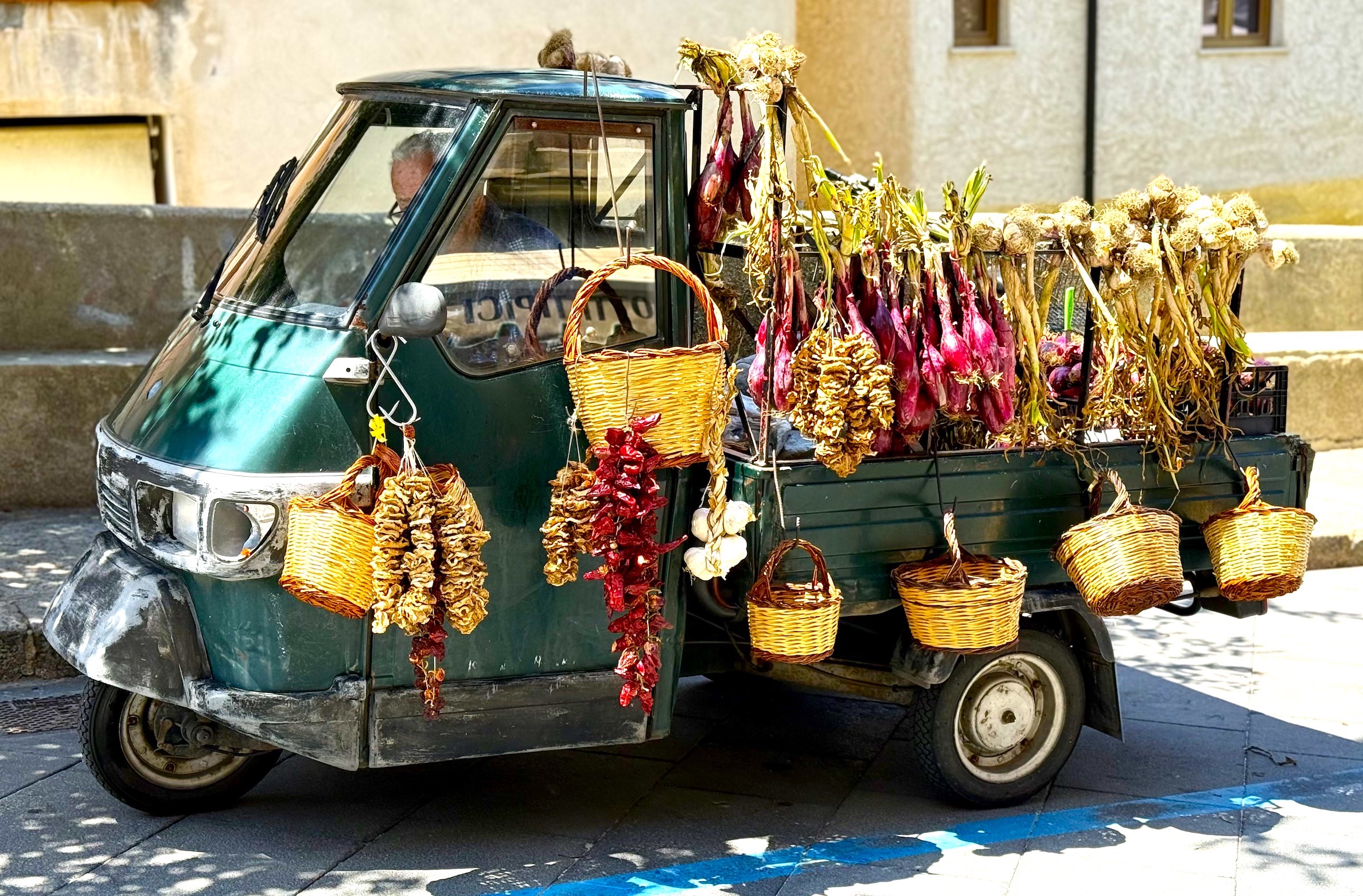 Fiumefreddo Bruzio
Iniziamo dal fascino di un borgo arroccato sulle colline a picco sul mare, Le rovine dell’antico castello dominano la collina e vi verrà voglia di esplorare la città a piedi.per scoprire la sua storia, i monumenti, l’arte e le delizie culinarie.
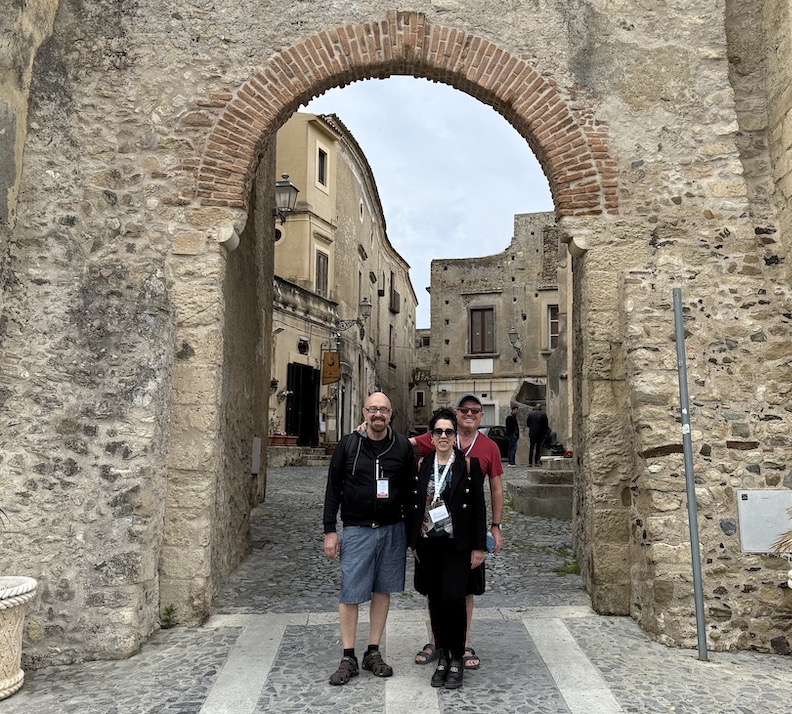 La nostra guida Alessandra Porto ci ha fatto scoprire antiche chiese ricche di fascino, tra cui una che ospita favolosi dipinti del famoso artista Salvatore Fiume, che evidentemente aveva la vocazione di condividere la sua opera in questa città che onora il suo nome.

A trip to remember
Calabria, going up the coast starting from Amantea and going North towards the border with Basilicata province. Here the best stopovers, food, and wine
Fiumefreddo Bruzio,
An absolute must stop for the charm of the city perched in the hills about the sea, its history, monuments, arts, and culinary delights. Thanks to our enthusiastic touristic guide Alessandra Porto, we got to enjoy the visit to the fullest.
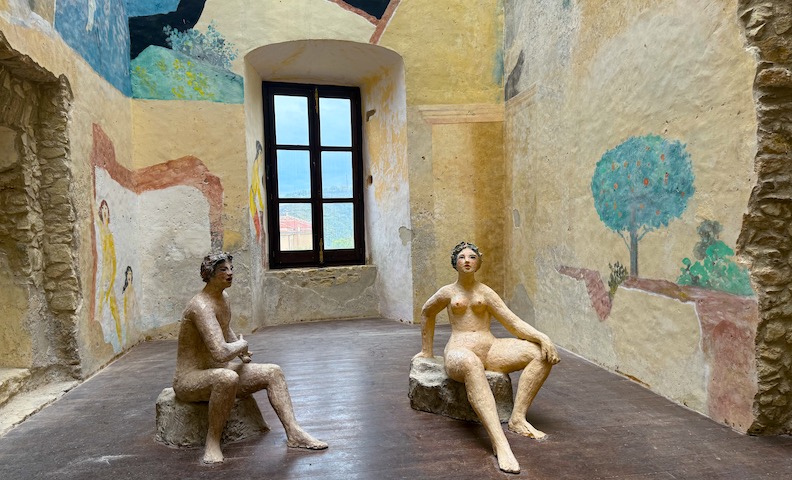
She had the key to let us discover old churches full of charm and one that hosts fabulous paintings by famous artist Salvatore Fiume who must have had a calling to share his work in this town that honors his name.
The ruins of the old castle dominate the hill, and you will work up an appetite by discovering the town on foot.

Diversi ristoranti soddisferanno la vostra fame, ma l’Osteria Convivio offre di più: una vera esperienza della Calabria locale dall’inizio alla fine… L’Osteria si dedica anche alla promozione dei vini calabresi e la sua lista di bottiglie di bianchi, rossi e rosé è davvero impressionante.
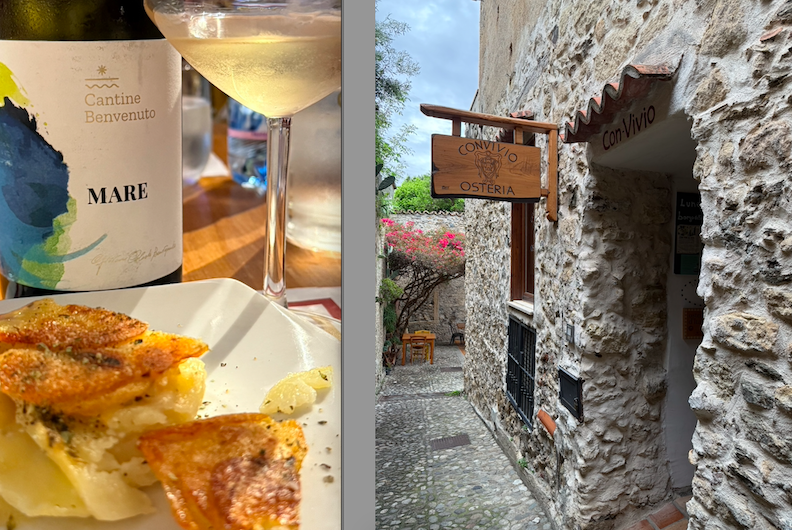
Tra le varie specialità, la stroncatura (o struncatura), una pasta preparata con acciughe, aglio, qualche oliva nera, olio d’oliva locale, un po’ di peperoncino e pangrattato croccante in superficie. Questa pasta ha una storia ricca, ma origini molto umili. Sembra una tagliatella marroncina, tradizionalmente fatta con gli avanzi di grano e crusca raccolti direttamente dal pavimento dei mulini.. Preparata con pochi ingredienti, è una vera testimonianza della genialità della cucina povera calabrese.
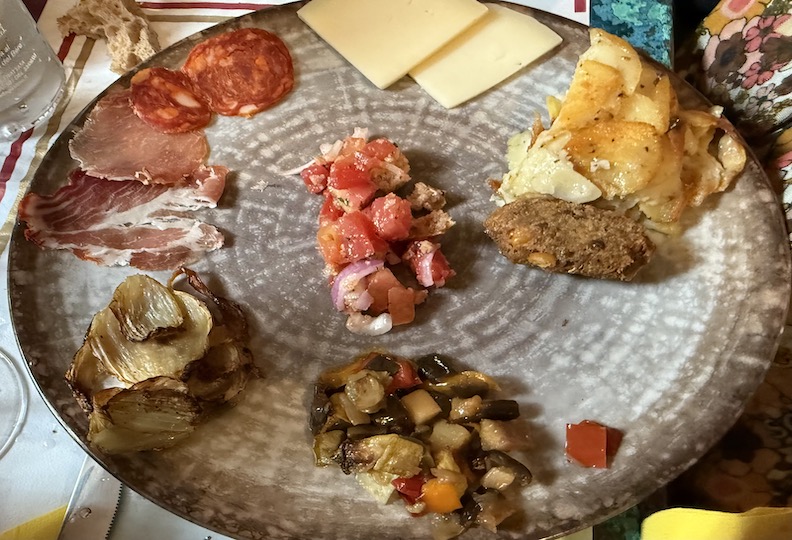
 Vera primadonna della cucina è la frittata di patate alla fiumefreddese.
Niente uova, solo patate a fette, un po’ di farina, pecorino, un pizzico di origano, peperoncino e sale. L’esterno è super croccante e l’interno si scioglie in bocca.,,,

Several restaurants will satisfy your hunger, but l’ Osteria Convivio offers more: a real experience of local Calabria from beginning to end. L’Osteria is also dedicated to the promotion of Calabrian wines and their list of white, red, and rose bottles is really impressive. The restaurant has different dining areas set on various levels. You feel like you are in a historic tavern that caters to locals and visitors. Among the various specialties, we sampled the stroncatura (or struncatura) pasta prepared with anchovies, garlic, a few black olives, local olive oil, a little peperoncino and extra crunchy breadcrumbs on top.
This pasta has a rich history, but very humble origin. It looks like a brownish tagliatelle, traditionally made from grain and bran leftovers swept directly from the floor of flour mills. It got banned for a while for obvious hygiene reasons and has resurrected in the form of a perfectly sanitary pasta, but truthful to its origins, mixing the flour of various grains. The resulting texture is quite unique, slightly rough, allowing the condiment and oil to cling to it. Prepared with just a few ingredients, it is a real testimony of the genius of the “cucina povera” of Calabria. The other dish tasted was another local specialty star: the “frittata di patate alla fiumefreddese.” No eggs involved here, just sliced potatoes, a little flour, pecorino cheese, a touch of oregano, peperoncino and salt.
La filosofia alla base della selezione di vini è scritta sul muro: “il peggiore vino contadino e migliorere del migliore vino industriale“. Scoprite il Mare bianco delle Cantine Benvenuto. Ha di tutto: un frutto maturo persistente, ma una splendida freschezza al naso e al palato. Prodotto con uve Malvasia e Zibibbo, il terroir le conferisce una combinazione gioiosa e perfettamente equilibrata. 
The philosophy behind the wine selection is written on the wall: “the worse single vineyard wine is better than the best industrial wine.”
(Photo : “Il peggiore vino contadino e megliore del migliore vino dell’industria »).
Discover white Mare from the Cantine Benvenuto. It had it all: lingering ripe fruit, yet a beautiful freshness to the nose and on the palate. Made from malvasia and Zibibbo grape varietals, the terroir brings them to a joyful and perfectly balanced combination.After such a meal, we enjoyed walking around Fiumefreddo’s streets and small plazas before hitting the road to our next stop up the coast.
CLETO
Per arrestare quei nemici che riuscivano ad arrivare alla costa e tentavano di conquistare i borghi arroccati, i castelli divennero vere e proprie fortezze, capaci di resistere all’aggressione da una posizione dominante e di sopravvivere all’interno delle mura grazie a ingegnosi depositi di acqua e viveri, come il grano. Abbiamo iniziato la nostra “Alla scoperta dei Borghi” con il suggestivo Castello di Savuto, dai cui resti si gode uno splendido panorama

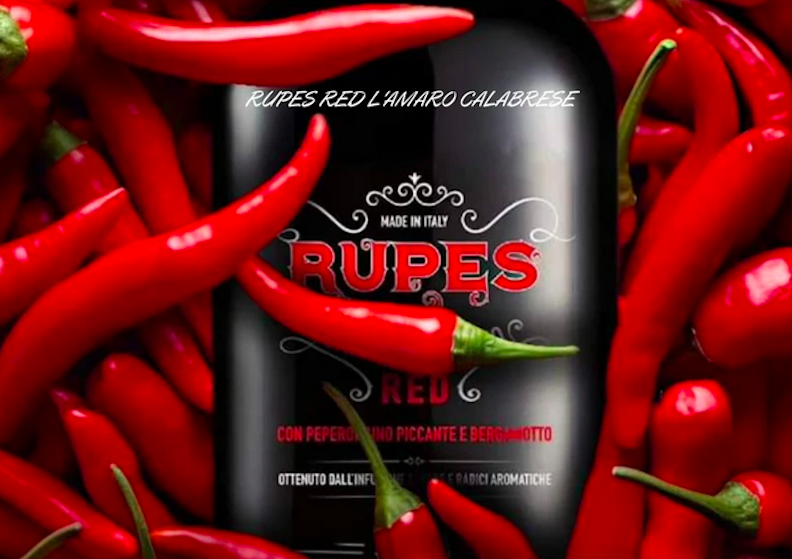
Da lì, ci siamo spostati a Cleto, dove siamo stati accolti con un aperitivo che includeva, come avrete già immaginato, della n’duja su crostini, insieme a una crema di olive, vari salumi e formaggi. Il vino rosso locale (Savuto classico di Antichevigne) era robusto, ma non pesante né stucchevole. Inoltre una ricca collezione di liquori amari, incluso il Rupes aromatizzato al peperoncino: non piccante in senso stretto, ma capace di lasciare una leggera sensazione di pizzicore sulla lingua.
Da Cleto ci siamo spostati su un’altra collina per visitare il bellissimo borgo di Aiello, ricco di storia e con diverse dimore nobiliari, come il Palazzo Cybo-Malaspina, Da non perdere gli squisiti mieli locali che potete acquistare da Bernardo Apicoltura.
If those made it to the shore and attempted to seize the perched villages, castles became real fortresses capable of withstanding aggression from a dominant standpoint and survive within closed walls thanks to savvy reservoirs of water and foodstuff like grain.
We started our “borgo adventures in Savuto where the views are enjoyed from the castle remains. From there, we hopped to Cleto, where we were hosted to have an aperitivo along with, you guessed it, some n’duja on crostini as well as olive spread, different charcuterie and cheese. The local red wine (Savuto classico from Antichevigne) was robust, but not heavy or cloying. But, what stoof out for me was the collection of “amaro’ liquors, including the Rupes one flavored with peperoncino: not hot per se, but leaving a little tingling on the tongue. Another stand out was the Jefferson which gets its strange name from the date of its creation in 1871!AIELLO
From Cleto, we hopped to another hill to visit the beautiful village of Aiello, rich in history and counting several noble mansions (like the Palazzo Cybo-Malaspina).. Not to be missed is the various local honeys you can get at Bernardo Apicoltura. Back to Amantea, one gourmet stop that cannot be missed to finish the day is to get a gelato at Sicoli. It’s a real institution in the area, and beyond, for the creaminess of its biggest hits (orange and pistachio), as well as a stuffed pastry which recipe is kept as a family treasure not to be shared.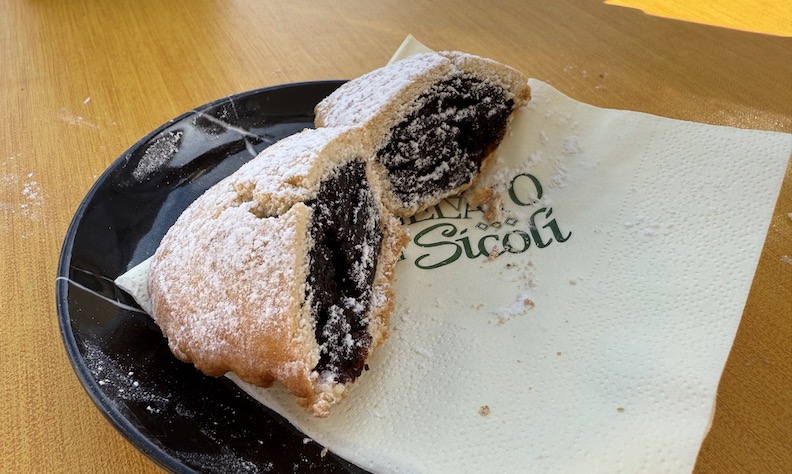
BELMONTE CALABRO
Passeggiando nel centro storico si incontrano vicoletti stretti, case in pietra, archi medievali e chiese barocche. Il nome “Belmonte” deriva probabilmente dal latino “Bellus Mons”, per via della sua posizione panoramica da cui potrete godere di una vista mozzafiato sul Mar Tirreno, magari assaporando qualche dolce specialità locale, come i fichi dottati, i dolci cannariculi e i taralli al miele.
 La fondazione ufficiale del Castello viene attribuita al normanno Ruggero il Normanno, che nel 1065 fece costruire un castello come fortezza difensiva.
 Si narra che il castello sia infestato dal fantasma della “Dama Bianca”, una giovane nobile rinchiusa e lasciata morire da un geloso signore. Le sue apparizioni sarebbero state registrate da visitatori che affermano di aver visto una figura in abito bianco aggirarsi tra le stanze antiche, soprattutto nelle notti di luna piena.

DIAMANTE
una delle città della Calabria con un centro storico direttamente sulla costa (di solito arroccato sulle colline). È nota a livello internazionale per due cose: oltre duecento murales e la sagra del peperoncino che si tiene ogni settembre.
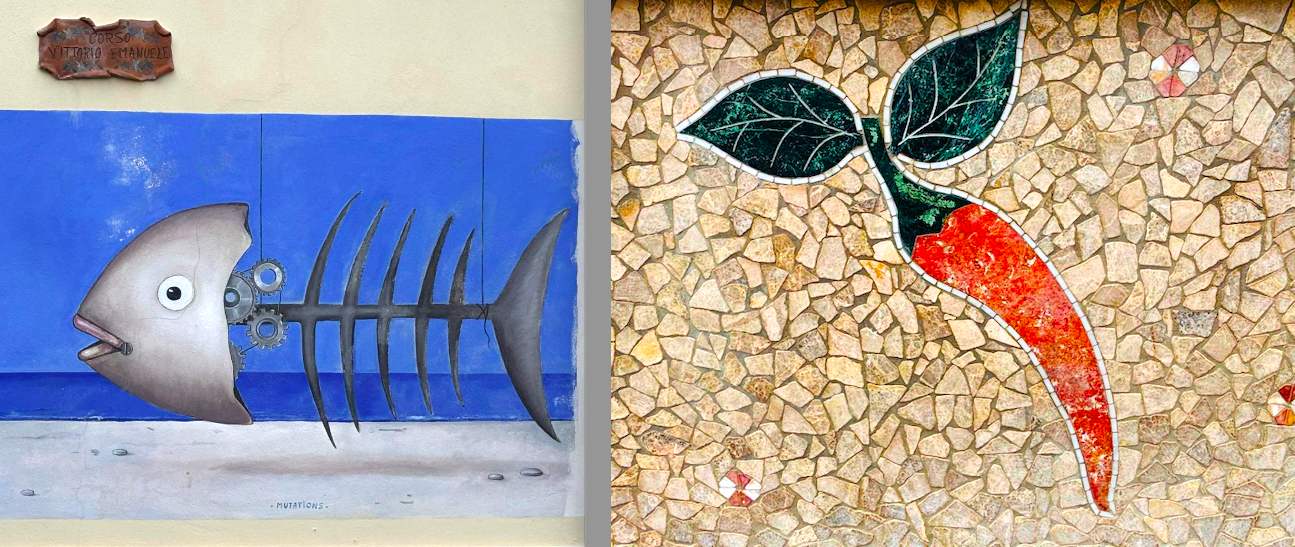 Il peperoncino si trova in tutte le sue forme: piccole botteghe che vendono vasetti di varie preparazioni piccanti (dalla crema liscia al sott’olio tritato grossolanamente, dai peperoncini interi secchi alla polvere sottile…) Alcune gelaterie offrono gelato al peperoncino. Altri negozi usano la forma e il colore dei peperoncini per creare sciarpe e teli mare o braccialetti e altri oggetti decorativi.
 Abbiamo optato per soggiornare e cenare fuori dal centro storico e lontano dai negozi turistici, a pochi chilometri lungo la costa, al Cristina Hotel (www.cristinahotel.com). Le camere dispongono di ampie terrazze dove si può ammirare il tramonto in tutta tranquillità, dopo un bagno in mare o nella splendida piscina della proprietà.
 È anche un luogo dove cenare è un momento speciale, perché avrete l’occasione di scoprire piatti autentici come la “raganella di alici”.peparata con pane raffermo sbriciolato, acciughe, aglio, origano, prezzemolo e peperoncino. Per accompagnare questa ricetta di famiglia, niente di meglio che bere il vino della casa, particolarmente leggero e rinfrescante, ma al tempo stesso affascinante e interessante con i suoi aromi floreali.
 DIAMANTE
One of the very cities in Calabria with a historic center directly along the coast (usually it’s perched up in the hills). It is known for two things internationally: over two hundred mural paintings and its peperoncino festival held every September.
 It is a charming town with a long promenade along the crystal-clear sea and small coves where you can swim with the charming old town in the background. Peperoncino is to be found in all its form: small stores selling small jars of various spicy preparations (smooth cream to coarsely chopped sott’olio, dried whole peppers to thin powder…). Even though tiny in size, the touristic store Radici di Calabria (www.prodotti-tipici-calabresi.net) will dazzle you with the variety of gourmet products. Some gelaterias offer pepperoncino ice cream. Other stores use the shape and color of peppers to create scarves and beach towels or bracelets and other trinkets.The touristic feeling is never overwhelming, and Diamante keeps a charming authenticity.
(picture with two old buildings and a little red car stuck between them)
But we opted to stay and dine outside of the old center and away from the touristic shops a few kilometers up the coast at Cristina Hotel (www.critinahotel.com). The rooms have generous terrasses where one can admire the sunset in peace, after swimming in the sea or the beautiful swimming pool on property.
It is also a place where dining is special moment because you will have the occasion to discover very authentic dishes such as the “raganella di alici.” It is another example of how “cucina povera’ can reach unexpected perfection. Made from stale bread broken into crumbs, anchovies, garlic, oregano, parsley and peperoncino, it comes out as a crispy galette, perfect in combination with a fresh salad. To wash down this family recipe, nothing better than to drink the vino della casa bearing the name Ristorante Cristina on the label which comes from the region of Morano Calabro and produced by the Casa Vinicola Gialdino. With only 11.5% alcohol, it is particularly light and refreshing, yet charming and interesting with its floral aromas.
SAN NICOLA ARCELLA
La nostra ultima tappa lungo la costa tirrenica è stata appena a nord di Scalea, nella località di San Nicola Arcella, che vanta alcune delle spiagge più belle della Calabria. Dopo uno spettacolare boat trip a cura di Galatea tra suggestive grotte marine e la strabiinate vista della storica nave ” Amerigo Vespucci”, siamo approdati al ristorante Il Furano,pesce freschissimo, preparazioni sapienti, un’eccellente selezione di vini, un servizio cordiale e competente, tutto perfetto in un’atmosfera elegante, ma semplice e familiare.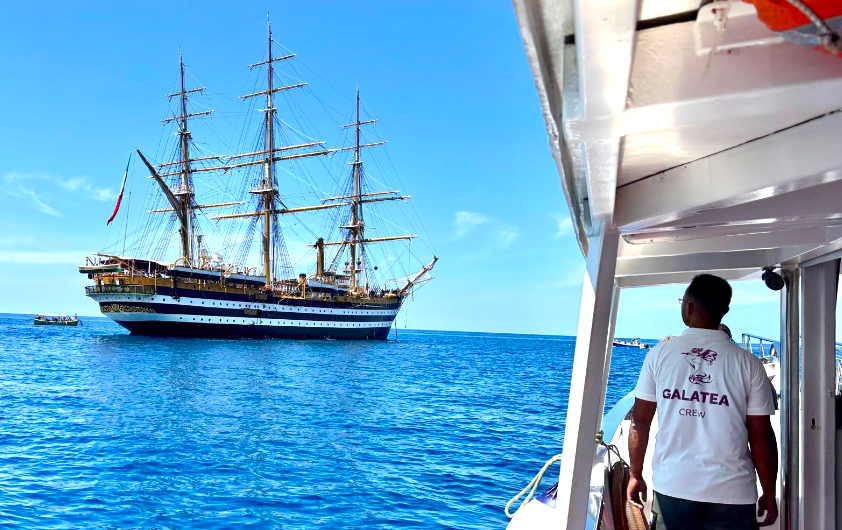 Ecco due dei piatti eccezionali che abbiamo assaggiato.
Il polpo alla griglia era già di per sé splendido, con i suoi due tentacoli generosi, appena scottati e scintillanti di freschezza. Adagiato su un letto di verdure e circondato da croccanti peperoni cruschi a ricordarci che eravamo a pochi chilometri dalla Basilicata, era un modello di equilibrio e generosità. Il polpo era di una tenerezza da sogno e l’unico consiglio che siamo riusciti a ottenere da Franca, la “cuoca madre“, per ottenere una tale consistenza è stato proprio un tempo di cottura limitato.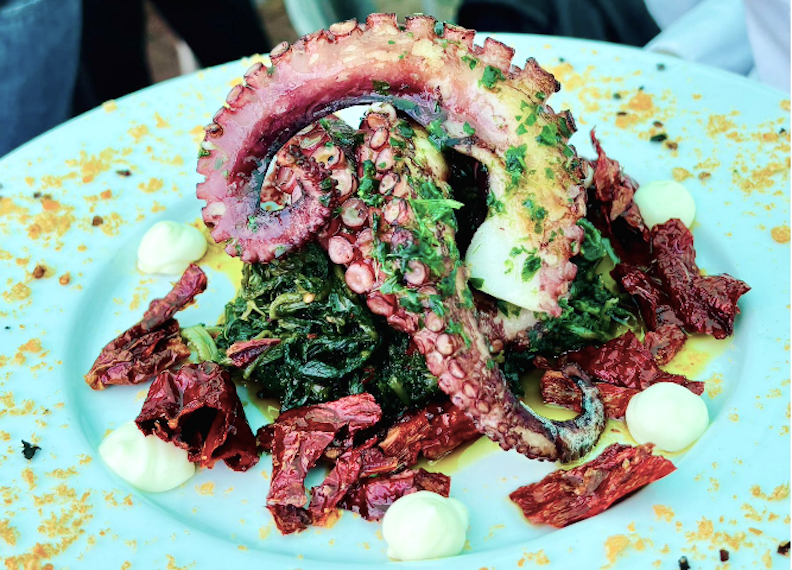
Anche il filetto di tonno rosso in crosta di pistacchi, ricoperto di cremosa stracciatella e delicatamente caramellato di cipolle rosse di Tropea, è stato un successo, per il suo equilibrio di sapore e consistenza. L’esecuzione del piatto era degna di una stella Michelin, con la crosta perfettamente croccante e per nulla unta, mentre la polpa del tonno è stata mantenuta praticamente cruda per preservarne la consistenza e il sapore succulenti.
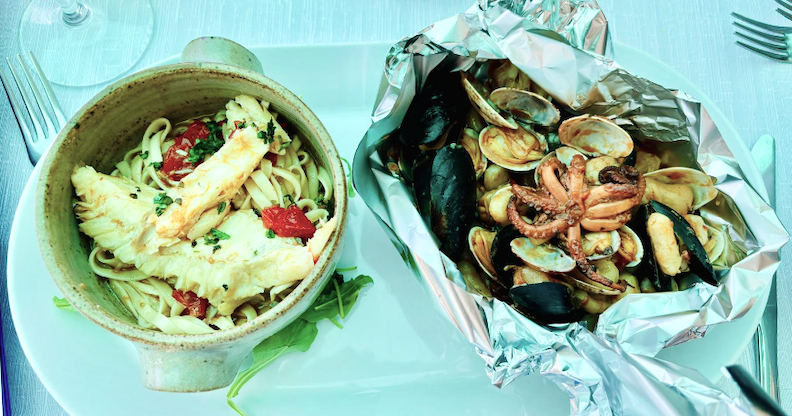
Il vino bianco si abbinava perfettamente a entrambi i piatti: aromatico e saporito, ma allo stesso tempo leggero e rinfrescante. Il Nobili Melissesi (IGT Calabria Bianco) nasce dal tradizionale vitigno Greco Bianco, con l’aggiunta di Chardonnay.La famiglia Galiano offre camere in affitto (www.furanohomebb.it) proprio lì, tra la spiaggia e il ristorante, per un pisolino sotto il sole cocente. Per un drink, un caffè espresso o un pasto leggero dopo un tuffo in mare, hanno un bistrot proprio di fronte alla spiaggia. Our last stop along the Tyrrhenian coast is just north of Scalea in the locality of San Nicola Arcella that counts some of the most beautiful beaches of Calabria.
We had the privilege to savor one of the best meals of our whole Calabrian tour at Il Furano restaurant (INSTAGRAM: @RISTORANTEILFURANO). Set on a large terrasse dominating the sea, you will have the lunch of your life: super fresh seafood, expert preparations, beautiful wine selection, charming and knowledgeable service, everything was perfect bathing in a chic, yet simple and family-oriented atmosphere.
Here are two of the outstanding dishes we got to taste.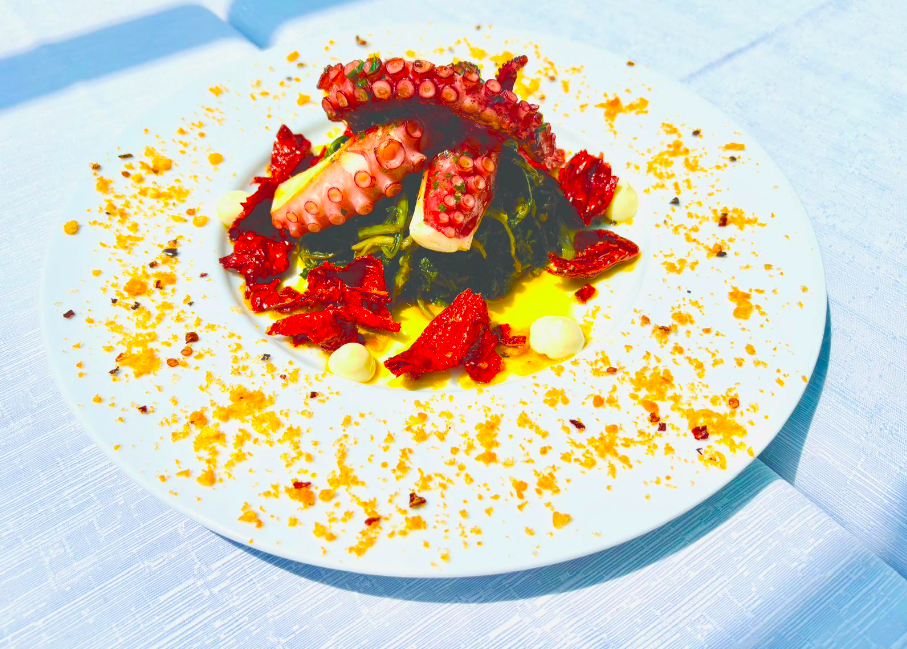 The grilled octopus was visually stunning already with these two generous tentacles, barely charred and glistening with freshness. Set on a bed of greens and surrounded by crunchy cruschi peppers reminding us that we were just a few kilometers away from Basilicata, it was a model of balance and generosity. The octopus was dreamingly tender and the only tip we could obtain from Franca, the “mother in chef” to achieve such a consistency was just a limited cooking time. The red tuna filet with a pistachio crust, covered with creamy stracciatella and delicately caramelized Tropea red onions was also a winner, by its balance in flavor and texture. The execution of the dish was Michelin star worthy with the crust being perfectly crispy and not greasy at all, while the flesh of the tuna was kept practically raw to preserve its luscious texture and taste.
 The white wine was a perfect match with both dishes: aromatic and flavorful, yet light and refreshing at the same time. Nobili Melissesi (IGT Calabria Bianco) comes from the traditional greco bianco grape with the addition of some Chardonnay which gives it a bit of depth and roundness making it a perfect gastronomic wine. Produced by the cantine Bruni http://www.cantinebruni.it, the vineyard is located near Melissa, a few kilometers inland from the town of Ciro.The Galiano family offers rooms to rent (www.furanohomebb.it) right there, between the beach and the restaurant in order to take a nap while the sun is burning hot. They also offer a variety of boat trips to explore the beautiful coast. For a drink, an espresso, or a light meal after a dip in the sea, they have a bistrot right in front of the beach.

In just a few days and less than a 60 km drive up or down the coast from Lamezia, you get to taste how rich the history of Calabria is and how bountiful the area is in terms of products, wines and noteworthy eateries. This gastronomic tour is far from being over. Next, we’ll take you up North to discover wonders along the sea and inland treasures. Viva Calabria!
 Special Thanks to Maria Antonella Cauterucci / calabriastraordinaria.it, Rossella Ferraro/Riviera dei Borghi
by Cesare Zucca
Oggi vi porto in Puglia, regione famosa per la sua straordinaria gastronomia, i suoi prodotti e i suoi meravigliosi piatti regionali.
La nostra destinazione è la pasta.
Ecco due produttori che ho incontrato e di cui ho assaggiato le loro specialità
Today I take you to Apulia (Puglia), a region famous for its extraordinary gastronomy, its products, and its amazing regional dishes.
Our destination: pasta.
Here are two producers I met and tasted their amazing products.

Siamo nel Salento, nel piccolo Borgo di Cocumola, dove ci avventuriamo verso la nostra prima “pasta experience” presso l‘Azienda Agricola Brunitta che produce pasta con il grano coltivato nei campi della Famiglia Urso. Grazie alla tradizionale macinazione a pietra e alla lenta lavorazione a bassa temperatura, viene preservata la qualità autentica della nostra terra.
We are in the Salento region, in the small Cocumola Village where we venture towards our first “pasta experience” at Azienda Agricola Brunitta that makes pasta from wheat grown in the fields of the Urso Family Thanks to traditional stone milling and slow, low-temperature processing, the authentic quality of our land is preserved
La pasta è prodotta in piccoli lotti genuini, nel pieno rispetto dell’artigianalità locale. Non è prodotta industrialmente: è trafilata al bronzo e a lenta essiccazione.
La pasta di Brunitta si inserisce in una tradizione che celebra il meglio dell’agricoltura italiana.
The pasta is produced in small, genuine batches, with full respect for local craftsmanship. It is not industrially made—bronze-drawn and slow-dried.
Brunitta’s pasta becomes part of a tradition that celebrates the very best of Italian agriculture..
Tra tutta la produzione, ho scelto le “Sagne ‘ncannulate Senatore Cappelli”, una pasta tradizionale pugliese, fatta da una sfoglia sottile e piatta. La pasta viene tagliata a strisce e poi piegata e attorcigliata per creare la sua caratteristica forma lunga e a spirale.
Among the whole production, I chose the “Sagne ‘ncannulate Senatore Cappelli”, a traditional pasta from Apulia, made from a thin, flat sheet of dough. The dough is cut into strips and then folded and twisted to create its distinctive long, spiral shape.
Tradizionalmente, le “sagne ‘ncannulate” vengono preparate dalle “nonne” pugliesi con un giorno di anticipo, di solito il sabato sera, per essere servite a pranzo la domenica, condite con un ricco sugo di pomodoro. Che delizia!
Traditionally, “sagne ‘ncannulate” are prepared by the Apulian “Nonnas” a day in advance—usually on Saturday evening, to be served at Sunday lunch, sesoned with a rich tomatoes sauce. What a treat!
 Ci spostiamo verso la stupenda Valle Carbonara immersa nell’incontaminata natura del Parco nazionale del Gargano.
Qui troviamo Casa Prencipe, un’azienda giovane che nasce dal sogno di Giovanna e Domenico. La ricetta è semplice: Pasta in elevata purezza con solo acqua pura, semola biologica, e aria di montagna .
We move towards the stunning Carbonara Valley, immersed in the pristine nature of the Gargano National Park.
Here we find Casa Prencipe, a young company born from the dream of Giovanna and Domenico. The recipe is simple: high-purity pasta made with only pure water, organic semolina, and mountain air.
 La produzione prevede pasta secca corta e lunga, trafilata al bronzo, molte paste regionali pasta secca di grano duro, pasta fresca oltre a pasta integrale e aromatizzata, tra cui le “orecchiette”, al vino rosso, al nero di seppia e di grano arso. E poi ancora “foglie” agli spinaci e tagliolini al limone.
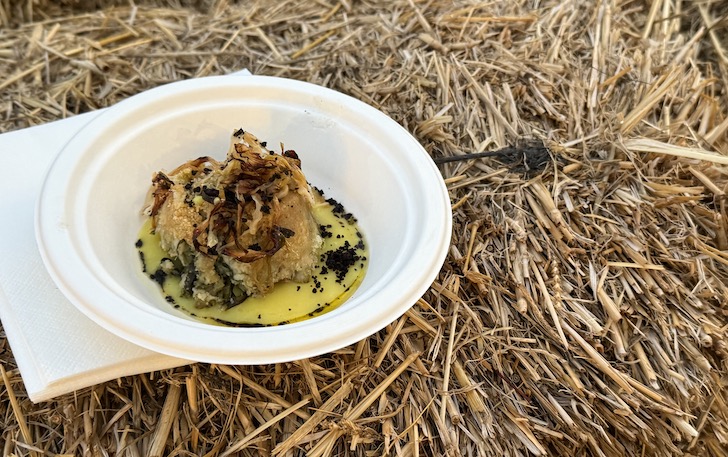
Il mio piatto preferito? Garganini con zucchine e feta. Delizioso!
The production includes short and long dried pasta, bronze-drawn, many regional pastas: dry durum wheat pasta, fresh pasta, as well as whole-wheat and flavored pasta, including orecchiette, red wine, squid ink, and burnt wheat. And then there’s spinach “foglie” and lemon tagliolini.
My favorite? The Garganini with zucchini and feta cheese. Delicious! Per chi ama la pasta di legumi, ecco i fusilli alle lenticchie rosse, ai piselli e le caserecce ai ceci. Casa Prencipe produce inoltre un ottimo olio.”trames”. Ne basteranno poche gocce per valorizzare i vostri piatti.
For those who love legumes, here are the fusilli with red lentils, peas, and caserecce with chickpeas. Casa Prencipe also produces an excellent “trames” oil. A few drops will enhance your dishes.


 Testo & Foto © Cesare Zucca
La mia dieta dice “niente pane”... ma devo ammettere che ho trasgredito (alla grande) in occasione di un saporitissimo weekend nell’incanto del Gargano, Puglia, dove si è vissuto un percorso tra sacralità e tradizioni, tra leggende e storie di oggi.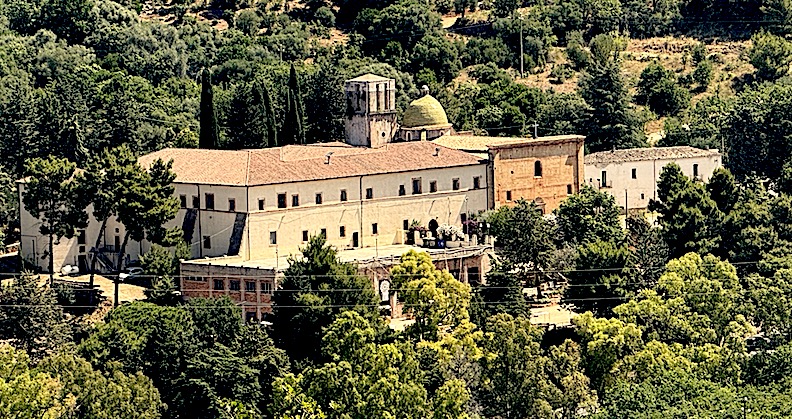
In occasione dell’evento Grani Futuri 2025 è nato un itinerario tra i luoghi più mistici del Gargano, dal Convento di San Marco in Lamis, al mistico Santuario di San Matteo allo straordinario Santuario di San Michele Arcangelo , passando per il Convento di Padre Pio a San Giovanni Rotondo., dove devoti di tutto il mondo si recano in pellegrinaggio.

Grazie alla guida di Michele Bruno, mi sono immerso nei paesaggi aperti del Tavoliere delle Puglie, tra le spighe mature dei campi di Zilletta di Brancia.
 Grani antichi, farine vive e storie contadine ci conducono alla radice di un pane che racconta la terra di chi ancora oggi sa custodire il tempo. Nei campi assolati, rivivono la mietitura a mano e la molitura a pietra, con la pazienza e la bellezza delle origini. Verissimo lo slogan “Se l’amore avesse un profumo, sarebbe quello del pane appena sfornato”

Nell’oasi all’aperto del Convento di Stignano. a due passi da San Marco in Lamis, si è celebrato un rito serale di condivisione del pane,
“Complici ai Fornelli” un plotone di top chef provenienti da località pugliesi e italiane.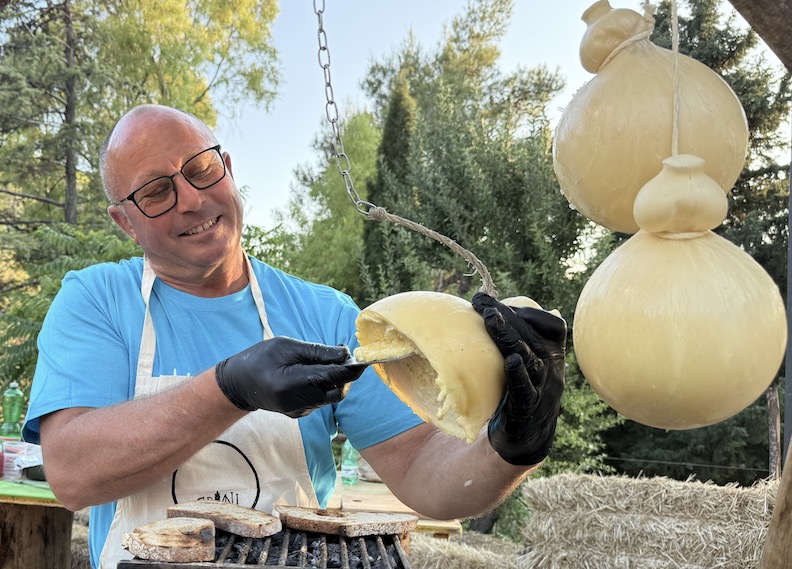
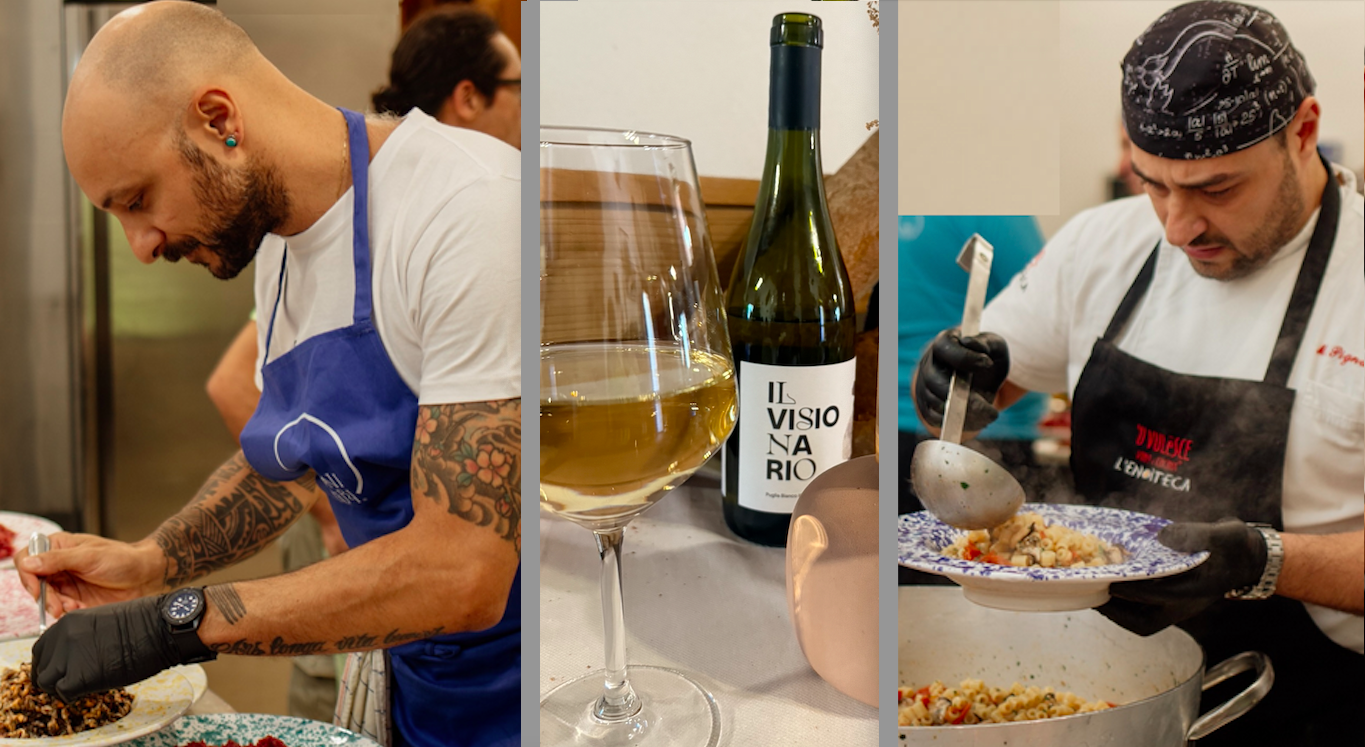 (l’elenco completo e i loro ristoranti a fine articolo)
LA VIA DEL PANE
Agriturismo Le Caselle (Rignano Garganico) ha ospitato la “Via del Pane”,un progetto di speranza che unisce la Puglia attraverso il valore della terra e della cultura agricola. LE SEI REGINE DELL’ARTE BIANCA
Sono sei le città pugliesi simbolo dell’arte bianca • Altamura (BA), Guagnano (LE),
Laterza (TA), Andria (BT), Mesagne (BR), Monte Sant’Angelo (FG) •
Sei imperdibili località che costruiscono insieme un percorso di identità e sapori. Lungo questo simbolico cammino, prende forma un momento di confronto tra i sindaci e le comunità, per riconoscere nel pane un segno di appartenenza, dialogo
e visione condivisa.
SUA MAESTA’ IL PANCOTTO
Profumi e sapori del cibo da secoli è l’eccellenza “povera” della cucina pugliese … “povera” si fa per dire, “squisita” lo è di certo! Basta vedere come gli Chef pugliesi hanno servito le loro “nuove versioni” dello storico “pancotto” e dei tradizionali piatti di pane.

Protagonista è il “pancotto”, piatto umile e universale, proposto sia in versione tradizionale che innovativa, sempre utilizzando i pani caratterizzanti ciascun comune coinvolto.
Tre top chefs: Nicola Martella di Peschici, Lele Murani di Foggia, Michele Pizzigoni di Lesina, uniti in una missione d’ eccellenza: servire una loro ricetta tradizionale e crearne una innovativa Come non innamorarsi di queste ricette tradizionali e della loro “new version”?
Da quella con cipolla. peperone, pomodor,cime di rape e cubetti di salumi, una ricetta che Chef Michele ha “rubato” alla Nonna.
 La sua versione innovativa si ispira a una riedizione sempre “al recupero” con uova, pasta brisè, parmigiano, tagliatella di seppia, guanciale e germogli di borraggine. Da Premio Oscar!!
 Più tradizione di così…Chef Nicola punti a classici ingredienti: pane. patate, basilico, il tutto amalgamato in una cremosa e fresca tentazione. Per l’innovazione, si riallaccia ai ricordi del classico pesce farcito e inserisce nel calamaro un ripieno di pane e pecorino. Piatto top.
 Chef Lele si dirige verso verdure e erbe spontanee, in un profumato tripudio di odori e sapori, tra cui spiccano bietola, cicoria selvatica, rucola, pomodorino. E le famose polpette? Eccole rivisitate, rigorosamente in pane da recupero, insaporite da pasta di pomodoro, soffritto di acciuga e verdure. Bontà!

Super host di Grani Futuri 2025 è Antonio Cera dell’insuperabile FORNO SAMMARCO situato nel centro storico della suggestiva San Marco in Lamis, una colorata cittadina dove potrete scoprire le donne del luogo, vestite alla maniera antica.

Indossano i costumi della tradizione, con lunghe gonne colorate, elaborate camice lavorate a mano e sfavillanti ori al collo, spesso intente a portare a destinazione il pane appena sfornato.
Nella cosiddetta “palude”, primo nucleo abitato del paese, scoprirete austeri forni e vezzose botteghe orafe in un percorso che narra il pane e l’oro come gesti d’arte, bellezza condivisa e memoria viva. Tra le mani che impastano e quelle che cesellano, nasce un racconto di inclusione tra cuore e cultura. San Marco in Lamis è nota anche per le manifestazioni del Venerdì Santo che culminano con la preparazione delle “fracchie“, enormi coni di legno, realizzati con grossi tronchi tenuti insieme da cerchi in ferro, che vengono accesi all’imbrunire e fatti circolare per il paese su appositi carri in occasione della Processione della Madonna Addolorata.

IL PANE E’ DI SCENA
In un sorprendente spettacolo tra mito, pane e risate, esplode il fantasmagorico Rito d’Iniziazione dell’Accademia delle Corna (Putignano).
Questa tradizione, che affonda le sue radici nella satira e nella tradizione popolare, vede un corteo di uomini (i “cornuti”) sfilare per le vie del paese, indossando abiti griffati dall’associazione, accompagnati da canti e balli affidati ad “attori” più o meno improvvisati e “gaudenti” Un weekend che auguro a chiunque, dieta o non dieta!
 IN CUCINA… ECCO CHI C’ERA
Tutti gli chefs, i fornai e dove trovarli.
Luigi Nardella (Masseria Montaratro – Lucera), Giovanni Ingletti (XFood Ristorante – San Vito dei Normanni), Nicola Di Lena (Virgola Pasticceria Terapeutica – San Vito dei Normanni Con Michele Sabatino (CASA SABATINO – Apricena), Primiano D’Addetta (LAKE CAFE’ – Lesina), Alfredo De Luca (Ristorante LA TAVERNA DEL PORTO – Tricase), Luigi Tedone (MASSERIA SCANNAGATTA – Corato),

Massimo Ferosi (Ristorante IL PRESIDENTE – Lucera), Pietro Zito (ANTICHI SAPORI – Montegrosso), Agostino Bartoli (GATTO ROSSO – Taranto)
 Errico Recanati (Andreina * Michelin – Loreto), Domenico Cilenti (Porta di Basso * Michelin – Peschici) e Tiziano Mita e Felice Campanale (Borgo Egnazia – Savelletri),
 Luigi De Vita (IL MANISCALCO – Mattinata), Luigi Centra (AL SOPPALCO – San Giovanni Rotondo), Michele Sabatino (CASA SABATINO – Apricena), Gaetano Pezzicoli (OPUS ART EVENT – Lesina)
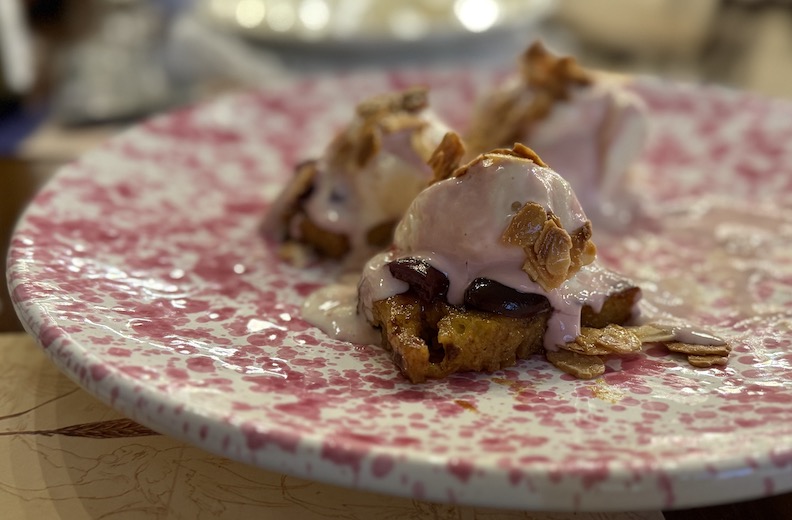 Una personale menzione speciale a Iginio Ventura (Gelateria PINAGEL – Peschici) che ha sbalordito il pubblico con un gelato all’ amarena piccola, in purità,
 And last but ot the least, la “supersonica” Diana Pia Pignatelli (Agriturismo LE CASELLE – Rignano Garganico) che, oltre a una tradizionale panzanella e un inedito vitello alle pesche, ha servito una parmigiana che mi ha fatto esclamare ” Questa parmigiana è davvero….una parmigiana !”
 I MAGNIFICI FORNAI
Salvatore Curatolo (FORNO FANTASMA -Cagnano Varano), Massimo Vitali (PANETTERIA VITALÌ – Cesenatico), Catello Di Maio (CESTO BAKERY – Torre del Greco), Francesco Arena (FRANCESCO ARENA MASTRO FORNAIO – Messina), Nunzio Ninivaggi (IL PANE DI NUNZIO – Altamura),  Orazio Chiapparino (D’ORAZIO PIZZERIA – San Giovanni Rotondo), Francesco Paolo Mango (VIRGA&MILANO GROUP Palermo),Vincenzo Maddalena (Castelluccio dei Sauri), Antonio Cera e Pietro Borazio (FORNO SAMMARCO – San Marco in Lamis).

Un grazie speciale a Antonio Cera, Ester, Alessandra, Ludovico, Antonella Millarte, Michele Bruno e tutto l’agguerrito Team di Grani Futuri. Mi avete fatto vivere un’esperienza meravigliosa, dieta o non dieta….
Arrivederci a Grani Futuri 2026 !

 Cesare Zucca
Milanese di nascita, vive tra New York, Milano e il resto del mondo. Viaggia su e giù per l’America e si concede evasioni in Italia e in Europa. Cesare fotografa e racconta città, culture, stili di vita e scopre delizie gastronomiche sia tradizionali che innovative.
Incontra e intervista top chefs di tutto il mondo, ‘ruba’ le loro ricette e riporta il tutto in stile ‘turista non turista’.
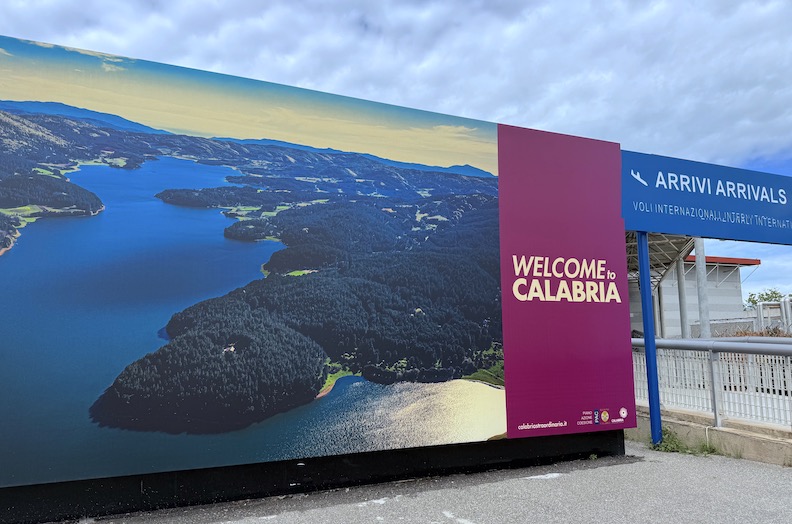 This unforgettable trip began in Lamezia Terme, as for many visitors coming from elsewhere in Italy or the rest of the world . Lamezia is much more centrally located on the Tyrrhenian Sea and at a short distance from the Ionic coast, Also the international Lamezia airport is minutes away from the main train station, Just a 15 minutes drive and you will discover the best place possible to relax after a long trip and enjoy our first bite of Calabria.
 Welcome to Hang Loose Cottage in the small community of Gizzeria Lido, but it really is a world of its own, above the sea and boasting a gorgeous swimming pool embodying the spirit of the place.


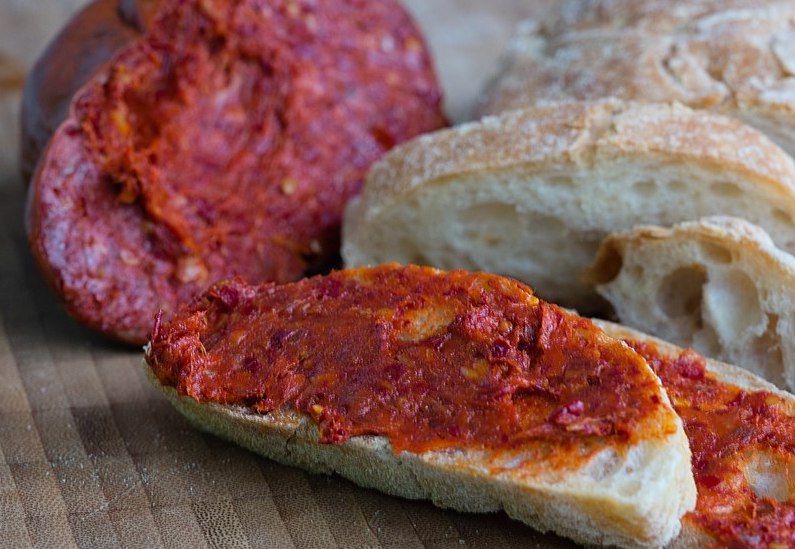
 For dinner you ll have to taste the most traditional Calabrian peperoncino product: n’duja. a spicy spreadable pork sausage. It is sold in butcher shops but also supermarkets, and specialty stores. Here it was served along the best grissini I have ever tasted, due to their irregular shapes: the thicker parts had a bit of chew and the thinner ones were super crispy.


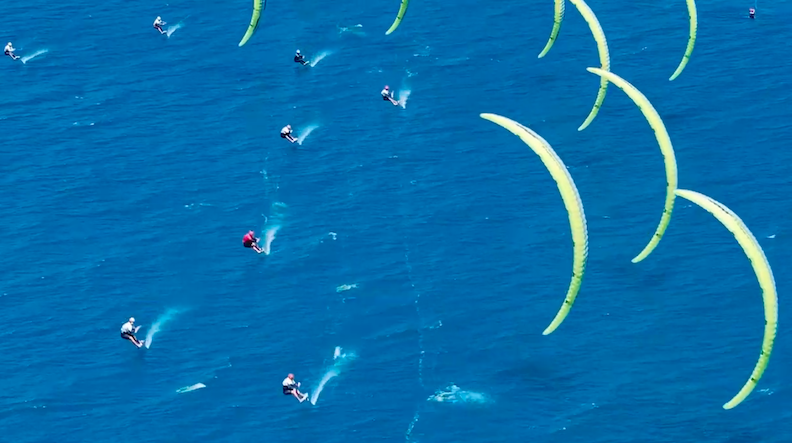
 This area is known for having strong winds and you’ll have your chance to kitesurfing, windsurfing, stand up paddle (sup), sailing, canoeing. All the equipment is there and the experts too to show you the ropes of the activity
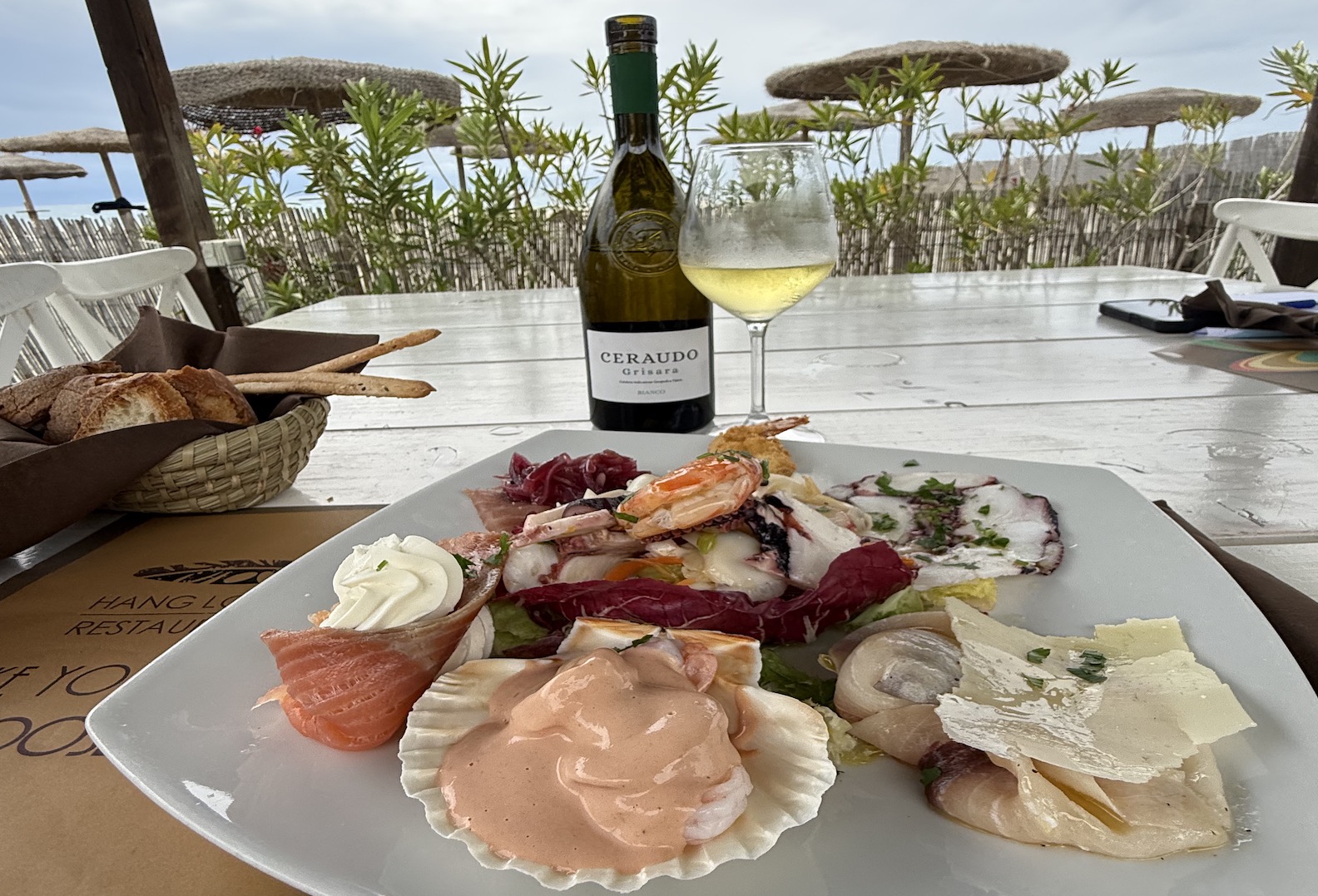
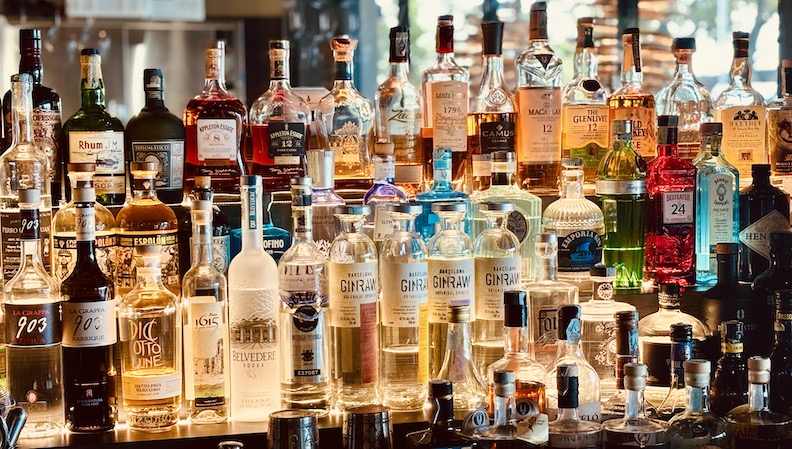
 Not to get dehydrated, the restaurant offers an impressive selection of local wines, including the beautiful Cerauto Grisara which has the roundness and body that makes it a wine fit to match the flavorful cuisine.


What a wonderful sea in Tropea!
And what a desire to enjoy a catch of the day, perhaps on a terrace overlooking the blue. Sunset Beach Club) a restaurant perfectly in tune with the magnificent panorama. At the helm we find Chef Dario Jannello, who confesses to me that he has always been “curious in the kitchen”, since the age of 8 … and the results are evident, a sincere, lively, tasty cuisine…
 Here the fish triumphs, starting with the cod meatballs, also in the “gourmet” version with potatoes, caciocavallo silano and tomato chutney, to the crispy breaded anchovies (but how good they are …) served with nduja mayonnaise.
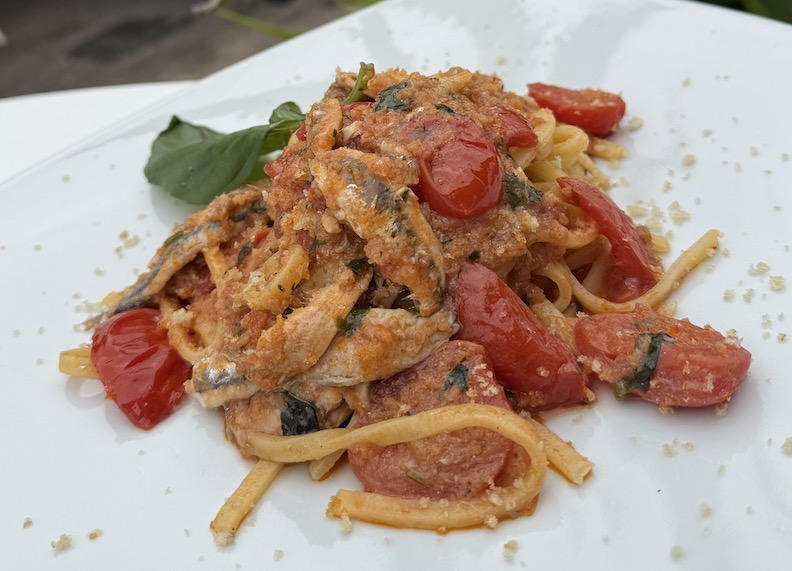
 I then enjoyed an exquisite mussels with pepper and a dish of linguine and clams that tasted of the sea,
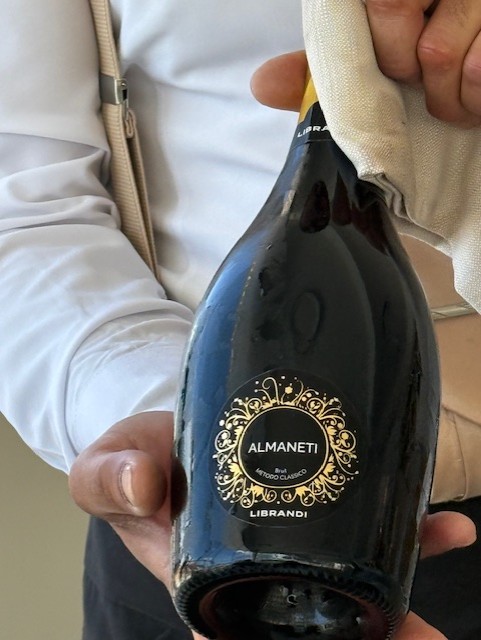
 All washed down with an excellent Almaneti Liprandi, a label well known to local and non-local enthusiasts. The cellar boasts 150 labels, 80% of which are Calabrian. Sunset Beach Club Tropea is a perfect place for a lunch, a romantic dinner or an unforgettable aperitif with tapas.
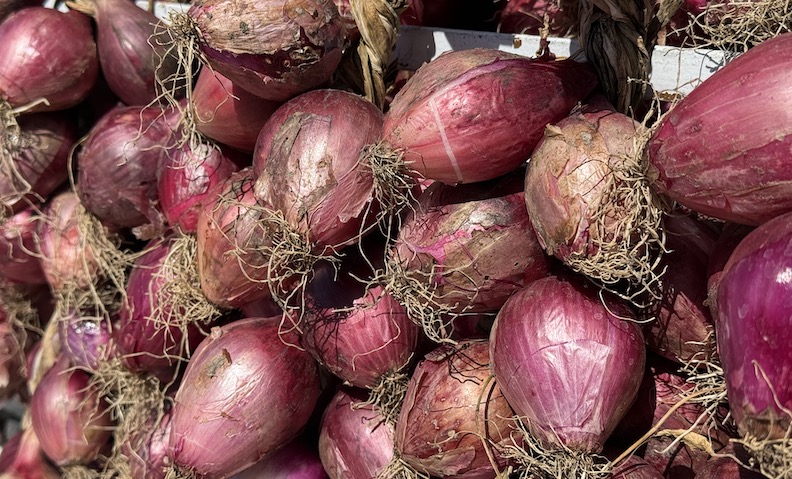
Foodwise, Tropea is also known for the famous red onion that carries its name. It definitely grows in the area, and I actually noticed a whole field of them right next the Hotel Stromboli where we stayed, just a bit down the coast in Capo Vaticano.
 Besides the neighboring fields that dominate the sea, guests of the hotel tend to watch the beauty of the sea that you can enjoy from the beach and the terrasse of the restaurant down the road or just from your balcony where sunsets showcase the famous Stromboli island and its volcano as a black pyramid licked by the drowning sun.
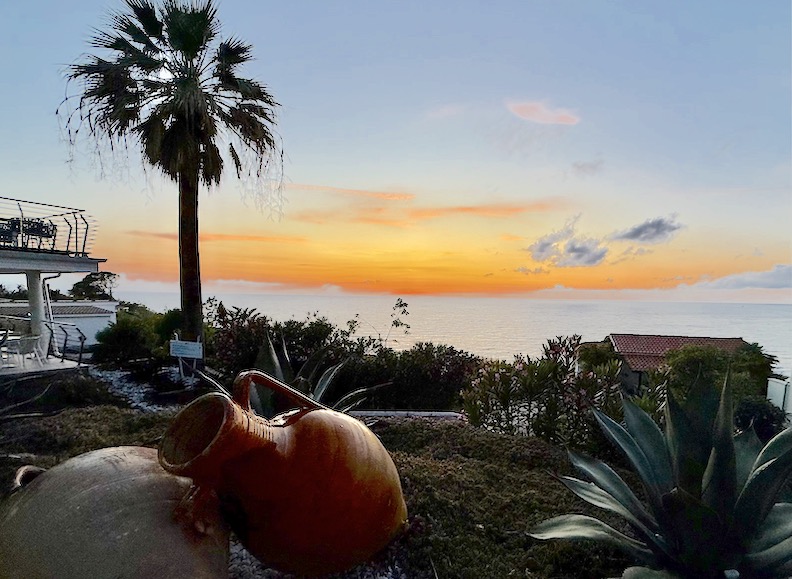
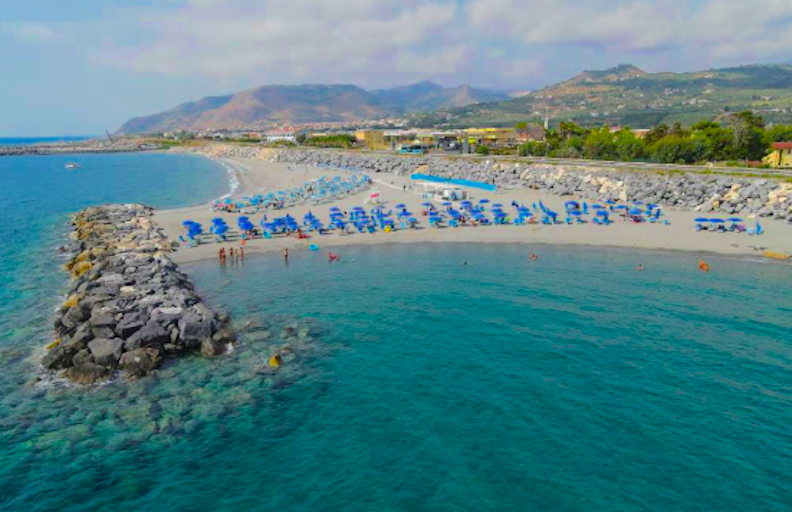
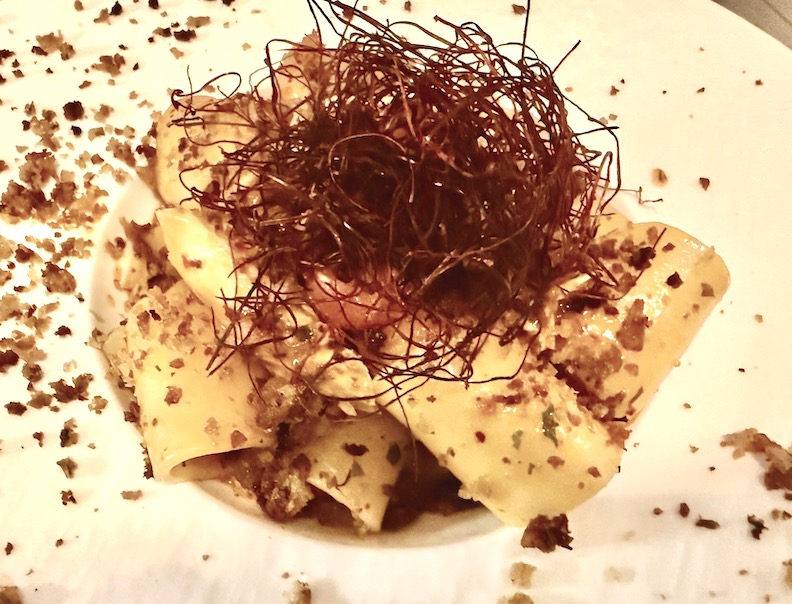
 to savor cuisine of the area, we got to dine at Molo Bretti Restaurant. a seafood restaurant attached to Baia Di Tempsa Hotel.
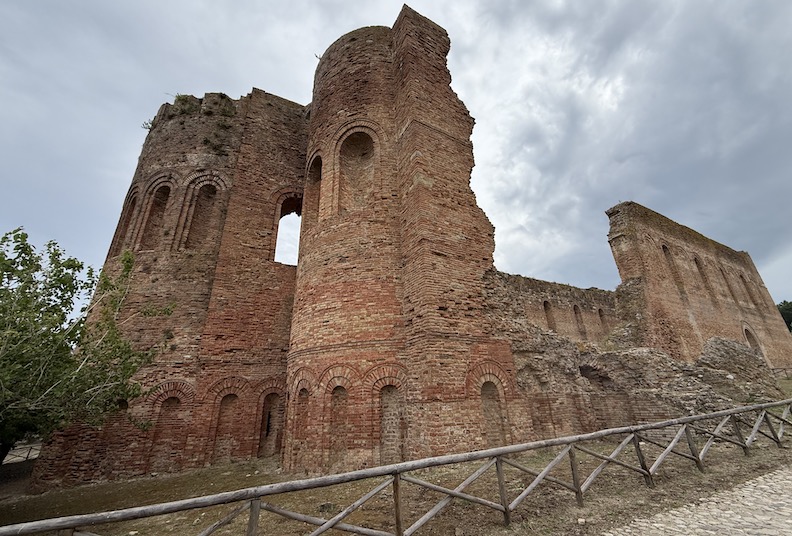 If those made it to the shore and attempted to seize the perched villages, castles became real fortresses capable of withstanding aggressions from a dominant standpoint and survive within closed walls thanks to savvy reservoirs of water and foodstuff like grain.

We started our “borgo adventures in Savuto where the views are enjoyed from the castle remains. From there, we hopped to Cleto
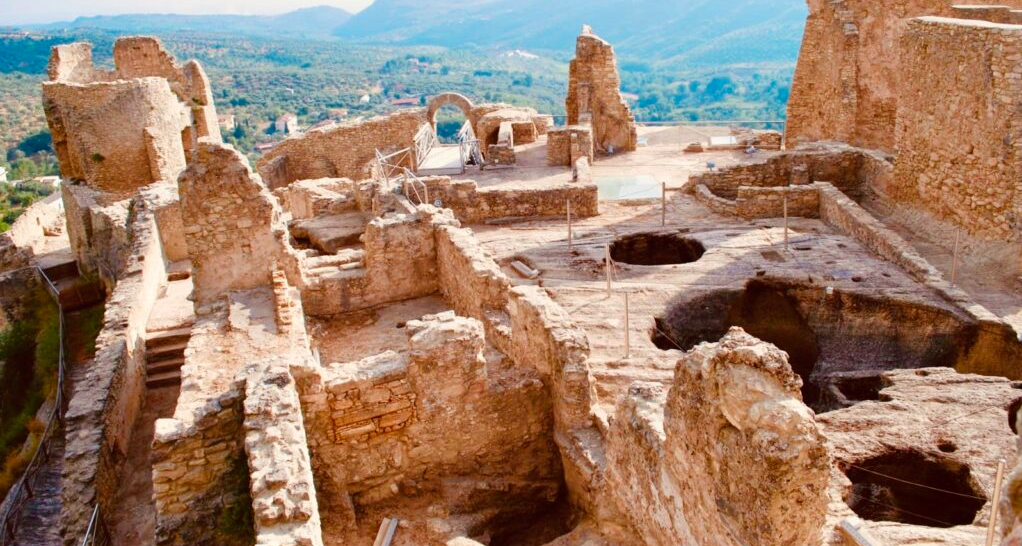 Where we were hosted to have an aperitivo along with, you guessed it, some n’duja on crostini as well as olive spread, different charcuterie and cheese. The local red wine (Savuto classico from Antichevigne) was robust, but not heavy or cloying. But, what stoof out for me was the collection of “amaro’ liquors, including the Rupes one flavored with peperoncino: not hot per se, but leaving a little tingling on the tongue. . Another stand out was the Jefferson which gets its strange name from the date of its creation in 1871!
 From Cleto, we hopped to another hill to visit the beautiful village of Aiello, rich in history and counting several noble mansions (like the Palazzo Cybo-Malaspina).
No time to dine, but the Osteria Malaspina is a gastronomic reference in the area, thanks to the chef-owner who has an impressive collection of Calabrian wines. Not to be missed is the various local honeys you can get at Bernardo Apicoltura.
Back to Amantea, one gourmet stop that cannot be missed to finish the day is to get a gelato at Sicali. It’s a real institution in the area, and beyond, for the creaminess of its biggest hits (orange and pistachio), as well as a stuffed pastry which recipe is kept as a family treasure not to be shared.
Italian version followed by English version
Benvenuti in Calabria !
By Cesare Zucca
Che mare meraviglioso a Tropea!
E che voglia di gustare un pescato del giorno, magari su una terrazza che si affaccia sull’azzurro. Ho scoperto Sunset Beach Club) un ristorante perfettamente in sintonia con il magnifico panorama. Al timone troviamo Chef Dario Jannello, che mi confessa di essere sempe stato un “curioso in cucina”, fin dall’età di 8 anni…e i rusultati si vedono , Una cucina schietta, vivace , gustosissima.
Qui il pesce trionfa, a cominciare dalle polpette di baccalà, anche nella versione “gourmet” con patate, caciocavallo silano e chutney di pomodoro, alle croccanti alici impanate (ma quanto sono buone…) servite con maionese alla nduja. Ho poi gustato una squisita impepata di cozze e un piatto di linguine e vongole che sapeva di mare,
il tutto annaffiato da un ottimo Almaneti Liprandi, etichetta ben nota agli amatori locali e non. La cantina vanta ben 150 etichette, di cui 80% calabresi
Un luogo perfetto per un lunch, una cena romantica o un indimenticabile aperitivo con tapas.
INFO
Sunset Beach Club Tropea
English Version
Welcome to Calabria!
What a wonderful sea in Tropea!
And what a desire to enjoy a catch of the day, perhaps on a terrace overlooking the blue. I discovered Sunset Beach Club) a restaurant perfectly in tune with the magnificent panorama.At the helm we find Chef Dario Jannello, who confesses to me that he has always been “curious in the kitchen”, since the age of 8 … and the results are evident, a sincere, lively, tasty cuisine… Here the fish triumphs, starting with the cod meatballs, also in the “gourmet” version with potatoes, caciocavallo silano and tomato chutney, to the crispy breaded anchovies (but how good they are …) served with nduja mayonnaise.I then enjoyed an exquisite mussels with pepper and a dish of linguine and clams that tasted of the sea,
All washed down with an excellent Almaneti Liprandi, a label well known to local and non-local enthusiasts. The cellar boasts 150 labels, 80% of which are Calabrian
Sunset Beach Club Tropea is a perfect place for a lunch, a romantic dinner or an unforgettable aperitif with tapas.
INFO
Sunset Beach Club Tropea
Riso Ebano by Hera nei Campi
Two hundred years ago one of the best Italian rice was grown in Salerno – considered one of the best ever. Today Hera nei Campi brings rice back to Campania, to the uncontaminated Piana del Sel
A rice of excellent quality, that captured the attention of writers, philosophers, poets and chefs who mentioned ‘Salerno rice’ at court banquets. There are numerous testimonies from poets, gastronomes, philosophers and chefs who mention ‘Salerno rice’. Ebano grows in the countryside with a very low demand for energy and inputs: less water, less fertilizer, no fungicides. To control weeds, it is possible to carry out an intense mechanical control activity thanks to its significantly postponed sowing.

Super perfumed, it has a spiced and roasted aroma, with scents of coffee, cocoa and olive sauce. Ideal for of tasty dishes such as risottos with shrimps, asparagus, porcini mushrooms, finger food, sushi and arancini. Cooking time: 37 min
Ebano Rice by Hera nei Campi
The Circle ‘s pestos and rubs
From an innovative aquaponic cultivation come exclusive products designed to enhance the authentic taste and quality of aromatic plants and baby leaves.Each recipe creates seasonings of the highest level, capable of enriching each dish with intense, natural and surprising flavours. Among the products I choose Pesto Oriental, with mustard, mizuna, japanese spinach, arrugula, parmesan cheese and cashews. It is refined and bold, thaks to an accurate selection of the best oriental leaves. Ideal for creative dishes with a light spicy touch
.Also in the vegan version as the Pesto Oriental Vegan 100% vegetable, with an intense and spicy aroma, perfect for those who love strong, natural and characterful flavour Mediterranean Rub a fragrant addition to your mediterranean cuisine, with sea salt, lemon balm, marjoram, oregano, thyme, lemon, sweet paprika, garlic, fennel. .A true explosion of Mediterranean scents, with selected herbs for balanced marinades and dressings. Ideal for fish dishes, white meats and fresh salads.
The Circle Carefully elected and and hand-picked from the best farms of Khorasan, ROSSORO Super Negin it s an organic iranian saffron that does not use any kind of fungicide and picking poison and represents the highest quality in terms of flavor and aroma.

Without coloring or food flavors, it is the perfect choice to add extraordinary color, flavor and aroma to your dishes, desserts and drinks. For maximum color and flavor, dissolve a small amount of saffron in hot or boiling water, then add it to your dishes or drinks.
Perfect for dishes such as risottos, soups, stews, cous cous, fish and meat, pastas and international recipes, Ideal for making desserts such as saffron sweet rice, saffron ice cream, cakes and biscuits, saffron tea
http://rossoro.org/
 In the Marche, a region considered among the greatest hidden gems of Italy, in a small town located between the Adriatic Sea and the Sibillini Mountains Park, I found the house and the laboratory of La Pasta di Aldo a name that represents the first syllable of the surnames of Maria and Luigi, husband and wife.

I love the pappardelle, very similar to tagliatelle, but wider and capable of giving intense sensations. When chewing, the more accentuated grain size of the semolina does not go unnoticed, a full flavor both from the taste and tactile point of view. Here the ideal condiment is represented by full-bodied sauces based on hare and wild boar. Chitarrine with squid back ink . Smelling the cooking steam you can sense that imperceptible scent of squid ink that makes them so original. Enhanced with white fish-based sauces, they also go very well with vegetables and extra virgin olive oil.
 And finally the glam Pasta e Cacao, artisanal specialty with roasted cocoa bean husks and nibs, slowly air dried by traditional method, with an intense color and a unique aromatic profile, capable of enhancing savoury dishes with a creative and surprising touch.i deal with sauces based on mature cheeses, porcini mushrooms, game.nuts and gorgonzola cheese, a white powder cream or simply with butter and spices.
www.lapastadialdo.it
 Cesare Zucca Born in Milan, lives between New York, Milan and the rest of the world. He travels up and down America and allows himself escapes in Italy and Europe. Photographs and describes cities, cultures, lifestyles and discovers both traditional and innovative gastronomic delights. Meets and interviews top chefs from all over the world, ‘steals’ their recipes and tells you all about it here, in a ‘non touristy tourist’s style’
 Milan, the last TUTTOFOOD 2025 was an ideal opportunity to discover and review the best extra virgin olive oils. The fair was a springboard for new products, but also for reviews and tastings of products already on the market. A great bonanza for oil lovers! Those amazing olive oils aren’t just taste, but emotion, memory, identity. Here my choices.
 The Azienda Agraria Bacci Noemio practices organic farming. The cultivar present is moraIolo. The olives are harvested at initial ripening starting from the beginning of October, It is a rare oil because it can be produced in limited quantities.
 It is precious, it enhances the flavors of Mediterranean cuisine, excellent paired with grilled meats, side dishes of beans, potatoes and spinach. Perfect for grilled or boiled fish, soups and vegetables such as turnips or on a caprese salad or on sautéed vegetables.

A JUMP TO SICILY!
A VuccIria debuted with the donation of the La Vucciria luminaria placed at the entrance of via Maccheronai,Palermo, in front of the historic market, immediately becoming an icon of the city. The product’s strong points are the quality of the 100% Sicilian production and the careful design of the packaging that collects the Sicilian tradition in colors and shapes, which represents on the label the symbol of the “stidda” the star of the Sicilian cart.
The Biancolilla extra virgin olive oil stands up for a delicate pale yellow colour. with light greenish reflections, a medium fruity fragrance with hints of almond. It boasts a slightly spicy, delicate and pleasant taste with a slightly bitter aftertaste.
The Nocellare del Belice– cold pressed, with an intense fragrance with herbaceous hints,: and a fruity taste, slightly bitter and spicy
www.avucciria.com
 In Sicily, between Etna and the Mediterranean olive trees have been growing for over three thousand years. Frantoi Cutrera harve the olives before they are fully ripe to preserve their taste, properties and aromas.They were among the first in the world to understand that early harvesting and processing of olives within a few hours are among the most important factors for the production of special oils.
 Their Primo is produced on the Iblei Mountains, at 350-450 meters above sea level, fr
Bright green with an intense fruity taste,with pronounced notes of green tomato, freshly cut grass and fresh aromatic herbs. Perfect with grilled meat and fish, soups and salads, bruschetta or caprese, raw on grilled vegetables and greens. The Sicilia come from the union of the oils produced by these two cultivars, Biancolilla and Nocellara del Belice, produces a very balanced blend. The result is a medium intensity oil with floral notes of artichoke, freshly cut grass and fresh aromatic herbs, an intense aroma and a persistent spiciness. This perfect balance is the result of decades of know-how.
https://frantoicutrera.it/
 Olio del Cardinale
There was a small village on the edge of a hill, where very high quality olive oil had been produced for centuries. This oil, with a balanced and intense flavour, was known as “the cardinals’ oil” and had conquered the tables of the most prestigious courts.
 Legend has it that a group of cardinals, passing through the area, stopped to taste the local oil. It was love at first sight and they decided to buy large quantities of it to take it with them to Rome. The prestige of the papal court in Rome, the only place where the cardinals’ oil could be found, contributed to the diffusion of the product, to the point of making it a true symbol of culinary excellence. The name “Cardinale’s Oil”, was given in honor of those cardinals who were its first ambassadors.
 The Cardinale’s Oil is the most emblematic extra virgin olive oil of the company, the result of the wise experience of Luigi Tega since 1946. This oil is obtained from a careful selection of the best local cultivars such as Moraiolo, Leccino and Frantoio, to obtain an unparalleled oil, characterized by a medium fruity taste with a progressive spicy, balanced with a pleasantly bitter aftertaste with vegetal notes that recall the freshness of freshly cut grass.
APULIA IS WAITING!
Are you ready for a sensory explosion that conquers at first taste?
Here two brand new oils produced by iconic Perilli Family , active from 1949. They stand out for the intense fruitiness blends with seductive notes of freshly picked artichoke and fresh almond. A sublime balance between vibrant spiciness and elegant bitterness, which transforms every drop into pure gastronomic magic.
Puglo, Terra di Bari, Bitonto produced and bottled in its area of origin, obtained from coratina and ogliarola, intense taste , perfect with red meat, vegetables and spicy dishes, a superior category, obtained directly from olives and solely by mechanical means. Puglo Organic 100 % italian, extra vergin olive oil cold extracted, Ideal to pair delicate dishes, fish, white meat.  Both olis are definetly a superior category, obtained directly from olives and solely by mechanical means, they have spendid, colorfull labels.
www.puglio.it
 We are now in the center of Puglia, among churches, monuments, trulli and castles. It is a land of centuries-old olive groves, crossed by sheep tracks and the “Oil Roads”. It is the region with the largest production of extra virgin olive oil in the world. Frantoio Galantino dated 1926, is at the gates of Bisceglie, a charming medieval town overlooking the Adriatic Sea, an ideal place for growing olives but also a popular tourist destination, entertainment center and important archaeological site.
 Affiorato It is made by following the ancient method of affioramento, which involves hand-picking a very small percentage of oil that forms spontaneously on the olive paste before pressing. full-bodied in appearance, perfect harmony between delicate aroma and fruity taste.
https://www.galantino.it/

Let’s move to Ferre, a district in the Castellaneta countryside (Taranto, Apulia) known for its particularly fertile lands. It is a valley between the sea and the hills: the Ionian Sea and the Murgia hills. The microclimate is truly benevolent, it breathes the sea breeze and smells of Mediterranean scrub. 
I love Le Ferre flavored extra vergin oils based on natural extracts of Mediterranean plants, spices, dehydrated essences or aromas from a controlled supply chain To be used preferably raw before serving the dish, to enhance it or personalize its final flavour or during cooking, to enhance some flavours or, more simply, to add the ingredient that is missing in the pantry! I tried the orange and peperoncino, so good!
www.olioleferre.com

Montagano monovarietal of Peranzana , an olive that plays an important role in the list of Italian agri-food excellences. combined with the elegance of the White Élite line, perfect for enriching your tables or simply as a refined gift idea. Its fruity aroma is dominated by notes of fresh grass, almonds and ripe tomatoes. Peranzana olive oil reveals a balanced, bitterish and pleasantly spicy taste thanks to the discreet polyphenolic charge with clear notes of almonds and aromatic herbs, with an undertone of artichoke and tomato.
 This extraordinary fruit has a deep connection with Puglia and in particular with the north-western part of the province of Foggia, between the municipalities of San Severo, Torremaggiore and San Paolo di Civitate, where it has found ideal conditions to thrive and develop.
www.aziendamontagano.com
CALABRIA :SPECIAL GUEST
“Where there is the scent of olives, there is home”, says the Consorzio Olio di Calabria IGP that brought to TuttoFood the soul of the Calabrian land, made of sun, wind, deep roots and hands that tell ancient stories. We applause the President of the Calabria Region Roberto Occhiuto and the Councilor for Agriculture Gianluca Gallo, always attentive to the gastronomic excellence of Calabria and the development of new markets for the regional agri-food sector. 
Ten thousand centuries-old olive trees of the carolea cultivar are the identity heritage of the Costantino company that produces, with absolute dedication, the prized organic extra virgin olive oil Lametia DOP with an intense green, bitter and spicy fruitiness. The nose perceives aromas of leaves, grass and tomato. On the palate, the sweet opening gives way to an evident bitterness and a powerful and persistent spicy, but balanced and fresh. High quality and 100% Italian, 
The olives, processed with cold pressing, reach the company mill within 4 hours of harvesting to preserve their nutritional properties and obtain a genuine oil with a unique taste. 60 hectares of olive groves that surround and embrace a company that, like few others, is organized in harmony with the vital cycles of nature and developed according to the criteria of fully sustainable agriculture. On the palate, the sweet opening gives way to an evident bitterness and a powerful and persistent spicy, but balanced and fresh. Available also in pink garlic and peperoncino flavours.
OliveOII Costantino
In the heart of the Piana di Lamezia Terme, the agricultural heart of Calabria, ninety people work in the Azienda Agricola Statti on three hundred hectares of centuries-old olive groves,“Working here means producing complex vital energy, striving to increasingly integrate the different crops in a harmonious and dependent way.” say Alberto and Antonio Statti.
The carolea olive on the hill looks at the Mantonico, Greco and Gaglioppo espaliers, with their uniqueness what is typical and true that the Calabrian land offers on the tables of the world, for more than two thousand years. And for two hundred the Statti Family has directed this vital orchestra, with the simplicity of always.
Statti oli brings an intense taste of olive, herbs, and artichoke, with a full fruity texture, able to enhance your dishes, perfectly pairing with with grilled fish, fresh mozzarella, vegetables and those succulent calabrian hearty pasta dishes.
Extra Virgin Olive Oil Statti
Cesare Zucca Born in Milan, lives between New York, Milan and the rest of the world. He travels up and down America and allows himself escapes in Italy and Europe. Photographs and describes cities, cultures, lifestyles and discovers both traditional and innovative gastronomic delights. Meets and interviews top chefs from all over the world, ‘steals’ their recipes and tells you all about it here, in a ‘non touristy tourist’ style.
 Testo e Foto di Cesare Zucca
(Italian version followed by English version)
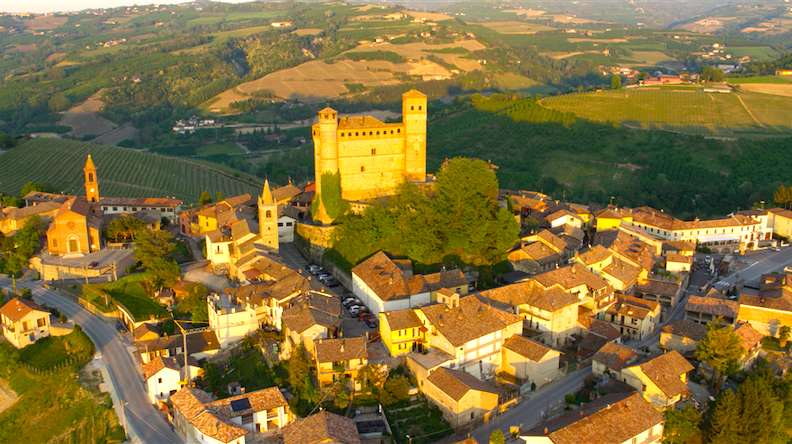
Oggi vi porto alla scoperta di una perla nel cuore delle Langhe, in Piemonte: Serralunga d’Alba, tipico borgo medievale, sovrastato da un imponente castello medievale e circondato da colline ricoperte di vigneti. Un paesaggio stupendo e famoso in tutto il mondo, così come le bottiglie pregiate che vengono prodotte nella zona. Il paese è circondato da celebri vigneti a nebbiolo da Barolo, mentre nelle sue cantine si affina il “re dei vini” per la gioia dei grandi intenditori di tutto il mondo IL CASTELLO
Slanciato, maestoso, considerato uno degli esempi meglio conservati di castello nobiliare trecentesco del Piemonte, rappresenta un unicum in Italia. La roccaforte svetta verso il cielo ha infatti la struttura architettonica di un donjon francese con le alte torri, baluardi dell’avvistamento, da cui si può osservare la singolare struttura urbanistica dalle case disposte in modo concentrico per favorire l’accesso della popolazione in caso di guerra Dalle finestre dell’edificio è possibile godere di una vista spettacolare su tutta la Langa fino all’arco alpino, un panorama che toglie il fiato specie nelle giornate più terse.
Il Catello è visitabile da maggio ad ottobre: giovedì pomeriggio 14.30 -18.30; da venerdì a lunedì e tutti i festivi: 10:30 – 13:30 e 14:30 – 18:30. L’accesso al castello è consentito esclusivamente con visite guidate (durata 45 minuti), Una visita da non perdere … E POI … TUTTI A TAVOLA!
Ho scelto la “Cucina di Langa“ dell’Agriturismo Schiavenza in Via Mazzini 4, capitanata da Emanuela Pira, mamma Maura e nonna Luciana, all’insegna della cortesia e del buon gusto in una vera tradizione di famiglia.

Chef Mamma Maura
Nella grande sala bianca, pulita ed essenziale , con qualche tocco vintage come la credenza della nonna, viene servito un menu con pochi, selezionati piatti della tradizione, come i plin al brasato di barolo, la faraona al forno oltre a qualche rispettosa rivistazione. Concedetevi un goloso pasto annaffiato da un bicchiere di Barolo o Dolcetto rigorosamente locali. 
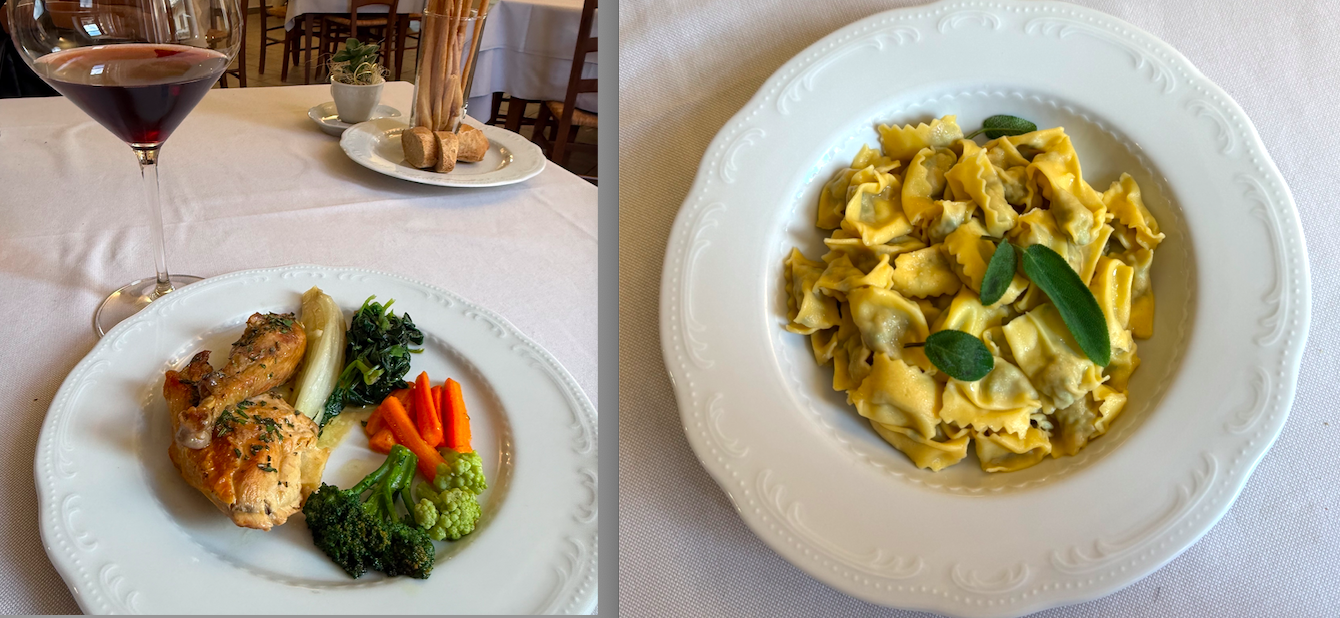 Tra gli antipasti, oltre alla tradizionale tartare di fassona, il ricco vitello tonnato e una delicata crepe alle verdure, spicca un delizioso gioiello, il pess coj, un involtino di cavolo di cui Chef Maura mi ha rivelato la ricetta che troverete a fine articolo.
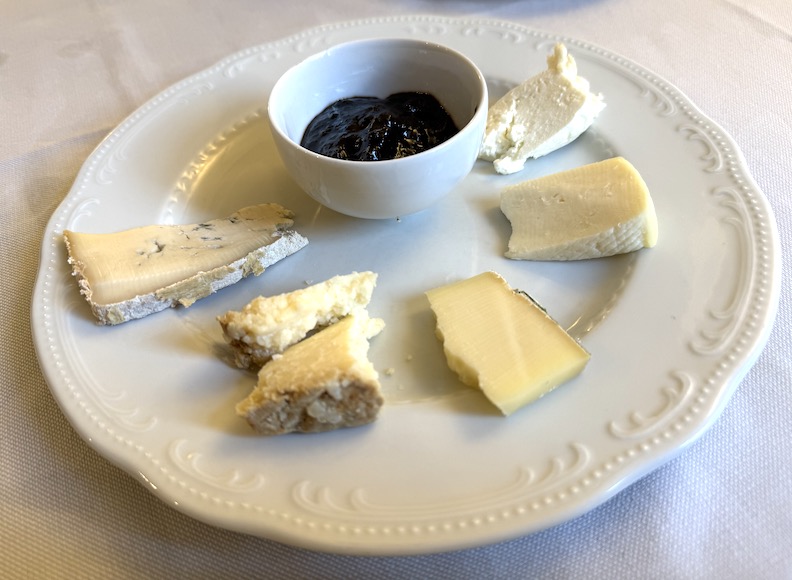
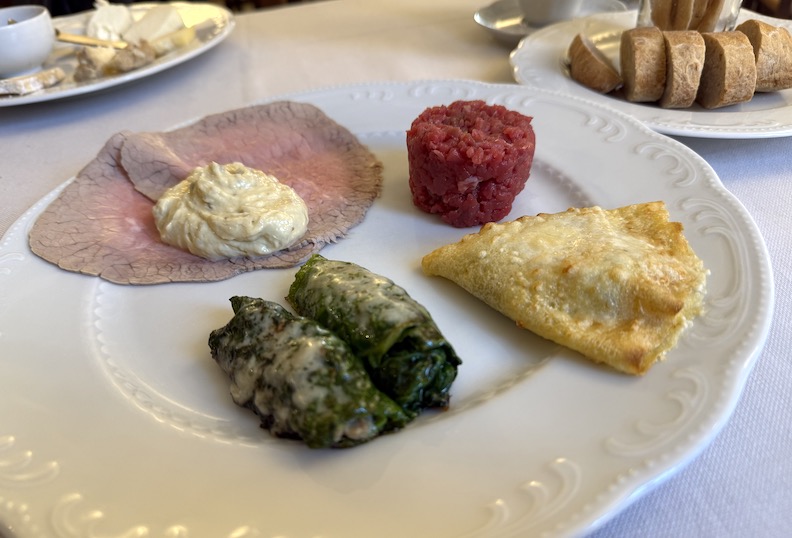 Tra le specialità della Trattoria troverete un ricco assortimento di formaggi :locali: il caprino di Rocca Verano, i formaggi di pecora di Murazzano e la raschera, vaccino stagionato in foglia di castagno.
E SE AMATE I DOLCI….
A Serralunga troverete un vero paradiso di delizie, dalla classica torta ai biscotti “nisurin”, ai “brutti ma buoni”, ai tartufi dolci, tutto a base di nocciole (la tonda gentile delle Langhe); le torte di castagne, gli amaretti morbidi, i cuneesi al rhum, al barolo, alla nocciola e altri; il torrone di Sebaste tipico di Gallo Grinzane Cavour e sua Maestà il Bonet do cioccolato .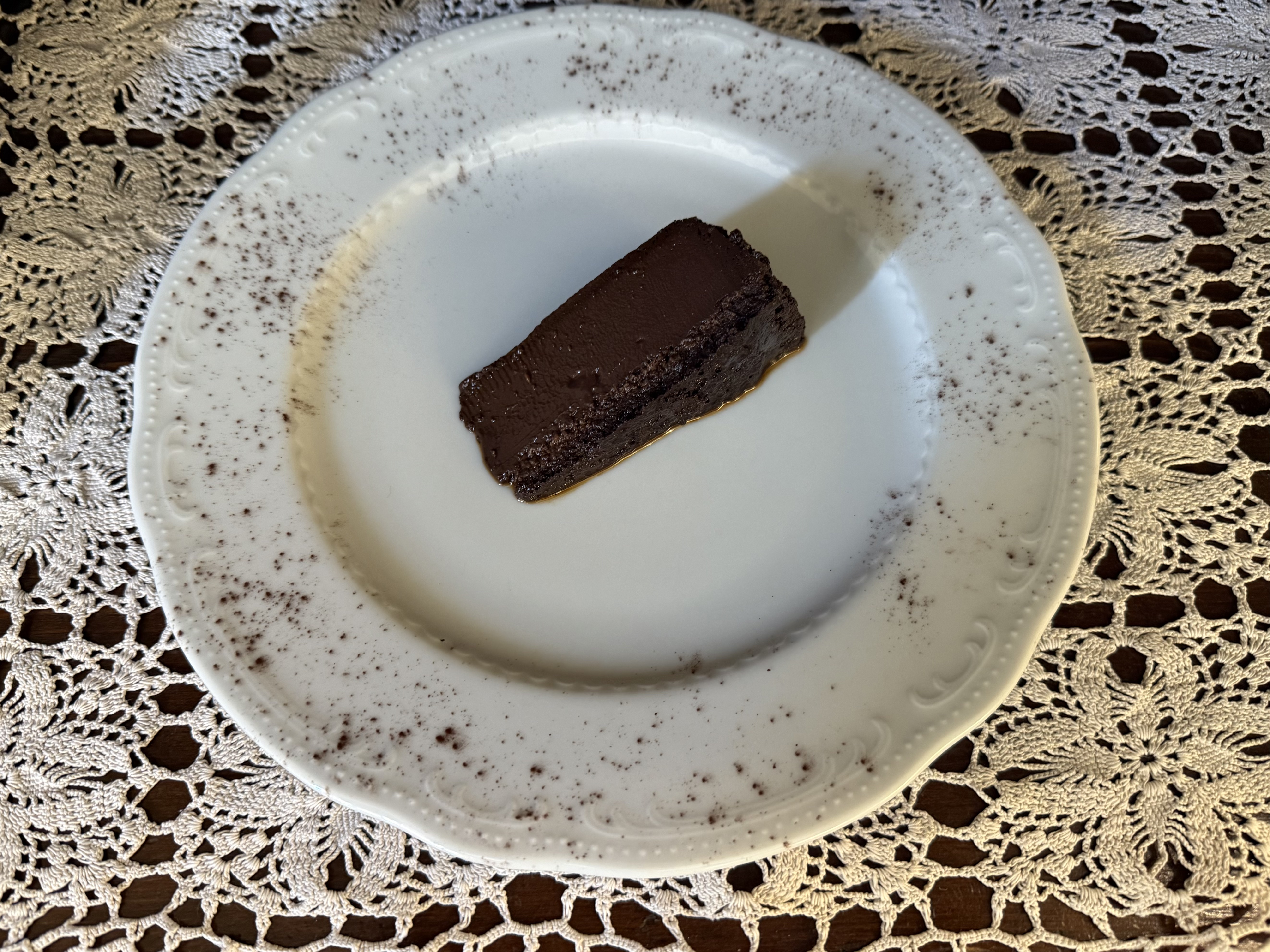 La vostra sosta”gourmet” proseguirà nel borgo, scoprirete gli “infernot” tipiche botteghe che offrono una vasta scelta di prodotti in vasetto, e tanti golosità al tartufo, come i , “tajarin”, creme e sughi abbinati ai funghi, un profumato olio tartufato e gustosi formaggi sott’olio.
 DOVE DORMIRE
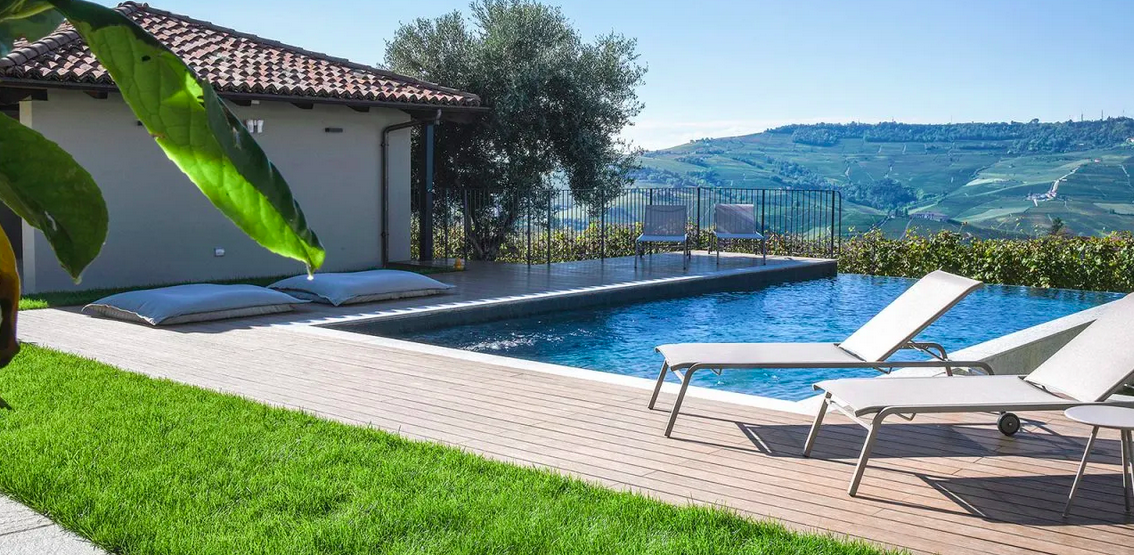
Sempre gestito dall’affabile Emanuela, a Perno, poco distante dal borgo, troverete l’ accogliente villetta B&B Casa Schiavenza, dotata di una capace cucina, due bagni, un piacevole terrazzo con vista sulle Laghe, una bella piscina, un garage privato e capace di ospitare fino a 8 persone.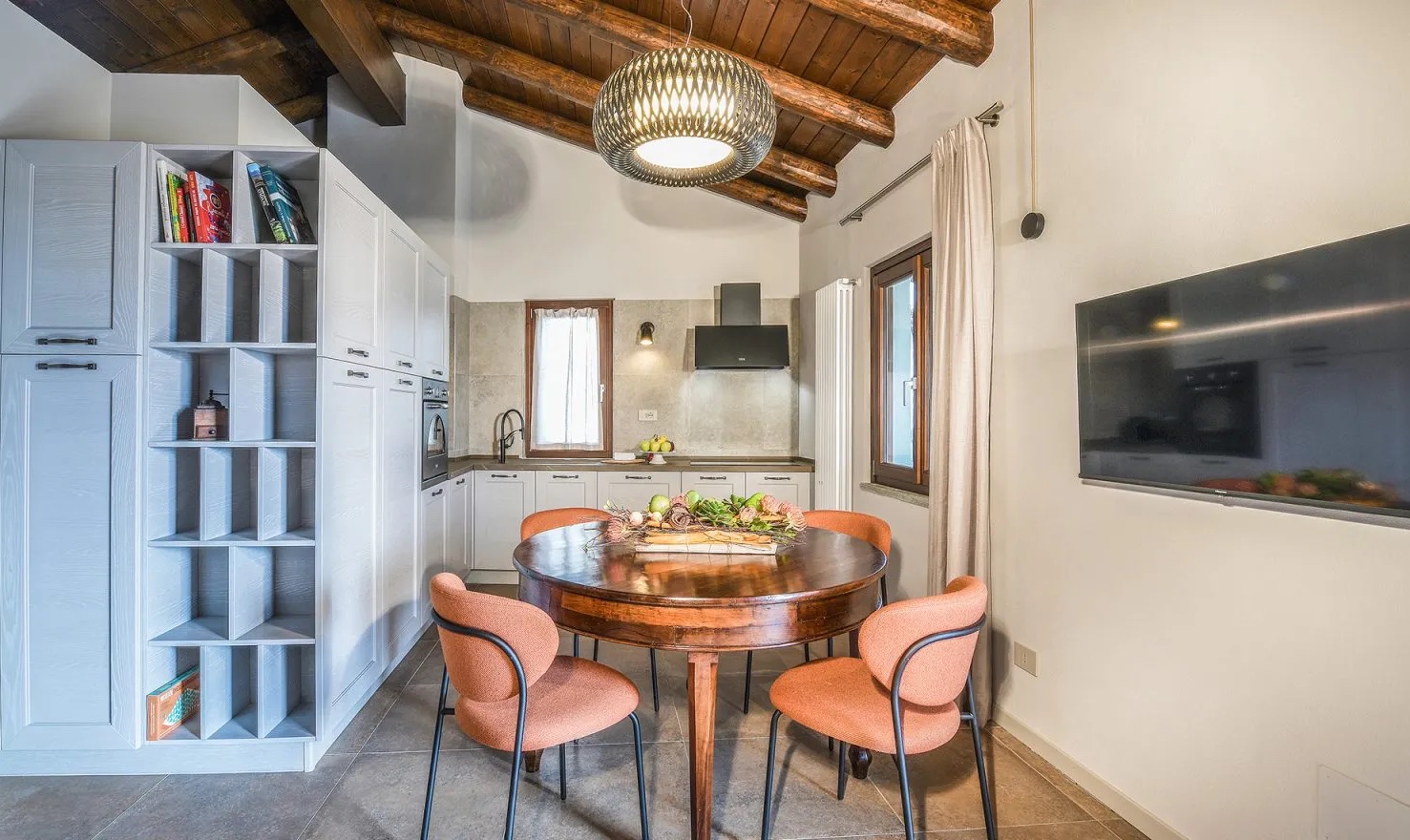

Ecco la ricetta dei PESS COJ (involtini di cavolo) la specialità di Chef Mamma Maura Ingredienti per 4 persone:
8 foglie CAVOLO VERZA
100 gr SALSICCIA
10 gr PREZZEMOLO TRITATO
1 UOVO intero
40gr GRANA PADANO GRATTUGGIATO
5 gr BURRO
Preparazione
Lessare le foglie di cavolo in acqua salata. Scolare.
Cuocere la salsiccia, tritarla, unire prezzemolo, uovo e grana.
Farcire le foglie con il composto formando degli involtini.
Cuocerli pochi minuti in padella con il burro e aggiungere una spolverata di formaggio.
Buon appetito!
Serralunga d’Alba: the enchantment of the Langhe, the majestic Castle and Mamma Maura’s super recipe
English version
Text and Photos by Cesare ZuccaSERRALUNGA D’ALBA . PIEDMONT
Discover a little pearl in the heart of the Langhe, in Piedmont: Serralunga d’Alba, a typical medieval village, overlooked by an imposing medieval castle and surrounded by hills covered with vineyards. A stunning landscape famous throughout the world, as are the fine bottles that are produced in the area. The town is surrounded by famous Nebbiolo vineyards for Barolo, while in its cellars the “king of wines” is refined to the delight of great connoisseurs from all over the world THE CASTLE
Slender, majestic, considered one of the best preserved examples of a fourteenth-century noble castle in Piedmont, it represents a unique example in Italy. The stronghold soars towards the sky and has in fact the architectural structure of a French donjon with high towers, bastions of sighting, from which you can observe the singular urban structure of the houses arranged in a concentric way to facilitate access by the population in case of war. From the windows of the building you can enjoy a spectacular view of the entire Langa up to the Alpine arc, a panorama that takes your breath away especially on the clearest days.
The Castle can be visited from May to October: Thursday afternoon 2.30pm – 6.30pm; from Friday to Monday and all holidays: 10.30am – 1.30pm and 2.30pm – 6.30pm. Access to the castle is permitted exclusively with guided tours (duration 45 minutes),
A visit not to be missed …AND THEN … EVERYONE TO THE TABLE!
I chose the “Cucina di Langa” of the Agriturismo Schiavenza in Via Mazzini 4, led by Emanuela Pira, mother Maura and grandmother Luciana, in the name of courtesy and good taste in a true family tradition.
Chef Mamma Maura
In the large white room, clean and essential, with some vintage touches like grandma’s sideboard, a menu is served with a few, selected traditional dishes, such as plin with braised Barolo, baked guinea fowl as well as some respectful revisitations. Treat yourself to a delicious meal washed down with a glass of strictly local Barolo or Dolcetto.Among the appetizers, in addition to the traditional Fassona tartare, the rich veal with tuna sauce and a delicate vegetable crepe, a delicious jewel stands out, the pess coj, a cabbage roll for which Chef Maura revealed the recipe to me that you will find at the end of the article.Among the specialties of the Trattoria you will find a rich assortment of local cheeses: goat cheese from Rocca Verano, sheep cheese from Murazzano and raschera, cow cheese aged in chestnut leaves.iF YOU LOVE SWEETS….
In Serralunga you will find a true paradise of delights, from the classic “nisurin” biscuit cake, to the “brutti ma buoni”, to sweet truffles, all made with hazelnuts (the tonda gentile delle Langhe); chestnut cakes, soft amaretti, cuneesi with rum, Barolo, hazelnut and others; the typical nougat from Sebaste from Gallo Grinzane Cavour and His Majesty the chocolate Bonet Your “gourmet” stop will continue in the village, you will discover the “infernot” typical shops that offer a wide selection of products in jars, and many truffle delicacies, such as the “tajarin”, creams and sauces combined with mushrooms, a fragrant truffle oil and tasty cheeses in oil.WHERE TO SLEEP
Always managed by the affable Emanuela, in Perno, not far from the village, you will find the welcoming villa B&B Casa Schiavenza, equipped with a large kitchen, two bathrooms, a pleasant terrace overlooking the Laghe, a beautiful swimming pool, a private garage and capable of hosting up to 8 people.
Here is the recipe for PESS COJ (cabbage rolls) the specialty of Chef Mamma MauraIngredients for 4 people:
8 leaves of CABBAGE
100 gr SAUSAGE
10 gr CHOPPED PARSLEY
1 whole EGG
40 gr GRATED GRANA PADANO
5 gr BUTTER
Preparation
Boil the cabbage leaves in salted water. Drain.
Cook the sausage, chop it, add parsley, egg and parmesan.
Stuff the leaves with the mixture to form the rolls.
Cook them for a few minutes in a pan with butter and add a sprinkling of cheese.
Enjoy your meal!
Testo e foto di Cesare Zucca
(Italian version followed by English version)
 PUGLIA: Sarà le vostra prossima destinazione per scoprire il calore, l’ospitalità, la simpatia delle gente di queste terre che vi sorprenderanno con eventi, sagre, feste paesane, suggestive processioni religiose e spettacoli nei quali rivivere le abitudini di un tempo, assporare il contemporaneo e lasciarsi andare ai piaceri enogastronomici.
 Andare in Puglia vuol dire intraprendere un viaggio all’insegna della tradizione, della storia, dell’arte, del buon cibo e… last but not least spettacolari olii di oiiva che ulivi secolari ci regalano.

OPERA AND AROMA BY AGROLIO

L’Olio Extra Vergine di Oliva Agrolio nasce dalla passione e dal forte legame della Famiglia Agresti, started back in the 30’s by Vincenzo. Imbottigliato in un suggestivo “orcio”, un vaso in ceramica fatto a mano, l’olio OPERA Intenso, ottenuto da olive “monocultivar Coratina”capaci di esaltare note aromatiche di amaro e piccante ed esalta, con poche gocce di olio crudo, il sapore di zuppe di legumi, insalate e verdure
INFO
www.agrolio.com
English version
APULIA It will be your next destination to discover the warmth, hospitality, friendliness of the people of these lands who will surprise you with events, festivals, village festivals, suggestive religious processions and shows in which to relive the habits of the past, taste the contemporary and indulge in the pleasures of food and wine.Going to Puglia means embarking on a journey in the name of tradition, history, art, good food and… last but not least spectacular olive oils that centuries-old olive trees give us.
OPERA AND AROMA BY AGROLIO
 Agrolio Extra Virgin Olive Oil is born from the passion and strong bond of the Agresti Family, started back in the 30’s by Vincenzo.
Bottled in a suggestive “orcio”, a handmade ceramic vase, the OPERA Intenso oil, obtained from “monocultivar Coratina” olives capable of enhancing aromatic notes of bitter and spicy and enhances, with a few drops of raw oil, the flavor of legume soups, salads and vegetables
INFO
www.agrolio.com
by Cesare Zucca
Christmas is about sharing dinners at home, with relatives and closest friends, and even the menu reflects habits and customs that are repeated every Christmas Eve.
In Italy and all over of the world, milanese panettone remains the inevitable end of the meal to be presented on the tables.
There are several legends about the birth of the milanese panettone.
The most common dates back to the 1476. It tells of Ugo, a young falconer
who worked for Ludovico il Moro, the Duke of Milan.

The boy was secretly in love with Adalgisa, daughter of Toni, the most popular baker in Milan. To spend more time with her, Ugo managed to become a pastry cook apprentice. Christmas was coming, and Ugo wanted to give a twist to the usual bread.He sweetened up the dough, adding sugar, butter, eggs, raisins and chopped candied fruits, then he cooked and shaped it like a giant muffin.The novelty instantly became the talk of the town. Everybody wanted the new Toni’s bread (pan de Toni) soon named “panettone“.
Here my choiches for the best 2024 panettone from Italy.
CLASSICO by RUSTICHELLA D’ABRUZZO.
Rustichella d’Abruzzo offers the classic panettone, typical of the Italian confectionery tradition. Soft and fragrant, Made with the precious sourdough, full of fragrant candied fruit and exquisite first-choice sultanas.It also comes in a baby size called Panettoncino” great for snacks or tea time. Rustichella also offers a savory panettone, with semi-dried cherry tomatoes and pecorino. inspired by the Abruzzo cake, it is a pleasant alternative for those who do not like sweets and want to accompany it with a nice glass of Montepulciano. Noteworthy is the typical checked tea towel that wraps it, an original wrapping that tastes of AbruzzoA flavor and aroma that will conquer you.
 MIO by PIETRO D’AGOSTINO
Michelin starred Chef D’Agostino launches a mango and peach panettone. “It is extremely delicate and fragrant,” says Pietro, “we didn’t even have to go too far to pick up a basket of delicacies grown behind the house, which also give us the feeling of being in the Tropics.”. The orange peels are accompanied by raisins soaked in an excellent passito wine from Pantelleria.  From the rich undergrowth of Vulcan Etna, the typical yellow apples in a caramelized version with brown sugar and cinnamon, then softened by a white chocolate glaze, while wild raspberries are processed and immersed in dark chocolate, for a triumph of deliciousness.
 You can reserve Pietro’s creations by sending an email to info@pietrodagostino.it and it will be sent directly to your home.

SOPHIA LOREN by Caffè Masulli
The legendary actress s giving the joy of tasting her special panettone, made in collaboration with the famous artisan pastry shop ‘Caffè Masulli’ that was able to capture the exuberant personality of the Neapolitan diva, creating a panettone enriched with Mediterranean flavours of apricot and almonds . Masulli pastry shop is located in Somma Vesuviana (Naples) on the edge of the rare orchards that produce the Pellecchiella apricot, which has a unique flavor because it is grown right on the slopes of Vesuvius.

The most iconic dessert of Italian Christmas, a product of the highest quality, obtained with a mother yeast that has belonged to the same family for 100 years. You chan choose betweem three versions: “Classic” with raisins and candied fruit., “Apricot”with the unique pellecchiella apricots from Monte Somma and “Coffee” (my favorite!) I MARIGLIANO
Giovanni and Alessandro, are the founders of the company “I Marigliano”, an excellent confectionery company in San Giuseppe Vesuviano (Naples) Their desserts are steeped in childhood memories, happy moments spent with family. They manage to transform simple ingredients into creations that bring warmth to the hearts of those who taste them. In 2022 he won a first prize at Re Panettone with an innovative leavened product, but he also goes strong on the classic This year the two brothers offer a line of soft leavened products dedicated to traditional holidays, such as panettone , produced with sourdough passed down through generations and with carefully selected high-quality ingredients, just like everything produced by Marigliano.
 MASSA BON by DANIEL CANZIAN
Top chef Canzian created MassaBon Panettone, from the Venetian dialect “too good”, which is characterized by a surprising softness, a delicate taste and a fruity aroma given by the roasted apricots; the fruit pulp, baked in the oven and worked just to guarantee a natural flavor, is enclosed in the alveolation of the dough and offers a delicate aroma to the product, as well as an extremely creamy consistency.  What makes it unique is the use of Roasted Orange Paste, an iconic preparation of the chef, free of aromas and preservatives, with a very low percentage of sugar, created in the kitchens of DanielCanzian Ristorante according to the classic Italian preparation and conservation method.
Chef Canzian advices to heat the panettone in the oven at 160° for 5-7 minutes before tasting, in order to emphasize the sweet and natural fragrance of the fruit, making it even creamier on the palate. Those desserts can be purchased online at the oniine chef’s Boutique, or at his Milanese restaurant in Via Castelfidardo corner of San Marco.
Have a Merry and Sweet Christmas!
BUON NATALE !
CLASSICO by RUSTICHELLA D’ABRUZZO.
Rustichella offers the classic panettone, typical of the Italian confectionery tradition. Soft and fragrant, Made with the precious sourdough, full of fragrant candied fruit and exquisite first-choice sultanas.Ingredients: Wheat flour, fresh eggs, sultanas, natural yeast (wheat flour, water), candied citrus peel (orange and citron peel, glucose-fructose syrup, sugar, acidifier: citric acid), sugar, butter, orange paste (orange peel, glucose-fructose syrup, sugar), emulsifiers: mono- and diglycerides of fatty acids of vegetable origin, fresh egg yolk, whole milk, glucose syrup, salt, skimmed milk powder, natural flavors.
It comes in several versions from the classic to the more refined flavors such as figs and chocolate, orange and black cherry. But Rustichella’s Christmas also offers a savory panettone, with semi-dried cherry tomatoes and pecorino. inspired by the Abruzzo cake, it is a pleasant alternative for those who do not like sweets and want to accompany it with a nice glass of Montepulciano. Noteworthy is the typical checked tea towel that wraps it, an original wrapping that tastes of Abruzzo. A flavor and aroma that will conquer you.
MIO by PIETRO D’AGOSTINO
Michelin starred Chef D’Agostino mango and peach for the 2024 panettone.
“It is extremely delicate and fragrant,” says Pietro, “we didn’t even have to go too far to pick up a basket of delicacies grown behind the house, which also give us the feeling of being in the Tropics.”. The orange peels are accompanied by raisins soaked in an excellent passito wine from Pantelleria.
From the rich undergrowth of Vulcan Etna, the typical yellow apples in a caramelized version with brown sugar and cinnamon, then softened by a white chocolate glaze, while wild raspberries are processed and immersed in dark chocolate, for a triumph of deliciousness.
You can reserve Pietro’s creations by sending an email to info@pietrodagostino.it and it will be sent directly to your home.
SOPHIA LOREN by Caffè Masulli
The legendary actrice is giving the joy of tasting her special panettone, made in collaboration with the famous artisan pastry shop ‘Caffè Masulli’, which has earned a prominent place in the sector, establishing itself on the national and international market. The pastry shop is located in Somma Vesuviana (Naples) on the edge of the rare orchards that produce the Pellecchiella apricot, which has a unique flavor because it is grown right on the slopes of Vesuvius.
The most iconic dessert of Italian Christmas, a product of the highest quality, obtained with a mother yeast that has belonged to the same family for 100 years. You chan choose betweem three versions: “Classic” with raisins and candied fruit., “Apricot”with the unique pellecchiella apricots from Monte Somma and “Coffee” (my favorite!)
I MARIGLIANO
Giovanni and Alessandro, are the founders of the company “I Marigliano”, an excellent confectionery company in San Giuseppe Vesuviano (Naples) Their desserts are steeped in childhood memories, happy moments spent with family. They manage to transform simple ingredients into creations that bring warmth to the hearts of those who taste them.
In 2022 he won a first prize at Re Panettone with an innovative leavened product, but he also goes strong on the classic
This year the two brothers offer a line of soft leavened products dedicated to traditional holidays, such as panettone , produced with sourdough passed down through generations and with carefully selected high-quality ingredients, just like everything produced by Marigliano.
DANIEL CANZIAN
Introduces MI.O featuring roasted orange paste, an iconic preparation of the chef, free of flavorings and preservatives, with a very low percentage of sugars, created in the kitchens of DanielCanzian Ristorante according to the classic Italian preparation and conservation method. In addition to that Daniel created MassaBon Panettone, from the Venetian dialect “too good”, which is characterized by a surprising softness, a delicate taste and a fruity aroma given by the roasted apricots; the fruit pulp, baked in the oven and worked just to guarantee a natural flavor, is enclosed in the alveolation of the dough and offers a delicate aroma to the product, as well as an extremely creamy consistency.
Chef Canzian advices to heat the panettoni in the oven at 160° for 5-7 minutes before tasting, in order to emphasize the sweet and natural fragrance of the fruit, making it even creamier on the palate.
Those desserts can be purchased online at the onine chef’s Boutique, or at his Milanese restaurant in Via Castelfidardo angolo San Marco at a price of €40.00 (1 kg).

MI.O and MassaBon are the panettone by chef Daniel Canzian for Christmas 2024
Two original desserts characterized by different preparations and aromas, available for pre-order on the chef’s online Boutique.
Milan, October 25, 2024 – MI.O and MassaBon are the panettone that chef Daniel Canzian proposes for next Christmas, two original recipes that are characterized by the softness of their dough and that stand out for the fillings enclosed in their alveolation.
MI.O is the great leavened product signed by Daniel Canzian proposed for the first time in 2019, a dessert that combines tradition, simplicity and refinement. What makes it unique is the use of Roasted Orange Paste, an iconic preparation of the chef, free of aromas and preservatives, with a very low percentage of sugar, created in the kitchens of DanielCanzian Ristorante according to the classic Italian preparation and conservation method.

Panettone MI.O
MassaBon, from the Venetian dialect “too good”, is the second large leavened product proposed by the chef, born in 2023 and characterized by a surprising softness, a delicate taste and a fruity aroma given by the roasted apricots; the fruit pulp, baked and worked just to guarantee a natural flavor, is enclosed in the alveolation of the dough and offers a delicate aroma to the product, as well as an extremely creamy consistency.
Both recipes are born from the collaboration between Daniel Canzian and Albertengo, a Piedmontese company known in Italy and abroad for the production of large leavened products, which prefers the use of raw materials of Italian origin, selects eggs from free-range hens and does not use processed aromas.

Panettone MassaBonw
Any tip how to better serve the panettone?
Heat the panettoni in the oven at 160 ° for 5-7 minutes before tasting, a step that will allow you to emphasize the sweet and natural fragrance of the fruit making it even creamier on the palate.
The desserts can be purchased online at the chef’s Boutique, or at his Milanese restaurant in Via Castelfidardo, corner of San Marco, at a price of €40.00 (1 kg).
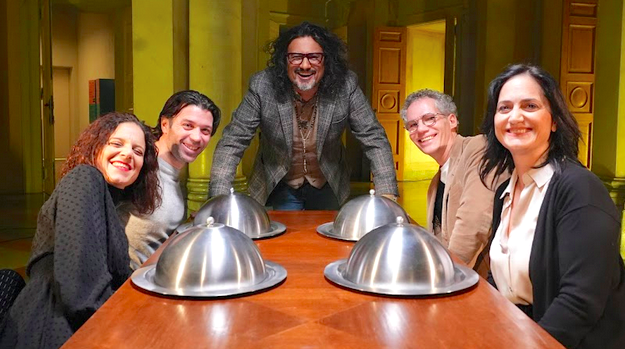
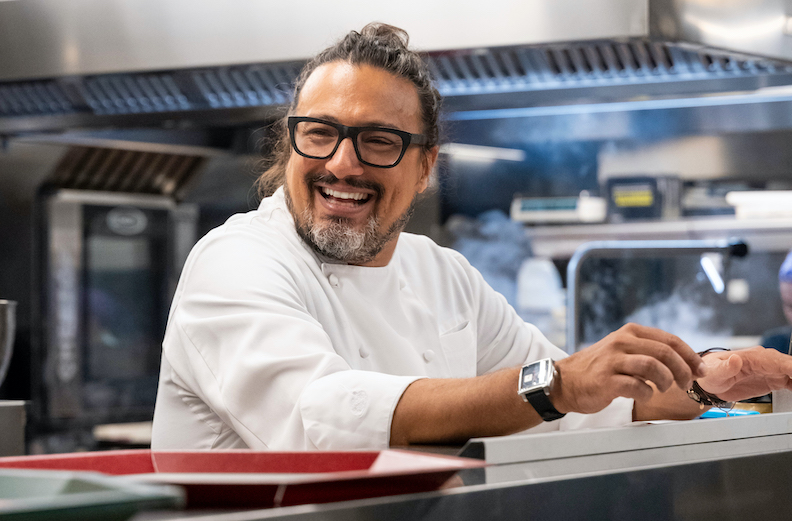 Alessandro Borghese is an eclectic and innovative chef, undoubtedly one of the most authoritative and influential figures in the Italian gastronomic scene, after graduating from the American Overseas School in Rome, he embarked on cruise ships for three years. His culinary experiences continued in restaurants in San Francisco, New York, London, Paris,
 Copenhagen, Rome, Milan and Venice, while his gastronomic “investigations” continue up and down Italy in the Italian TV show “Alessandro Borghese 4 Restaurants” written, produced and hosted by Alessandro.
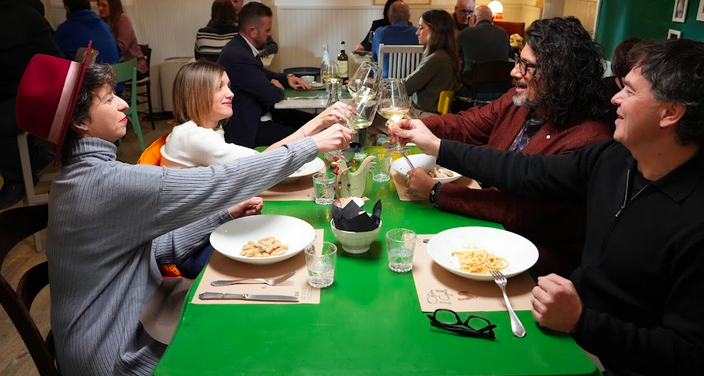 With “Alessandro Borghese 4 Restaurants” you visited many places, which one remained in your heart?
All of them! Each place with its restaurateurs and its inhabitants left something in my heart and contributed to enriching my experience in the kitchen. I met wonderful families united in a common passion or young guys who aim to invest in the restaurant business. 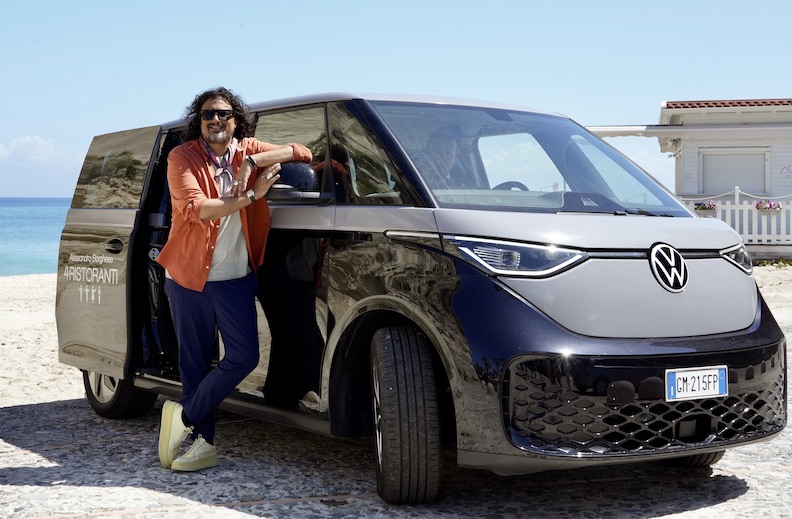 Everywhere the black van with the program’s logo has become a must for selfies… when it is parked or stopped at the traffic light, it becomes the protagonist and photos next to the door go crazy on social media. I live with immense pleasure the reality of those places and the daily life of the inhabitants I meet, they are all in my heart
 How would you describe your cuisine?
Inventive and generous, a cuisine that wants to tastefully satisfy the palates of those who love refined things, but do not want to give up tradition and combines quality raw materials with refined simplicity in the preparation of its creations.  What is “Your” favorite dish?
It’s not a simple answer, tomorrow I could answer differently… My Cacio & Pepe is an ancient dish, poor in ingredients, but rich in flavor. It was born with the ancient transhumance of cattle, but I wanted to give it a unique and personal touch. Thanks to my travels and my experiences I wanted to enhance it by adding Tasmanian pepper, which gives the dish a truly unique flavor.  Is “TV cooking” a current trend?
Of course! Food has captured the attention of television networks and the Internet. Today everyone at home puts themselves to the test after seeing a recipe on TV or on the web. It was about time there was more cooking on Italian television, abroad they had started communicating it a long time ago.  When does food become “glamorous”?
Food, like music, has the gift of giving journeys, paths, dreams and emotions with pure and simple perception. It gives always new sensations that tease, spoil and surprise the palate. Cooking is sharing and a continuous exchange of experiences and culture. It is discovering and knowing our cultural roots. Each of us in the kitchen can give a flavor to an idea. Cooking today is also fashionable: everyone at home puts themselves to the test after seeing a few recipes on TV or on the web. It was about time there was more cooking on Italian television, abroad they had started to communicate it a long time ago. Food has captured the attention of television networks and the Internet because cooking is the soul of Italy and the engine of important commercial activities. It is no coincidence that our raw materials are unique and exceptional. Then today we are lucky to have immediate means of communication: anyone through television and the internet can follow the procedures and advice on a dish to prepare.
 I am very happy to have been a precursor of this new vision of food: I had an idea of the success of cooking on television ever since it was unusual to become a testimonial for a gastronomic product. I am also proud to have cleared the union of cooking with other similar universes, such as music and art. Before, it was unthinkable to describe dishes with rock songs or to talk in an interview like this about possible combinations between the two realities.

Today in my restaurants AB – Il lusso della semplicità in Milan and Venice I continuously host temporary art exhibitions, which my guests can admire when they come to the premises. I strongly believed in my work and in the potential of cooking in Italy. A few years ago, all these considerations and preparations about food and the many faces that talk about it did not exist. I have always been a supporter of progress because it shortens distances and improves culture.  Fashions change, even in food. What dish you think will always be in vogue. Creativity. It is not a tangible dish, but I like it because it is an absolutely free concept, without end.
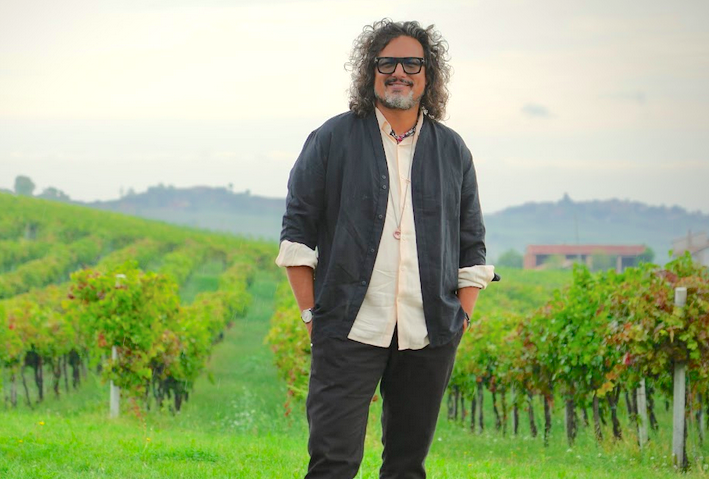 Do you have a dream in the drawer?
(smiles) Becoming a Rock Star! I also really like writing because when I write, often in English, I rearrange scenes, music, faces, smiles and moments, I am only sorry that I have not yet managed to get beyond the fifth chapter of my erotic novel … it is stuck in a folder on the desktop!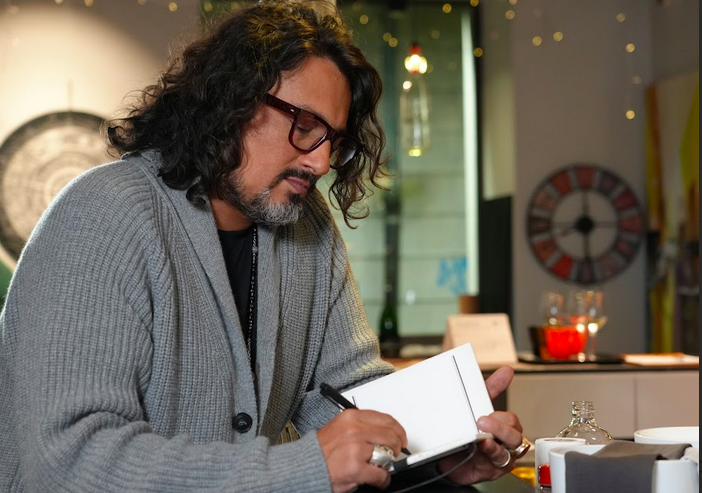

aa
Meeting Alessandro Borghese… is always an unexpected (and pleasant) surprise. We have crossed paths several times and not only in Italy, once it happened in Mauritius, where the Chef gave two gala dinners at the Constance Hotel & Resort and then again in New York, to promote the Italian Cuisine as a UNESCO heritage site. A
Alessandro is an eclectic and innovative chef, undoubtedly one of the most authoritative and influential figures in the Italian gastronomic scene, after graduating from the American Overseas School in Rome, he embarked on cruise ships for three years. His culinary experiences continued in restaurants in San Francisco, New York, London, Paris, Copenhagen, Rome, Milan and Venice, while his gastronomic “investigations” continue up and down Italy in the television program “Alessandro Borghese 4 Ristoranti” of which he is the author, producer and host.
In person Alessandro is pleasant, helpful, ironic and lively just as he appears on TV, an interview with him is like meeting up with a dear friend, spontaneous, radiant and cheerful.
Hi Alessandro, you’ve traveled the world. What’s your favorite restaurant?
I can’t say I have a favorite restaurant or a memorable dish because I surprise myself every time. I have beautiful memories of special dinners in Cape Verde, Japan, San Francisco, where I was born and where I experienced unforgettable romantic dinners with my wife. I ended up in unexpected places, like that little shack near the beach in Maui, Hawaii, where I not only tasted one of the best sushi of my life, but I also learned about preparations I was not aware of, an indelible memory.
With “Alessandro Borghese 4 Ristoranti” you visited many places, which one remained in your heart?
All of them! Each place with its restaurateurs and its inhabitants left something in my heart and contributed to enriching my experience in the kitchen. I met wonderful families united in a common passion or young guys who aim to invest in the restaurant business. Everywhere the black van with the program’s logo has become a must for selfies… when it is parked or stopped at the traffic light, it becomes the protagonist and photos next to the door go crazy on social media. I live with immense pleasure the reality of those places and the daily life of the inhabitants I meet, they are all in my heart
Can you tell us a little bit of the new season of “Alessandro Borghese 4 Ristoranti”?
We are filming the tenth season and the new episodes are on air on TV8, a new graphic and new stops for a tasty tour around Italy to discover and rediscover many territorial identities. We travel far and wide across the Belpaese trying to give viewers a wide and sincere window on the varied world of Italian catering.
What about the new itinerary?
We started from Lucca, followed by Monza, Mantua and many other locations and many restaurateurs, each with their own business idea: there is the philosopher who has made cooking a creed, those who think of it as if it were a poem for the palate and those who want to keep alive the tradition of a typical recipe or simply their favorite dish.
How would you describe your cuisine?
Inventive and generous, a cuisine that wants to tastefully satisfy the palates of those who love refined things, but do not want to give up tradition and combines quality raw materials with refined simplicity in the preparation of its creations.
What is “Your” favorite dish?
It’s not a simple answer, tomorrow I could answer differently… My Cacio & Pepe is an ancient dish, poor in ingredients, but rich in flavor. It was born with the ancient transhumance of cattle, but I wanted to give it a unique and personal touch. Thanks to my travels and my experiences I wanted to enhance it by adding Tasmanian pepper, which gives the dish a truly unique flavor.
Is “TV cooking” a current trend?
Of course! Food has captured the attention of television networks and the Internet. Today everyone at home puts themselves to the test after seeing a recipe on TV or on the web. It was about time there was more cooking on Italian television, abroad they had started communicating it a long time ago.
When does food become “glamorous”?
When food, like music, has the gift of giving travels, dreams and emotions, when it is sharing and continuous exchange of experiences and when it flows into other similar universes, such as music, fashion, image and above all art of which I am a great enthusiast, in fact in my restaurants and in my new bistro “ABKS Break Time” I often host works of art.
Which artists did you choose?
Michelangelo Galliani and his works in marble, lead and steel are a research focused on two fundamental themes: the anatomy of the human body and symbolism. Currently in Venice I host the works of Sara Forte, who, between canvases full of meanings and sculptures in Murano glass, transports us to a dream world populated by planetary shapes, starry skies and intricate patterns that evoke the mysteries of the universe.
Fashions change, even in food. What dish you think will always be in vogue.
Creativity. It is not a tangible dish, but I like it because it is an absolutely free concept, without end.
Do you have a dream in the drawer?
(smiles) Becoming a Rock Star! I also really like writing because when I write, often in English, I rearrange scenes, music, faces, smiles and moments, I am only sorry that I have not yet managed to get beyond the fifth chapter of my erotic novel … it is stuck in a folder on the desktop!
testo e foto di Cesare Zucca
DAL DATABASE AL FORNELLO…
Flavio De Maio, romano della Garbatella, nella sua prima vita lavorava alla Datamat Spa: azienda di informatica in cui è rimasto per ventisei anni. Poi, l’illuminazione sulla via dell’arte culinaria con una vocazione incentrata sui piatti della tradizione romana. Il suo Velavevodetto approda al Testaccio di Roma, a cui segue Piazza dei Quiriti e infine a Milano, in Via Festa del Perdono, coadiuvato dallo chef Salvatore Marchese

Proprio a Milano, ho incontrato Flavio per un una simpatica intervista.

Buongiorno Flavio, domanda di rito: dove ama trascorrere il weekend Mi piace il mare e punto verso Fregene. la Calabria e in inverno Lampedusa, dove ho una barca. “Telavevodetto” nome curoso per un ristorante… Com’è nato ? Era già il nome del ristorante al Testaccio , ancora prima del mio arrivo . Per scaramanzia i nomi delle barche e dei ristoranti non anrebbero cambiati , ed eccoci a qua nel mio terzo “Velalevodetto” , questa volta a Milano.

Il suo primo ricordo in cucina? Il profumo del sugo che mamma Gisa e nonna Rocca cucinavano quotidianamente. Lei cucina a casa? Quando sono in vacanza. Mi piace restare sulla tradizione perchè ritengo sia un valore. Non sono contrario alle innovazioni, ma mi piace essere fedele alla classicità della nostra cucina romana che nasce da due poli: le famiglie che nel corso degli anni hanno modellato il piatto secondo il loro gusto e poi la cucina ebraica, base essenziale della cucina romana

Torniamo al menu. Un suo consiglio? Come primo i rigatoni con sugo di coda e i tonnarelli con sugo di involtini. Poi coniglio alla cacciatora, polpete di bollito,e la classica trippa alla romana.


Come contorno, le zuccine alla scapece, la caponata di melanzane e una tradizionale cicoria saltata in padella.


Per finire il nostro tiramisu, che va gustato “alla lettera”, tirandolo su dal fondo del bicchiere.

Flavio al Velavevodetto Via di Monte Testaccio 97, ROMA Telefono: 06 5744194
Velavevodetto ai Quiriti Piazza dei Quiriti 4/5, ROMA Telefono: 06 36000009
Velavevodetto a Milano Via Festa del Perdono 1, MILANO Telefono: 02 92863557
THE ROYAL HORTICULTURAL HALLS – LONDON
The Italian Show is the format conceived and developed by I Love Italian Food to promote Made in Italy supply chains and authentic Italian food and wine products in international markets.  Educating, Tasting, Promoting are the three main objectives of The Italian Show.
The fourth edition for the British market will be held in London on September 30th, 2024 at The Royal Horticultural Halls an event and conference venue in the proximity of Westminster Cathedral. Exhibition area dedicated to networking and meeting over 50 producers of the Italian supply chain. A big stage with masterclasses by the leading figures of Italian cuisine in England.

Chef Enzo Olivieri
The Enoteca with presentation and tasting of Italian wines and a great Pizza Show with classes and performances on the world of Pizza ! FOR MORE INFO
https://iloveitalianfood.it/en/project/the-italian-show-london-2024/
Testo e Foto di Cesare Zucca
(Italian and english version)

Oggi vi porto nel cuore di Roma, nel rinomato Largo Del Tritone, per scoprire un hotel davvero visionario dove straordinari elementi architettonici incontrano design innovativo e un mix coraggioso di colori e tessuti.
 Benvenuti a U-Visionary Roma, nuova “visione romana” di un viaggio da vivere nel presente, tra tradizione, miti e leggende, per proiettarsi in un futuro eterno per un’esperienza tra passato, presente e futuro.
 Tutto lo splendore di Roma da vivere dalla spettacolare terrazza che domina la Città Eterna.

L’hotel ospita il ristorante-bistrot Clementino, guidato dallo Chef Massimo D’Innocenti che vi invita a assaporare l’eccellenza culinaria della Citta Eterna, abilmente rappresentata dal passato e dal presente, rispettando le tradizioni gastronomiche romane e accendendole di sapori contemporanei. Ho incontrato D’Innocenti per una breve intervista
Buongiorno Massimo, perchè “Clementino”?
Per un discorso familiare e affettivo, infatti Clementino viene dal nome del papà dell’imprenditore che ha costruito questo magnico posto e che ha iniziato questa attività di ristorazione.
A proposito di ricordi, qual è il suo primo in cucina?
(sorride) Beh, devo sfatare la leggenda che sono nato tra i fornelli della nonna, bravissima cuoca. Il primo flash della cucina è stato proprio un innamoramento di quando avevo 20 anni. Appena finita scuola, ho participato a un corso culinario indetto dalla Regione, non avevo mai preso un coltello in mano, ma forse questa è stata la mia fortuna perchè sono entrato in un mondo totalmente nuovo e ho scoperto un mondo che mi è immediamente piaciuto. Un colpo di fulmine?
Esattamente! Pur non venendo da alcuna esperienza settoriale, è nata una passione che col tempo si è rafforzata, grazie anche alla convivenza con personaggi importanti della ristorazione romana e internazionale.

Dal menu dei : Polpettine di trippa, pecorino e menta
Dove ha iniziato?
Nel Ghetto di Roma, regno di una cucina davvero romanesca: cacio e pepe, il classico fritto, le animelle, la coratella d’abbacchio con i carciofi, la trippa alla romana, la caponata di melanzane, per poi passare a ristoranti importanti, quindi prediligendo metodi alternativi, sferificazioni, spume eccetera. Però dopo un po’ ho sentito bisogno di tornare alla base, con il bagalio e l’esperienza acquisita negli anni.

La tradizione: il carciofo alla giudea
Qual è il concept di Clementino?
Ero annoiato da certe visioni un po’ eccentriche di alcuni chef.
Pur rispettando la loro espressione, penso che si sia smarrita un po’ la base: troppa televisione, giornali, internet, chef star, quindi abbiamo optato per un ristorante pensato per essere al servizio del Cliente, che abbiamo voluto posizionare al centro del progetto. Questo è un luogo di grande libertà sia per chi vuole spendere dieci euro sia per chi ne vuole spendere mille. La libertà è del Cliente, il sorriso fa parte della casa.

Asparagi, uovo, formaggio a granelli
Dove ama passare un weekend libero?
Weeekend liberi… rarissimi. Se me ne capita uno, scelgo una città d’ arte. Il mio ultimo weekend libero l’ho passato a Firenze, un mordi e fuggi di arte e bellezza: la Galleria degli Uffizi e ritorno…
Come vede l’abbinamento arte-cucina?
C’è da sempre un’ attenzione da parte di grandi nomi, Marchesi e i tagli di Fontana, Bottura e i lavori di Picasso e Hirst oppure l’ “uovo apparente” di Pietro Leemann che ricorda Piero della Francesca, ma anche pittori e scrittori, come Pollock e le sue ricette ritrovate, Proust e le sue madelaines. Personalmente l’arte a tavola non è un argomento che mi si confà, preferisco apprezzarla nei musei.

Una classica pasta mista patate e provola
Nel frigorifero di casa sua: sempre e mai...
Sempre frutta e verdura, mai prodotti e spezie etnici in generale, wasabi.
Cucina a casa?
Beh, se voglio mangiare… tocca a me, mia moglie non ci pensa proprio. Preferisco stare sul tradizionale, ma se ho qualche ospite mi piace inventare, usare la fantasia. C’è un piatto che preferisce mangiare su cucinato da qualcun altro?
Certamente, adoro la cucina di Emanuele Del Signore. E’ uno chef che è stato mio secondo per parecchi anni che ora è al timone del Twiga di Montecarlo. Amo la sua cucina fusion e il suo spettacolare spiedo laccato con miele, zenzero e salsa di soia, un piatto eccellente, che mangio solo da lui,
Se non fosse diventato uno chef…
Chissà, ho sempre avuto una grande passione per i lavori creativi dove la manualità è importante: dalla fotografia all’arte di tagliare i capelli.
(ride) Chissà, forse sarei diventato un ottimo parrucchiere…
Di certo la scelta di Massimo è stata una decisione vincente, la cucina di Clementino offre piatti che nella loro semplicità, destano quelle emozioni che solo le eccellenze della tradizione possono regalare. Clementino si trova nel U-VISIONARY ROMA HOTEL, Via dei Maroniti, 12, Roma
ENGLISH VERSION
ROME: Massimo D’Innocenti talks about Clementino
Today I take you to the heart of Rome, in the renowned Largo Del Tritone, to discover a truly visionary hotel where extraordinary architectural elements meet innovative design and a bold mix of colors and fabrics.
Welcome to U-Visionary Roma, a new “Roman vision” of a journey to be experienced in the present, between tradition, myths and legends, to project yourself into an eternal future for an experience between past, present and future. All the splendor of Rome to be experienced from the spectacular terrace overlooking the Eternal City.
The hotel hosts the Clementino restaurant-bistro, led by Chef Massimo D’Innocenti who invites you to savor the culinary excellence of the Eternal City, skillfully represented by the past and the present, respecting Roman gastronomic traditions and lighting them up with contemporary flavors.I met D’Innocenti for a short interview
Good morning Massimo, why “Clementino”?
For a family and emotional reason, in fact Clementino comes from the name of the father of the entrepreneur who built this magnificent place and who started this restaurant business.Speaking of memories, what is your first in the kitchen?
(smiles) Well, I have to dispel the legend that I was born in the kitchen of my grandmother, a very good cook. The first flash of the kitchen was actually a love affair when I was 20 years old. As soon as I finished school, I participated in a culinary course organized by the Region, I had never held a knife in my hand, but perhaps this was my luck because I entered a totally new world and discovered a world that I immediately liked.
Love at first sight?
Exactly! Even though I don’t come from any experience in the sector, a passion was born that has strengthened over time, thanks also to living with important people in the Roman and international restaurant industry.
Dal menu dei : Polpettine di trippa, pecorino e menta
From the menu of : Tripe, pecorino and mint meatballs
Where did you start?
In the Ghetto of Rome, the kingdom of a truly Roman cuisine: cacio e pepe, the classic fried food, sweetbreads, lamb offal with artichokes, Roman-style tripe, eggplant caponata, and then moving on to important restaurants, therefore preferring alternative methods, spherifications, foams, etc. However, after a while I felt the need to return to the basics, with the baggage and experience acquired over the years.
La tradizione: il carciofo alla giudea
Tradition: Jewish-style artichokes
What is the concept of Clementino?
I was bored by certain somewhat eccentric visions of some chefs.
While respecting their expression, I think the basis has been lost a bit: too much television, newspapers, internet, star chefs, so we opted for a restaurant designed to be at the service of the Customer, which we wanted to place at the center of the project. This is a place of great freedom both for those who want to spend ten euros and for those who want to spend a thousand. Freedom is the Client’s, the smile is part of the house.
Asparagi, uovo, formaggio a granelli
Asparagus, egg, granulated cheese
Where do you like to spend a free weekend?
Free weekends… very rare. If I get one, I choose a city of art. My last free weekend was in Florence, a hit and run of art and beauty: the Uffizi Gallery and back…
How do you see the combination of art and cuisine?
There has always been attention from big names, Marchesi and Fontana’s cuts, Bottura and the works of Picasso and Hirst or the “apparent egg” by Pietro Leemann that recalls Piero della Francesca, but also painters and writers, such as Pollock and his rediscovered recipes, Proust and his madeleines. Personally, art at the table is not a topic that suits me, I prefer to appreciate it in museums.
Una classica pasta mista patate e provola
A classic mixed pasta with potatoes and provola
In your refrigerator at home: always and never…
Always fruit and vegetables, never ethnic products and spices in general, wasabi.
Do you cook at home?
Well, if I want to eat… it’s up to me, my wife doesn’t even think about it. I prefer to stay traditional, but if I have guests I like to invent, use my imagination. Is there a dish that you prefer to eat cooked by someone else?
Certainly, I love Emanuele Del Signore’s cooking. He’s a chef who was my second for several years and who is now at the helm of Twiga from Montecarlo. I love his fusion cuisine and his spectacular skewer lacquered with honey, ginger and soy sauce, an excellent dish, which I only eat at his place,
If uou hadn’t become a chef…
Who knows, I’ve always had a great passion for creative works where manual skills are important: from photography to the art of cutting hair.
(laughs) Who knows, maybe I would have become an excellent hairdresser…
Certainly Massimo”s choiche was a winning decision, Clementino’s cuisine offers dishes that in their simplicity, arouse those emotions that only the excellence of tradition can give.Clementino is located in the U-VISIONARY ROMA HOTEL, Via dei Maroniti, 12, Rome
di Cesare Zucca
(italian and english version)
 Si è svolta nel magico scenario del giardino del’antico Convento Santa Maria di Stigliano (San Marco in Lamis) Gargano ,Puglia) l’ edizione 2024 di GRANI FUTURI, la kermesse dello studio , della ricerca e del gusto dello storico, protagonosta della tavola italiana e mondiale: il pane.
 Protagoniste le preparazioni di fornai, pizzaioli e chef tra arte, conferenze, dibattiti, cultura luci e musica per terminare con la spettacolare Cena di Gala “La condivisione del Pane”, evento nazionale, con i riflettori puntati sul pane utilizzato come materia prima principale dall’antipasto fino al gelato finale con una carrellata di fornai premiatissimi insieme a talenti pugliesi e di tutta Italia, giornalisti e influencers, chef stellati e molto altro.

 UN’OASI DI PACE DIVENTA L’OLIMPO DEL PANE
Abbiamo conosciuto il giacimento di biodiversità di laghi e lagune del Gargano, fra Lesina e Varano, tra sandali, catamarani e ostricoltura alla scoperta dei lieviti, passeggiate botaniche sulla via Francigena Micaelica, Non potevano mancare gli oli di oliva extra vergini del Gargano , giustamente chiamato “L’Oro del Gargano. Come riconoscerlo, degustarlo e abbinarlo ai meravigliosi pani” a cura di Sabrina Pupillo, tecnologa alimentare ed assaggiatrice.
 Gran Patron dell’evento è ANTONIO CERA (Ideatore di “Grani Futuri e promotore del“Manifesto Futurista del Pane”, il cui obiettivo è creare una cultura del pane in chiave sia gustativa che nutrizionale.
 Un manifesto che sottolinea la cura, il rispetto e la tutela delle caratteristiche vitali dei terreni agricoli, dove tutelare e sviluppare le diverse varietà e ne determina QUALI GRANI USARE, LA MOLITURA, LA TIPOLOGIA DELLE FARINE L’IMPASTO, LA LIEVITAZIONE, LA LAVORAZIONE, LA COTTURA E LA CONSERVAZIONE

SOSTENIBILITA’
In una tre giorni dedicata al “Fattore S”, binomio Pane – Sostenibilità: e come il pane sia in grado di fare rete e generare un cambiamento reale per rispondere alle sfide sociali, culturali e ambientali del presente. 
 Attraverso degustazioni, percorsi tematici, laboratori ad opera di chef, fornai ed esperti del settore provenienti da tutta Italia, sono venute alla luce nuove conoscenze e metodi per e assaporare diverse scelte espressive aventi come unico comune denominatore il pane e la sua infinita poliedricità.


IL PANE E’ ARTE
Mi ha articolarmente colpito il dipinto “Cottura del pane” del pittore ottocentesco Anders Zorn, in cui il vero protagonista è proprio il pane e la sua preparazione. Una scena che sa di buono, di famiglia, di antico e semplice. Le donne di questa famiglia sono impegnate tutte a fare qualcosa, a prescindere dall’età.  Mentre al Musée de beaux arts, Nantes, spicca il quadro Gustave Courbet, “Le vagliatrici di grano” Gustave Courbet,datato 1854 che descrive l’elegante movimento rotatorio della giovane vagliatrice, sinuosa e leggera, anche se si tratta di una scena povera che esalta il duro lavoro dei contadini, testimoniato dalla stanchezza dell’altra protagonista femminile. Il piccolo fanciullo intanto apre la madia per cercare se vi è rimasto qualcosa da mangiare.

ARRIVEDERCI A GRANI FUTURI 2025!
 .ENGLISH VERSION
The 2024 edition of GRANI FUTURI, the kermesse of study, research and taste of the historic protagonist of the Italian and world table: bread, took place in the magical setting of the garden of the ancient Convent of Santa Maria di Stigliano (San Marco in Lamis) Gargano, Puglia. The protagonists were the preparations of bakers, pizza chefs and chefs among art, conferences, debates, culture, lights and music to end with the spectacular Gala Dinner “Sharing Bread”, a national event, with the spotlight on bread used as the main raw material from the appetizer to the final ice cream with a parade of award-winning bakers together with talents from Puglia and all over Italy, journalists and influencers, starred chefs and much more. AN OASIS OF PEACE BECOMES THE OLYMPUS OF BREAD
We have discovered the biodiversity deposit of lakes and lagoons of Gargano, between Lesina and Varano, between sandals, catamarans and oyster farming to discover yeasts, botanical walks on the Via Francigena Micaelica, to the extra virgin olive oils of Gargano, rightly called “The Gold of Gargano. How to recognize it, taste it and combine it with wonderful breads” by Sabrina Pupillo, food technologist and taster.The Grand Patron of the event is ANTONIO CERA (Creator of “Grani Futuri” and promoter of the “Manifesto Futurista del Pane”, whose aim is to create a culture of bread in terms of both taste and nutrition.A manifesto that emphasizes the care, respect and protection of the vital characteristics of agricultural land, where to protect and develop the different varieties and determines WHICH GRAINS TO USE, THE MILLING, THE TYPE OF FLOUR, THE DOUGH, THE LEAVENING, THE PROCESSING, THE COOKING AND THE CONSERVATION
SUSTAINABILITY
In a three-day event dedicated to the “S Factor”, the Bread – Sustainability binomial: and how bread is able to network and generate real change to respond to the social, cultural and environmental challenges of the present.Through tastings, thematic itineraries, workshops by chefs, bakers and experts in the sector from all over Italy, new knowledge and methods for savoring different choices have come to light expressive works with the sole common denominator of bread and its infinite versatility.
BREAD IS ART
I was particularly struck by the painting “Baking Bread” by the nineteenth-century painter Anders Zorn, in which the true protagonist is bread and its preparation. A scene that feels good, family-like, ancient and simple. The women of this family are all busy doing something, regardless of their age.While at the Musée de beaux arts, Nantes, the painting Gustave Courbet, “The Wheat Sifters” Gustave Courbet, dated 1854, stands out, which describes the elegant rotary movement of the young sifter, sinuous and light, even if it is a poor scene that exalts the hard work of the farmers, demonstrated by the tiredness of the other female protagonist. The little boy meanwhile opens the cupboard to see if there is anything left to eat.
SEE YOU IN GRANI FUTURI 2025!


