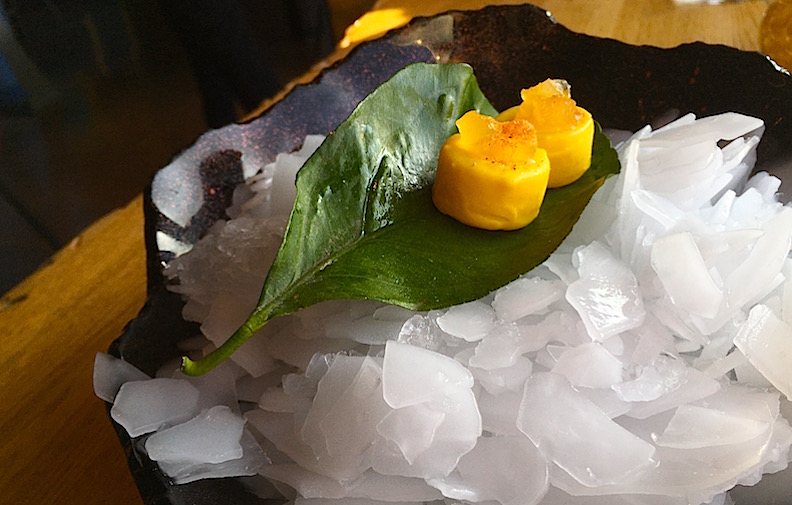
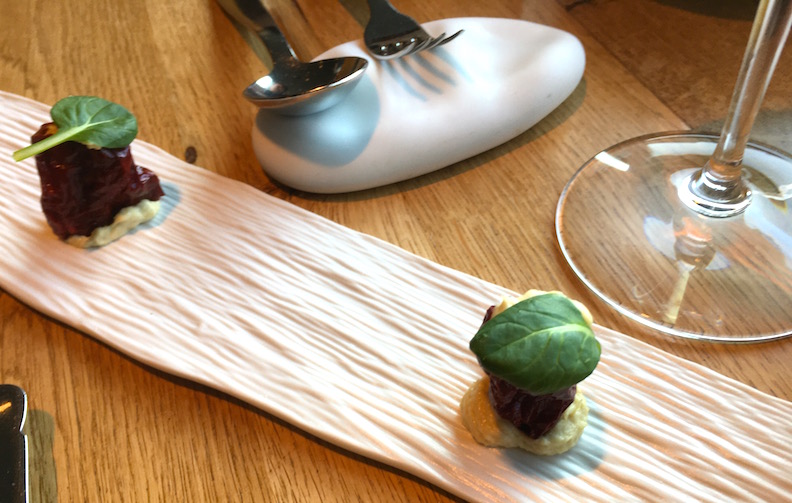
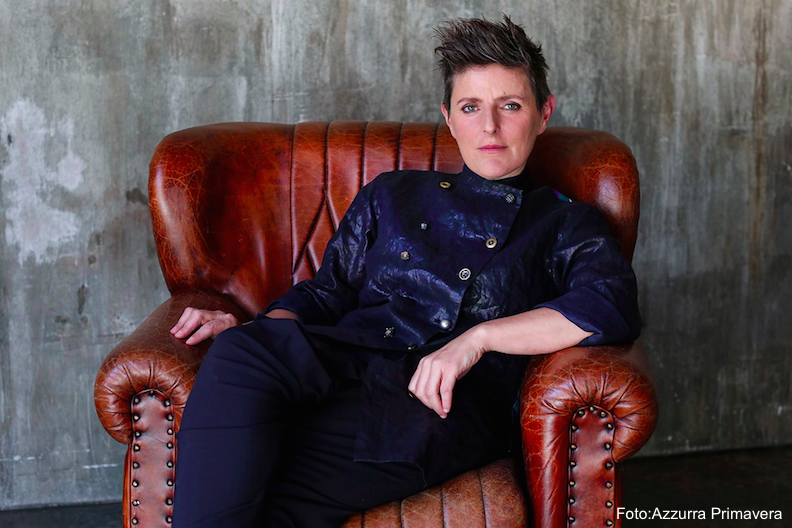
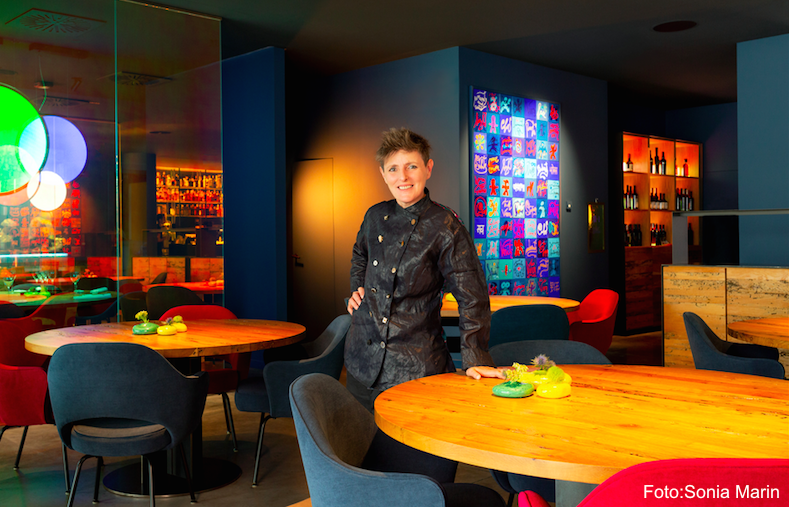
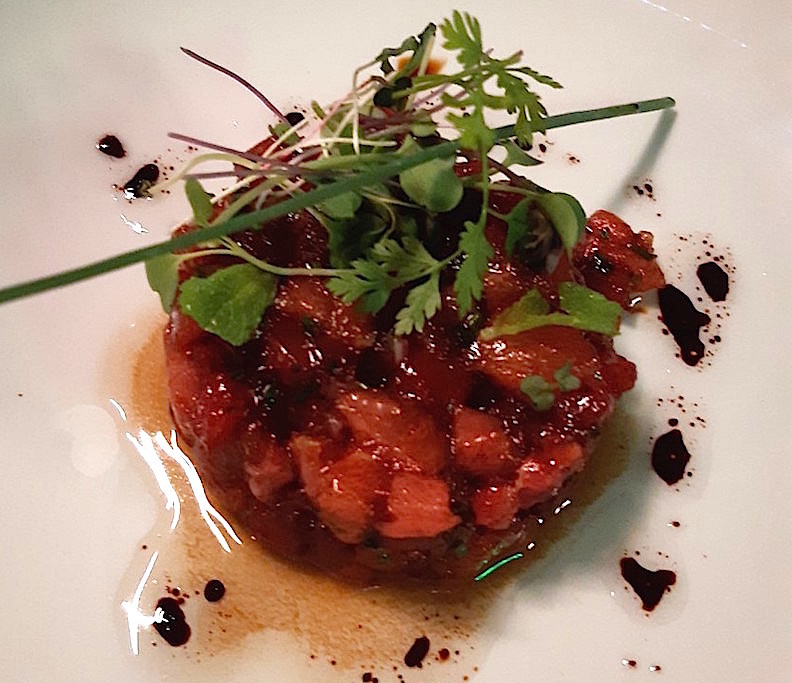
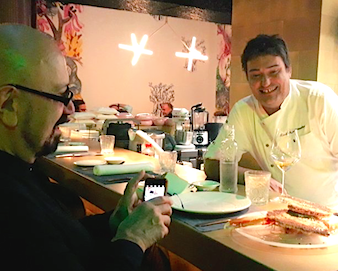
LONDRA. CHEF SRIRAM AYLUR E LA RAFFINATA CUCINA INDIANA DEL QUILON.

TESTO E FOTO DI CESARE ZUCCA –

London Calling! The Best Indian Restaurant.
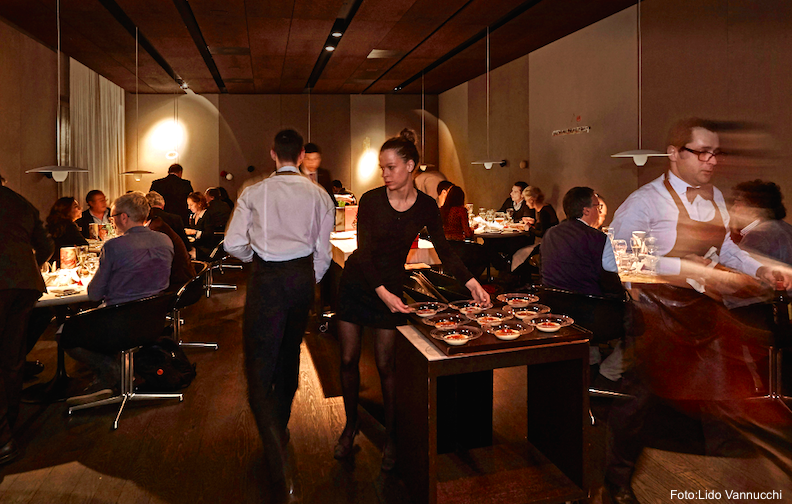
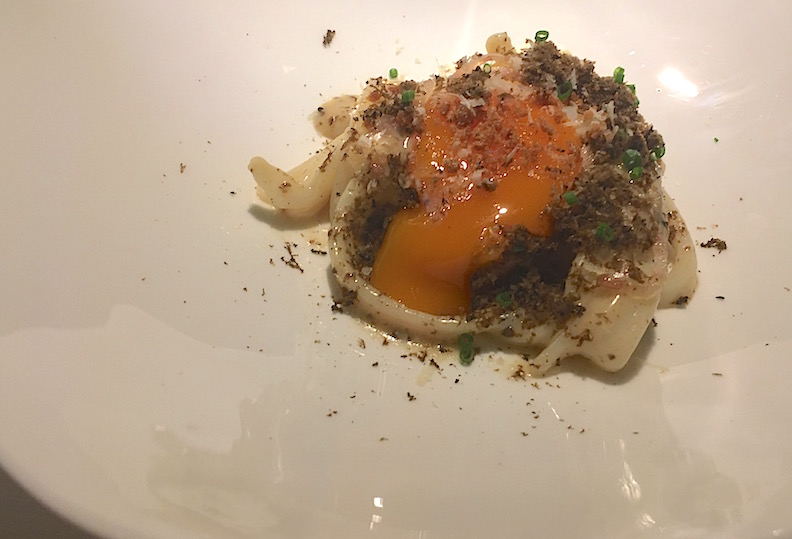
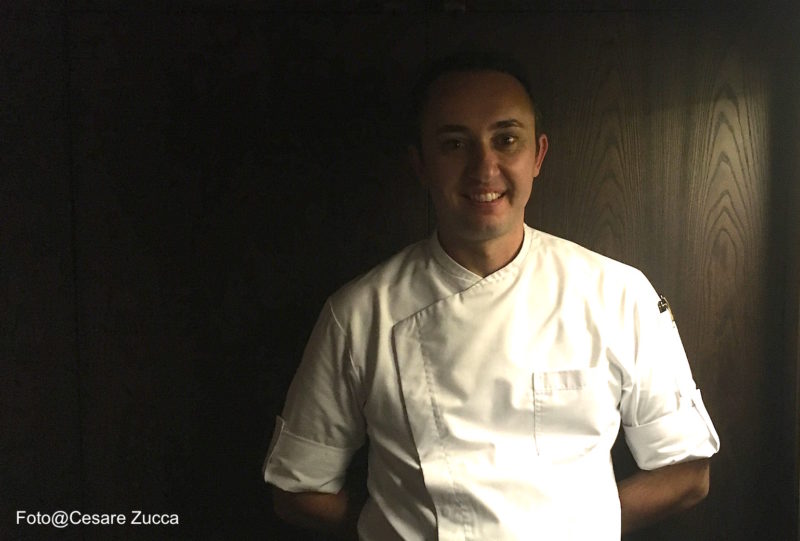
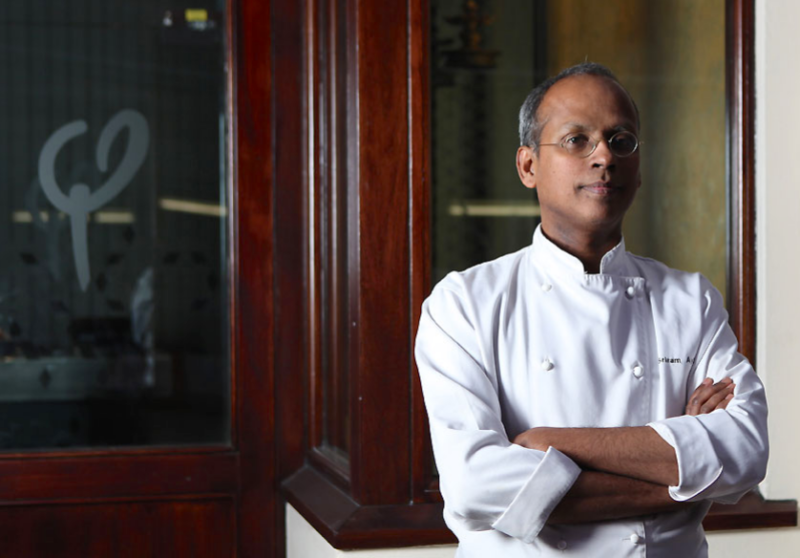
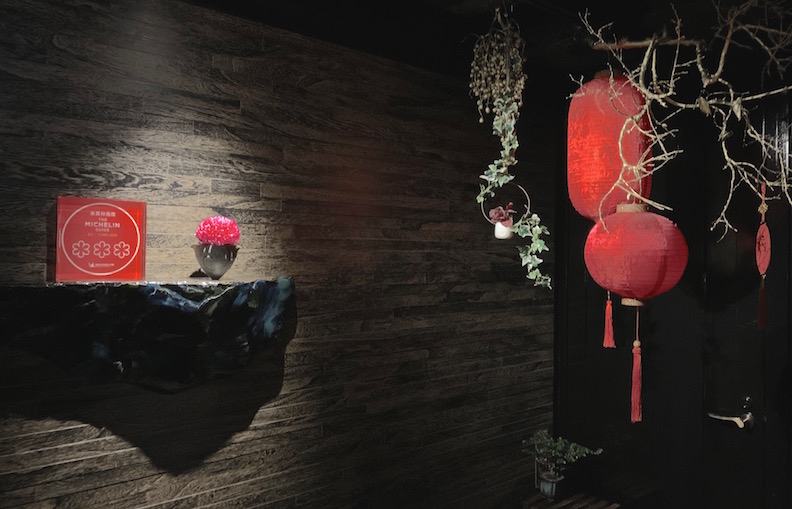
Quilon, piccola città nella provincia di Kerala in India del Sud  si è spostata nel cuore di Londra, nella elegante zona di Westminster. Perlomeno con il nome: Quilon è infatti il rinomatissimo ristorante di alta cucina indiana condotto dallo Chef Sriram Aylur, stella Michelin dal 2008 e tuttora insignito del prestigioso riconoscimento.


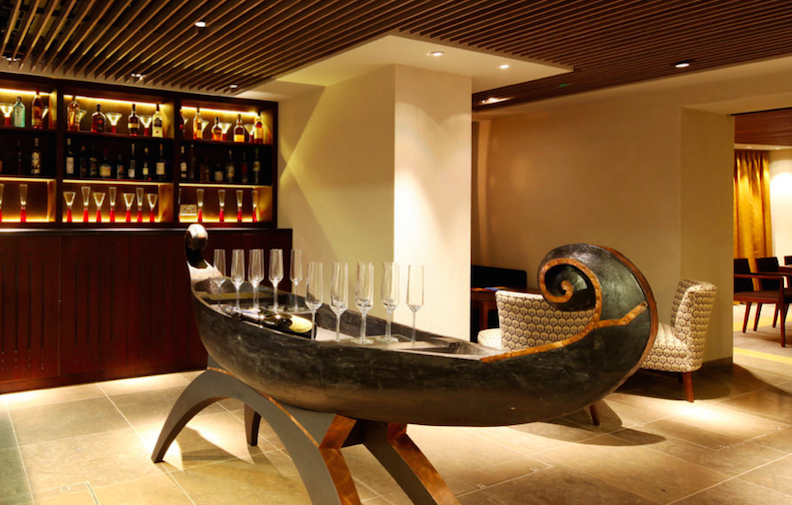
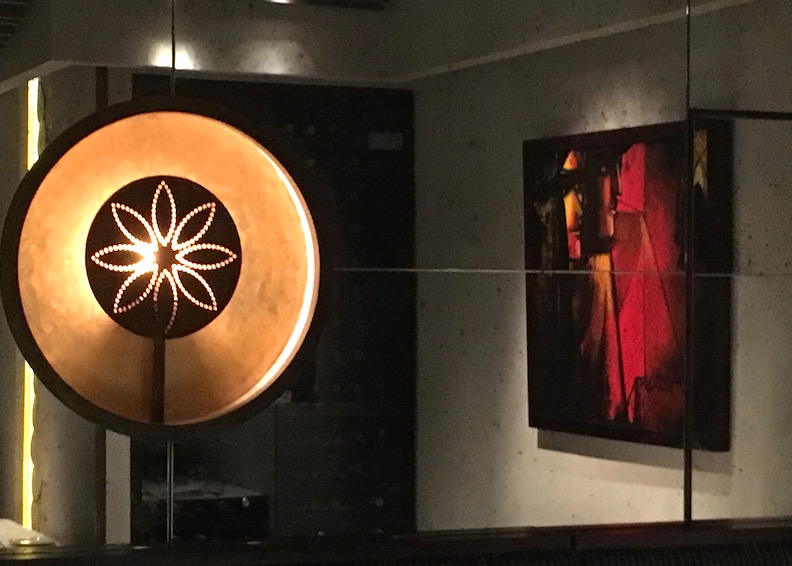
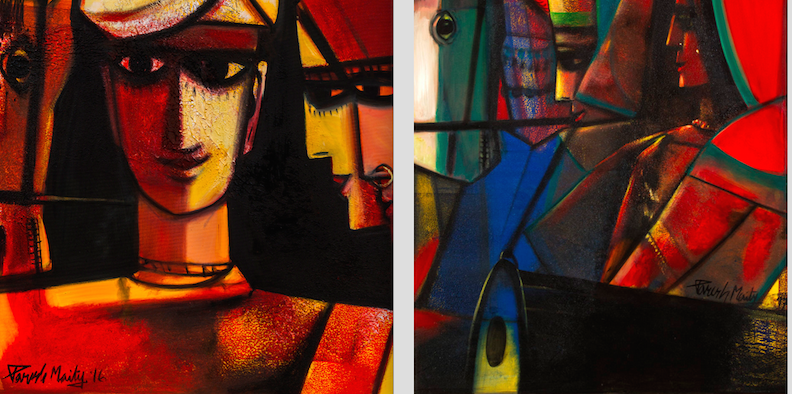
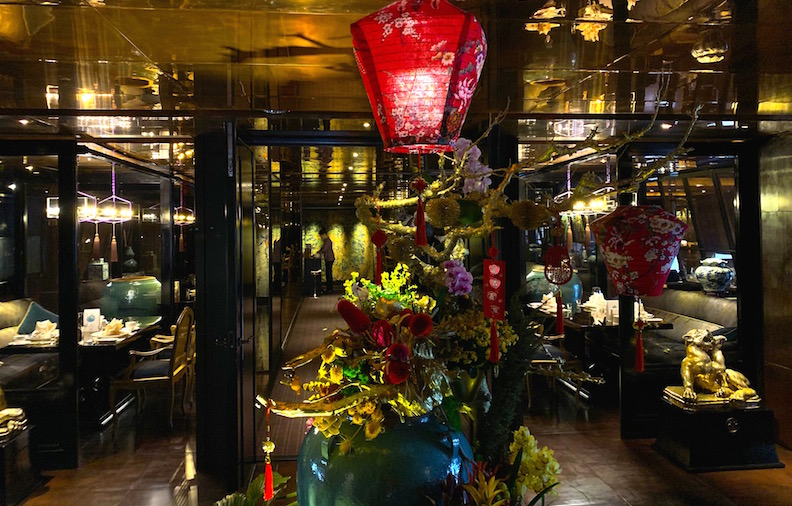
Quilon condivide gli spazi con il lussuoso Hotel Taj 51 Buckingham Gate e spicca per il suo   design rigoroso ed essenzale, ad eccezione dei suggestivi quadri che tappezzano le pareti. dai colori netti e dalle forti emozioni.

Sono tutte opere di Paresh Maity, un apprezzato artista indiano e caro amico di Sriram.

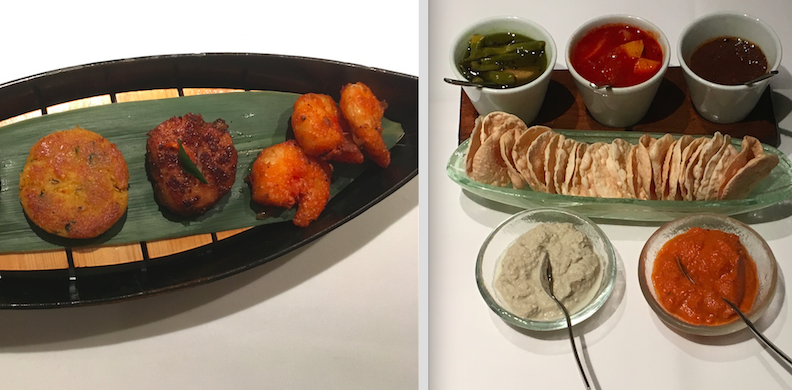
La cucina di Quilon ci porta nell’India meridionale. All’inizio del pasto mi è stata servita selezione di chutney, speziati si , ma sorprendentemente poco piccanti. Ho trovato che  a  volte le spezie sembravano essere attenuate e ravvicinate a sapori occidentali.


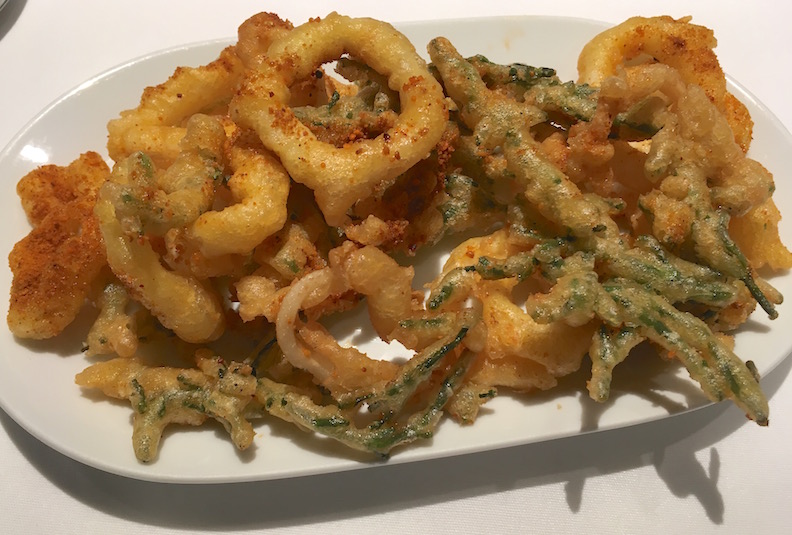
Le cimette di cavolfiore fritte erano croccanti e avevano un sapore gradevole, condite con foglie di curry, yogurt e peperoncino verde, I gamberetti al pepe erano teneri e ben speziati, serviti con salsa di mango e menta.
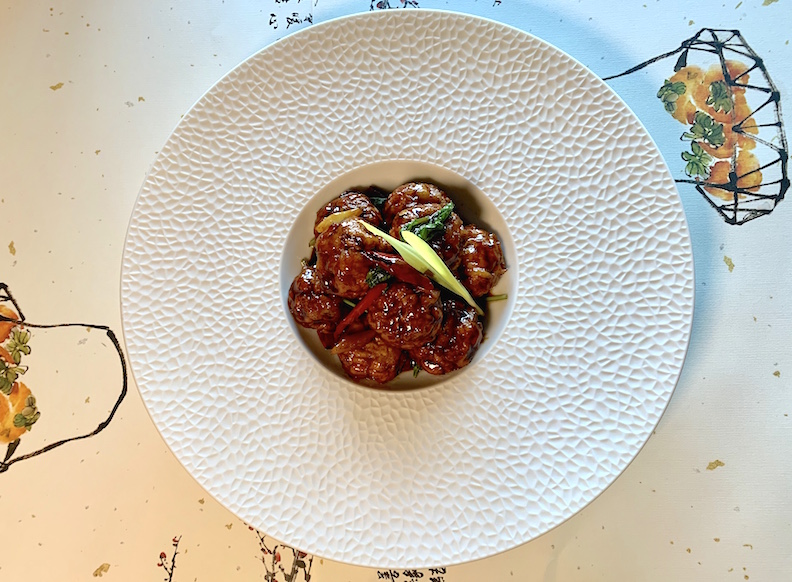
Ho poi gustato il pollo mangaloreano è un piatto dello stato costiero di Kamataka, aromatizzato con cocco e una gamma di spezie tra cui fieno greco, peperoncini rossi e chiodi di garofano.

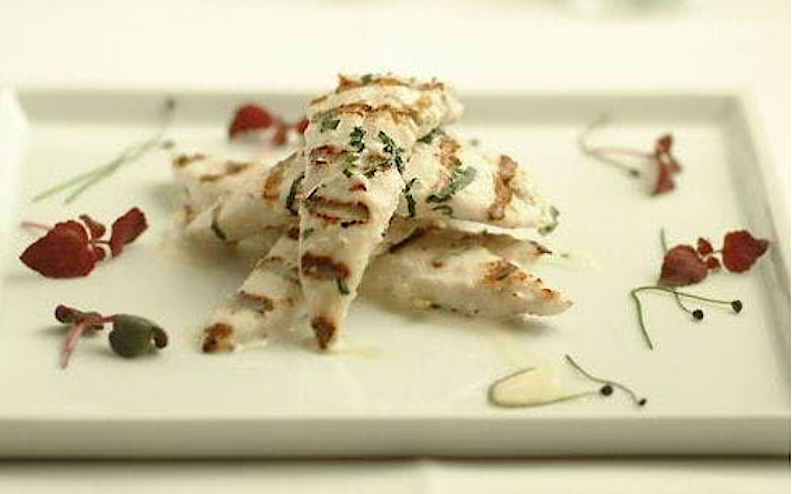
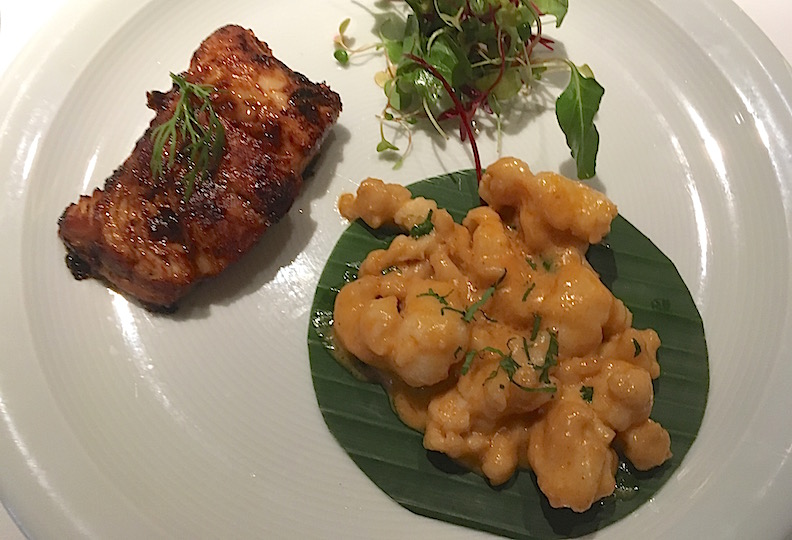
  Il merluzzo nero cotto nelle spezie era abbastanza piacevole, ma ho preferito i gamberi al peperoncino con grani di pepe rosa macinati.

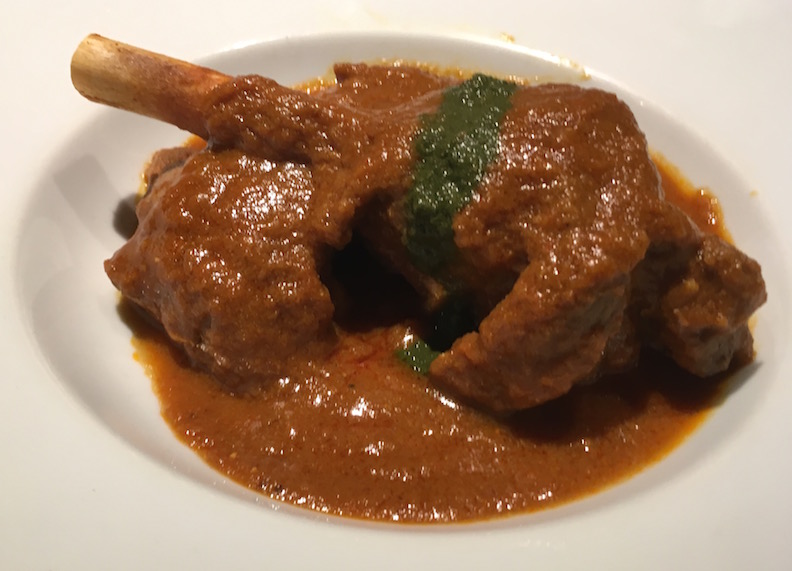
l Il mio piatto preferito? il tradizionale agnello biryani , servito dentro una grande pentola ben sigillata per conservarne profumo e sapore.


Quando è nata la tua passione per il cibo?
Dalla prima volta che sono entrato entrato nella cucina di mio padre, chef anche lui, è stato l’inizio di una lunga ricerca, di una passione senza limiti e della continua conoscenza del cibo. Studiavo legge e ho abbandonato gli studi per entrare nell’Istituto alberghiero e tecnologia della ristorazione.
La passione continua in famiglia?
Si, amo cucinare a casa e i miei ragazzi se la cavano benissimo, Il più grande punta sulla cucina giapponese, il più piccolo ama il cibo italiano, quando sono in vena di una buona pasta… ho un ristorante italiano in casa.
Cosa spicca nel tuo menù?
E’ un menu molto ricco e può soddisfare qualunque richiesta: carni , pesce, frutti di mare, gamberi. I miei preferiti: pollo al mango, merluzzo al forno, rombo macerato in coriandolo, menta, limone, aceto, capesante  al cocco e ogni giorno la ‘fisherman catch’, un pesce freschissimo che presento sempre i modo diverso.


Se ha del tempo libero, quali cittò ami visitare?
Tra le mie preferite: Barcellona, Milano, New York San Francisco e poi scopro sempre nuove città in India. Amo l’arte e l’architettura e naturalmente l’approccio con la cucina locale,
Prossimi viaggi?
Giappone, Australia, Turchia… una lista molto lunga,


La ricetta di Sriram Aylur
COSCE DI QUAGLIA RIPIENE
Ingredienti
Per 4 persone
Per la quaglia
4 quaglie (disossate e scuoiate della pelle)
1 cipolla tritata finemente
Un pezzo di zenzero da 2 cm
1 rametto di foglie di curry
1/4 cucchiaio di curcuma
1/4 cucchiaino di Chaat Masala
Pizzico di polvere di Aamchoor
1/4 cucchiaino di finocchio in polvere
Sale qb
50 g di coriandolo fresco
15 ml di olio
Per la salsa
500 ml di quaglie
15 ml di olio
1 cucchiaio di semi di finocchio
1 cipolla tritata finemente
Zenzero tritato finemente
1 rametto di foglie di curry
1/4 cucchiaino di curcuma
1/4 cucchiaino di peperoncino in polvere
2 pomodori tritati finemente
50 g di coriandolo fresco
Sale qb
Preparazione
Per la quaglia

Tritare grossolanamente la carne di quaglia in un mixer e tienila da parte. Pulire l’ala e l’osso della gamba, tagliare le articolazioni in due, dovreste riuscire a mettere insieme 8 ossa. Arrostire per alcuni minuti e tenere da parte.
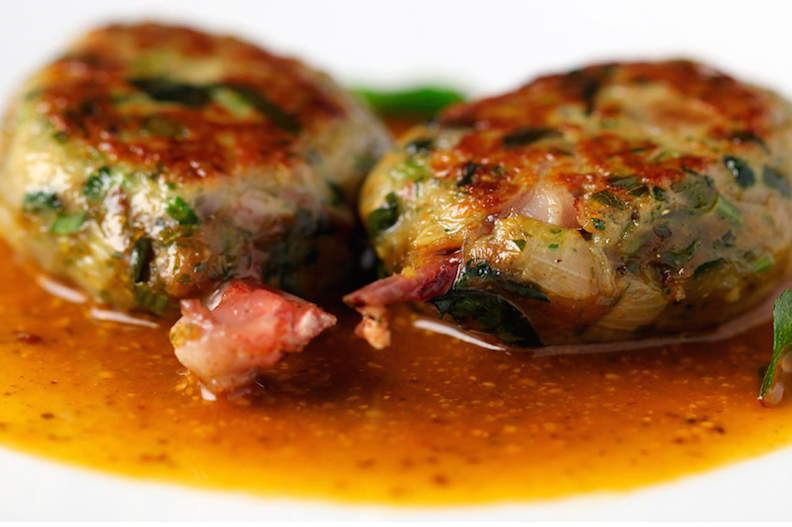
Scaldare l’olio in una padella e soffriggere la cipolla fino a doratura. Aggiungere lo zenzero, le foglie di curry, il masala chaat di curcuma, la polvere di amchoor, la polvere di finocchio, il sale e il coriandolo fresco e cuocere per un minuto a fuoco lento. Aggiungere questo composto in otto dimensioni uguali e ricostruirlo in una gamba di quaglia, attacca ogni gamba con un pezzo di osso in modo che mantenga la forma.
Scaldare un po ‘d’olio in una padella o piastra e scottare la quaglia. Posizionare sulla teglia e arrostire per 3-4 minuti. Servire caldo con la salsa.
Per la salsa
Scaldare l’olio in una padella e aggiungere foglie di finocchio, cipolla, zenzero e curry, mescolare e aggiungere la curcuma, il peperoncino e il pomodoro. Cuocere fino a quando i pomodori sono morbidi e aggiungere il gambo di coriandolo insieme al brodo. Regolare il condimento. Portare a ebollizione e far sobbollire per 5-10 minuti. Togliere dal fuoco e battere in un frullatore a immersione. Passare attraverso il filtro. Scaldare la salsa e servirla con la quaglia.

INFO
Quilon
41 Buckingham Gate | St James, nella zona di Westminster, rinomata per il Palazzo di Westminster, l’iconico Big Ben e la Piazza del Parlamento.

CESARE ZUCCA
Travel, food & lifestyle.
Milanese di nascita, vive tra New York, Milano e il resto del mondo. Viaggia su e giù per l’America e si concede evasioni in Italia e in Europa.
Per WEEKEND PREMIUM fotografa e racconta città, culture, stili di vita e scopre delizie gastronomiche sia tradizionali che innovative.
Incontra e intervista top chefs di tutto il mondo, ‘ruba’ le loro ricette e vi racconta il tutto qui, in stile ‘turista non turista’.

ROMA: A DUE PASSI DA PIAZZA NAVONA, IL RISTORANTE STELLATO PIPERO E LE MAGICHE VISIONI DI CIRO SCAMARDELLA

TESTO E FOTO DI CESARE ZUCCA

Roma. Arrivare al ristorante Pipero provenendo dall’ opulenza barocca dell’adiacente Piazza Navona è come entrare in un altro mondo, sobrio e essenziale,  silenziosamente maschile, personale in abiti sartoriali, tavoli ben distanziati. La sobrietà di questa prima impressione è immediatamente contrastata dall’energia effervescente del Patron Alessandro Pipero, maitre, sommelier, consumato ospite dell’elite capitolina e promotore  di “Noi di sala”, un progetto volto a promuovere e valorizzare l’arte dell’ospitalità.

La cucina di Pipero serve piatti che uniscono tradizione a fantasia, dal porcellino in cialda. alla purea di ceci con funghi shitake e nocciole, alla porcellino mozzarella ‘sorpresa’ servita su un piatto a due piani, quello sopra, dove viene adagiata la mozzarella,  è forato e riceve il caldo dal piatto sottoscatnte  dove troviamo una panzanella  di pomodorini e cipoll.

Anche i dolci non mancano di stupire, come il ‘finto lime’ ripieno di yougurt su terriccio di cacao.

Al timone del ristorante (Stella Michelin) lo Chef Ciro Scamardella che ho incontrato per una breve intervista e per ‘rubargli’ una ricetta.

GENOVESE DI POLPO IN RAVIOLO

Mise en place del piatto:
Pasta all’uovo
Farcia genovese polpo
Crema burro e cipolla
Salsa fegato polpo
Acqua polpo ridotta
Olio maggiorana
Cipollina arricciata
Ventose polpo

Dosi:
5 ravioli a persona
7gr farcia per 1 raviolo (35gr farcia a persona)
15gr crema cipolla a persona
4gr salsa fegato a persona
3gr acqua polpo ridotta a persona
8 ventose a persona
3 riccioli cipollina a persona

Ricette
Ingredienti per la pasta all’uovo:
1kg farina “00”
1kg semola rimacinata
1lt tuorli
360gr tuorli freschi
200gr acqua
Procedimento per la pasta all’uovo:
Lavorare tutti gli ingredienti in planetaria con il gancio fino a quando non diventa ben
compatto l’impasto, da notare che la quantità di acqua può variare in base all’umidità
Ingredienti per la farcia:
8kg cipolle bianche
5kg polpo
100gr Olio extra vergine
Colatura di alici
Soia
Acqua del polpo
Sedano
Carota
Cipolla
Alloro
Procedimento per la farcia:
Tagliare sedano, carota e cipolla grossolani e mettere in una pentola grande con acqua, insieme all’alloro. Portare a bollore e cuocere il polpo (solo i tentacoli) per circa 30 minuti a fuoco forte, poi coprire la pentola e far riposare per 1 ora. In un altra padella aggiungere le cipolle precedentemente tagliate sottili e far andare a fuoco molto basso per 2-3 ore affinché si appassiscono bene. Spellare il polpo cotto e teniamo da parte le ventose (lo scarto della pelle non va buttato), il restante lo tagliamo a cubetti. Aggiungere adesso l’olio alle cipolle appassite, aumentare la potenza del fuoco e aggiungere le teste del polpo crude i cubi di polpo cotto, l’olio e l’acqua di cottura del polpo far andare affinché non evapora quasi del tutto l’acqua aggiunta, frullare tutto e condire con colatura di alici, soia, sale e pepe nero. Mettere nei silpat a mezza sfera e congelare.

Ingredienti per la salsa di fegato:
35gr fegato di polpo cotto (5 minuti a 65°)
35gr polpo cotto tritato
2gr colatura alici
1gr soia
5gr succo limone
50g olio vinacciolo
Sale
Pepe nero
Procedimento per la salsa fegato:
Unire tutti gli ingredienti tranne l’olio di vinacciolo, frullare per 5 minuti a velocità 7, unire l’olio a filo e continuare a frullare per altri 5 minuti a velocità 10, passare a chinoix e conservare in frigo.
Ingredienti per la salsa burro e cipolla:
8 cipolle bianche medie
750gr burro
15gr soia
Sale
Pepe nero
Procedimento per la salsa burro e cipolla:
Tagliare per metà nel senso della larghezza le cipolle, bruciarle al barbecue e mettere sottovuoto con il burro, cuocere a 65° per 1 ora e mezza e poi raffreddare. Frullare al bimby 7 minuti alla velocità massima, passare allo chinoix sottile e poi condire.

Ingredienti per la salsa di acqua polpo:
2,5kg polpo gelo
8lt di acqua
100gr sedano
100gr carota
100gr cipolla
2 rape rosse
Procedimento per la salsa di acqua polpo:
Tagliare le verdure a pezzi irregolari, mettere in una pentola con l’acqua e portare a bollore. Far sobbollire per 30 minuti, poi filtrare mettere in pentola a pressione e aggiungere il polpo con la rapa rossa a pezzi piccoli, dopo il fischio far cuocere per 50 minuti. Sfiatare, togliere i polpi ancora caldi e far riposare per 1 ora. Eliminare lo sporco che si crea alla base della pentola facendola decantare. Far ridurre di 2\3 il liquido ottenuto a fuoco medio per non intorbidire l’acqua. Assaggiare facendo attenzione che non diventi salato. Se dovesse capitare che si è già raggiunto il punto di sale, legare al 2% con amido di mais.


Ingredienti per l’olio di sedano:
70gr foglie di sedano
140gr olio vinacciolo
Procedimento per l’olio di sedano:
Sbollentare le foglie di sedano in acqua bollente e salata, con l’aggiunta di 1gr di bicarbonato, frullare tutto al bimby a velocità 7 per 10 minuti a 70°. Passare l’olio all’etamina e far congelare in un contenitore lungo e stretto. Lasciare una notte in congelatore, sformare e togliere subito la parte di acqua in eccesso che si congelerà sull’estremità dell’olio e tenere in frigo

INFO
Pipero Roma

CESARE ZUCCA
Travel, food & lifestyle.
Milanese di nascita, vive tra New York, Milano e il resto del mondo. Viaggia su e giù per l’America e si concede evasioni in Italia e in Europa.
Per WEEKEND PREMIUM fotografa e racconta città, culture, stili di vita e scopre delizie gastronomiche sia tradizionali che innovative.
Incontra e intervista top chefs di tutto il mondo, ‘ruba’ le loro ricette e vi racconta il tutto qui, in stile ‘turista non turista’.
VIVA Viviana Varese! Chef stellata e viaggiatrice innamorata di terre lontane.

TESTO E FOTO DI CESARE ZUCCA

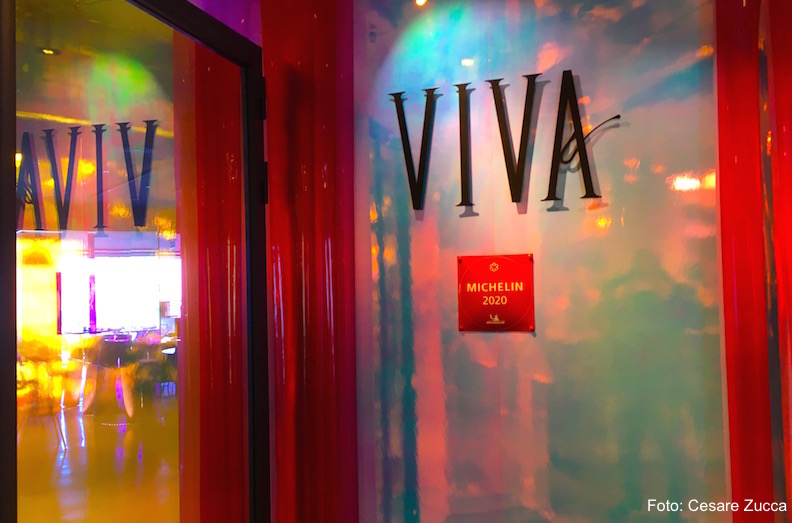
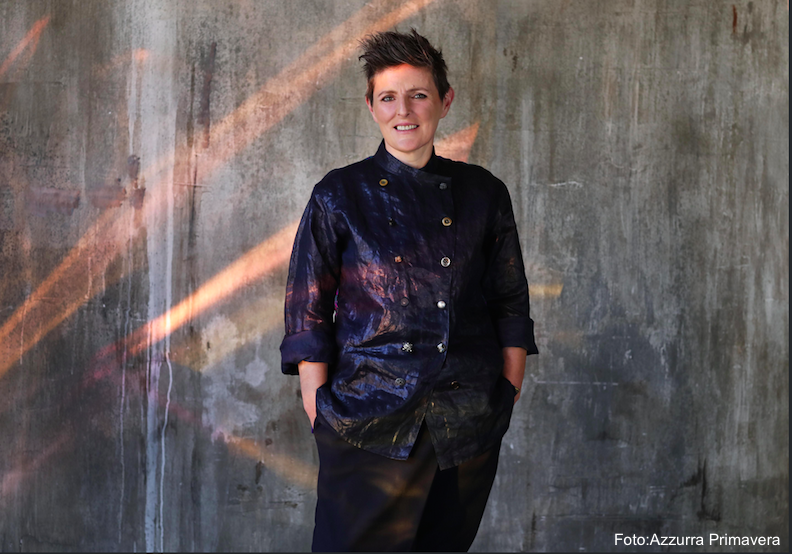
Milano. Viviana Varese, Chef inarrestabile, ama i progetti ambiziosi.. e li realizza:! A cominciare dall’ apertura di VIVA Viviana Varese, il suo nuovo ristorante stellato, dove ha riunito 24 chef e 6 pasticceri da tutto il mondo, agli appuntamenti di ‘INCREDIBILE VIVA’, creati con l’amica Anna Morelli, editrice e nota globetrotter. Sono serate speciali in cui Viviana ospita alcuni tra i migliori chef del mondo, ‘concedendo’ loro la sua brigata e coinvolgendoli a immergersi nel colore e nell’energia del suo locale.

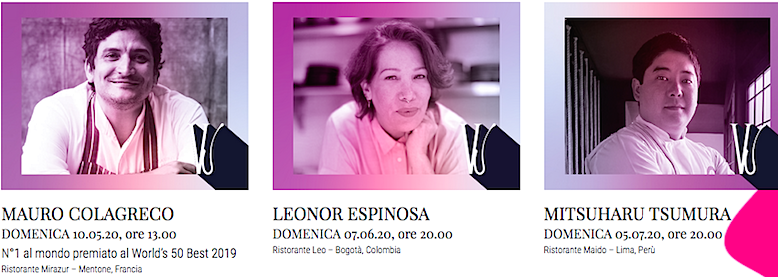
Un cast davvero stellato, eclettico e top, Sono previsti: Leonor Espinosa (Bogotà) Mitsuharu Tsumura (Lima) e Mauro Colagreco (Mentone) proclamato Chef n°1 al mondo da World’s 50 Best 2019. I menù sono scelti dall’ospite mentre VIviana si occupa degli antipasti e dei dolci, studiati in armonia con la personalità dell’ospite.


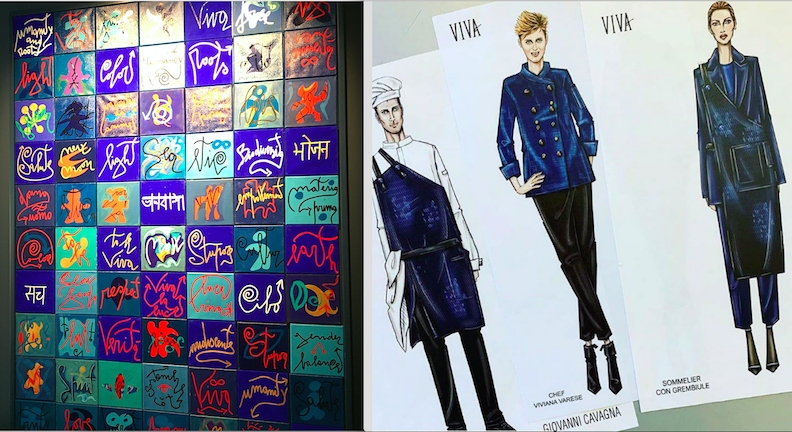
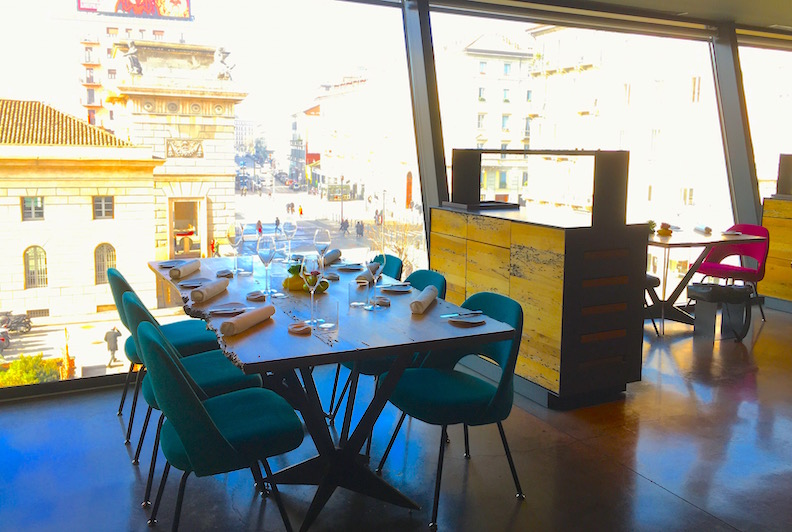
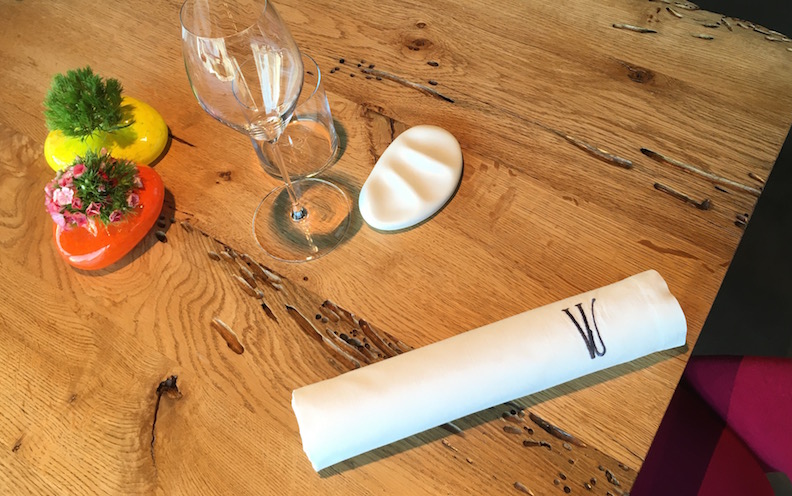
VIVA (acronimo del nome e cognome dlla Chef) è locato a Milano, all’ultimo piano di Eataly e ci riserva irridiscenze, colori, luce, una vista spettacolare su Piazza XXV Aprile, tavoli in legno, condivisione, arte e ricerca, dal variopinto murale di Marco Nerero Rotelli, ai bicchieri  disegnati da Gaia Rotelli, alle posate Giò Ponti, alle stilose divise disegnate da Giovanni Cavagna.

A tavola!
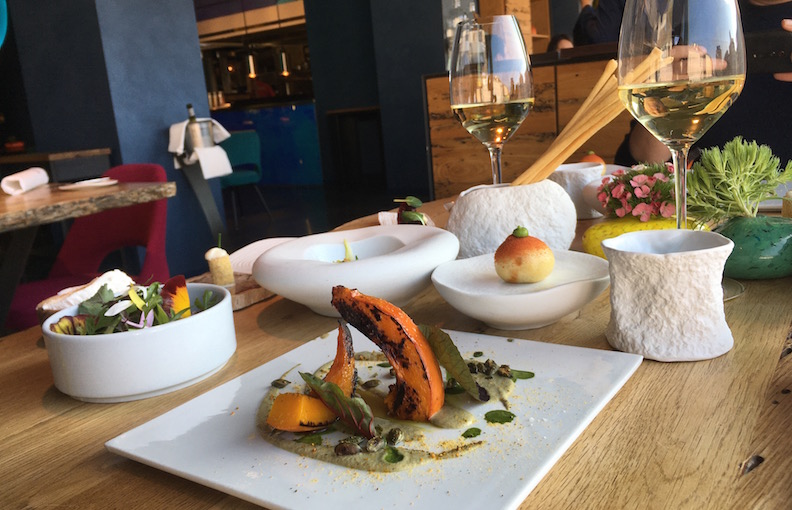
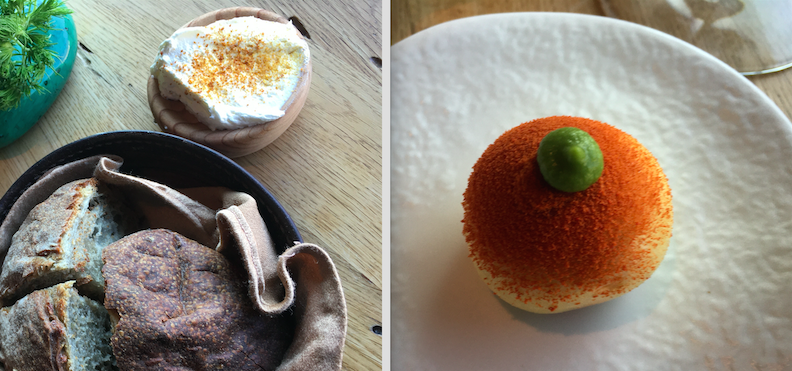
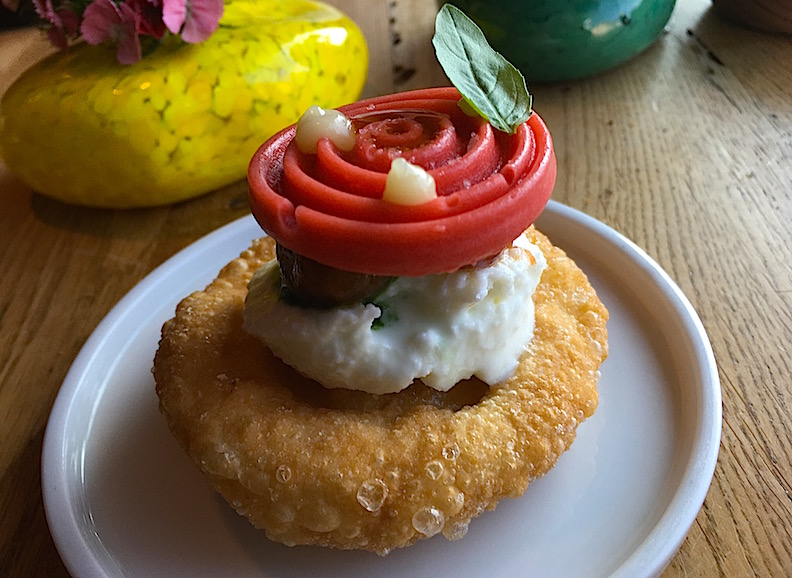
Si parte con le 7 variazioni dell’orto di Viviana, dalla briochina accompagnata da mozzarella di bufala pomodoro e basilico, alla fantastica zucca piastrata con estratto di zucca e alloro, da un pizzocchero fritto ripieno di formaggio a un consommé a base di topinambur,

allo stella repeperone crusco con baccalà mantecato, mentre il burro occhieggia ‘vivamente’ (è proprio il caso di dirlo…) polverizzato da agrumi misti.

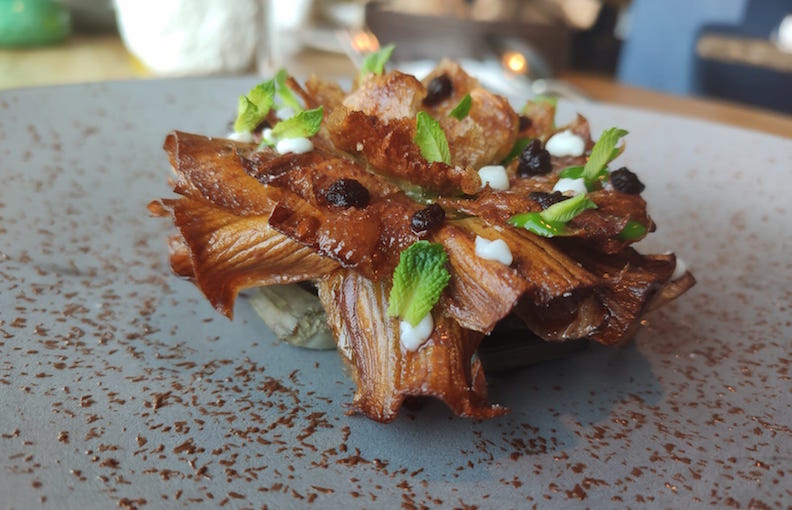
Un piatto dal titolo cinematografico: Non togliere l’osso a Mario ci presenta un ossobuco al barbeque con diaframma, tartare di fassona, cipollotto, maionese alla senape e neve all’aceto. Le citazioni continuano: il coccante carciofo alla Giudea diventa Al di là del Ghetto con menta, liquirizia, caffè, cioocolato e aglio.

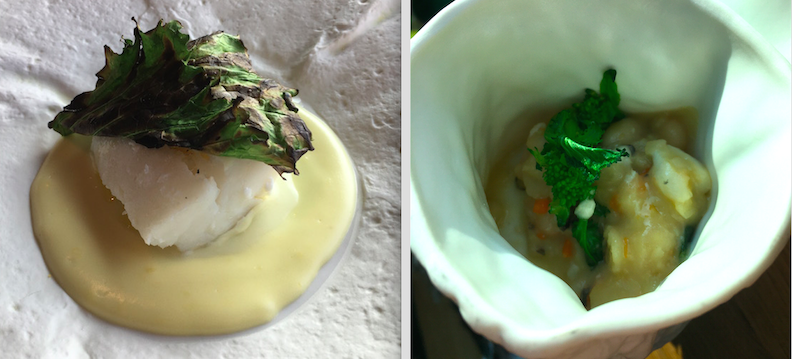
Il pesce sposa il porcino nel piatto  Rosemary’s ceci, calamari con crema di ceci neri, spugna al nero di seppia, brodo intenso di calamari e funghi porcini, mentre Tuffo nell’Orto serve baccalà al vapore, crema di patate, cime di rapa, zuppetta di fagioli di Pigna, trippa di baccalà.

I limoni di Sorrento non mancano mai nei menu e nel frigo di casa di Viviana…
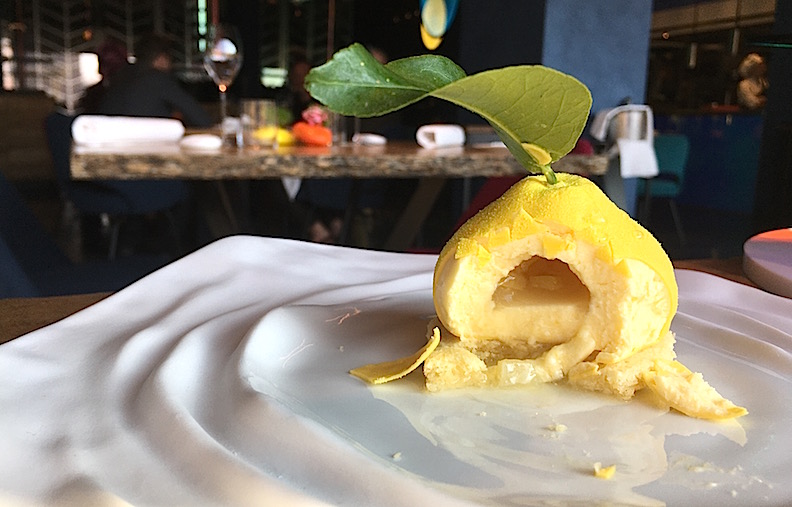
Siamo al dolce e riappare il limone in mousse dal cuore morbido su croccantino.

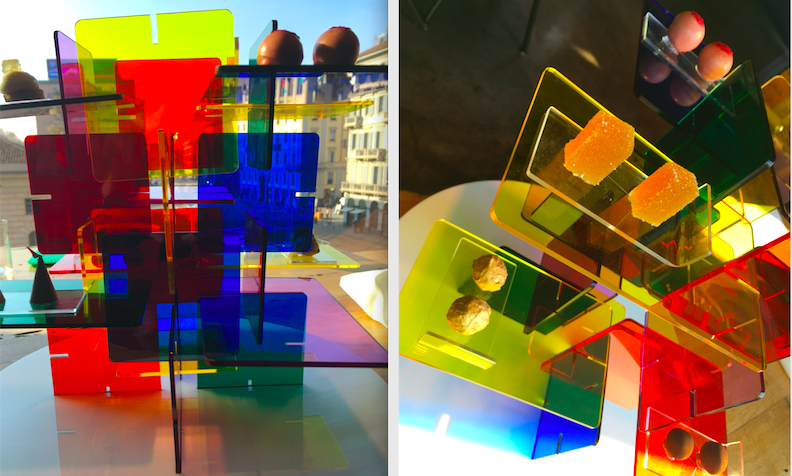
Ma le sorprese non finiscono perché, servite su una coloratissima costruzione di plexiglas, arrivano le delizie di mini pasticceria. Divertiamoci: gelatina di mango e frutto della passione, cioccolatino con aceto balsamico e lampon, la pepita d’oro che schiocca in bocca.

Buongiorno Viviana, quando è libera, dove le piace passare il weekend?
Il pochissimo tempo che mi dedico al di fuori del lavoro è di puro relax, talvolta In agriturismi in mezzo alla natura, dove posso liberare la mente e studiare nuove idee e poi… eccomi nuovamente al lavoro.
Che auto guida?
Una Land Rover
Qual è stato il suo viaggio preferito?
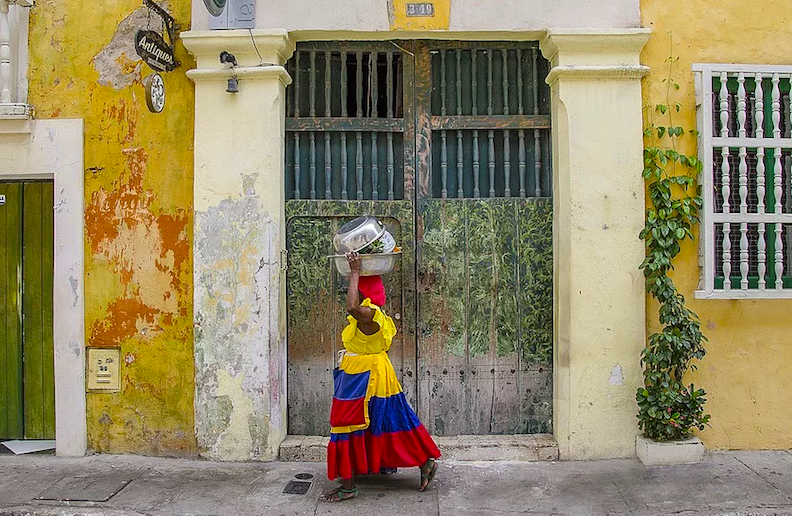
Sono stata da poco in Colombia, un luogo incantevole dove le persone vivono con grande semplicità, ma con valori ben radicati e forti. Gentilezza, accoglienza, rispetto per il prossimo, forti tradizioni.
Raffinatezza dei sapori e dei gusti: quale destinazione consiglia?
I Paesi Baschi. Ad oggi il luogo con la migliore offerta gastronomica al mondo.
Nei suoi viaggi ha avuto qualche ispirazione dal cibo locale?
Ogni mio viaggio mi accresce come persona e come professionista. Quando viaggio mi piace ascoltare le persone, vivere la loro quitidianità e mangiare il cibo locale. Traggo ispirazione dalle diverse culture con cui entro in contatto e vivere e lavorare a Milano, fortunatamente, mi consente di trovare praticamente tutti gli ingredienti del mondo. Da ogni viaggio mi porto sempre a casa un sapore, un accostamento, un ingrediente, un’idea.


Cucine nel mondo. Le sue preferite?
.Amo moltissimo alcuni piatti della cucina indiana, mi affascinano alcune preparazioni della cucina asiatica e ho anche molte amiche in America Latina (Messico, Colombia) che mi hanno fatto conoscere ingredienti straordinari. Ecco, cerco di riportare tutto ciò nella mia cucina, senza mai dimenticare chi sono e da dove provengo.


Come è diventata chef?
Potrei dire di essere nata in cucina. La mia è una famiglia di ristoratori. A 7 anni giocavo con l’impasto della pizza, a 13 ero pizzaiola e a 21 rilevavo il mio primo ristorante. Durante gli studi (ho studiato alle magistrali) oltre ad aiutare I mieri in pizzeria, studiavo da autodidatta leggendo le ricette e le tecniche dei grandi chef. Poi ho fatto alcuni stage presso realtà importantissime, come la scuola di Marchesi o I Roca, in Spagna.


Qualche appassionato di cucina nella sua famiglia?
Mio nonno possedeva lo storico bar del centro a Salerno, era una celebrità: era campione nazionale di pattinaggio e serviva i client sui pattini…la tradizione è continuata, mamma e papà avevano un ristorante in provincia di Lodi che ho rilevato io a 21 anni. Anche mia sorella Antonella e il suo compagno possiedono due ristoranti sul lago di Garda.


C’è un piatto che ama solo se cucinato da un altro?
La pasta e patate di mia mamma Carla. Una vera bomba!
Quanto è rilevante la sua terra nei suoi piatti?
La mia terra è l’origine della mia cucina. Nasco come pizzaiola, cresco come chef riconosciuta per i piatti di pesce e oggi, dopo oltre vent’anni ho aperto la mia cucina a diverse culture gastronomiche. Amo citare i piatti classici in chiave moderna.


Qualche esempio?
Per la mia pizza fritta, ad esempio, utilizzo una bavarese al pomodoro e un gel al basilico. Tra i miei primi la girella di pasta fresca ripiena di ragù alla genovese, piatto tipico della tradizione campana e poi il limone di Amalfi che non manca mai nella mia cucina.


Lavorare in cucina è…
Lavorare in cucina è faticoso. Fatica fisica e mentale, rinunce e amore spassionato per quello che fai quasi 15 ore al giorno. La tua vita diventa il tuo lavoro e viceversa. Inoltre, improvvisarsi è rischiosissimo. A Milano i ristoranti aprono e chiudono in continuazione. Questo danneggia non solo chi si imbarca nel progetto, ma l’intero settore.


Quanto c’è di ‘green’ nella sua cucina?
Il mio orto, a pochi km da Milano. Da lì arrivano le verdure di stagione che compongono i miei menu. Ho grande rispetto per la terra, per la stagionalità della materia prima. Seguo I ritmi della terra e ciò mi consente di cambiare i menu anche settimanalmente.


Dove trova l’ispirazione per creare un piatto?
Il mio cervello è sempre in movimento, non si ferma mai. Guardo al mondo sempre da una prospettiva “professionale”, cercando ispirazione nelle cose, nelle persone, nelle situazioni che vivo. E poi Milano, I miei viaggi, anche un singolo ingrediente che assaggio può essere fonte di ispirazione e poi l’arte, il design, i ricordi, certe immagini indelebili…
Ad esempio…
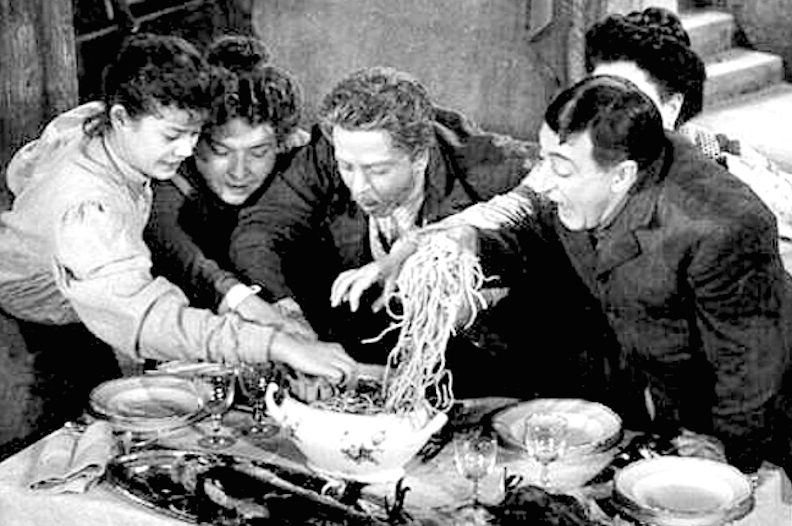
Ai miei ragazzi cito spesso la scena degli spaghetti nel capolavoro Miseria e nobiltà, in primis perché amo Totò e poi perché mi piace essere per loro, che sono molto giovani, un punto di contatto e una testimonianza con un’Italia che loro non hanno mai vissuto ma che credo non vada dimenticata.


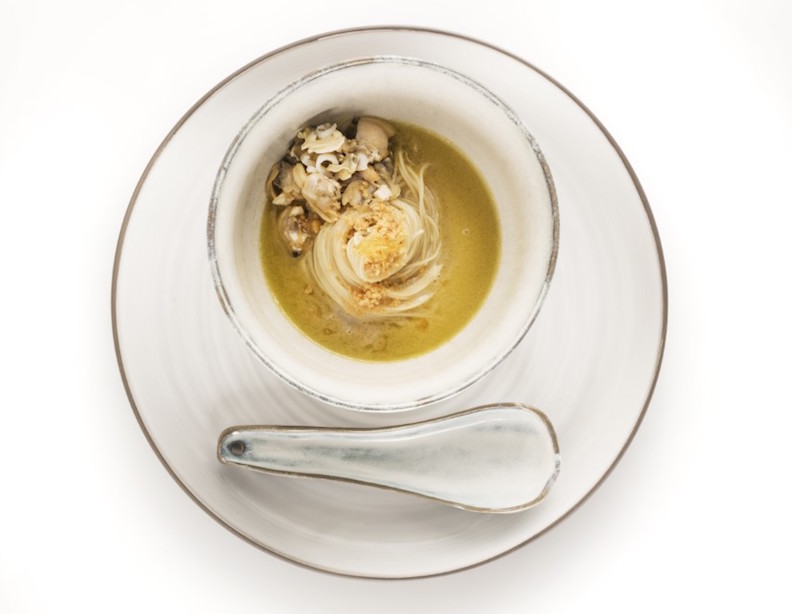
Condivido e rifletto: il mio piatto preferito? L’ Insuperabile, di nome e di fatto. Semplicità e gusto, un ‘quasi ramen’ brodetto affumicato di vongole, calamari, una spuzzata di polvere di tarallo con spaghettini, anzi ‘super spaghettini’ come li definisce  Chef Varese, a cui non posso non chiedere la ricetta …

SUPER SPAGHETTINO CON VONGOLE NAZIONALI, JULIENNE DI CALAMARO,
LIMONE CANDITO E POLVERE DI TARALLO

INGREDIENTI
per 4 persone

Spaghettini g 300
Brodo di pesce g 300
Vongole g 600
Calamari eviscerati g 100
Olio extravergine di oliva g 40
Zeste di limone candito g 10
Taralli pestati a mortaio g 80
Spicchi di aglio 2
Prezzemolo qb
Pene nero macinato qb

ZESTE CANDITE DI LIMONE
Limoni di Amalfi non trattati 4
acqua g 120
zucchero g 120

PREPARAZIONE
Pelare i limoni, eliminare la parte bianca, tagliare a julienne, cuocere in un pentolino con acqua e zucchero e bollire per 15 minuti. Raffreddare.
Soffriggere l’aglio, eliminarlo, mettere le vongole e due mestoli di brodo di pesce. Coprire. Spegnere il fuoco, sgusciare le vongole e metterle in frigorifero.
Bollire il brodo, aggiungere gli spaghettini e muoverli per due minuti.
Aggiungere le vongole, i calamari a julienne, 10 g di zeste di limone candito e il prezzemolo tritati. Cuocere un altro minuto.
Spegnere e mantecare con olio e pepe nero.

FINITURA
Versare gli spaghettini nel piatto con un po’ di brodo e ultimare con la polvere di tarallo.

INFO
VIVA Viviana Varese
INCREDIBILE VIVA

CESARE ZUCCA
Travel, food & lifestyle.
Milanese di nascita, vive tra New York, Milano e il resto del mondo. Viaggia su e giù per l’America e si concede evasioni in Italia e in Europa.
Per WEEKEND PREMIUM fotografa e racconta città, culture, stili di vita e scopre delizie gastronomiche sia tradizionali che innovative. Incontra e intervista top chefs di tutto il mondo, ‘ruba’ le loro ricette e vi racconta il tutto qui, in stile ‘Turista non Turista’

VALENCIA. TOP CHEF RAUL ALEIXANDRE: “SI ALLA ‘FUSIONE’, NO ALLA ‘CONFUSIONE’”

TESTO E FOTO DI CESARE ZUCCA

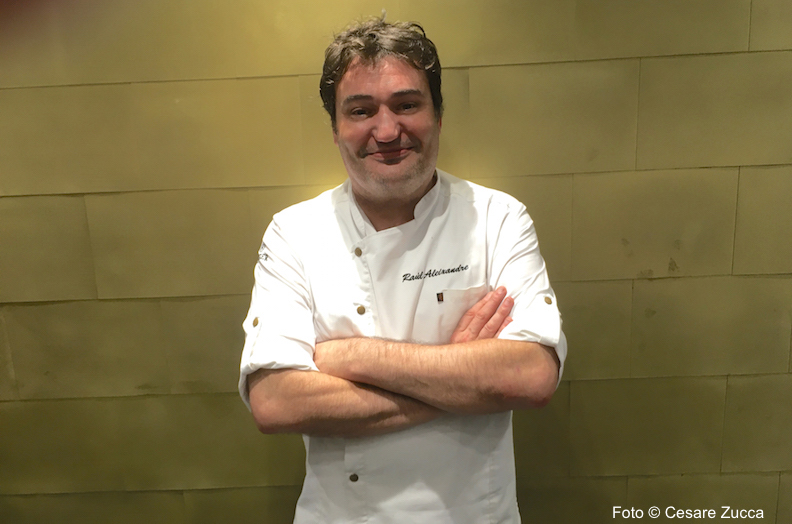
Valencia, Spagna. Raúl AleIxandre ha vinto numerosi premi: Miglior Chef il National Gastronomy Award, Premio Gourmetour per il miglior ristorante in Spagna e la stella Michelin al Ca’Sento.
Ha lavorato in diversi ristoranti top come El Bulli, Martín Berasategui e Mugaritz.


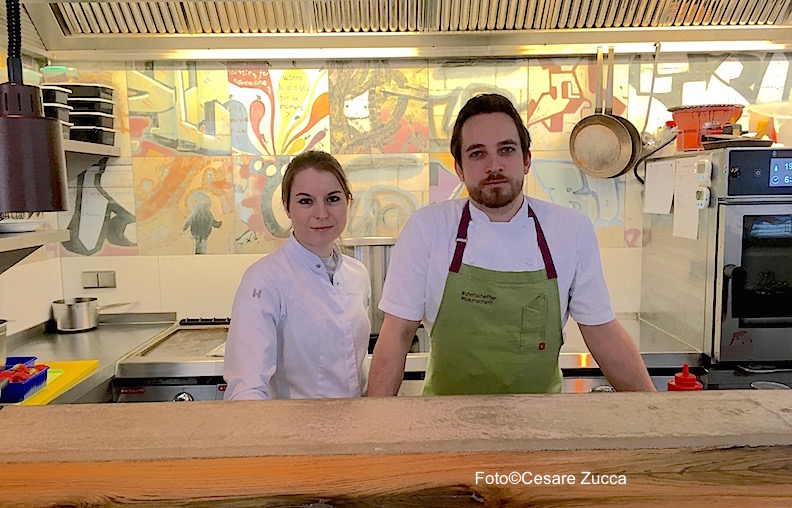
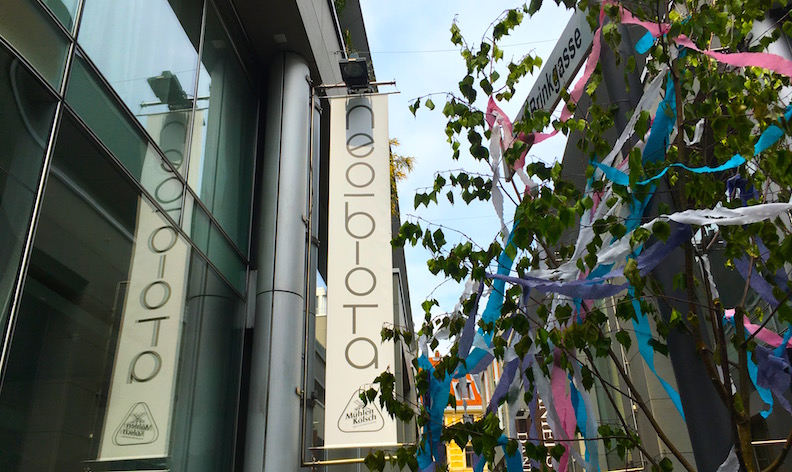
Lo ritroviamo a Valencia, la sua città, dove al Baobab, un ristorante con una decina di tavoli divisi in due sale e un bar che circonda la cucina a vista, dove Chef AleIxandre spadroneggia tra i fornelli, in modo che tutti possano vedere le preparazioni per poi gustare i sapori della sua cucina legata al  territorio, al mare, alle emozioni. La sua identità è marina, del Cabañal, di Valencia, del suo porto, della sua gente, gioviale, sorridente, entusiasta.


L’ho incontrato al Baobab e, tra un assaggio e l’altro, abbiamo fatto quattro chiacchere.
Dove vai nel tempo libero?
Ne ho davvero poco… mi piace andare in spiaggia, nel mio orto, un aperitivo con gli amici.
Le destinazioni che hai amato?
Tutta la Califonia e New York per un motivo speciale: ho cucinato per l’Ambasciatore di Spagna.
Se venissi a casa tua e curiosassi nel tuo frigo, cosa troverei di sicuro?
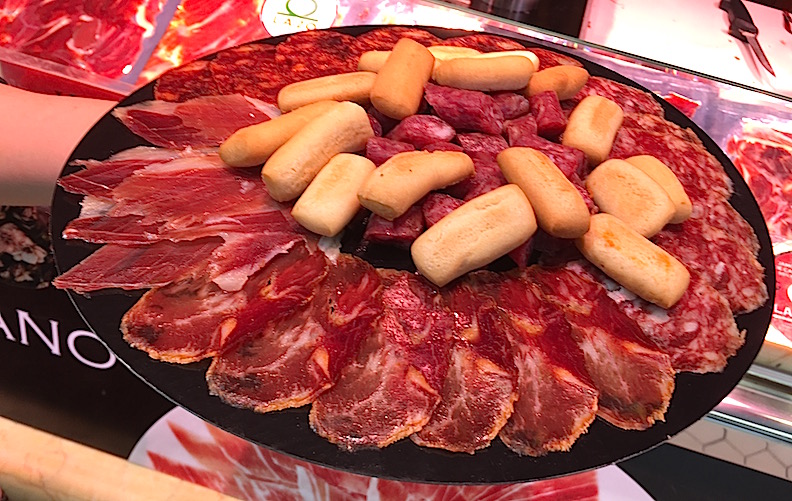
Yougurt e del buon jamón serrano, qualche formaggio, dei crackers, nel caso mi andasse di fare uno snack, anche perchè a casa non cucino mai.  Non troverai mai delle sardine, le detesto.


C’è un piatto che preferisci mangiare se cucinato da un’ altra persona?
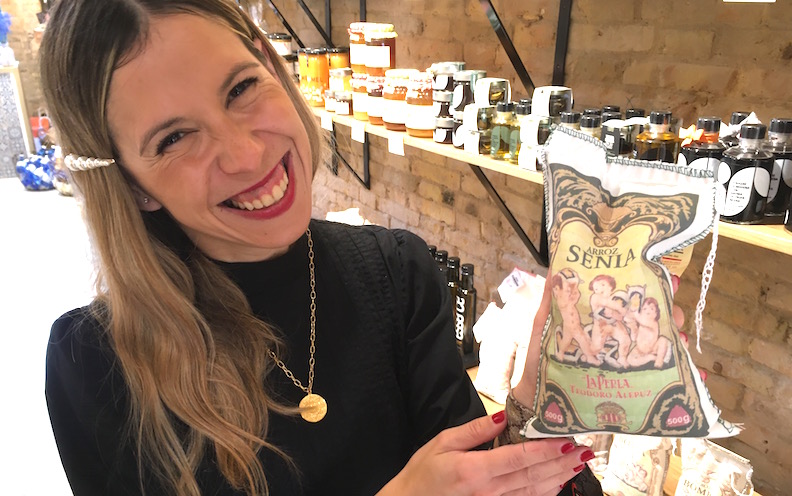
Il riso al forno di mia suocera 96enne. Usa rigorosamente Arroz Senia, celebre per i suoi 17 minuti spaccati di cottura e lo tratta come se fosse una tortilla, in più ci aggiunge pere e uvetta. Incomparabile!

Le cucine che preferisci?
Generalmente le cucine del Sud sia in Italia che in Francia e ovviamente in Spagna. Sono di Valencia, vivo a 50 Km dal mare e amo la cucina del mio territorio, la più vicina al mio modo di esprimermi.

Quindi cucina tradizionalmente territoriale, no ‘fusion”?
(ride) Mi piace la cucina della ‘fusione’ ma non della ‘confusione’…
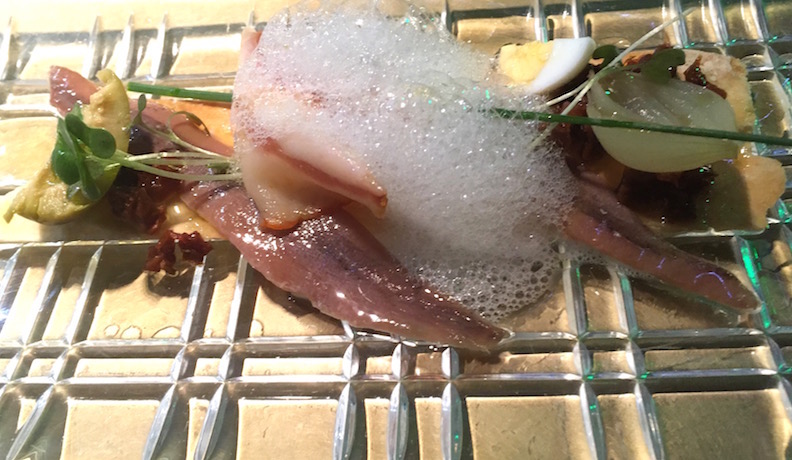
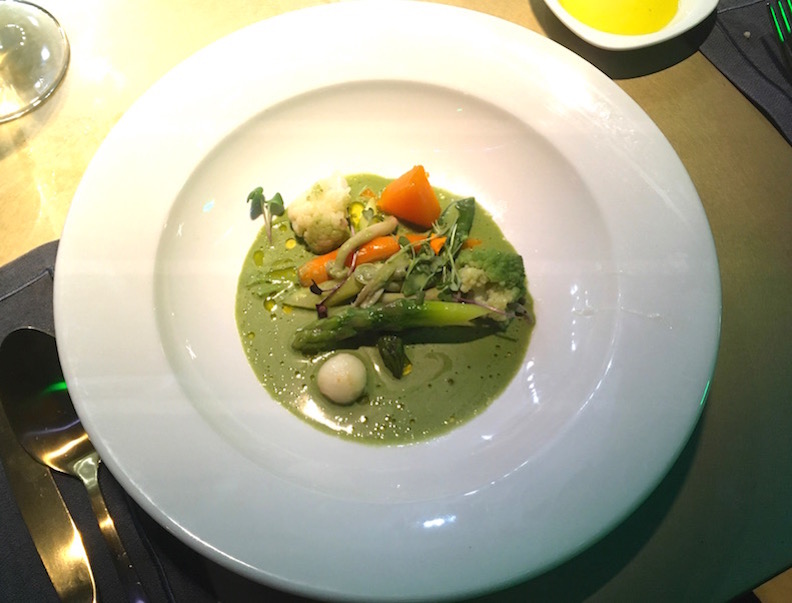
Assaggia qualcosa, partiamo da acciughe con uovo di quaglia, da mangiare con le mani, poi, per pulire lo stomaco, una supersana minestra con verdure, succo di bieta e acqua di mare.

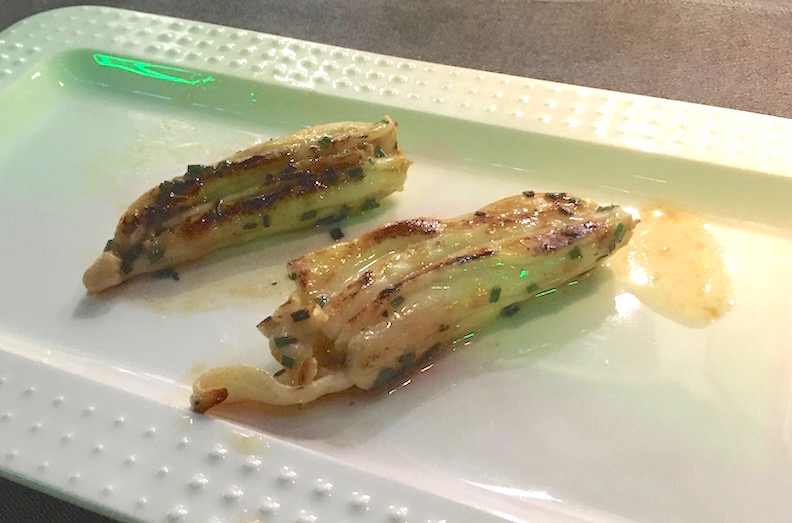
Il mare è tanto presente nel mio menu…Conosci le espardenyes? Sono lumache di mare, a volte indicate come cetrioli di mare. Sono prelibatezze molto apprezzate, hanno un gusto e una consistenza unici, a metà tra granchio, vongola e capesante, perfette alla griglia.

La cucina del Baobab è…
Una cucina del territorio, sincera, umile onesta e la magia di mangiare cibo del posto, che comunque danno il benvenuto a ‘ospiti’ come il caviale e il fois gras, ma se mi dirai che quello che ti è piaciuto di più è stato il fois gras… mi ammazzi… E’ un po’ come se io venissi in Italia e a cena, invece di un buon Franciacorta, ordinassi della vodka!

TARTARE DI TONNO CON MOUSSE DI MELANZANE 

Ingredienti
Per 4 persone

Filetto di tonno: 500 g.
Olio di zenzero: 2 cucchiai.
(l’olio di zenzero può essere fatto con olio di girasole e lo zenzero tagliato fine e lasciato marinare).
Soia: 3 cucchiai
Olio di girasole: 3 cucchiai
Menta: un pizzico di menta
Cerfoglio: un pizzico di cerfoglio.
1mazzetto di erba cipollina piccola.
Per la mousse di melanzana:
4 cucchiai. Olio di sesamo:
3 melanzane
Aglio: 1 spicchio d’aglio
Sale: un pizzico
Preparazione
Tagliare il filetto di tonno in piccoli cubetti e mescolare con olio di zenzero
Aggiungere qualche goccia di limone, l’erba cipollina tritata e qualche goccia di soia.
Per la mousse di melanzane:
Introdurre nel mixer (o frullatore): l’olio di sesamo, le melanzane arrostite, l’aglio crudo sbucciato, un pizzico di sale e setacciare il tutto con un colino fine.
Preparare la tartare di tonno in uno stampo e aggiungere menta, cerfoglio, erba cipollina e ravanello a fette.
Lo impiattiamo come nella foto.

INFO
Baobab Gastronomia


CESARE ZUCCA
Travel, food & lifestyle.
Milanese di nascita, vive tra New York, Milano e il resto del mondo. Viaggia su e giù per l’America e si concede evasioni in Italia e in Europa.
Per WEEKEND PREMIUM fotografa e racconta città, culture, stili di vita e scopre delizie gastronomiche sia tradizionali che innovative. Incontra e intervista top chefs di tutto il mondo, ‘ruba’ le loro ricette e vi racconta il tutto qui, in stile ‘Turista non Turista’

CHEF MATT CHEN, IL RISTORANTE TRISTELLATO ‘LE PALAIS’ E UNA ‘PANNA COTTA’…QUASI ITALIANA

TESTO DI CESARE ZUCCA
FOTO DI PHILIP SINSHEIMER

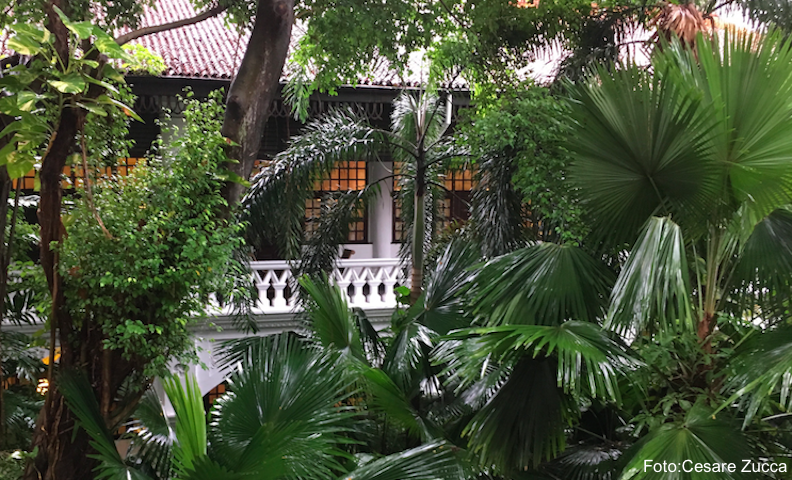
Taipei. Incontriamo lo Chef Matt Chen, al timone di Le Palais, unico ristorante 3 stelle Michelin di Taiwan, al diciassettesimo piano del prestigioso Hotel Palais de Chine.

Appena entrati, si sente immediatamente l’elevato standard del luogo, la raffinatezza degli arredi e l’accoglienza elegante del personale rigorosamente vestito di nero. Il ristorante è diviso in diverse sezioni e alcune sale private. Qui, spazio e tempo sembrano aver assunto una dimensione, equilibrata, tranquilla ed elegante.

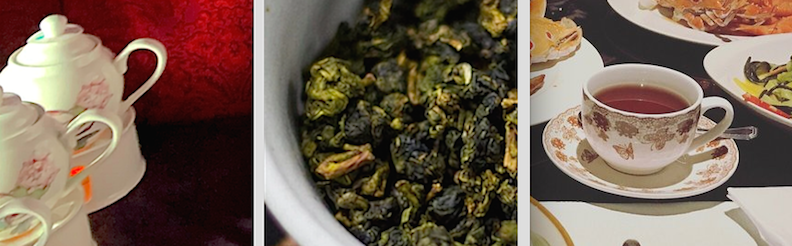
Il tè è protagonista: un ‘maestro del tè’, proprio come un sommelier, consiglia alcuni abbinamenti in base a quello che viene ordinat. Ho provato due superbe produzioni locali, una leggera e floreale dell’ area di Dayuling, l’altra, soprannominata “bellezza orientale” ricca di note di miele e di frutta matura.


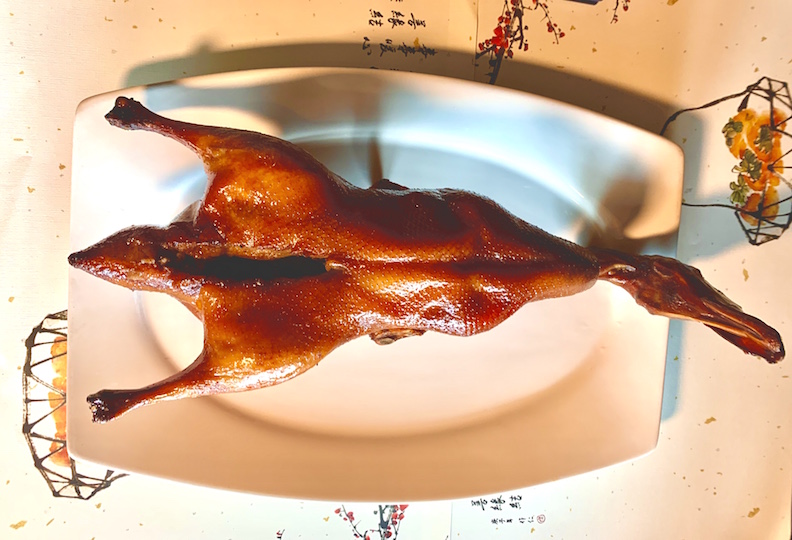
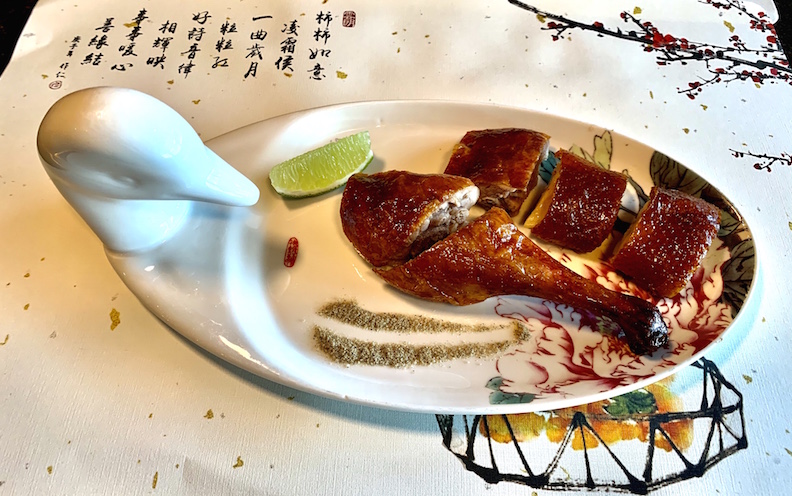
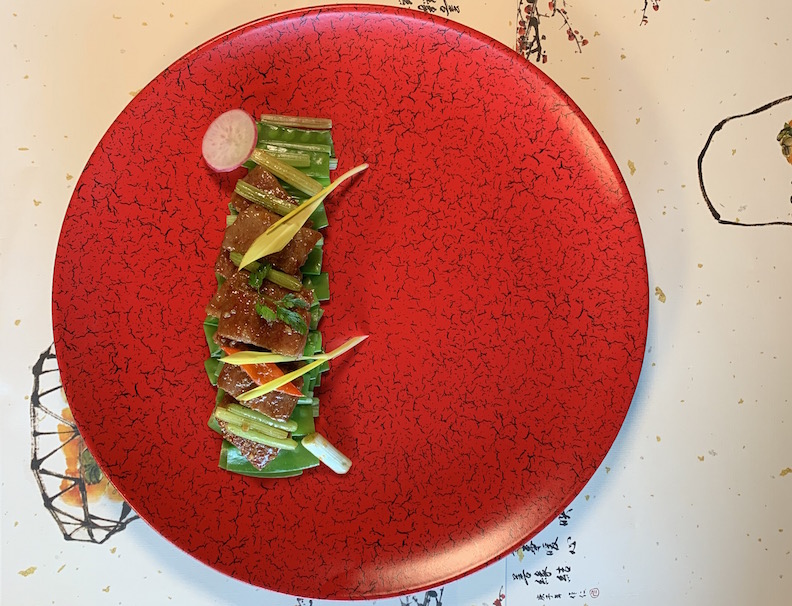
Nel menu impera la classica cucina cinese meridionale, spesso definita “cantonese”, con alcuni ‘colpi di scena’ creativi. I due executive chef provengono dal sud-ovest di Taiwan: uno è di Hong Kong e l’altro di Macao. Lo chef Matt Chen, ci ha servito Il suo piatto più rinomato: l’ anatra arrosto, la cui pelle croccante e la carne succosa non richiedevano nient’altro che un po’ di sale e pepe o giusto qualche goccia di lime per chi ama aggiungere un tocco di acidità.

Sorpresa! L’anatra viene servita accompagnata dalla recita di una poesia della dinastia Song di Su Sh che si tramanda aver ispirato il piatto.

Altra delizia: un piatto con uovo, granchio fresco e dei vermicelli di riso leggeri come dei capelli d’angelo, cosi’ fini… che viene voglia di pettinarli.


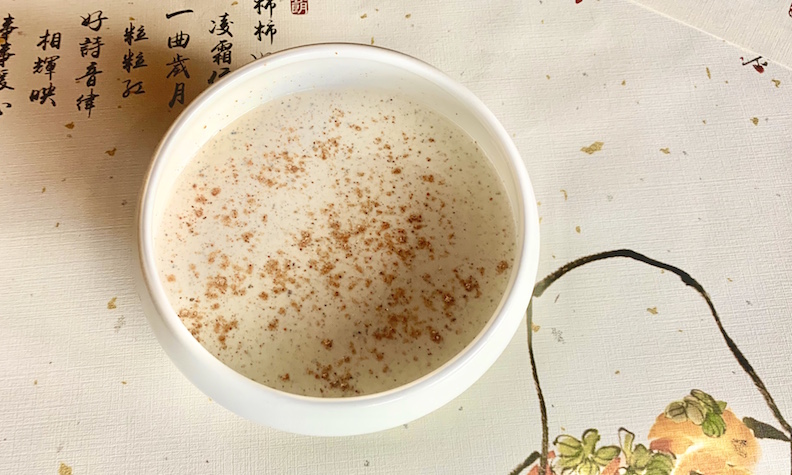
Per finire, una deliziosa panna cotta di sesamo, non troppo dolce e dalla consistenza delicata e dal sapore profondo, altro esempio del perfetto equilibrio della cucina di Chen.
Parliamo di viaggi. La tue destinazione preferite?
Se ho un po’ di tempo libero, mi piace prendere una pausa dalla cucina e andare in giro per Taiwan a mangiare in ristoranti degni di nota. La mia preferenza va alle cucine occidentali. I viaggi più lunghi puntano verso Singapore e Shanghaï. È qui che ho mentori e colleghi che mi aiutano a trarre ispirazione per creare nuovi piatti. Condividiamo idee, ricette, bei momenti e mi sento ispirato a tornare a cucinare con rinnovata energia.

Ti confesso che il mio grande desidero è di conoscere molti paesi europei: Francia, Olanda, Spagna, Italia, Portogallo, Inghilterra…Cosa mi attrae?  Il cibo, sei sorpreso? Cibo e cultura.
Nei tuoi viaggi precedenti, hai preso ispirazione dal cibo locale?
Direi che il mio ultimo viaggio ad Hong Kong mi ha aiutato a sviluppare la mia ricetta di manzo Wagyu con aglio e fagioli neri fermentati, un piatto locale molto tradizionale e sono entusiasta di averlo incluso nel mio repertorio.

Come sei diventato chef?
Sono stato ispirato da mio zio chef in un ristorante di Macao, una città e un territorio che hanno influenzato la mia cucina, per esempio nella mia versione del maiale alla brace.
Nel tuo frigorifero di casa: sempre e mai…
Abalone, secco che gli amici di Hong Kong non mancano mai di mandarmi. Sono un grande sostenitore della freschezza degli ingredienti e del cibo. Nel mio frigo non troverai mai prodotti che abbiano più di un giorno.

Parliamo della tua ricetta. Perché hai scelto questo piatto?
Per me questo dessert rappresenta un felice incontro tra l’ oriente e l’occidente,  la ricchezza e la naturale untuosità della crema e l’intenso sapore del sesamo bianco e nero.

PANNA COTTA CON SESAME BIANCO E NERO

Per una persona
Ingredienti
Sesamo bianco e nero: 160g~170g
Latte: 260g+10g
Gelatina: 0.5g
Zucchero: 1/4 di tazzina (o a proprio gusto)

Preparazione
Iniziate bollendo sesamo bianco e nero
Macinatelo.
Aggiungere latte e zucchero fino a ottenere un perfetto bilanciamento tra sesamo e latte

INFO
Le Palais

Cesare Zucca
Travel, food & lifestyle.
Milanese di nascita, vive tra New York, Milano e il resto del mondo. Viaggia su e giù per l’America e si concede evasioni in Italia e in Europa. Per WEEKEND PREMIUM fotografa e racconta città, culture, stili di vita e scopre delizie gastronomiche sia tradizionali che innovative. Incontra e intervista top chefs di tutto il mondo, ‘ruba’ le loro ricette e vi racconta il tutto qui, in stile ‘Turista non Turista’

Cesare con il fotografo Philip Sinsheimer

IN ESCLUSIVA: SANDRA MILO SI TRASFORMA IN CHEF: “IL MIO PIATTO ‘DA CONQUISTA’”

INTERVISTA DI CESARE ZUCCA –

Quando? Una magica notte di luna piena. Dove? Alla Vigna di Sarah, nella meravigliosa Vallata del Prosecco, Chi ho incontrato? Un’icona del cinema italiano, l’incomparabile Sandra Milo.
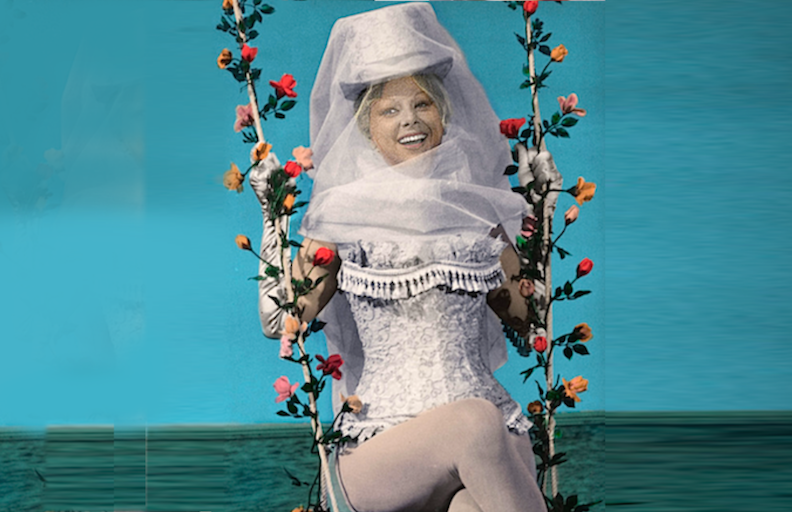
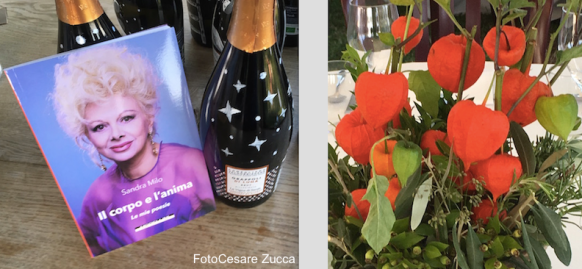
Quasi tutti la conoscono come la biondissima, sexy, svampita e irriverente Musa di Federico Fellini, pochi sanno che Sandra nasconde un animo gentile e una felicità interiore colorati da  quel suo inimitabile pizzico di follia. Ah dimenticavo… con mia grande sorpresa ho scoperto che dietro un’immagine piuttosto frivola, si nasconde una poetessa… Sandra infatti scrive bellissime poesie che ha raccolto nel suo libro ‘Il corpo e l’anima’. E poi ho scoperto che è un’eccelente chef. Leggere per credere…


Parliamo di auto, cosa guida Sandra Milo?
Sandra da qualche giorno… non guida più..( ride)
Mi e’ scaduta la patente e non trovo il tempo per rinnovarla…
La sua auto da sogno?
Da ragazza ero pazza per le Ferrari, il mio ‘dream car’era la Ferrari 250 GT California, mitica star degli anni ’60, la più desiderata dai divi di Hollywood.

Ma poi col tempo mi piacevano sempre di più le macchine belle dentro, ma fuori un po’ ’vissute’, dalla carrozzeria un po’ scassata,  perchè mi toglievano la responsabilità di non doverle acciaccare , magari urtando contro un palo o facevendo manovra nei posteggi. Niente panico, tanto erano giò conciate…
Dove trascorre un weekend libero?
A casa mia (ride), con il telefono rigorosamente staccato…
Un viaggio che ricorda con piacere?
Ho viaggiato tanto, ma sempre per lavoro. Ho girato mezzo mondo ma non ricordo di aver fatto un viaggio solo per piacere. Un destinazione che ho particolarmente amato è stata  l’Argentina: Buenos Ayres è una città fantastica. me ne sono innamorata, al punto di occuparmi di un ristorante, il Porto Rose.


Lo gestiva lei?
Più che gestire… ero sempre in cucina , si. la cuoca ero io!
Ama cucinare ?
Cucinare è un’ arte che ha una durata brevissima e che va coltivata come una disciplina artistica. Ci sono molti ‘chef’ in giro ma solo alcuni sono veri artistI, abili non solo nell’innovazione e nella presentazione, ma soprattutto negli accoppiamenti e nei dosaggi, capaci di rispettare individualemte i sapori, senza che si scavalchino uno sull’altro.

Spesso mangi un piatto e non riesci a distinguere i sapori, secondo me l’arte della cucina è quando nessun degli ingredienti ha il sopravvento, ma tutto si fonda in un piacevole gusto, allora è arte.
Beh, la passione per la cucina raffinata vedo che resta, l’abbiamo vista spesso con l’imprenditore Alessandro Rorato, dell’apprezzato ristorante Le Mercandole.
Si, lì trovo una cucina dove i sapori restano individuali, riconoscibili. Ti faccio un esempio: la polenta, è inutile camuffarla e estrapolare quel tradizionale sapore di grano turco perderebbe tutta la sua armonia.


Eros e cibo sono un’accoppiata indiscussa, qual è per lei un piatto erotico?
Un piatto esaltato da un’abile dosatura di pepe, peperoncino e spezie, che esaltano il gusto e la voglia…Tutti dicono le ostriche, ben non direi  anche perche spesso i filamenti ti rimangono infilati nei denti e di erotico non c’è proprio nulla… ( ride)


Un piatto che mangia solo se cucinato da un’altra persona?
Il sugo di pomodoro. Sembra facile, tutti lo fanno ma pochi lo sanno fare bene. Io me la cavo, ma non arrivo di certo all’altezza del sugo dell’ Excelsior di Ischia, fatto con tanti pomodori gialli, verdi e rossi.che crescono sull’isola e di quello del Don Carlos, lo chicchissimo ristorante del Grand Hotel de Milan


Aspetti un ospite speciale, ha un piatto ‘che conquista’?
Non ho dubbi: ‘lasagnette alle verdurine.’ Un piatto che sorprende grazie al suo gusto delicato arricchito da un appetitoso ragù di verdure miste, besciamella, parmigiano. Da portare in tavola in tutte le stagioni, grazie alla possibilità di utilizzare le verdure che troviamo sui banchi dei nostri mercati.
Come le cucina?
Le verdure le faccio cuocere in padella, tutte insieme, si possono usare anche quelle surgelate. Le unisco a un soffritto di aglio, cipolla e un po’ di peperoncino. Faccio rolosare e aggiugo un tocco di pomodoro. Preferisco usare lasagne sottili, mi sembrano più delicate, le metto a strati con le verdure, burro, besciamella e parmigiano. Semplice.
I suoi primi ricordi in cucina ?
I miei nonni erano toscani quindi  ricordo il profumo deila cucina toscana, i crostini e… quel pollo alla cacciatora che solo nonna Alberta sapeva fare cosi saporito.


Ha mai cucinato per Fellini o Fellini per lei ?
Cucinare proprio no, ma quando lavoravamo nel suo studio, Federico ordinava dalla Cesarina, una cuoca romagnola. che ci portava piatti tipici del suo territorio. La passione di Federico erano mortadella e parmigiano a tocchetti, da mangiare con le mani, cosa allora piuttosto insolita.
L’attore piu goloso?
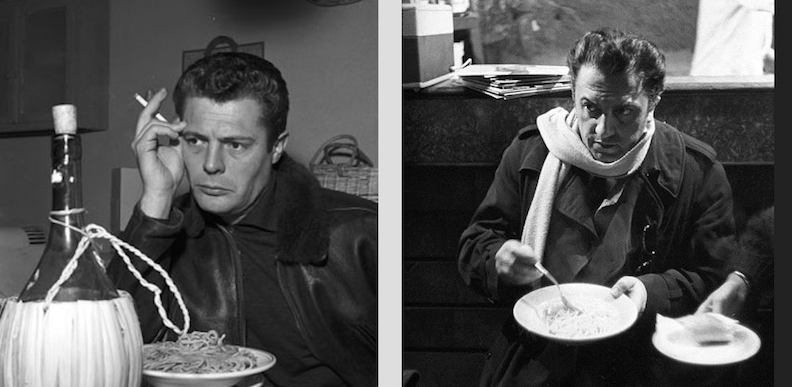
Marcello Mastroianni! Era capace di fare chilometri e chilometri per mangiare una cosa buona….Magari arrivava al ristorante alle 4 del pomeriggio e si faceva fare un piatto di tortellini in brodo…
Nel suo frigo di casa, cosa troverò sempre?
Formaggi, specialmente quelli francesi, li adoro.
Mai?
Beh, mangio un po’ di tutto… Ah si, la trippa, la milza, le interiora, beh non so se mi piacciono o no. Di certo non troverà del pesce perché ho fatto voto di non mangiarne più.
Posso chiederle perché?
Per rispetto verso tutta la gente che è morta nel Mediterraneo.
Un sogno nel cassetto
Li ho esauriti tutti. Ne avevo uno e cioè di fare un musical e lo farò nel 2020, quindi il sogno si avvererà e per la prima volta interpreterò un uomo vestito da donna, una drag queen.
Una domanda che lei vorrebbe che un intervistatore le facesse?
“Cosa vorresti che venisse scritto sulla tua tomba?
E la sua risposta?
Qui giace una donna libera e un po’ pazza che è stata capace di essere felice.

La ricetta di Sandra Milo
LASAGNE ALLE VERDURINE
Ingredienti
Verdure di stagione a tua scelta.
Come base:

  • 3 zucchine
  • 1 porro
  • 1 cipolla bianca
  • 2 carote
  • 1 bicchiere di vino bianco
  • 1 pizzico di pepe
  • b di sale
  • b di besciamella
  • 400 g di lasagne
  • 3 cucchiai di olio extravergine d’oliva
  • b. di grana padano
    Preparazione
    Fate scaldare l’olio extravergine di oliva in una teglia e inserite nel seguente ordine le verdure tagliate a fettine: cipolla, porro, carote, e zucchine. Sfumate con il vino bianco, salate e pepate. Lasciate riposare.
    Preparate la besciamella e sbollentate le lasagne adagiandole su di un canovaccio pulito. Oppure, utilizzate quelle pronte alla cottura in forno. In una teglia da forno imburrata, stendete il primo strato di lasagne e, a seguire, le verdure, la besciamella
    Continuate con gli strati fino a terminare con le verdure e la besciamella.
    Aggiungete qualche fiocco di burro e, se lo desiderate, una spolverata di grana padano o parmigiano reggiano.
    Infornate per 50 minuti a 180°C coprendo la teglia con un foglio di carta alluminio che toglierete a 10 minuti dal termine della cottura.


CESARE ZUCCA
Travel, food & lifestyle.
Milanese di nascita, vive tra New York, Milano e il resto del mondo. Viaggia su e giù per l’America e si concede evasioni in Italia e in Europa.
Per WEEKEND PREMIUM fotografa e racconta città, culture, stili di vita e scopre delizie gastronomiche sia tradizionali che innovative.
Incontra e intervista top chefs di tutto il mondo, ‘ruba’ le loro ricette e vi racconta il tutto qui, in stile ‘turista non turista’.
MILAN KEEPS ON COOKING!

A special apron bearing the words “MILAN KEEPS ON COOKING” to send a positive message to Milan, Italy and the whole world in a moment of immobility and general concern that threatens to deal a blow to everything the catering sector. The idea came to the team of the agency Alessia Rizzetto PR & Communication, specialized in the food & beverage sector “Milan, says Alessia, the dynamic, creative and productive city par excellence, will not stop, rather will continue to” cook “dishes, ideas and opportunities , although the Covid-19 epidemic forced us to change our lifestyle for the moment.
We therefore lend ourselves as a sounding board to a message of optimism that starts from the Milanese chefs and that we hope will reach the public and institutions,
“The goal, continues Alessia, is to relaunch the attractiveness of the made in Italy gastronomy on a national and international scale, of which Milan is one of the undisputed strongholds, without neglecting the precautionary measures imposed by the serious ongoing health emergency.
There are already more than 30 chefs, pizza chefs, pastry chefs and catering entrepreneurs – in alphabetical order, Mattia Accarino, Marco Ambrosino, Enrico Bartolini, Andrea Berton, Cesare Battisti, Eugenio Boer, Fabrizio Borraccino, Daniel Canzian, Nicola Cavallaro, Roberto Di Pinto , Gianluca Fusto, Antonio Guida, Ernst Knam, Filippo La Mantia, Martina Miccione, Davide Oldani,
Mathias Perdomo, Wicky Priyan, Eugenio Roncoroni, Laura Santosuosso, Lorenzo Sirabella, Luigi Taglienti, Matteo Torretta, Viviana Varese, Simone Zanon, Andrea Zazzara
– to have joined the awareness campaign by taking the front line for the recovery of Milan. They were symbolically given an apron to wear and then take a photo to be published on their social networks together with a message using the hashtag #milanokeepsoncooking
In the next few days, moreover, the chefs involved in the initiative will be asked to create video recipes that can be easily replicated at home,  Stay tuned for more info….

CAN THE ESPRESSO BE A… COCKTAIL?

Coffee liqueur has a long history dating back to the times of the unification of Italy and has always met the taste of consumers.
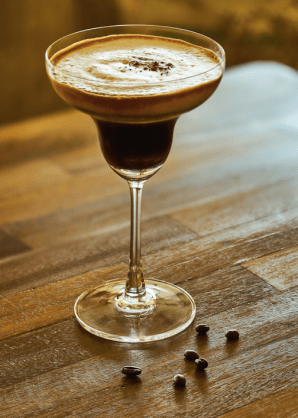
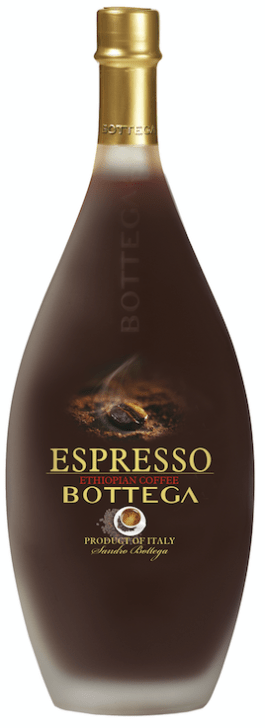
Espresso Bottega, a new proposal from the Bibano di Godega winery and distillery  draws inspiration from this long tradition and thanks to the careful selection of raw materials and their skilful mixing, is refined and intriguing. It is characterized by the persistent aroma of mocha, by the delicate fruity notes of peach and apricot, as well as by the slight hints of chocolate.

Espresso Bottega is produced exclusively with Arabica coffee of the fine Sidamo and Djmmah varieties, grown in the mountainous area of ​​Ethiopia. The quality, character and personality of this liqueur depend not only on the excellence of the raw materials, but also on the three different types of roasting used and the three different ways of extracting the aromatic component: hot infusion, which allows you to obtain hints of “mocha”, the cold infusion, which gives finesse and enhances the varietal characteristics and, finally, the classic hydro-alcoholic infusion, which gives the product more body and structure. Before filtration and bottling, a small percentage of grappa is added, which gives the product additional intensity.


The moderate alcohol content (20% vol.) Makes it an ideal after-meal, to be eaten smooth or with ice. It is also an excellent ingredient for preparing cocktails. Finally, it can accompany coffee desserts, dry pastries and can add an “alcoholic” touch to tiramisu.


For more info https://www.bottegaspa.com/en/collections/espresso/


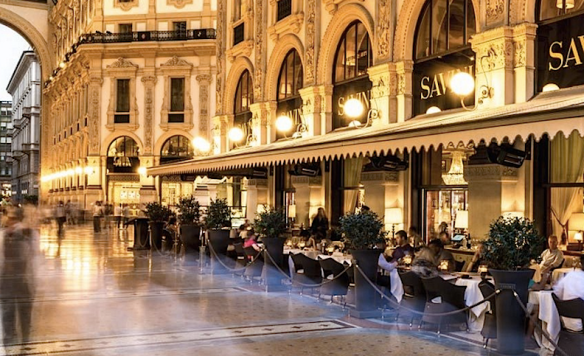
WELCOME TO THE SAVINI MILANO 1867. A legendary institution for over 150 years

Text and photos by Rossana BeccariGalleria Vittorio Emanuele II was inaugurated on December 31, 1877
As a matter of fact,  the  so called ‘Salotto di Milano’ was already completed in 1867, when the covered passage was completed and so under a transparent roof, among stuccos, mosaics and elegant decorations, the Gallery comes to life with its shops, bars, restaurants and the prestigious headquarters of the Ricordi music publisher.
Once upon a time there was Caffè Gnocchi, then it changed its banner and became the elegant Stocker Brewery until in 1885 the space was purchased by Virginio Savini:
who transformed the venue into a posh living room enriched by beautiful crystal chandeliers, cutlery, table mats, silver food warmers and tailcoat waiters. The success spanned the golden season of the Belle Epoque and the fabulous 1950s.
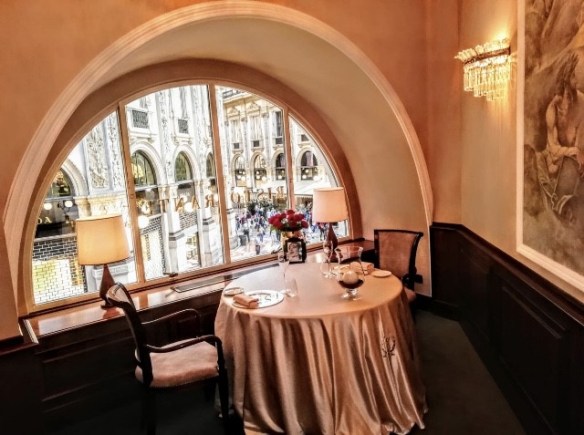
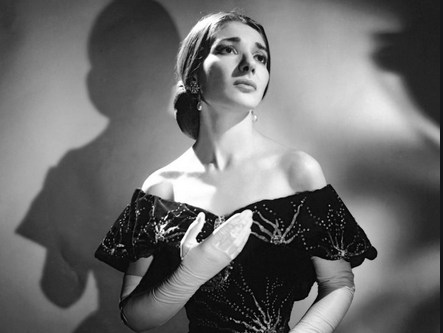
Savini has always kept its aura of exclusive place but it is also an interesting archive of memories, stories of characters, curiosities of city life … and why not? … a little
of ‘gossip’: like the iconic ‘table 7’ on the first floor, in the most romantic corner with large windows overlooking the Gallery,
Why iconic? Because that spot was reserved only for the ‘Divine Soprano Maria Callas’ often escorted by Luchino Visconti, Franco Zeffirelli … and of course Mr.Onassis.
A cocktail is dedicated to her, her favorite, based on bitter herbs, still on the list and could only be called “DIVINA”.
Savini has always been the favorite venue for world-famous singers and composers.
Regular guests were Verdi, Puccini, Toscanini, Eleonora Duse and D’Annunzio At the beginning of the twentieth century,
Savini became a place for Milanese intellectuals, writers and artists: from these tables Filippo Tommaso Marinetti founded and became the leader the group known as ‘The Futurist” followed by legends such as Charlie Chaplin, Ava Gardner, Henry Ford, Hemingway and the iconic grand entrance of Liza Minnelli, who’s limo was allowed to drive into the Galleria and stop right in front of the restaurant entrance! That ‘s a star!
Today the Savini Milano 1867 sign is part of Milan’s historic shops and Italy’s historic venues
SAVINI MILANO
1° Piano / 1° Floor

Via Ugo Foscolo, 5
Corner of Galleria Vittorio Emanuele II
Opening Hours
From 12.00 to 2.30pm
and from 7.00pm to 10.30pm.
Closed for lunch on Saturdays and on Sunday
Tel +39 02 72 00 34 33

Passo del Cerreto, Collagna, RE , Italy. A CHESTNUTS BIG PARTY!

Collagna, RE , Italy:
On Saturday January18th at 5.00 pm, a yummy ‘Gastronomic Laboratory of the Apennines’ will take place. at the Passo del Cerreto, at the Giannarelli Restaurant, Visitor Center of the Tuscan-Emilian Apennine National Park.
The protagonists are chestnut producers and restaurateurs of the Zero Km circuit of the UNESCO Biosphere Reserve of the Tuscan-Emilian Apennines. On the occasion, the fourth ‘Contest’ will take place among the producers of chestnut flour made with the traditional method on the ridges of Emilia and Tuscany, a monument of tradition that binds the territory. Three moments of the competition: the sensory analysis of the product, by a jury of experts; the tasting of competing flours with small samples produced by the restaurateurs of the Km Zero circuit; the revisiting of a traditional dish by a representative chef from the Apennines.
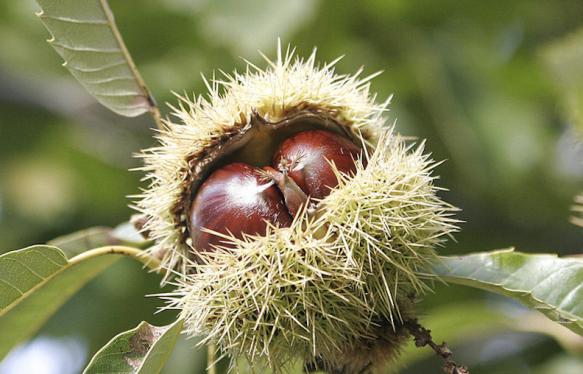
‘Dolce & Farina’ is the event dedicated to the chestnut chain: an ancient path that has always linked the Apennini communities to their mountains. For many small villages, the recovery of the bread tree – as the chestnut was traditionally called – and its fruits, as well as the re-ignition of the dryers and the production phases of the precious flour, represent a renewed sense of community; a job for all the autumn months, until the winter, which brings people back to being together for a good that returns to being collective..on Saturday 18 January 2020 at 5.00 pm
INFO
turismo@parcoappennino.it
www.parcoappennino.it

CESARE ZUCCA
Born in Milan, he lives in New York, Milan and the rest of the world.
Cesare likes to travel up and down America as well as spending time  in Italy and Europe.
For NTT, he photographs and tells about cities, cultures, lifestyles and discovers both traditional and innovative gastronomic delights, among interviewing top chefs from all over the world, “stealing” their recipes and  write everything here, in  a perfect ‘ non touristy tourist’ style..
 

MAY THE “FORTEZZA” BE WITH YOU ! Discovering the Campania Region, the wines and… the witches!

TEXT AND PHOTOS BY CESARE ZUCCA

Campania Region, Italy.
Torrecuso
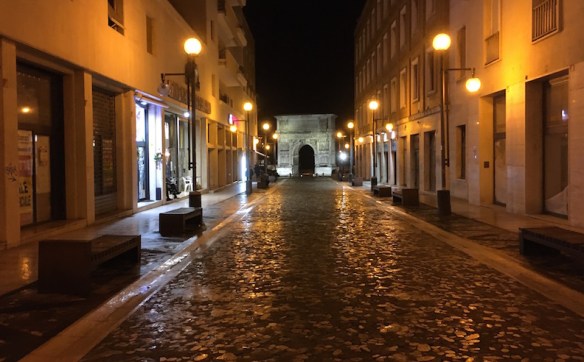
is an enchanting medieval ‘borgo’, that offers a suggestive view of the Taburno and the Valle del Calore. Its origins date back to 216 BC, probably on the initiative of some Etruscan refugees from the Tuscan town of Chiusi who called it “TurrisClusii”.
Today is a small village characterized by narrow, winding streets, which surround the square on which stands the splendid Palazzo Cito, adapted into an ancient tower; the building was the residence of the feudal lords of Torrecuso and today is the town hall.

The soil is sunny and lends itself well to growing grapes; here is produced the Aglianico del Taburno, which makes this place an important station for food and wine tourism.
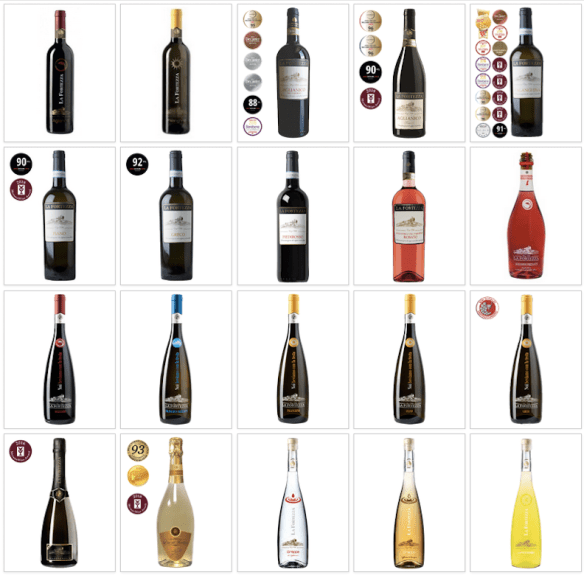
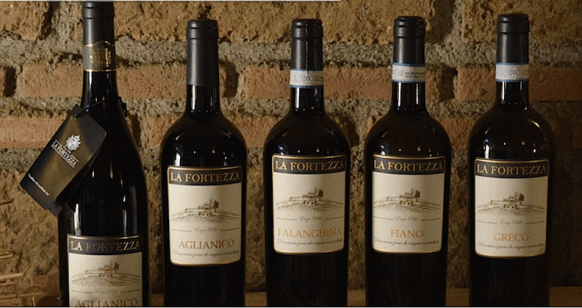
In the last decades the production of other typical vines such as Falanghina, Coda di Volpe and Greco has been increased, all included in the Taburno D.O.C..
I will take you to the best of the wineyards in Torrecuso, the great Cantina La Fortezza and invite you to taste its excellent wines, but allow me to start witha little history of this magical land…
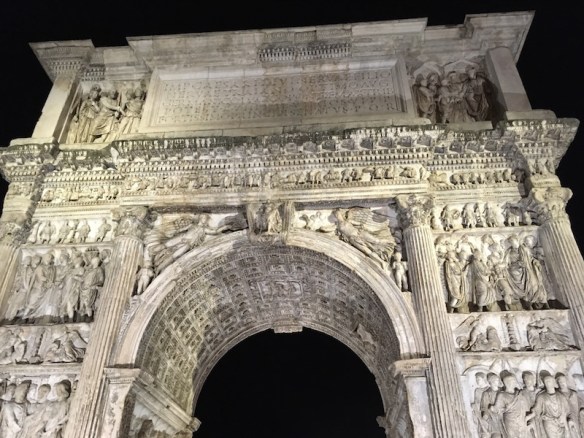
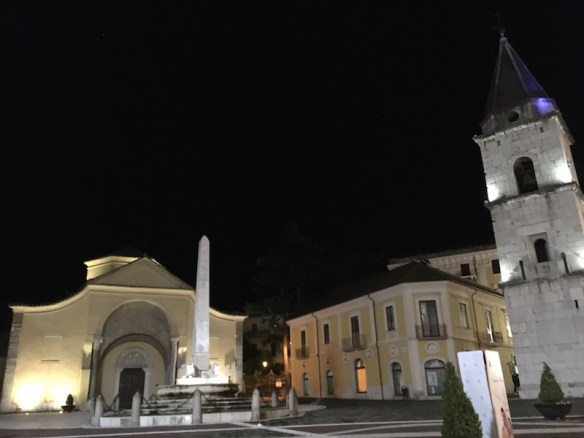
Torrecuso is located close to Benevento, a town mythically traced to the arrival of a Greek hero back from the disastrous Trojan war. In this case it would have been Diomedes to found it and on the Beneventan soil the Greek prince would have met and almost met with death with Enea, a Trojan hero.
Historically, the first settlement dates back to the Osci, and then passed under the control of the Samnites. The first ‘bad’ name was Maleventum that means a ‘huge disaster’, then luckily changed to the positive name of  Beneventum  when the city became a Roman colony, in 268 BC.
Throughout the Roman period the city became one of the most prosperous since it represented a very important junction for the main commercial routes and roads. 
Although tortured by violent earthquakes and barbarians invasions, Benevento gained the reputation of a city difficult to conquer: even the Franks and Charlemagne himself had to stop at its borders. In 1077 Henry III ceded the city and the entire area to the Church, which held power until the unification of Italy.
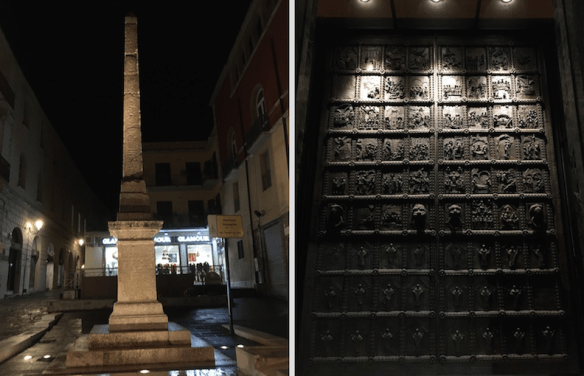

For a few years, in 1798, it was occupied by Napoleon’s troops,then in the hands of the Bourbons, then again of the Church.
Here come the witches!
Benevento has always been in the popular belief the capital of witches, in that peasant and genuine territory where legends and traditions have a weight, the nightly Janare were the most ferocious species of those witches.
These were women who possessed the knowledge of the occult and magical rites, such as invoices and the evil eye, capable of ruining life. According to tradition, in fact, it was necessary to place an upside-down millet broom or a bag with grains of salt in front of the door, counting which the witch would have lingered until dawn, when the light, her bitter enemy, would have forced her to flee away, leaving the inhabitants of that house or that room in particular in peace.

T
here was a widespread belief that these witches gathered under a walnut tree on the banks of the Sabato river to worship the devil. Aggressive and acid, they use to go around naked and celebrate the Sabbath, or demonic rites: banquets, dances and orgies.
“Ointment ointment
take me to the Benevento nut
above the water and above the wind
and above Benevento ».There are still janaras around  today?
I asked several Benevento citizens, but apparently the malifigcent witches aren t no more. Perhaps some older women are preparing healing natural ointments or infusions, as regular herbalists. But hey, I’ ve been told that you can recognize them, because they are the last ones to leave the church after the mass…
Strange…Are the witch going to church?
The only surviving witch is the Strega Liqueur, a traditional drink obtained by the distillation of about 70 herbs and spices from all over the world. You can drink it neat, icy or mixed in long drinks or cocktails.Let’s move from the legends to a truly magic reality…
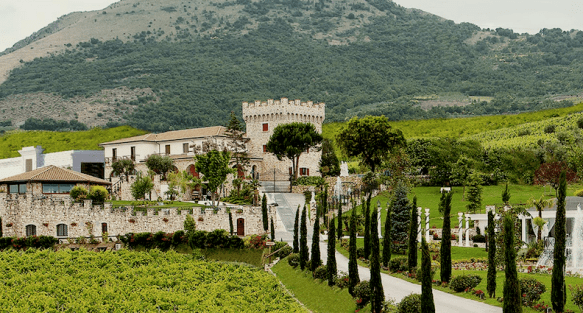
I am taking you to La Fortezza Vineyards, located in Torrecuso,
where their headquarters extend on the east slope of the Regional Park of the Taburno-Camposauro: the slopes are a succession of vineyards, woods and small clearings, which only in the last hours of the day the Monte Taburno profile subtracts light and heat.In the middle of the vineyards stands the beating heart of our business: the cellar.
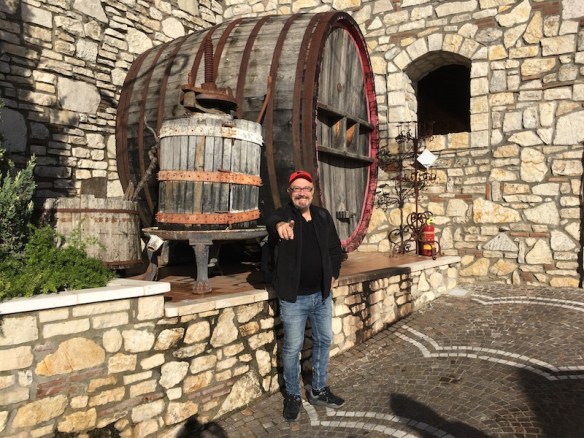
Entirely coated in stone and well integrated into the surrounding landscape is made up of two bodies. In the upper part a Villa and wide open spaces primarily intended for lawn: a charming place by sweeping views looking towards the Apennines that separates the Campania from Apulia. The underlying body, which opens more than two gates in medieval style strictly processed hardwood, home to the productive activity itself: a perfect blend of tradition and modern technology.The barrel vaults, that dominate the area destined to accommodate the aging of wine, entirely coated in terracotta bricks and partially dug into the tuff, bring us closer to an idea of ​​the cellar to those who were the old “cellai” of rural farms, that is, those places that were intended to keep as much wine as food.
The local processing, where there are machines for wine making, bottling and labeling room, steel tanks and warehouses for goods destined to commercialization complement the wine cellar, with a production potential of about two million bottles.Here La Fortezza’s grape varieties:
Let’s start with the Aglianico del Taburno, a generous quantity that allows an accurate selection in the vineyard for the various sales lines and to guarantee the production of wines of the highest quality such as the Riserva, whose grapes come from a vineyard of about seventy years of age.  Falanghina del Taburno, whose exposure of the vineyards gives us the best results in terms of sugar content, perfumes and acidity of the wine without having to resort to cuts in working phase. By the time we select in outside the vineyards of Greek and Fiano to be allocated to our products by imposing a strict and meticulous discipline of crop for producers: once the land and its vineyards identified, these are followed in all the basic steps until the collection that takes place under our supervision.
Want to go bubbles?
I like to point the Sparkling Falanghina, the Aglianico Frizzante and the precious “Maleventum”  a brut obtained with the charmat method.
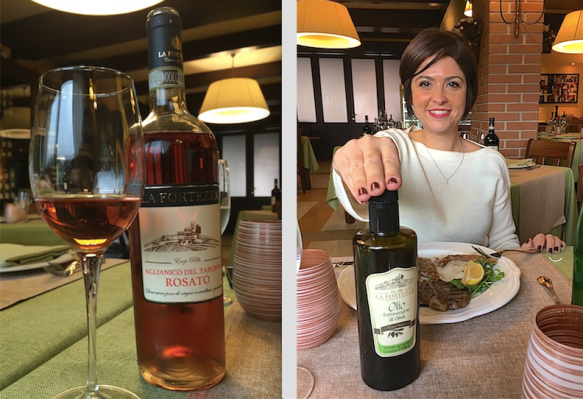
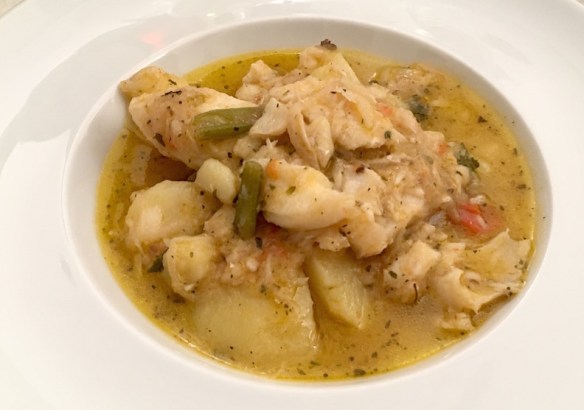
Last but not the least I like to mention the delicate rosèe Aglianico dl Taburno, perfectly pairing fish and the fragrant Olio La Fortezza, both excellent choice if you are having a local great dish with baccalà (salted codfish) a remarkable specialty of this territory, which I had the pleasure to taste at a typical restaurant Trattoria Nunzia, in Benevento.
Sweet finale? Do you love chocolate?
Well, while you are there, take a trip to to San Marco dei Cavoti to visit the Antonio Autore Artisanal  Factory that produces the one and only handmade ‘croccantino’.a delicious traditional recipe of a bar of sugar, almonds and hazelnuts. It will be a pleasure for your eyes and for your mouth!

INFO
La Fortezza
Torrecuso, Benevento
www.lafortezzasrl.it

Antonio Autore
San Marco dei Cavoti

Cesare Zucca
Milanese di nascita, vive tra New York, Milano e il resto del mondo. Viaggia su e giù per l’America e si concede evasioni in Italia e in Europa.
Per WEEKEND PREMIUM fotografa e racconta città, culture, stili di vita e scopre delizie gastronomiche sia tradizionali che innovative.
Incontra e intervista top chefs di tutto il mondo, ‘ruba’ le loro ricette e vi racconta il tutto qui, in stile ‘turista non turista’.

GORI WINERY, FRIULY, ITALY: FROM MAGNIFICENT MAGNIFICAT TO HISTORICAL VERMUT, FROM RIBOLLA PRECIOUS GRAPES TO A LICIT DRINKABLE CANNABIS!

You want more?
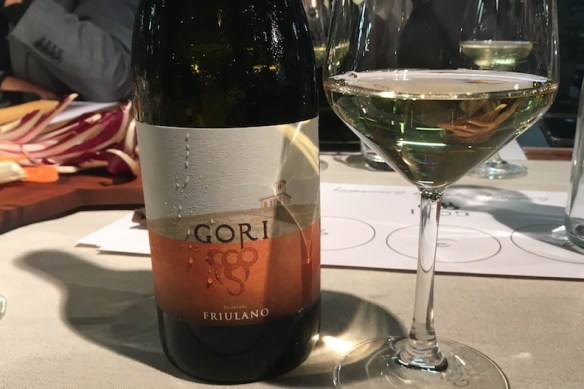
I really enjoyed the Friulano, pure expression of the territory, the Chardonnay, the fruit of an international vine that finds here a suitable habitat, thus becoming one of the most characteristic white wines of the region; Sauvignon, also in this case an international grape variety which, thanks to the frequent daily temperature changes and to the fresh and dry soil, enhances its characteristics.
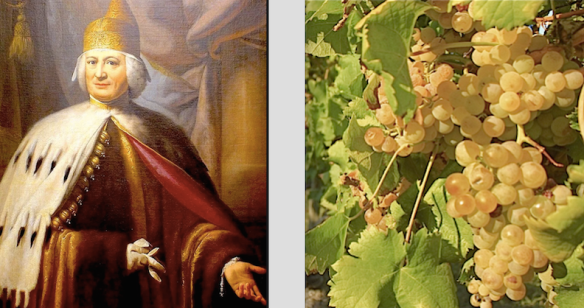
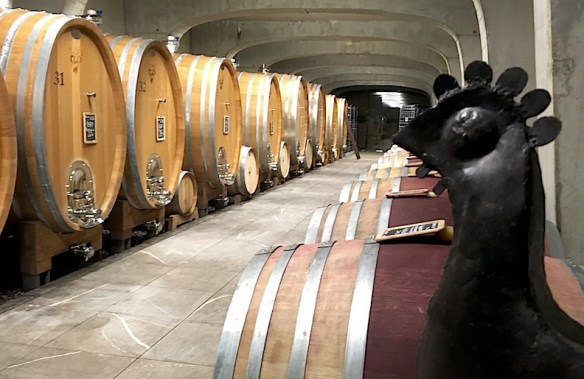
Finally I lusciously indulged in a glass of Ribolla Gialla, which comes from a native grape known in the 1300s and since then present on the table of the Doge of Venice and which finds its optimal position in the hills.
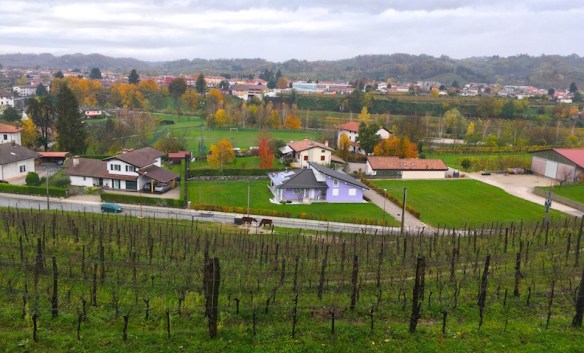
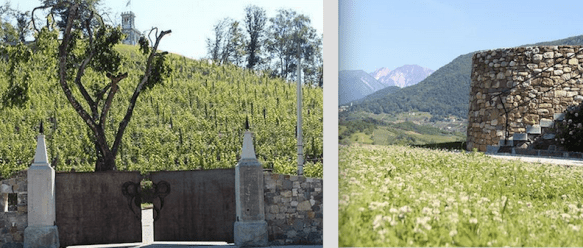
The winery is an extraordinary example of architecture integrated into the landscape, a symbol of the Gori family’s love for their land. Developed on three levels, it has been designed with respect for tradition and, despite being equipped with all the modern equipment to limit the use of permitted chemical products as much as possible, its construction is inspired by the old principles for the correct vinification and aging of wines The stainless steel containers and on the lower floor, excavated inside the hill, the wooden barrels are optimal and help red wines in their ripening phase, respecting their typicality and taste. Furthermore the use of refrigeration allows to obtain long and not tumultuous fermentations: in this way the wine retains the aromas and the aromas that the grape has obtained during the maturation, making the use of chemical products superfluous.
The tasting area welcomes guests with its contemporary design and the large window overlooking the vineyards and allows natural light to illuminate the environment. A place to live a sensory journey that, through the wines and recipes that best interpret local raw materials, leads to the discovery of the stories of these lands between territory, history, culture, traditions, excellences.Let’s party!
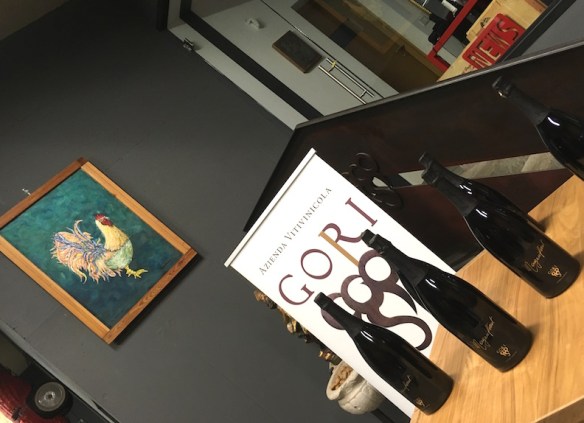
Magnificat ,the newest Gori creation, boasts the Classic Method sparkling wine signed Cantine Goritells while its excellence and expresses at the same time the joy for the result achieved after years of study and work. It starts with the harvest, which takes place between the last days of August and the beginning of September and, as for still wines, is performed manually in boxes of only 20kg, we proceed with the selection made with soft destemming on the sorting table, yes continues with fermentation in steel tanks and with bottling until manual disgorgement, after a stay on yeasts of at least 24 months. Finally, no sugar or “liqueur d’expédition”: only sparkling wine from the same cuvée to obtain a Zero Dosage with minimal residual sugar, a dry, elegant and natural taste, now increasingly appreciated.
Magnificat becomes part of Cantine Gori only in the magnum version, with 1.5 liter champagnotta bottles that make its evolution more stable and protected and enhance its sensory characteristics. The cuvée of Pinot Noir (60%) and Chardonnay (40%), typical blends of the eastern Friuli hills, best expresses a terroir that has always been devoted to the production of wine and to which the Cantine Gori are deeply linked.

Happy 10th anniversary !
Gori s familily celebrated the first certified organic harvest and was able to celebrate it with its first Magnificat bubbles!
Did you know that the ‘Vermouth’…
The vermouth was officially invented in 1786 by Antonio Benedetto Carpano in Turin,
But they say that this aromatic liqueur has a millennial history. Apparently already the Greeks used to add spices, honey and sea water in wine amphorae, however the legend according to which Hippocrates would be the inventor of Hippocratic wines, precisely wines flavored with honey, herbs and spices, is just a myth, but above all the wines were flavored to mask their defects, given that they were crude and highly perishable products.
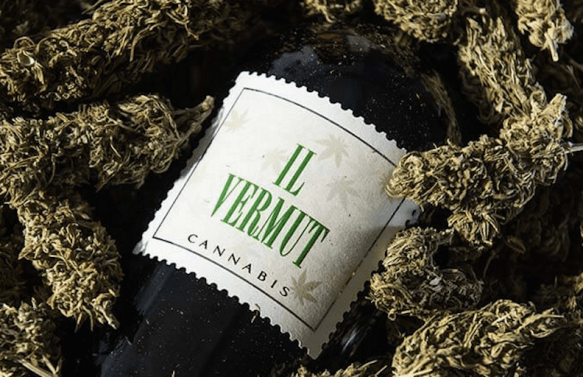
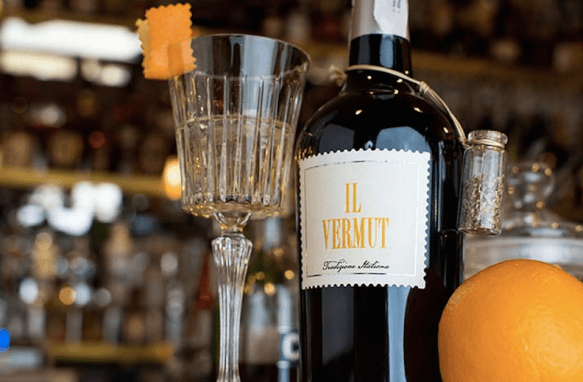
Gori, au contraire, decided to the best grapes and best wines to make its great vermouth, simply called THE VERMUT, a product that emphasizes the Friuly territory by selecting the best qualities of Friulian wine, adding creativity, ingenuity and innovation.Aromas of herbs, fruit and spices give strength to our vermouth enhancing typically artisan properties.
Thanks to the richness and quality of the native vines Gori created 3 different varieties:
IL VERMUT ROSSO Ramandolo DOCG
From the lands of Ramandolo, with its fine and lovable taste and its ancient vineyards on the Friuli hills, blended with spices and aromas to give birth to the Red Vermouth.
IL VERMUT CANNABIS Vermouth Bianco e Aromi
A revolutionary yet simple recipe, born from the union of different cultures, but at the same time complementary, with antipodal flavors and which together create an exceptional drink Did I get stoned? not really …Did I get satisfied? A lot!
and finally…
IL VERMUT BIANCO Ribolla Gialla and Friulano
A blend of  Ribolla Gialla and Friulano, embellished it with spices and aromatic herbs, making it unique, classic, but at the same time innovative (and my favorite!) Ready ?
Let ‘s start a great ‘Gori-speed’ tasty journey!

INFO
GORI WINERY
IL VERMUT

CESARE ZUCCA
Travel, food & lifestyle.
Born in Milan, Cesare lives in New York, Milan and the rest of the world, traveling up and down in the US, Italy and Europe. Cesare photographs, tells about cities, cultures, lifestyles and discovers both traditional and innovative gastronomic delights.He meets and interviews top chefs from all over the world, “stealing” their recipes and telling you everything here, in a perfect ‘non-touristy-tourist’ style.


Udine, Restaurant ‘Il Fogolar’ Chef Stefano Basello and Chef Simone Gottardello. A four hands dinner to celebrate tradition, innovation and friendship

TEXT AND PHOTOS BY CESARE ZUCCA
Hello non-touristy-tourists friends!
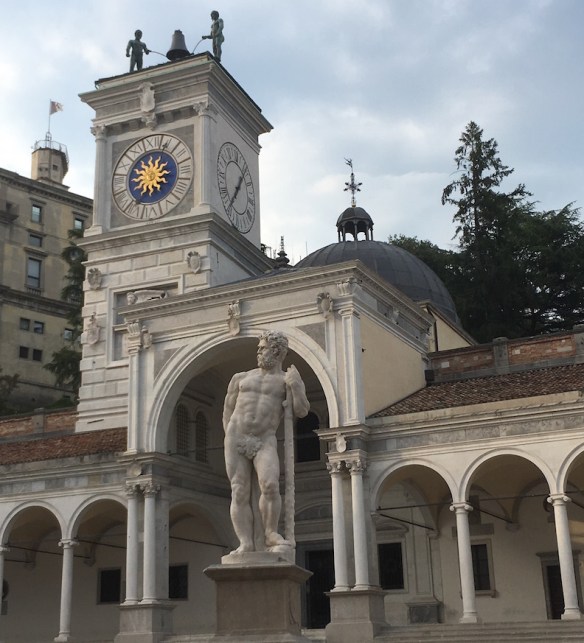
I am in Udine, in the heart of Friuli Venezia Giulia, Let me introduce you to the The Marinis, or, I should say,  the Morets, because of their dark hair, in 1905 opened a small tavern with a stable and a large courtyard with a deposit where the horses could rest, and fed the passing patrons with a warm but unobtrusive welcome – the same one reserved for real friends – and offer them bread, salami, cheese and omelettes.
Precisely in this simple yet excellent formula adopted by the patriarch Giovanni, lies the success achieved and consolidated over time by the Marini family: genuine and lively hospitality according to the canons of authentic Friuli, combined with the excellence of the food and wine proposal, have in fact made the Best Western Plus Hotel Là di Moret The trademark “Là di Moret” is a real guarantee – also confirmed by the prestigious awards obtained over the years, first of all the numerous Best of Alpe Adria Awards – which it is renewed daily not only in the kitchen of “Il Fogolar” but also means welcoming 360 ° to involve gourmets and all guests, all travelers who want to be pampered by the comfort of the 86 rooms and take advantage of the high international standards of services the hotel – at the forefront those dedicated to women and noteworthy for the excellence and flexibility those dedicated to business customers and the world of MICE – and to experience the beauty and wellness paths of the Blu Moret SPA.
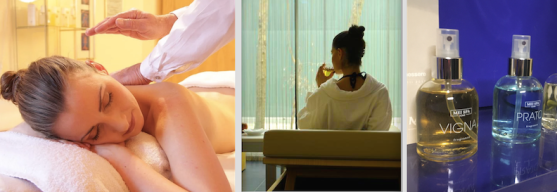
more than five generations has been wisely guiding this structure, symbolizing the best of accommodation and the high quality catering of an incredibly rich territory of history and culture, history and great gastronomy
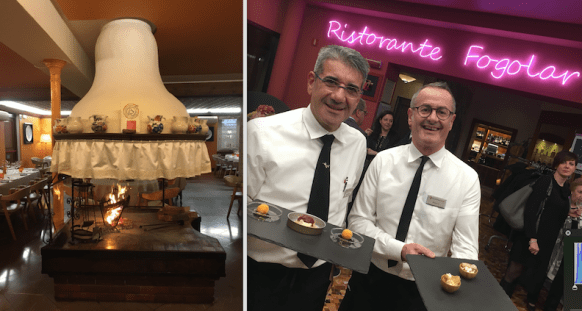
Let me tell you about the cozy restaurant Il Fogolar
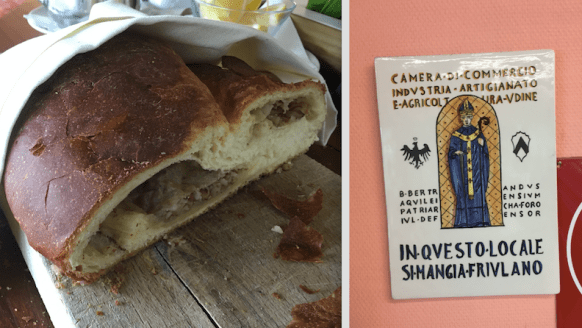
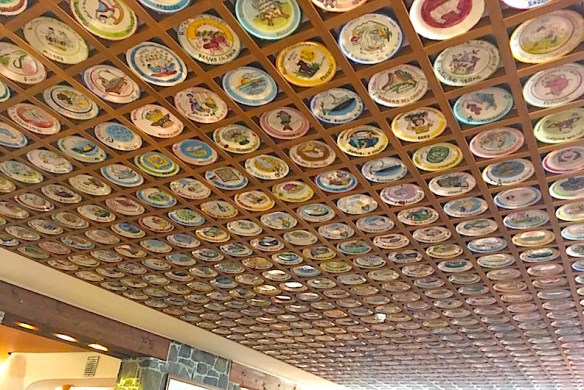
The room is warmed up by a real wood burning fireplace,  the sealing boasts 500 dishes ‘del buon ricordo’ ( great remembering) a tribute to the traditions and the history or this territory.
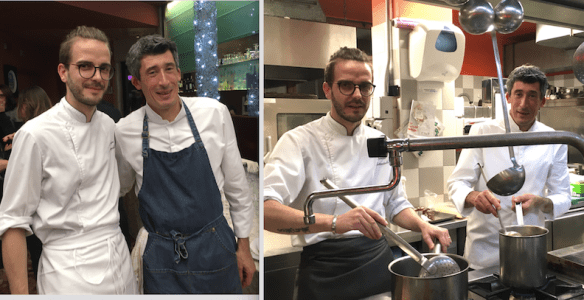
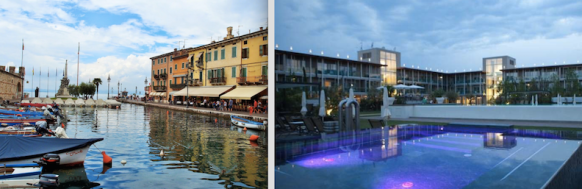
The dinner was created by resident Chef Stefano Basello and host Chef Simone Gottardello from EVO at Aqualux Hotel SPA Suite & Terme Bardolino -.
it was a comeback , actually the couple worked together in a previous dinner in Bardolino , so this time they were more familiar with each other ways of cooking .
The two young chefs both believe in a gourmet cuisine deeply tied to their origins and to their territory understood as a baggage of history and culture in operation of a personal and professional enrichment, they decided to get together and share their experience once again.The encounter happened at “Il Fogolar”, for over a century a real window on Friuli, the symbol of the values ​​of tradition and hospitality of this still little-known region, which has taken the helm of the previous event from EVO, the restaurant of the design hotel with a green soul that rises in one of the most suggestive corners of the Verona side of Lake Garda, and that allows you to live an experience of taste, tradition and creativity, immersed in a refined environment and at the same time welcoming.
The menu entitled “When tradition rhymes with emotion” give a foretaste of rediscovered flavors, classic revised suggestions in terms of personal interpretation and new preparations that open the dances of imagination and curiosity.
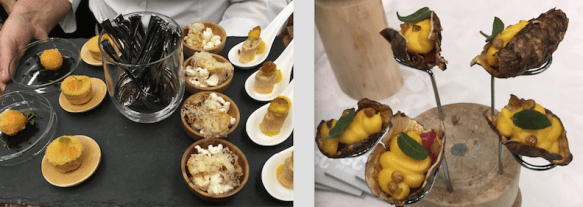
The hoers d oevre were served with a Scala Bianco White wine,from Tenuta S. Antonio
and they keep the promise to tribute the territory, including the sound!
EAT AND LISSEN!
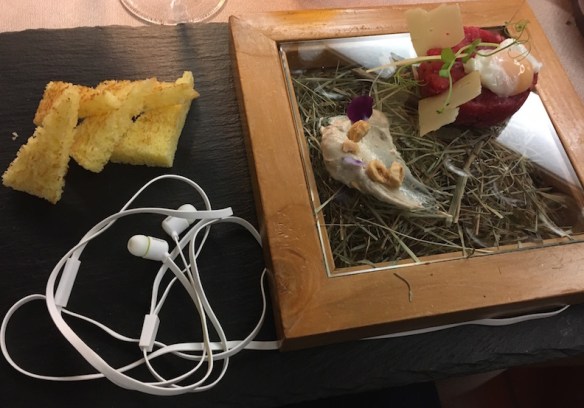
Yes , it happened when an extraordinary dish was served on a wooden box completed with hearphones.  Eat and listen to the really recorded sound of the surrounding hills…
Cows included!
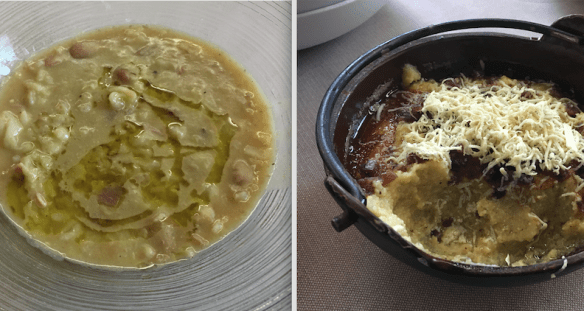
Stella Chianzuttan, a great pralina di Montasio and Blave di Martena a crunchy Blave by Mortean (a polenta – dialect means polenta – made with a flour made from a native variety of maize grown in the lands of the municipality of Mortegliano, Udine) accompanied by Caffè di mais, a a very original aperitif found in the stories of the peasants, while the Venetian chef thought of the Baccala ‘mantecato, yellow bean from Val Belluna (a precious bean, very tender, with an almost inconsistent skin after cooking, whose cultivation is documented since early twentieth century) and onion sorbet in saor (literally “flavor”, a typical Venetian condiment made from onions, vinegar, raisins and pine nuts). Simone continued with a Vialone rice creamed with a 48-month matured cheese from the Corrado Benedetti reserve, chestnuts from San Zeno, suckling pig and cabbage.  tefano responded with a classic of autumn, pumpkin ravioli, Montasio broth and pitina (the famous “meatball” of Friuli Venezia Giulia that has obtained the IGP recognition in 2017).
Then Stefano’s signature dish , the Faraona in Tre Servizi (first, the clarified guinea-fowl broth is served, then the breast stuffed with walnuts and plums and wrapped with bacon.
One of my fav was the dish ‘Da Sauris A Grado’ a delicious pan brioche combining Cheese from Sauris and sardines from Grado.
Finally Gottardello’s signature dessert, a real gem with lemon, Orelys chocolate and Lake Garda’s Viola DOP Oil.


INFO
https://www.ladimoret.it/

CESARE ZUCCA
Travel, food & lifestyle.
Born in Milan, Cesare lives in New York, Milan and the rest of the world, traveling up and down in the US, Italy and Europe. Cesare photographs, tells about cities, cultures, lifestyles and discovers both traditional and innovative gastronomic delights.He meets and interviews top chefs from all over the world, “stealing” their recipes and telling you everything here, in a perfect ‘non-tourist tourists’style.

A SWEET MONA LISA CONQUERS NY!

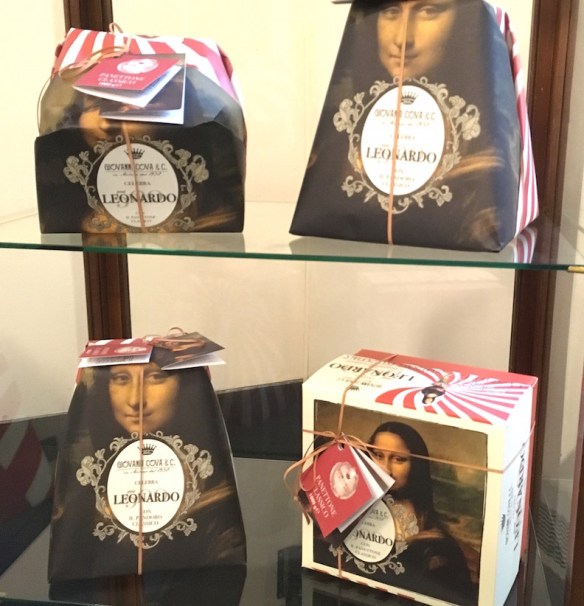
TEXT AND PHOTOS BY CESARE ZUCCA In 1795, Mastro Tommasso di Filippo Muzzi opened small pastry shop in the heart of Foligno, a town in central Umbria. Today, Muzzi continues to make the highest quality Italian pastries, cookies, and cakes. While in Milan for the entire Christmas period a real “Panettone festival” will be organized which will see the specialties of the prestigious Giovanni Cova & C. pastry shop at the extraordinary Eataly Smeraldo Store. In New York, Boston and Chicago, in synergy with Eataly, Tommaso Muzzi’s Panettone will be told in its essence, as we know it in Italy. The rigor and complexity of production will be transferred, making it one of the most prestigious national gastronomic symbols. he collaborative project between Eataly, the Farinetti family company and Borsari family Confectionery Company of the Muzzi family, owners of the “Tommaso Muzzi” brand, will take the form of setting up real single-brand temporary stores, in which they will be protagonists classic panettone and pandoro, coated and stuffed specialties that will find narrative opportunities and sumptuous exposure. Connoisseurs can, in a guided way, taste the products and understand the substantial characteristics and differences with respect to any other dessert. Emphasis therefore on the mother of natural yeast, sensory analysis, occasions and ways of consumption, to establish a path of knowledge and culture with the consumer.

 “We are in perfect agreement with the Eataly philosophy based on the celebration of Made in Italy excellence – states Andrea Muzzi Ceo of the Group – we also share the values ​​and the will to bring Italy where no one has gone so far so determined. The conquest of the international tables is above all a cultural issue and those who become standard-bearer are also guarantors of an entire system or supply chain. The Italian tradition must be defended and protected, therefore teamwork is not only a necessity but I would say, an imperative “.
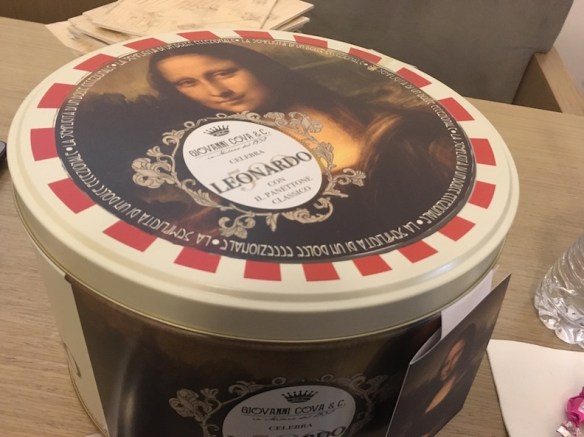
The historic pastry shop Giovanni Cova & C., also distributed in the US with label Brera Milano 1930,  from Mid.November till January 2020  will host a great sale of its products at NY Eataly, including a sumptuous exhibition the celebration of the 500th anniversary of the death of Leonardo da Vinci. Combining excellence and art, all the celebrations of the Leonardo 500 Line will be on display and on sale. La Gioconda will wrap the Classic Panettone, awarded with the Three Star Superior Taste Award and the Annunciation, the extraordinary GranCioccolato Panettone.

The Lat Supper will be an elegant Panettone livery with drops of white chocolate, raspberry and pistachio, while to embellish the Panettone with curcuma and ginger there will be the fascinating reproduction of the work La Dama with Ermellino; The Virgin of the Rocks will be the protagonist with the Panettone stuffed with cream of “Pistacchio Verde di Bronte DOP” and Sant’Anna, the Virgin and the baby with the lamb will be the copy that will adorn, finally, the Panettone Pere e Cioccolato.

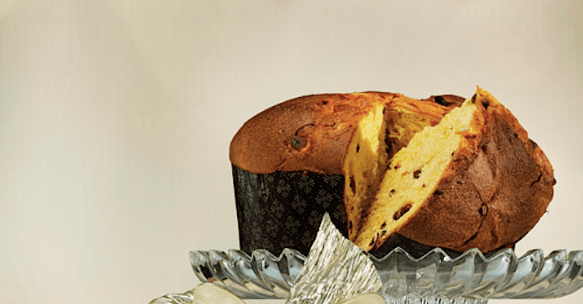
To complete the assortment, but no less important, will be the presence of all the iconic products of the prestigious Milanese pastry brand. A grand take on the traditional Italian Christmas cake, this classic basso panettone is made with natural yeast that takes at least 30 hours to rise, then filled with a generous helping of candied fruit and raisins. Excellent on its own, panettone pairs well with fresh berries, whipped cream, and dark chocolate. Enjoy with a cup of coffee for an afternoon pick-me-up, or serve as after-dinner dessert with a glass of wine.INFO
Muzzi
Brera Milano 1930
Giovanni & Cova.G
Eataly NY


RUSTICHELLA HAS ABRUZZI TRAVEL THE WORLD: FROM LOCAL EXPERTISE TO INTERNATIONAL RECOGNITION!

TEXT BY PHILIP SINSHEIMER
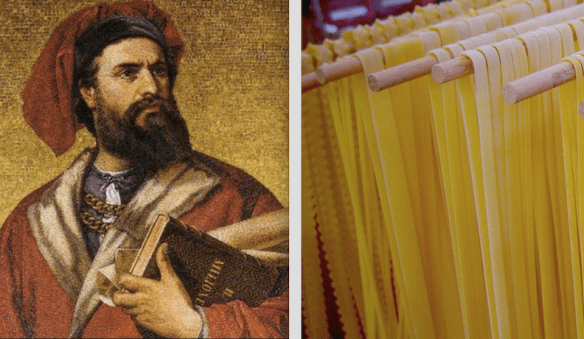
PHOTOS BY CESARE ZUCCA After the discovery of Abruzzi thanks to the guidance of local pasta maker extraordinaire Rustichella, I collected my thoughts about their business model relying largely on export. Why would this company deeply rooted in this region of Italy have both the desire and the possibility to reach the four corners of the world? Wasn’t there a form of contradiction here between local and global?This happened to be around Oct 25th which is celebrated as pasta day around the world which put things in context, as pasta appears as an icon of Italiy and, at the same time, an international product, almost universal. Looking at things from a historical perspective, this is not that shocking or contradictory. Pasta is, by definition, a product made to travel. By “pasta”, I am referring to dry pasta made of durum wheat semolina, not fresh pasta made from tender wheat flour with the adjunction of eggs most of the time. Italy is the birthplace of pasta as a commercial commodity capable of withstanding long periods of time, being a dry product that can last for years. The first mention of commercial dry pasta making dates to the 12th century (way before the birth of Marco Polo you may note!) with a text from an Arab geographer referring to a large production of it in the vicinity of today’s Palermo in Sicily. It is clearly stated that the goods produced were sent by ships to various Christian countries.Genova was soon to become an important area of dry pasta production as well. Why? Because of the importance of its port and shipping capacities. Think about it: at a time with no refrigeration and slow means of transportation, how far could food really travel? Pasta, well protected from humidity, rapidly grew in popularity and started traveling the world, just like salt cod did! Fast forward: today, how can a medium-size company like Rustichella manage to have their products fly over continents to reach the kitchens of chefs and gourmet home cooks as far away as Japan and Brazil? How can they compete with industrial giants such as Barilla which benefit from massive marketing, advertising and financial power? The answer is both material and immaterial qualities, just like soul and body. How can that be in the case of pasta which is basically made of 2 ingredients, durum wheat and water, the latter being at the end eliminated for the most part by the way. How can such a basic and simple food product have a soul and how can it vary so much in quality? Food products are not only a collection of molecules. They carry with them emotion and identity. Think of Proust and his lengthy internal voyage through the remembrance of his past, just by biting into this piece of madeleine cake ducked in a cup of tea. Rustichella does everything to delivery emotions. Opening a package of their product is an invitation to a journey to Abruzzi without having to take a plane. Of course, having been there is a prerequisite to experience this motionless journey. People should really come and taste all that Abruzzi has to offer in order to tie emotional knots in their memory and feel something when they open a package of pasta coming from there. Who knows where Barilla pasta is produced? And more importantly, who cares? The giant company which headquarters are in Parma translate nothing of the soul of this beautiful city of Emilia Romagna.Besides this immaterial quality that Rustichella instils at the heart of its products, there is a good deal of very concrete and technological elements that make them stand out as a pasta like no other. In short, the product is not a mere invitation to dream of Abruzzi. If it carries a soul, it’s because its body is of the best quality to begin with. You wouldn’t have people dream and get off their feet with a food product that wouldn’t be worth their attention in the first place. Now, what are the material qualities that make a pasta exceptional and dream-worthy? First, the quality of the ingredients. Well, we do not have to go very far with that: durum wheat and water, that’s it. I had been told that the quality of the water was important, but Gianluigi Peduzzi – co-owner of Rustichella with his sister Stefania – seemed to dismiss that element. Just pure water. The ingredient that really counts is the durum wheat. The siblings being children of famous millers in the region of Vestina knew one thing or two about the ingredient! A great wheat will lend not only great flavor, but great texture. Whether imported or locally sourced, only the best quality is used. An organic line of pasta has also been created recently RUSTICHELLA
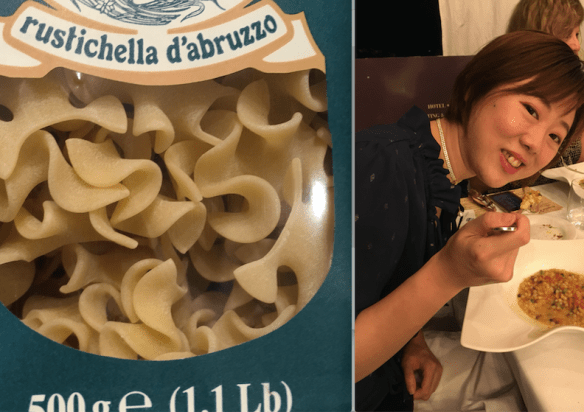
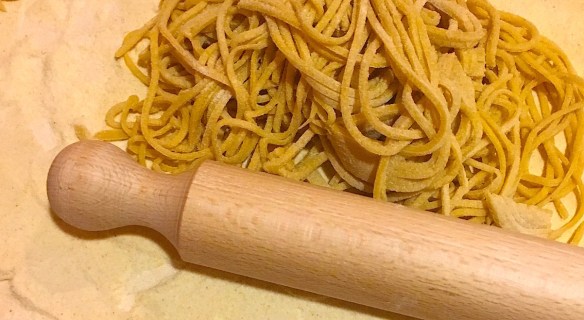
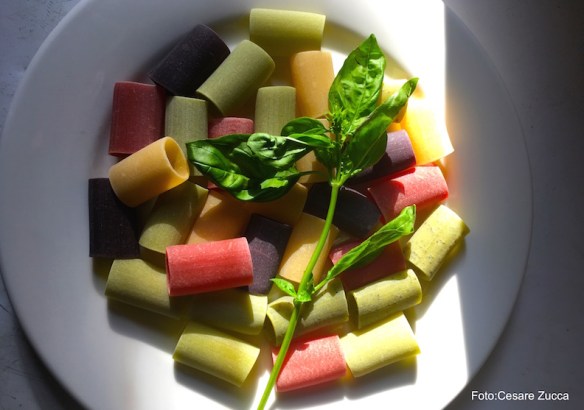
But the best durum wheat in the world won’t automatically make a great pasta. It would be too easy! Technique is essential. An exceptional visit of the factory was the occasion to have a clue of all the parts involved in the process. One of the key elements is the use of bronze dyes, which are pierced wheels of metal, if your will, through which the pasta dough is pushed through leading to various shapes of pasta. Why is this better than the Teflon coated molds used in basic quality pasta? Well, the bronze can never be totally smooth and thus the pasta will have a superficial rugosity which will help the sauce cling to the pasta. With plastic coating the extrusion is way faster, but the result is a pasta texturally bland. This represents a big cost for the company: not only does the production is slower, but the dyes need to be replaced more frequently.The second most important technical element is the drying process. Ordinary pasta is produced in a continuous fully automated way. As soon as the pasta is extruded and cut, it is dried rapidly with the help of heat. Well dried, I should perhaps say baked. Notice that deep yellow color of basic pasta: it’s the sign of a caramelization and pasta shouldn’t be resemble candy making! Here, the pasta is slowly dried in chambers. It is during that drying time that the flavor of the pasta develops. Artistry is at stake here: the pasta maker will have to consider the humidity in the air to see first how much water to add to the semolina in order to obtain the perfect consistency and then, one has to judge when has to make sure the drying process is done at the right temperature and for the right time. Technique and artistry work hand in hand. As Gianluigi shared all his insights in terms of the technology, his sister Stefania gave us to see how far her artistic involvement went. She not only designed various packaging but created pieces and oversaw the art direction of a temporary exposition dedicated to Rustichella from its origins to its latest creations.One of those creations is a revolutionary spaghetti name ? that cooks in 90 seconds without sacrificing the quality of the pasta. No precooking here, like those sheets of lasagna that do not need to be precooked in boiling water. It is a technological feat coming from the shape of the pasta itself.     Here again, a combination of imagination and technology, tradition and modernity.All this explains why chefs at the other end of the world decide to put the price in this high-end product. They have a story to tell, not noodles to sell. They also have a well-made product which won’t let them down in their kitchen. Because the quality of the ingredients and of the process, they know the pasta won’t get limp on them and will remain al dente. They can even pre-cook the pasta halfway and finish the cooking process in the sauce or with a short plunge in boiling water.
The pasta has the strength of a tank and the grace of a Ferrari!INFO
https://www.rustichella.it/

AT SARAH’S VINEYARD, A DREAM CALLED ‘FULL MOON HARVEST’

TEXT AND PHOTOS BY CESARE ZUCCA
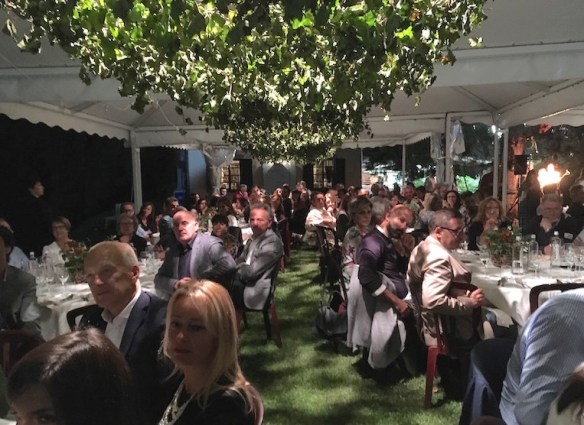
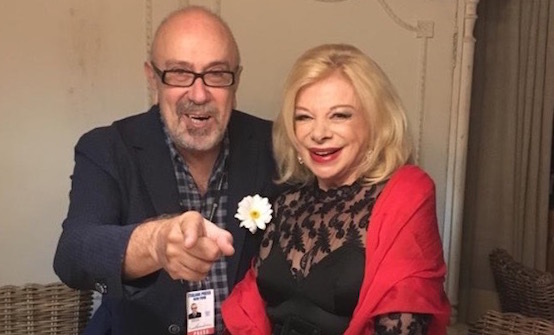
Iconic Federico Fellini’s Muse Sandra Milo and the governor of Veneto Luca Zaia were the guest of honor of the amazing harvest that happened few days ago (or I should say few nights ago)…) at the under the full moon celebration of the superb Sarah Dei Tos 2019 vintage of the Prosecco Superiore DOCG “Grappoli di Luna”.
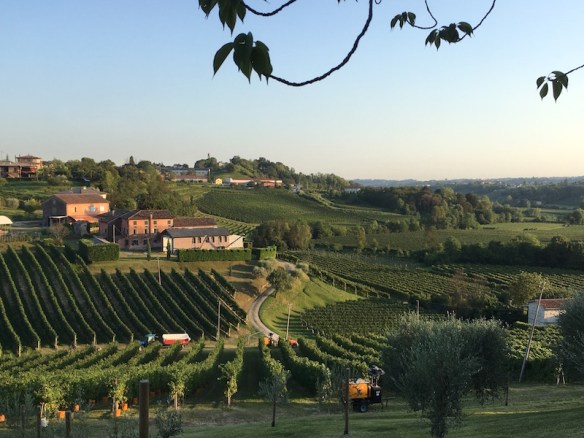
Over two hundred guest, including entrepreneurs, journalists, wine and food bloggers, public administrators, gourmet enthusiasts and a delegation from Imoco Volley, the women’s volleyball team from Conegliano which plays in A1, gathered to celebrate the all-biological Night Harvest of the “La Vigna di Sarah” farm, in the hills of Prosecco UNESCO World Heritage Site in Cozzuolo di Vittorio Veneto.
The “twinning” with the viticulture of Ponza with the awarding of the prize “La Vigna di Sarah BIO for heroic agriculture” to the Antiche Cantine Migliaccio.
Vittorio Veneto. It took three years of “virtuous” farming practices, and a lot of determination, to reach the goal of the first totally organic Glera grape harvest, with which the 2019 vintage of Prosecco Superiore DOCG “Grappoli di Luna” Brut Millesimato, tip will be produced diamond from the sparkling wine collection of Sarah Dei Tos, a young wine entrepreneur, owner of the “La Vigna di Sarah” farm, in Cozzuolo di Vittorio Veneto (TV). Organic and bio farming is the basis of its production philosophy and it has confirmed it in the fifth edition of the Night Harvest, the first completely organic, the only initiative of its kind in the lands of the Conegliano Valdobbiadene Prosecco Superiore appellation. On Friday 13 September the Col di Luna vineyards were crowded with “professional” and amateur harvesters, who harvested ripe grapes (healthy grapes at first glance) under the light of the full moon, the last of the summer, and at light of the great white globes and of the powerful lighthouses that lit up the night of Cozzuolo.    Another highlight of the party was the presentation of the third prize “La Vigna di Sarah BIO for heroic agriculture”, awarded to the Antiche Cantine Migliaccio of Ponza Island managed by Luciana Sabino, who along with her husband Emanuele Vittorio handed down a viticulture whose origin dates back to 1700. The governor of the Veneto region Luca Zaia commented on the important international commitments on which the Veneto Region bet, under his guidance: “When we left, I was the only one . We must believe in dreams “. And he recalled what was concretized in 2019: the Milan-Cortina 2026 Olympics and the Hills of Prosecco, a UNESCO heritage, “a result I chased for 10 years”
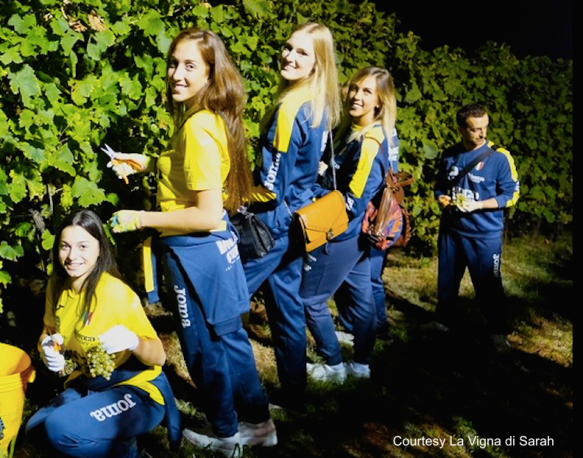
I would like to mention the welcoming Agriturismo di Sarah, a comfortable old colonial  bnb located in the farmhouse far only 40 minutes from Venice and 1 hour from Cortina d’Ampezzo, one of the most famous and prestigious village in Dolomiti Mountains. the farmhouse has a wonderful panorama: the view starts from Prosecco hills and arrives to Venice Lagoon. a great destination if you planning to visit this marvelous land.You will find And surprise… In addition to the cosy rooms, you can find some unique accommodations: three huge wooden wine barrels, perfect for an ‘ I love ‘ vacation.
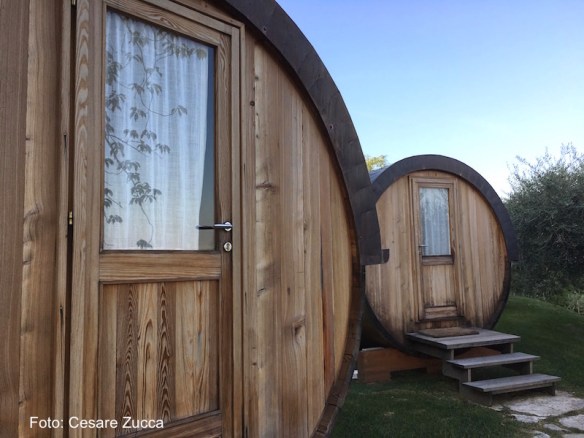
To brighten up the party there were also the charm and friendliness of Sandra Milo, who recently published a book of her touching poetry ‘ Il Corpo e l’Anima’ (Body and Soul) about the power of love: “If I hadn’t loved so much, and if I didn’t love now, who knows if I’d still be alive,”, she said and dedicated a beautiful poem to Sarah that says:
 “Inebriating reliefs, like the dreams of men who know peace. From Mother Vine the grapes reach the vats and then to the barrels. The sparkling wine is victorious to the cups, to reach the mouths of those who make life their own values. The generous Moon approves, shining with pleasure. God smiles because he knows that what he has created is divine. and it is repeated on earth, in Sarah’s vineyard “.
The legendary actress was the godmother of the Night Harvest, distributing smiles, selfies, hugs, including my emotional one !  On the stage and among the vineyards also the youtuber Canal has arrived, presenting its new video “On the stage and among the vineyards also the A grape harvest begins you”. To crown the party, the “country” dinner on the lawn of the “La Vigna di Sarah” farmhouse, framed by the Prealps. Almost a rural “snack”, as tradition dictates in order to repay the fatigues of the grape harvesters: Ulysses’ salmon trouts, raised in Follina, in the version by chef Elia of the Mainor of Fregona; the rich table of Friulian cheeses from the Latteria di Aviano (PN), presented by Linda Del Ben, including ‘Modesto’ that literally has been sleeping wrapped in straw…Excellent 5 hours grilled meat by the Alpini group of Soligo; dishes and vegetables from the organic vineyard of Sarah’s Vineyard, cooked by the trattoria Larin da Bepo, the yummy Treviso soppressa with Mauro Pinel’s bread and pumpered by the extra virgin Istrian olive oil Mate produced by Aleksandra VekicAnd in the glasses the two wines of the Antiche Cantine Migliaccio, the Fieno and the Biancolella of Ponza IGP, and the Prosecco Superiore DOCG “La Vigna di Sarah”, for a sparkling goodbye to the Night Harvest 2020.Sarah Dei Tos, after this commitment, is now projected to the next event that will see it, together with other companies, protagonist of the event “The corporate culture of the lands of the Alpe Adria meets the Milan Wine Week“, the 7-8 -9 October at the Itlas Flagship Store in Milan.
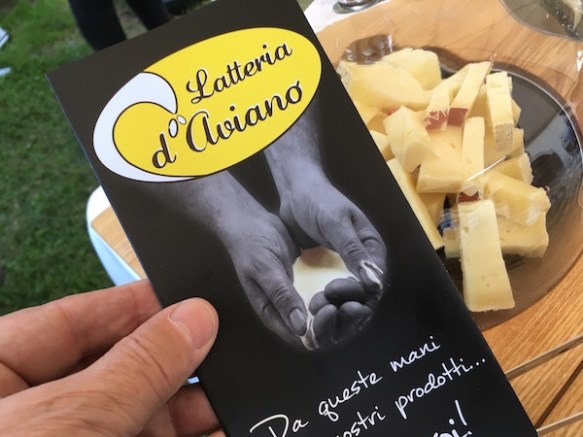
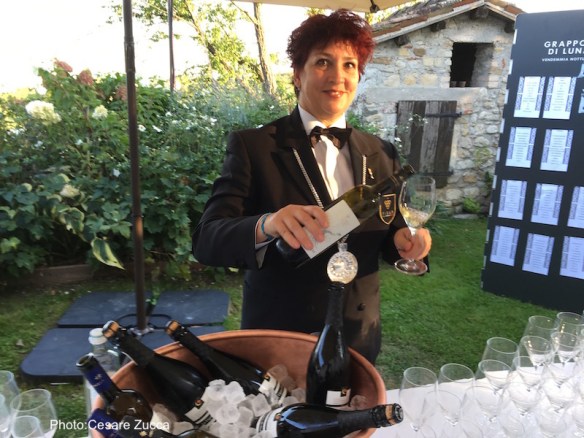
Finally a well deserved ‘grazie’ to Sarah her beautiful team and the unstoppable PR Cristiana Sparvoli, who graciously invited me to be part of such a dream!INFO
La Vigna di Sarah


HERE THE BEST! BIWA Italian Wine Awards 2019

The 8th edition of the tastiest event created by Luca Gardini and Andrea Grignaffini,
awarded the wines entered in the 2019 ranking and awarded special prizes
50 labels were selected during the summer through blind tastings by the international jury composed of some of the world’s leading wine experts and the two founders of the awards.
Here the winners:
Iin first place, Bolgheri Sassicaia DOC 2016 of Tenuta San Guido (Tuscany), followed by Barolo Monvigliero DOCG 2015 by Burlotto (Piedmont) and by Terminum Gewürztraminer late harvest Alto Adige DOC 2016 by Cantina Tramin (Alto Adige).
congrats to the producers and ‘salute!”
INFO


LONDON AT THE TABLE!

HERE MY STEPS. TAKE A LOOK!
Everyone wants to visit the UK’s busiest city, but aside from the main tourist sights, what is there to see? How do you get from one place to another in this huge place? Need an insider’s perspectiveI want to share a ‘ NON TOURISTY TOURIST’ perspective on what to see in the Big Smoke! If you want to visit the mainstream attractions like the London Eye, Tower of London and Madame Tussauds then, of course, you should go for it!
They’re lots of fun.
BUT………
There’s another fascinating side of the city that goes far beyond the usual tourist highlights. I want to share some quick tips that real Londoners enjoy to make your time there truly memorable!
Friday:
First things first, get accustomed to the TFL (Transport for London) website and buy an oyster card from your nearest station: it’s the most affordable way to travel.
You arrive early afternoon and want to see as much as possible this weekend! Head towards Greenwich to see the Cutty Sark ship, hire a Boris bike and cycle under the Thames. At the other side, enjoy the view and take a left towards Canary Wharf to get a sneak peak of all the city’s penguins (the crowds of businessmen in suits). If shopping and city life is your thing, the Canada Water shopping centre is your new best friend. Enjoy all of the main high street shops, in addition to some more fancy brands! The restaurant ROKA in Canary Wharf has a beautiful view of the city from a great height, and serves delicious food and cocktails.
If you prefer the scenic route, continue along the river you’ll reach some cobbled streets (difficult for cycling: it’s going to be a bumpy ride!) with quaint English pubs before arriving at St Katherine Docks. Dock your Boris bike somewhere and catch your breath before the evening adventures begins. There aren’t many places I’d recommend more highly than Frank’s bar in Peckham on a warm evening to really appreciate the atmosphere of London. Opposite the station lies a formerly disused multi-story carpark, which now hosts Frank’s Bar on the roof! Affordable drinks (for London) and a view over the whole city!
For my first night in the city, I went exotic and choose a great restaurant in Portobello.
Outdoor, a flashing red neon sign says Japanese Gastropub, just below a mysterious face of a mysterious woman. Is she a geisha? Is she crying or praying? Let’ s go inside. Previous doubts ended as soon as I found myself embraced by UKAI’s cosy and warm atmosphere . A welcoming bar to the front and an open kitchen restaurant in the back. It looked loke a nice mixing of Japanese design with Italian flair and some traditional British pub features black and white photo portraits give an art gallery feeling, while Japanese artwork and foliage painting decorate walls and ceilings the rooms adorns the walls; furnished with causal wooden tables and filtered by an amber lighting that warms up the rooms.


The big surprise was to briefly chat in italian with the head chef Alex Verros or should I calling him Alessandro, as he’s Italian born, like me.

Alex, who previously worked at Roka and Nobu, told me about his passion of mixing different cultures and ingredients, like his native land North Italian truffles, to South Latin accents, to British influences, not afraid to combine simplicity with complexity. I started with a warm, inviting and comforting wonderful salmon miso soup, served with tofu, seaweed and spring onion. Then I beg Alessandro to surprise me. And he did. Between his choices, my favorite were the kampachi salad, with thin slivers of tender cobia white fish, drizzled with yuzu truffle and rocket, a dish that Alessandro likes to pair with galapeno and the prawn tempura maki. From the menu, I would like to mention also some signatures dishes as the truffle white tuna tataki, the lobster tail tempura and his ceviche, where Japanese flavours meet South American tradition. In addition to a generous choice of sushi, sashimi and nagiri and of course the beef robata dishes that Alessandro loves to cook in person, lighted by the fire grill fireworks .


Impossible not to ask such a nice host a souvenir picture…
‘Let’ do it at my robata grill, said Alessandro, it is my favourite spot in this place’ ‘Certamente!’, I enthusiastically answered, and, both risking a fire attack, I shoot the pic.
A hot moment of an unforgettable dinner.For more info
UKAI
240 Portobello Rd, London W11
Phone: +44 20 7792 2444

Saturday: Grab brunch or food from every country you could think of at Borough Market (get off at London Bridge station) and wander around the stalls and old backstreets. Head down the steps on London Bridge and walk left along the river, passing lots of cute English pubs, the Globe Theatre and the Tate Modern gallery (many free exhibitions for lovers of the creative).
Stop by the National Theatre mid-afternoon for any last-minute discount tickets, or sit and enjoy the view of Big Ben or the London Eye from the South Bank. There are often pop-up bars or street performers there too!
Now you can carry on over the Jubilee Bridge towards Trafalgar Square and the West End. On sunny days I would highly recommend taking a left turn before Covent Garden and checking out St James’s Park, where you can find most people in London enjoying the weather and nature. If rainy England is sticking to its infamous title, head towards the National Gallery: free entrance and some of the most breath-taking paintings and sculptures you’ve ever seen!
Covent Garden is the perfect place for an evening out. From Sushi to Greek, Burgers to Quinoa, the choices are endless. There is also the option of trying out an old English pub or one of the trendy new bars the city is popular for. If you’re planning a late night, Oxford Circus is only twenty minutes away by foot, where you can party until your heart is content!
DINNER TIME!
I choose Tredwells, a Marcus Wareing restaurant and winner of AA’s London Restaurant of the Year.
Great location, excellent service and a breathtaking menu signed by the charming Chef Chantelle Nicholson, Tredwells showcases the very best in British seasonal produce  Located in the trendy Seven Dials area, right in the heart of Covent Garden, the venue boasts two bar areas serving seasonally inspired cocktails, cementing Tredwells’ reputation as one of the best drinks venues in Seven Dials. the restaurant sets over three floors, while the mezzanine and lower ground floors are available for exclusive hire.


I went for lunch, tried several of Chantelle proposals and found them all perfectly cooked and pleasantly tasting, starting from the beginning with a great potato and rosemary bread with salted whey butter till the end, indulging in a delicious fig mousse.


I noted, and photographed my choices and my recommendations.
After lunch, I meet with Chef Chantelle, obviously in her kingdom,the kitchen, and chatted oh her life, her love for cooking and her first solo cook book Planted.

Where your passion for food comes from?
It’s all because of the love of my New Zealand garden, so rich of herbs and vegetables and my two aunties who were great cooks Probably since that tender age I wanted to be a Chef, but…story of my life, I went to university to become a lawyer.
So you forgot your culinary passion?
Not really , while studying, I got a job at the local café, waking up at 6am on Saturday mornings to bake muffins, then proudly becoming a kitchen hand in the restaurant of a small hotel that also had a garden…
A garden? Here you go…
Yes, my passion for fruits and vegetables was there again, learning about seasonal food, how they grow, and the ecosystem of the garden. I remember picking up herbs super early in the morning…

What happened to the lawyer?
Well, I passed the bar in my law exams and ready to become a layer , but the still enchantment of the kitchen was always in my head…Coincidentally I enrolled the amateur cooking competition Chef Search, run by Gordon Ramsay. I made it to the final six, and was offered to work at The Savoy, London.

After that?
I have co-authored Marcus’s cookery books and in 2015 worked with him consulting on the movie Burnt. Then Marcus Wareing asked if she’d join Pétrus, his two-starred restaurant, as a junior sous chef in 2006, followed by The Gilbert Scott in 2011 and from 2014 I was in charge of as group operations director of the entire range of Marcus Wareing restaurants. Now I am back to my passion: cooking! I am proudly the chef patron at Tredwells created by the genius of Marcus Wareing.

Your new book ‘Planted’
Is not a book about veganism, it is about tasty dishes, made without animal products. You will find recipes for a plant-based cooking, focusing on plant based cuisine that deliver taste and creativity. I like to celebrate produce, seasonality and food that taste good.

Chantelle, what will I always find in your fridge?
Vegetables, vegetables, vegetables and a bottle of a great New Zealand Chardonnay!

for more info
www.tredwells.com

Sunday:
The perfect day for a relaxing walk around the local parks. Check out Dulwich’s Horniman Museum, a small childhood favourite of mine with beautiful botanical gardens, before riding on the banana bikes through the peaceful Dulwich Park. Then take a well needed rest and sit in the garden of the Woodhouse pub, sipping your ale (if you dare) and enjoying your roast dinner. If you still have time after doing all of this, then firstly, congratulations; you’re super efficient! Brick Lane, Camden and Liverpool Street would be my next recommendations. If there’s a day to spare, you can’t pass up the opportunity to go to the Harry Potter Studios cast some spells!
SUNDAY IS …. Brunch time!!!!
I discovered Trangallán.
It’s a word from Galicia, Spain for a kind of bohemian artist.
This so called ‘gastro-cultural space’ certainly has that bohemian feel, with its shabby chic-flea market furniture contrasting with rich glass chandeliers and vintage objects all around. The menu changes frequently boasting imaginative dishes revealing a good deal of skill and creativity. Add an easy-going welcome from the stuff and the super cool owner–chef, who came at my table to say hello while sipping a delicious 2016 Albarino Igrexario de Salar and snacking some succulent Manzanilla olives.                                                        I followed his suggestions and went for a very traditional tortilla made of eggs and potatoes. Perfectly browned on the outside, still tender within and served at room temperature. I asked if that is the way that tortilla should be served, medium warm not hot. They told me that is a Spanish tradition to cook tortillas in the morning and let them rest till the meal so, yes, the temperature should be room temperature, Good to know. Then I tasted a more winterish dish of judion, a butter beans & piparras, followed by a perfectly roasted octopus with saffron potatoes and wilde samphire.                                  If you’re looking for a ‘not so commun’ tapas restaurants in North London, or Spanish food in Stoke Newington then you must try this cool venue.
For more info
Trangallán  
61 Newington Green, Mildmay Ward, London N16

Monday
Smart move. I took a  day off from work and reserved a late afternoon flight!
Yes I wanted to enjoy London and … I had London at my feet!

London. I happily experimented the OXO TOWER restaurant located at the eight floor of the OXO Tower. Relaxed atmosphere, good service and … the view. The menu boasts dishes so-called ‘contemporary British’ with European accents spanning from Spain with a gazpacho with sardine paté, to Italy with bresaola paired to a watermelon carpaccio. I tried a rich yet delicate soup of Scottish langoustines, spaghetti style chopped squids, tomatoes, fennel, and lobster- It tasted rich yet delicate, not too spicy or garlicky (I hate too much garlic…) Notably the langoustines were nicely straight, not curvy at all, My very nice Italian born waiter, told me that the secret is simply to put them in the freezer for about 40 minutes.When you take them out, the shell will be solidified, you would easily break it and extract the langoustine in all its fullness and horizontality. As a main dish, I followed Guido’s suggestion and opted for a John Dory fish, served with lobster, celery puré, oil and herb sauce with little white beans.


I must say all the ingredients were in perfect fusion and the broth maintained its freshness thanks to the acidity of the vegetables. I paired with a very fruity Albarino Atlantico white wine from Galicias, excellent!


As a side dish, a kale salad, sprinkled with a powder of beets and pumpkin seeds and seasoned with a Caesar dressing.Delicious finale: English strawberry and basil mousse.
Not to mention the spectacular sunset view that made my dinner unforgettable.


For more info
https://www.harveynichols.com/restaurant/the-oxo-tower/

For reservations
Call 020 7803 3888 or
email oxo.reservations@harveynichols.com

Finally ….. here the best list of the two M I am crazy about …
MUSEUMS …AND MARKETS!

British Museum
Imperial War Museum
Bank of England Museum
Science Museum
Design Museum
Maritime Museum
Sir John Soane’s Museum
Natural History Museum
Queen’s House, Greenwich

Victoria & Albert Museum THE BEST!!!!!!
MUSIC MUSIC MUSIC
Royal Academy of Music Museum
YOU WANT MORE ???
Museum of London Docklands
RAF Museum
Horniman Museum & Gardens
Science Gallery London
Grant Museum of Zoology
YUMMY….
The Chocolate Museum

MARKETS, MY PASSION!
Borough Marketk ( my fav…)
Leadenhall Market.
Brick Lane Market.
Columbia Road Flower Market.
Camden Market.
Greenwich Market.
Portobello Road Market.
Brixton Village and Market
Old Spitalfields Market.
Mercato Metropolitano

SISTER MOON…not only a great Sting’s song…


Sting and his wife Trudie  are honorary citizens of Figline and Incisa Valdarno (Florence) where they own the Il Palagio estate; the announcement was made official by mayor Giulia Mugnai during a festive party at the Palagio  Farm Store.Sting entertained friends and funs with a great unplugged version of his hit Every Breath You Take” and  Roxanne  Wich is also the name of one of his wines


Villa Il  Palagio perches elegantly at the top of a long steep drive, overlooking the distant Tuscan hills and the undulating countryside which has always had profound agricultural significance. The Villa Il Palagio perches elegantly at the top of a long steep drive, overlooking the distant Tuscan hills and the undulating countryside which has always had profound agricultural significance. Screen Shot 2016-04-30 at 13.19.50The nearby medieval town of Figline Valdarno was known as the “barn of Florence” for its abundant corn supplies. Grains, wine, oil, sugar beets, peaches, apricots and cherries have long been grown here. Not only…Palagio has been the summer retreat for
Sting and Trudie’s family and friends for more than 15 years.
Palagio produces an excellent red wine.
A blend of Sangiovese, Merlot and Cabernet Sauvigon Biodynamic wine. Screen Shot 2016-04-27 at 10.26.06Named after Sting’s song “Sister Moon”
this was the first IGT Toscano wine produced at Il Palagio.It was 1979 when the single Message in a Bottle came out and today, with hindsight, one could say after 30 years that the title was in reality a prevision. The modern fairy tale of a rich and famous singer who retires to private life in a country villa “under a Tuscan sun” can be almost perfectly applied to the Tuscan experience of Sting and his wife Trudie Styler. It came true at the Il Palagio estate in Figline Valdarno, Florence’s historic breadbasket with its rich earth and slew of producers.

Rose, Beppe Rosato is a blend of Sangiovese and other red grapes of the Tuscany tradition. It is a pink peony colour, fresh perfume with notes of pineapple and peach. Fresh smell at palate, sapid with good persistence.

Screen Shot 2016-04-30 at 13.20.01 Il Palagio also collects a wide variety of flavoured honeys, each with their own distinct taste and floral notes. Chestnut is dark and robust. Acacia is mild and delicate. Thousand Flowers has a rich caramel and buttery taste. Erica is runny and intense, perfect for spooning. Forest is complex and aromatic. All of our honeys are bursting with the health-giving properties for which honey has historically been renowned, notably vitamins, minerals and antioxidants.The olive trees which grace Il Palagio’s landscape date back for many hundreds of years and have been sensitively restored to full productivity. This is largely thanks to the care and dedication of Estate Manager Paolo Rossi, who insists that the orchards are not irrigated, a system which is labour-intensive but which greatly improves quality. e.

more info
http://www.palagioproducts.com/

THE ‘CYCLISTS BY CHANCE’ CELEBRATING WITH… PROSECCO at Bottega Spa, Villa Rosina, Bibano di Godega (TV), Tuesday 30 July, 6 pm

Screen Shot 2019-07-29 at 11.11.59.pngItaly, the National Association Donne del Vino, established in 1988, aims to promote the knowledge and culture of wine, through the contribution of experiences and knowledge of women engaged in different but complementary sectors. Women who have a professional experience linked to the world of wine are admitted to the association, therefore: producers, restaurateurs, sommeliers, winemakers, journalists, bloggers, communication and marketing managers of wineries.
Linda Ronzoni and Silvia Gottardi are two great women passionate about two wheels who call themselves the “CICLISTE PER CASO”, make a stop at the Bottega headquarters in Bibano di Godega, during the long bicycle ride that is taking them from Bari to Milan.In Italy Linda and Silvia have already traveled the Milan-Catania route in 2016, while this year they decided to ride from Bari to Milan, to complete an ideal “Tour of Italy on the trail of Alfonsina Strada”, in homage to the one woman who participated in the Giro d’Italia for men in 1924.
The two cyclists, not just by chance, have some well-known companies on two wheels: Milan-London, the legendary Carretera Austral, between Chile and Argentina in the far south of the Latin American continent, the Grizzly tour, 4,000 km long the Rocky Mountains from Canada to Mexico.
The arrival is scheduled at around 17.30 at the Bottega headquarters, where they will be welcomed by Monica Lisetto and a representation of the Women of Wine, headed by Alessandra Boscaini, regional delegate of Veneto. A visit of the Bottega structure will end with a toast based on Prosecco Docg, to anticipate the next stage that will lead the two cyclists to Feltre, crossing the hills of Conegliano and Valdobbiadene, recently included in the Unesco World Heritage list.