Chi era Man Ray? Nato Emmanuel Radnitsky diventa Man Ray (“Man” da “Manny”, il suo soprannome, e “Ray” raggio di luce. Man Ray è senza dubbio uno dei grandi protagonisti dell’arte del XX secolo. Fu uno dei primi a utilizzare la fotografia come un vero e proprio medium creativo, realizzando opere emblematiche che sono entrate a far parte della storia dell’arte del Novecento.
La mostra ospita più di 300 opere tra fotografie vintage, negativi, collage, litografie, oggetti, film — un viaggio che parte da Philadelphia (1890), passa per New York, sbarca a Parigi negli anni ’20, intreccia arti, sogni, provocazioni.
Scoprirete autoritratti,nudi, ipnotiche solarizzazioni che rovesciano luce e ombra e ritratti degli amici intellettuali tra cui Duchamp, Cocteau e Kiki de Montparnasse musa, amante, performer. e le sue opere iconiche come Noire et blanche, Le Violon d’Ingres.
E poi i suoi film d’avanguardia: Emak Bakia, Les Mystères du Château de Dée l’imperdibile Retour à la raison, mini capolavoro di 3 minuti che ancora oggi sembra avveniristico.
Le magie di Ray sfidano la normalità: le rayografie non solo una tecnica, ma una filosofia, dove l’oggetto quotidiano appoggiato su carta fotosensibile diventa protagonista senza senza usare la macchina fotografica. Immagini talora astratte, ma ricche di pura poesia visiva.
La retrospettiva Man Ray – Forme di Luce, aperta dal 24 settembre 2025 all’11 gennaio 2026 a Palazzo Reale di Milano,
THE MAGIC AND LIGHT OF MAN RAY AT PALAZZO REALE, MILAN by Cesare Zucca
Who was Man Ray? Born Emmanuel Radnitsky, he became Man Ray — “Man” from “Manny,” his nickname, and “Ray” meaning a beam of light. Man Ray is undoubtedly one of the great protagonists of 20th-century art. He was among the first to use photography as a true creative medium, producing emblematic works that have become part of the history of modern art.
The exhibition features over 300 works — vintage photographs, negatives, collages, lithographs, objects, and films — a journey that begins in Philadelphia (1890), moves through New York, lands in Paris in the 1920s, and intertwines art, dreams, and provocations.
Visitors will discover self-portraits, nudes, hypnotic solarizations that invert light and shadow, and portraits of his intellectual friends, including Duchamp, Cocteau, and Kiki de Montparnasse — muse, lover, and performer — as well as his iconic works such as Noire et blanche and Le Violon d’Ingres
Then there are his avant-garde films: Emak Bakia, Les Mystères du Château de Dé, and the unmissable Retour à la raison, a three-minute mini-masterpiece that still feels futuristic today.
Ray’s magic defies normality: his “rayographs” are not just a technique but a philosophy, where everyday objects placed on photosensitive paper become protagonists without the use of a camera. The resulting images are sometimes abstract, yet full of pure visual poetry.
The retrospective Man Ray – Forms of Light, will be open from September 24, 2025, to January 11, 2026, at Palazzo Reale in Milan.
Pronti per scoprire la costa orientale della Calabria? Vi attende la meravigliosa Costa Ionica che prende il nome dalle antiche colonie greche della Magna Grecia. Qui si produceva già vino in epoca antica e ancora oggi Cirò è il territorio vinicolo più conosciuto della regione, grazie anche al riconoscimento della DOC. La costa non manca di spiagge da sogno e tesori gastronomici, ma prima bisogna attraversare l’imponente catena montuosa che separa i due mari: si arriva fino a 2267 metri di altitudine, nel bellissimo Parco Nazionale del Pollino.
Morano Calabro Il nostro itinerario inizia da un Incantevolo borgo-presepe arroccato sulla collina, fatto di case e chiese tutte dello stesso colore dorato e luminoso. In cima, ci sono i ruderi di un castello da cui si capisce subito quanto fosse importante la posizione per difendersi dagli attacchi dal mare.
Il suo fascino coniuga perfettamente arte e natura: da un lato le opere di Pietro Bernini e Vivarini, dall’altro l’imponenza del Serra Dolcedorme. I suoi paesaggi hanno ispirato poeti e pittori, tra cui li celebre incisore e grafico olandese Maurits Cornelis Escher che è vissuto per molti anni in Italia, affascinato dai paesaggi e dalle architetture del nostro paese.
Dove alloggiare La Locanda del Parco, è un agritursmo immerso nella natura. Il casale è antico, arredato con pezzi d’epoca. Tutto è curato nel rispetto della tradizione calabrese, dall’arredo al menu.
Dalla cucina arrivano piatti tipici, come la pasta fatta in casa con ‘nduja, la zuppa di fave, il baccalà con peperoni cruschi, il saporito cinghiale. Provate un tipico amaro locale con foglie di ulivo.
La mattina dopo ecco una special guest: la signora della pasta fresca, che ogni giorno viene lì a prepararla. Ricetta super semplice: farina, uova e acqua, ma ci vuole arte per ottenere quella consistenza perfetta…
Brrrrrr….. Nelle vicinanze, scoprirete Avena, un paese fantasma abbandonato. Le case sono ancora in piedi ma completamente invase dalla vegetazione. Sembra una scena di un film horror, dove un’ invasione di zombie ha fatto fuggire tutti gli abitanti… Il silenzio è surreale, solo qualche uccellino rompe l’atmosfera, ricordandoti che un po’ di vita c’è ancora.
Civita A pochi chilometri c’è Civita, uno dei Borghi più belli d’Italia. Un posto unico per due motivi: le case con facciate che sembrano facce e la forte presenza della comunità arbëreshë, cioè di origine albanese. C’è anche un piccolo museo che racconta la loro storia: arrivati dalla Puglia, si sono stabiliti qui e hanno conservato lingua e tradizioni.
Dove mangiare Kamastra, vecchia ocanda di un tempo, si possono apprezzare i tradizionali sapori di ieri. Chef Francesco serve il piatto forte della casai: i deliziosi cavatelli alla “nenesa”, con una crema di amaranto, erba selvaggia che si trova nei dintorni, e la specilità della casa: agnello al forno, tenerissimo, si scioglie in bocca! La carta dei vini è ampia, molti provenienti dalla zona di Cirò.
Rossano Scendendo verso la costa ionica verso Rossano, scoprirete l’imperdible Museo della Liquirizia, “Giorgio Amarelli”, fondato nel 2001 all’interno di un antico palazzo quattrocentesco .
È il primo e unico museo italiano dedicato alla liquirizia, racconta oltre tre secoli di tradizione imprenditoriale, dalla raccolta delle radici all’estrazione e trasformazione artigianale, attraverso antichi macchinari, cimeli, documenti e abiti epoca . La visita è guidata, con degustazioni nel Museum Café e shopping nello Liquorice Shop
immerso nel verde, in mezzo alla natura incontaminata, situato a circa 30 minuti di auto dal Parco Nazionale della Sila, a 15 minuti dalla costa ionica e dalle sue splendide spiagge, vicino a luoghi di grande interesse culturale e archeologico. Le stanze sono grandi, pulite e i letti comodissimi. Anche la ristorazione è di primordine: materie prime, unite ad una cucina tradizionale ma al contempo raffinata e una fornitissima cantina
Gerace Antico borgo medievale, soprannominato “la città delle cento chiese” e caratterizzato da un dedalo di viuzze, piazzette e scalinate che si snodano tra le case in pietra e i palazzi storici. Sembra uscito da un libro di fiabe, dove il tempo si è fermato, pensate che fino a pochi anni fa, alcune famiglie usavano ancora forni a legna pubblici per il pane. Da vedere : la Cattedrale con l’imponente campanile, la Chiesa di San Francesco di Assisi, nota per le decorazioni policrome dell’altare, la Chiesa di San Giovannello, la più antica chiesa Ortodossa di Italia e il Castello Normanno, perfetto per chi ama sognare tra torri e panorami mozzafiato. Dove dormire Palazzo Candida Elegante B&B è situato in uno dei palazzi storici più belli della città, in pieno centro. Gli ambienti sono stati restaurati con grande cura e mantengono intatta la loro bellezza antica. Le camere sono confortevoli e elegantemente arredate, con vista sul borgo antico e piccoli terrazzini da cui ammirare suggestivi scorci panoramici sull’azzurro del Mar Jonio. Gli ambienti sono stati restaurati con grande cura e attenzione ai minimi dettagli.
Santa Severina Puntando verso il Sud, impossibile non fare una sosta in questo borgo arroccato sui colli, degno di essere sul podio dei “Borghi più belli d’Italia” Vi colpirà subito con il suo imponente castello normanno, costruito dopo la cacciata dei Bizantini alla fine dell’XI secolo.
All’interno del castello troverete una miriade di musei: da quello della storia locale a quello dedicato alla lirica e alla “divina” Maria Callas.
Dopo la visita, nella piazza centrale , troverete un insolito Museo del Caffè che ospita centinaia di oggetti rari, macinini, caffettiere e strumenti legati alla preparazione e al consumo del caffè.
Sarà una vera esperienza sensoria che probabilmente vi inviterà a sostare nel bar del centro, punto di incontro dei santaseverini , per gustarvi un meraviglioso espresso servito “in sospensione” e , perchè no…anche una fantastica granita al caffè con panna
Per la cena, alla Locanda del Re, troverete una chicca della zona: la sardella, una specie di ‘nduja, ma fatta con sardine neonate al posto del maiale, perfetta per chi non mangia carne. Se invece amate la carne, non perdetevi le polpette: una vera bomba.
Badolato Proseguendo verso sud lungo la costa ionica, scoprirete Badolato, la cui parte antica è una vera meraviglia. Le sue stradine strette, le case in pietra e le antiche chiese raccontano secoli di storia. Negli ultimi decenni ha attirato l’attenzione per i progetti di recupero abitativo, accogliendo stranieri e artisti in cerca di tranquillità. Il borgo è noto anche per le sue tradizioni religiose, come la “Processione dei Vattienti”.
Lì troverete il ristorante Aqua’ dove Chef Ciro riesce in un’impresa rara: unire alta cucina e tradizione locale con equilibrio perfetto.
Piatti raffinati, ma mai pretenziosi, dal crudo di gambero rosso, servito come un mosaico sottile su tutto il piatto, decorato con le teste dei gamberi, finocchietto selvatico e pepe rosa, ai ravioli con peperone rosso, calamari e cozze serviti su una salsa spettacolare.
In abbinamento, il bianco “Phemina” della Cantina Brigante, che dimostra quanto può essere elegante il Greco Bianco, se vinificato bene. Badolato è una meta perfetta anche per la clientela internazionale: pensate che molti americani in cerca delle proprie radici italiane comprano qui case antiche, che venfono restaurate da un team di esperti locali e modernizzate all’interno. Buon appetito, buon cibo, buon vino e buon viaggio in Calabria!
CROSS THE MOUNTAINS TO REACH THE IONIC DELIGHTS English version by Philip Sinsheimer
Off we go to discover the Eastern Coast of Calabria, the famous Ionic coast that owes its name to the ancient settlements from Greeks, part of the “magna Grecia”. They sourced wines there and today Ciro is perhaps the best known wine country of Calabria benefiting from the international recognition of a DOC. The coast doesn’t lack beautiful beaches and gastronomic treasures, but before reaching those, one has to cross the mountainous region that separates the two seas that counts the highest altitude of the Calabria, culminating at 2267 meters, part of the fabulous Pollino National Park.
MORANO CALABRO From Scalea on the Tyrrhenian coast, it normally takes no more than one hour to reach the historic village of Morano Calabro. But, along the way, we could not resist stopping to see the ghost town of Avena, an abandoned village. The houses are still standing but inhabited by wild plants. What an eerie feeling to walk among those remnants of a past not so distant. It feels like everyone had to escape from a shattering earthquake or a menacing monster. Visually striking, it’s perhaps the absolute silence that is the most gut-wrenching. Thank god for the few birds chirping once in a while attesting that life has not totally abandoned the once upon a time village.
The arrival in Morano Calabro is really unforgettable: the small town cover this hill with houses and churches uniform in their luminous, soft golden hue. At the very top, there are the ruins of an ancient castle and one can understand the importance of the topography to defend the city from any invaders that would have pushed it that far from the coast.
We opted to spend the night a little outside of the historic center to enjoy the calm and beauty of the Locanda del Parco (Agriturismo Locanda del Parco | Agriturismo). Set in a beautiful country side, the old mansion is part of the Agriturismo and the personnel really take it at heart to respect the environment and culinary traditions. After a quick rest in a bedroom filled with antiques and offering a view over all the valley, time was set to try the food. Everything on the menu is tempting, from the homemade pasta with ‘nduja (the famous spicy soft and spreadable sausage typical of Calabria) or salted cod (baccala) and cruschi peppers, for those who do not care for hot and spicy food.
The main courses are also fabulous in quality of the meats, as well as the preciseness of the cooking process. The forest comes to your plate with the wild boar cooked in Magliocco wine (cinghale selvatico) keeping the rustic theme of the place. Our charming and knowledgeable server had us sample various amari liquors from the area, including one made with olive tree leaves. Perfect night cap, unless you prefer to sip a tea made from herbs picked in the garden. The next morning we met the pasta lady who comes every morning to make the fresh pasta of the day. Simple recipe with only flour, egg and water, but a lot of kneading technique involved to obtain the right texture.
CIVITA Only a few kilometers away, take the time to discover Civita, another village that was honored by the prestigious title of Most beautiful village of Italy (see Home | I Borghi più Belli d’Italia). Two characteristics make Civita a really unique place. First the collection of houses built in such a way that their façade resemble faces. Secondly, the important population from Albanese ancestry who live there. A tinny museum gives you a chance to see the story of these immigrants who arrived in Puglia and made their way to this area of Calabria where they created a community.
Albanese language is till spoken by some inhabitants, but everyone can enjoy the traditional cuisine found at Kamastra restaurant (Ristorante tipico). An absolute must try are the cavatelli alla “nenesa” dressed with an unctuous sauce made from local herbs and especially amaranth when in season. A wonderful and unique dish to try. Because of the generosity of the servings, we decided to share the roasted lamb main course and that too is a must: Fall off the bone tender meat roasted for a really long time at low temperature. Amazing!
The wine list is generous, organized by producers (cantine). Trust the waiter to find the perfect red to match that lamb, many of which local or down the hill in the region of Ciro where we went next.
ROSSANO Going downhill towards the Ionic sea, our first stop where we stayed at overnight was in Rossano (www.hotelbisanzioresort.it) You’ll need to go uphill to reach the hotel, enjoying the view and the fresher air along the way. Rooms are simple, clean, very large and the beds extremely comfortable.
SANTA SEVERINA Heading South towards Crotone, a visit of Sanra Severnia is not to be missed. The small city perched in the hills gives an impression of historical grandeur with its huge castle built by the Normans after they ousted the Byzantines at the end of the eleventh century and destroyed almost everything of their own palace. A rich museum of local history is set inside the castle, allowing to appreciate its size and unique style.
Enjoy the slow pace of Santa Severina by having a drink on the main square to observe the locals strolling along. La Locande del Re is where we ate, getting to taste a delicacy typical of the Province of Crotone: sardella. Think n’duja, in other words a spicy spread that you eat on crostini, but baby sardines replace the ground pork meat. Perfet for pescatarian eaters! Meat lovers, on the other hand, will be under the spell of the meatballs which are to die for.
BADOLATO
Continuing our way South along the Ionic coast, we were hosted in the historic old town of Badolato to have the one of the best meals we got to taste in Calabria. The restaurant Aqua’ (www.aquabadolato.it) manages to blend high-end gastronomy and soulful local cuisine, a feat that is not often achieved.
Delicate, but never bland, complex, but never complicated. The first course showcased the expertise of the chef with a crudo de gambero rosso shrimp turned into a paper thin mosaic covering the plate, garnished with erected heads of the king of shrimp, a few sprigs of wild fennel, and pink “peppercorn”.
The Ciro white wine named “Phemina” showcases what great results the Greco Bianco grape can generate, as long as the vinification process is up to the task, which the Cantina Brigante achieves beautifully. The ravioli with red pepper, calamari and mussels were elevated to a true gem with the fabulous sauce that it came with. The restaurant is adapted to the international clientele that Badolato counts. Many Americans who want to reconnect with their Italian roots, find opportunities to buy houses with a lot of character that they modernize from the inside.
GERACE An ancient medieval village, nicknamed “the city of a hundred churches,” characterized by a maze of narrow streets, small squares, and stairways that wind between stone houses and historic buildings. It seems like something out of a fairytale, where time has stood still; just think, until a few years ago, some families still used public wood-fired ovens for bread.
Must-sees: the Cathedral with its imposing bell tower; the Church of San Francesco di Assisi, known for its polychrome altar decorations; the Church of San Giovannello, the oldest Orthodox church in Italy; and the Norman Castle, perfect for those who love to dream among towers and breathtaking views.
Where to stay Palazzo Candida https://www.palazzocandida.it/ located in one of the city’s most beautiful historic buildings, right in the center. The rooms are comfortable and well-appointed, with views of the old town and small terraces offering picturesque panoramic views of the blue Ionian Sea. The rooms have been meticulously restored and maintain their original beauty. Five elegantly furnished rooms are equipped with every comfort: en-suite bathroom, television, air conditioning, minibar, kettle, and complimentary toiletries..
Balletto di Milano presenta il GalaLa Dolce Vita: da Nino Rota a Hans Zimmer un omaggio al forte legame tra musica e cinema dove musica e immagini sarano capaci di farvi sognare, innamorare e amplificare le emozioni, contribuendo in modo sottile, ma essenziale, al successo dei film a cui sono legate.
Balletto di Milano presents the Gala La Dolce Vita: from Nino Rota to Hans Zimmer, a tribute to the strong bond between music and cinema where music and images will be able to make you dream, fall in love and amplify emotions, contributing in a subtle but essential way to the success of the films to which they are linked.
Con le coreografie di Agnese Omodei Salè, lo spettacolo trasporta il pubblico in un’esperienza unica, mescolando danza, musica e immagini indimenticabili. La particolarità di questo Gala è appunnto varietà di musiche , di stili , di colori e naturalmente di passi di danza. Uno show intelligente che sa dare uno sguardo alla contemporaneità più popolare , E’ balletto classico , balletto moderno, è mimo, è musical. è varietè e sopratutto è recitazione. con un’incredibile cast perfettamente immedesimato nelle proprie parti .
Choreographed by Agnese Omodei Salè, the show transports audiences to a unique experience, blending dance, music, and unforgettable images. The show opens with a journey through 1960s Rome, a tribute to La Dolce Vita. It continues with Amarcord, 8½, and Romeo and Juliet, followed by Breakfast at Tiffany’s, Once Upon a Time in the West, Cinema Paradiso, and Life is Beautiful. The homage continues with Anna Karenina, Frida Kahlo, and finally La La Land. The show concludes with a moving tribute to Oppenheimer, for a powerful and evocative finale.
Lo spettacolo si apre con un tuffo nella Roma degli anni ’60 omaggio a La Dolce Vita, prosegue con Amarcord, 8½ e Romeo e Giulietta, seguono Colazione da Tiffany, C’era una volta il West, Nuovo Cinema Paradiso e La vita è bella. L’omaggio continua con Anna Karenina, fino ad arrivare a La La Land. Lo spettacolo si chiude con un emozionante tributo a Oppenheimer, per un finale potente e suggestivo.
Un aplauso alla regia , che ha sapientemente evitato di “rifare ” momenti dai film, peraltro famosissimi, bensì ha preferito portare l’azione in altri tempi e altri spazi , dove la musica fosse comunque una primadonna. C’è il lungo corteo di Amarcord, Audrey di Colazione da Tiffany e tante altre citazioni , che però non sopravvalgono i racconti delle coreografie .
Mio grande applauso va ai costumi , essenziali ma estremamente contemporanei e significativi , c’è un tocco di fashion tutu neri , i fiori di Frida, i look black and white e lo strepitoso colpod’occhio per tutto l’ensemble nell’esposivo Bolero di Ravel dove ripetitività ipnotica sposava l’inarrestabile crescendo orchestrale.
The tour continues, on Wednesday 6 August at 9:30 pm the Balletto di Milano will dance on the stage of the legendary Teatro Ariston in Sanremo.
La tournee continua, Mercoledì 6 agosto alle ore 21:30 il Balletto di Milano danzerà sul palco del mitico Teatro Ariston di Sanremo Sarà uno spettacolo che celebrerà danza, musica e cinema rendendo omaggio alle colonne sonore che hanno contribuito al successo di grandi film: da La Dolce Vita e Amarcord di Nino Rota, a Morricone per C’era una volta il West e Nuovo cinema paradiso e Piovani con La vita è bella, alle opere contemporanee di Dario Marianelli (Anna Karenina), Clint Mansell (Requiem for a dream), Elliott Goldenthal (Frida) e Hans Zimmer (Il Codice Da Vinci).
The Nuova Balera Pizzigoni is a ballroom where emotions, dances, songs and loves intertwine, all in a magic space from the 40s that manages to create a refuge of dreams and passions. The story takes place during the great snowfall in Milan in 1985, the music is very varied from the intimate song “Non arrossire” by Giorgio Gaber to the “Tango della gelosia ” to “Tutti i frutti” by Little Richard.
The stage is set up like one of those dance halls that were very fashionable in the last century: round tables, red chairs, a bar and a small band, On stage we find the actors Lucia Vasini, that recalls the evocative moments of this historic place. Enrico Ballardini, Sara Bertelà’, Alessandro Sampaoli, Emilia Scatigno. Four energetic dancers: Michelle Atoe, Arianna Cunsolo, Mattia Molini, Christian Pellino. The trio of musicians: Alessandro Centolanza, Daniele Di Marco), Gianmarco Straniero
Written and well directed by Emilio Russo. Teatro Menotti, Milan.
What would happen if the “Promessi Sposi” were suddenly transported to the Milan of Design and Fashion? Cosa accadrebbe se i “Promessi Sposi” fossero improvvisamente trasportati nella Milano del Design e della Moda?
On April 24th, Teatro Manzoni in Milan will host Stralusc, a contemporary and danced reinterpretation of one of the classics of Italian literature, I Promessi Sposi by Alessandro Manzoni.
In the show, the protagonists Renzo and Lucia become two young today’s people the Monaca of Monza is a star of the “Fashion week”, the Bravi and Don Rodrigo are popular Tik Tokers… The action unfolds with a tight rhythm and the show takes us to a land made of dedication, illustrious characters, ambitious goals as well as a solid, yet poetic sense of reality. The music is also taken from the Lombard hits of Nanni Svampa, Ornella Vanoni, Mina, Giorgio Gaber up to the disco dance ’70/’90.
A very interesting project, directed by Gisella Zilembo with the artistic installation by Ivan Nadin. On stage we find an excellent cast: Andrea Cheldi, Beatrice Risiglione, Ester Papini, Luca Guastadini Mike All, Roberto Masiero, Sebastiano and the Maitre du Ballet Tiziana Fiandra
“Il nuotatore di Auschwitz” “The Swimmer of Auschwitz”
Inspired by the true story of Alfred Nakache and the book “A Psychologist in the Lager” by Viktor E. Frankl
Alfred Nakache was a French swimmer of Jewish origin, holder of a world record. In Auschwitz he was prisoner number 172,763. Despite his imprisonment and unheard of privations, he never stopped training by diving into the freezing water of a reservoir. His strength, his unshakeable determination, allowed him to go through the horror of the camp and save himself. When he returned to compete, he achieved a new record and took part in the London Olympics. Viktor Frankl, an Austrian psychiatrist, was also interned in Auschwitz. Immediately after the liberation, he wrote a book about his experience and about those who, just like Nakache, managed to overcome that terrible ordeal. The show aims to bring back these two extraordinary figures who communicate a message of hope to all of us: living is certainly also suffering, but seeking a meaning to this suffering by looking towards the future with a purpose is the way to face the hardest challenges that life presents us. In this way, it is possible to finally discover the very meaning of existence.
Raoul Bova acts as an intermediary to tell the story of the famous French swimmer Alfred Nakache and the Austrian psychoanalyst Viktor Frankl, both locked up in Auschwitz. Raoul dialogues with the audience, also strong in his own experiences as an athlete, bringing his own sensitivity and his own experience to the story. The scene around him becomes essential, composed mainly of lines of lights designed by Marco Laudando and which become the symbol of lanes in a swimming pool, of rails that transport souls full of pain to finally rise to perspective escapes in a tension towards the unknown, the absolute, the search for a spirituality more necessary than ever in an attempt to survive the brutality of the concentration camp. The scene is then enriched by images filmed by Marco Renda that immerse the spectator in abstract yet material and poetic spaces, in an essential black and white, non-places that are mirrors of the soul. Again, the show makes use of the original music by Francesco Bova that builds sound carpets rich in throbs and references, that envelop and sometimes disorientate the spectators, but always with the intent to involve and excite. Because, if the story of an Auschwitz inmate inevitably brings us back to the many testimonies heard up to now, it is true that that of the swimmer Nakache stands out from these to become especially the emblem of a resistance carried forward and achieved with courage and stubbornness. A figure who, to fully emerge, however, needs his “double” – the scholar Frankl, – who analyses and theorises what the instinctive Alfred instinctively puts into action. In this vision Alfred and Viktor are each other’s mirror, they are two sides of the same coin and they merge in an experience capable of giving spectators the ultimate meaning of existence.
Adaptation and direction – Luca De Bei
Lighting design – Marco Laudando
Video contributions – Marco Renda
Original music – Francesco Bova
Assistant director – Barbara Porta
Costumes – Francesca Schiavon
UNA CARRIERA COSTELLATA DA OSCAR E IMPREZIOSITA DA COLONNE SONORE STRAORDINARIE: IL GLADIATORE, I PIRATI DEI CARAIBI, RE LEONE, DUNE…
Il 31 Gennaio, 1, 2 Febbraio il Teatro Franco Parenti di Milano e il 25 Maggio il Teatro Olimpico di Roma ospitano un eccezionale concerto dedicato a uno dei più grandi compositori di colonne sonore: Hans Zimmer. liberando un’ondata di vitalità, divertimento ed emozioni, sotto un’articolata guida esperta e prestigiosa: la regia di Marco Rampoldi, che da oltre trent’anni porta sui palcoscenici spettacoli di grandissimo successo muovendosi fra prosa, comicità e musica; la direzione musicale di Diego Maggi, Un vero concerto-show, che vede 20 musicisti, coristi e solisti impegnati a animare il palco non solo con la musica , ma anche con movimenti coreografici e inaspettati cambi di costume (divertentissimi i cappeli ricorno dei Piarti dei Caraibi) ambientati con le immagini più rilevanti dei film da cui le colnne sonore sono state tratte.
Hans Zimmer è uno dei musicisti più influente di Hollywood al pari di Ennio Morricone e John Williams. Ha musicato grandi film. ha vinto 2 Oscar, 4 Golden Globes, 4 Grammy, 1 Tony Award e decine di altri premi. Hans Zimmer ha lavorato in circa 150 pellicole diverse e in oltre 500 progetti complessivi che hanno prodotto incassi al botteghino per circa 28 miliardi di dollari. «In tutto quello che ho fatto c’è sempre qualcosa che mi piacerebbe modificare – ha dichiarato in un’intervista a Vanity Fair – però sto cercando la grande melodia che non ho ancora scritto: so che è da qualche parte là fuori e questa convinzione è ciò che mi spinge ad alzarmi dal letto ogni mattina»
Sounds of Legends, la musica da Oscar di Hans Zimmer, uno spettacolo-concerto interamente dedicato ai capolavori del grande compositore, riproposti da un ensemble di venti giovani musicisti.
Uno spettacolo imperdibile, che rispetta ed esalta la speciale miscela di sonorità pop-rock, classiche, etniche, ed elettroniche delle composizioni di Zimmer, unite alle immagini sul grande schermo dei leggendari film da lui musicati,
Dalla saga dei Pirati dei Caraibi ai capolavori di Christopher Nolan (Inception, Interstellar, Batman trilogy), dai premi Oscar con Il Re Leone e Dune al record assoluto di vendite per una colonna sonora con Il Gladiatore.
Progetto e regia Marco Rampoldi
Direzione musicale Diego Maggi
Direzione vocale Gianluca Sambataro
by Cesare Zucca (english version followed by italian version)
I had the pleasure of collaborating on her image at the Sanremo Festival ’81, where Alice triumphed with the song Per Elisa, written by the singer herself together with Franco Battiato and Giusto Pio.
It was an indelible encounter with a truly unique person and artist. So many musical gems have enriched her repertoire!
From Vento caldo ell’estate, her first real success, to Capo Nord the touch of Franco Battiato is clearly recognizable, particularly avant-garde, present as co-author and in the arrangements together with Giusto Pio. In 1984 Alice sells over a million and a half copies in Germany, duetting with the German singer-songwriter Stefan Waggershausen in the song Zu nah am Feuer, and participates in the Eurovision Song Contest in a duo with Franco Battiato, presenting I treni di Tozeur, which ranks fifth in the event, then gaining great success both in Italy and abroad. In artistic maturation, . The group of international collaborators also grows with musicians such as Danny Thompson, Gavin Harrison, Jakko Jakszyk of King Crimson. The album’s launch single is In viaggio sul tuo viso, which Alice presents at the Festivalbar; followed by a tour in Italy and Europe up to the wonderful concert at the Verona Arena, with Battiato and Anthony, the unmistakable voice of The Johnsons. Alice’s new tour “Master Songs” features some of her most cherished and significant songs from her musical production, increasingly oriented towards the search for existential, cultural, spiritual and poetic content. In addition to her own compositions, she pays particular attention to the singer-songwriter genre, with songs by Battiato, De André, Guccini, De Gregori, Dalla, Fossati, Camisasca and Di Martino, which she interprets with the desire to capture and share their essence. Her Master Songs also include some poems by P. P. Pasolini, of which Alice has interpreted “La recessione”, a text by Pasolini set to music by Di Martino
Alice, often on keyboards, is accompanied by the musicians:
Carlo Guaitoli piano and keyboards
Antonello D’Urso guitars and programming,
Chiara Trentin acoustic and electric cello
The show, enriched by video projections, represents a complete artistic experience,
Next concert on January 30th at the Teatro Borsoni in Brescia.
You can buy ticket for Milan and Brescia concerts at www.vivaticket.com
( italian version)
L’incomparabile voce di ALICE ci regala la magia dei grandi cantautori Ho avuto il piacere di collaborare alla sua immagine nel Festival di Sanremo ’81, dove Alice ha trionfato con il brano Per Elisa, scritto dalla stessa cantante insieme a Franco Battiato e Giusto Pio. E’ stato un incontro indelebile con una persona e un’artista davvero unica. Quante gemme musicali hanno arricchito il suo reperterio! Dal l vento caldo dell’estate, suo primo vero successo, a Capo Nord: chiaramente riconoscibile il tocco di Franco Battiato, particolarmente all’avanguardia, presente come coautore e negli arrangiamenti insieme a Giusto Pio.
Nel 1984 Alice vende oltre un milione e mezzo di copie in Germania, duettando col cantautore tedesco Stefan Waggershausen nel brano Zu nah am Feuer, e partecipa all’Eurofestival in coppia con Franco Battiato, presentando I treni di Tozeur, che si classifica al quinto posto nella rassegna, riscuotendo poi grande successo sia in Italia che all’estero. Nel maturazione artistica, . Cresce anche la schiera di collaboratori internazionali con musicisti come Danny Thompson, Gavin Harrison, Jakko Jakszyk dei King Crimson. Il singolo di lancio dell’album è In viaggio sul tuo viso, che Alice presenta al Festivalbar; segue un tour in Italia e in Europa fino allo stupendo Concerto all’Arena di Verona, con Battiato e Anthony, l’ inconfondibile voce di The Johnsons. Il nuovo tour di Alice “Master Songs” propone alcuni dei brani a lei più cari e significativi della propria produzione musicale, sempre di più orientata alla ricerca di contenuti esistenziali, culturali, spirituali, poetici. Oltre alle proprie composizioni riserva una particolare attenzione alla canzone d’autore, con brani di Battiato, De André, Guccini, De Gregori, Dalla, Fossati, Camisasca, Di Martino, di cui si fa interprete col desiderio di coglierne e condividerne l’essenza. Nel suo Master Songs anche alcune poesie di P. P. Pasolini, di cui Alice ha interpretato La recessione, un testo di Pasolini musicato da Di Martino Alice, spesso alle tastieri, è accompagnata dai musicisti: Carlo Guaitoli pianoforte e tastiere Antonello D’Urso chitarre e programmazioni, Chiara Trentin violoncello acustico e elettrico
Lo spettacolo, impreziosito da video proiezioni, rappresenta un’esperienza artistica completa, In cartellone il 20 Gennaio al Teatro Manzoni, Milano e prossimo concerto il 30 Gennaio al Teatro Borsoni di Brescia.
Prevendite per i concerti di Milano e Brescia su www.vivaticket.com
What happens to an actor when no agent or producer wants him?
Total crisis? Well, not exactly what happens to Michael Dorsey, talented actor who in a desperate attempt to make his dreams come true, dresses up as a woman and shows up at an audition as Dorothy Michaels. Unexpectedly Dorothyl gets the role and begins her extraordinary rise to stardom,
Great success and so much fame until….
Tootsie the Musical , adapted and directed by Massimo Romeo Piparo, inspired by the iconic 1982 film by Sydney Pollack. is brought to the stage by the unusual but convincing duo of Paolo Conticini and Enzo Iacchetti, while Emanuele Friello enriched the musical with jazz and swing sounds.
Director Massimo Romeo Piparo
Paolo Conticini, who plays Michael/Dorothy, shines in such a demanding role with continuous changes of costume, voice and attitude. He is escorted by the popular comedian Enzo Iacchetti who plays Jeff, Michael’s roommate, who faces the economic crisis by managing a small restaurant, Great cast of dancers, actors and singers.Enzo said that “with Paolo there is a special understanding, and it is a pleasure to share the stage in a show that speaks of dreams and reality with great lightness and intensity of thought.”
They are really good on stage together, there is great harmony searching how to understanding oneself and the way in which people can reinvent themselves.
Tootsie the Musical on stage at Teatro Manzoni , Milan, untill Jan 1 2025
To get tickets click here
TRENTO Auditorium Santa Chiara
GENOVA Politeama
VARESE Teatro di Varese
BOLOGNA Teatro Europauditorium
FIRENZE Teatro Verdi
TORINO Teatro Colosseo
Teatro Menotti , Milan hosted the debut of NoGravity Company’s FELLINI DREAM directed by Emiliano Pellisari, who also designed scene, costume and lighting and Mariana/P, music producer and principal dancer,
They brought on stage a unique show that blended drama, dance and music, exploring the boundary between dream and reality. Inspired by the visionary genius of Federico Fellini and the suggestive music that Maestro Nino Rota wrote for his longtime friend Federico..The show takies the audience on a visionary journey where actors and dancers moved in a game between verticality and lightness, Only by giving in to gravity, the protagonist achieves peace and elevation, reflecting herself in the mirror like a light figure in the sky.The Company is hosting the talented dancers Francesco Saverio Cifaldi, Giada Inserra, Leila Ghiabbi, Marianna Caratelli, Baolo Tiber while choreographer Emiliano Pellisari and Mariana P designed a suggestive, unreal dance with creating images and figures through the use of bodies as human geometric figures, adopting new choreographic techniques that the No Gravity has developed and performed over the yearsAt TEATRO MENOTTI till 01,December 2024
Via Ciro Menotti 11, Milano – tel. 0282873611 Get tickets Online
Alessandro Borghese is an eclectic and innovative chef, undoubtedly one of the most authoritative and influential figures in the Italian gastronomic scene, after graduating from the American Overseas School in Rome, he embarked on cruise ships for three years. His culinary experiences continued in restaurants in San Francisco, New York, London, Paris, Copenhagen, Rome, Milan and Venice, while his gastronomic “investigations” continue up and down Italy in the Italian TV show “Alessandro Borghese 4 Restaurants” written, produced and hosted by Alessandro.With “Alessandro Borghese 4 Restaurants” you visited many places, which one remained in your heart? All of them! Each place with its restaurateurs and its inhabitants left something in my heart and contributed to enriching my experience in the kitchen. I met wonderful families united in a common passion or young guys who aim to invest in the restaurant business. Everywhere the black van with the program’s logo has become a must for selfies… when it is parked or stopped at the traffic light, it becomes the protagonist and photos next to the door go crazy on social media. I live with immense pleasure the reality of those places and the daily life of the inhabitants I meet, they are all in my heart How would you describe your cuisine? Inventive and generous, a cuisine that wants to tastefully satisfy the palates of those who love refined things, but do not want to give up tradition and combines quality raw materials with refined simplicity in the preparation of its creations. What is “Your” favorite dish? It’s not a simple answer, tomorrow I could answer differently… My Cacio & Pepe is an ancient dish, poor in ingredients, but rich in flavor. It was born with the ancient transhumance of cattle, but I wanted to give it a unique and personal touch. Thanks to my travels and my experiences I wanted to enhance it by adding Tasmanian pepper, which gives the dish a truly unique flavor. Is “TV cooking” a current trend? Of course! Food has captured the attention of television networks and the Internet. Today everyone at home puts themselves to the test after seeing a recipe on TV or on the web. It was about time there was more cooking on Italian television, abroad they had started communicating it a long time ago. When does food become “glamorous”? Food, like music, has the gift of giving journeys, paths, dreams and emotions with pure and simple perception. It gives always new sensations that tease, spoil and surprise the palate. Cooking is sharing and a continuous exchange of experiences and culture. It is discovering and knowing our cultural roots. Each of us in the kitchen can give a flavor to an idea. Cooking today is also fashionable: everyone at home puts themselves to the test after seeing a few recipes on TV or on the web. It was about time there was more cooking on Italian television, abroad they had started to communicate it a long time ago. Food has captured the attention of television networks and the Internet because cooking is the soul of Italy and the engine of important commercial activities. It is no coincidence that our raw materials are unique and exceptional. Then today we are lucky to have immediate means of communication: anyone through television and the internet can follow the procedures and advice on a dish to prepare. I am very happy to have been a precursor of this new vision of food: I had an idea of the success of cooking on television ever since it was unusual to become a testimonial for a gastronomic product. I am also proud to have cleared the union of cooking with other similar universes, such as music and art. Before, it was unthinkable to describe dishes with rock songs or to talk in an interview like this about possible combinations between the two realities.
Today in my restaurants AB – Il lusso della semplicità in Milan and Venice I continuously host temporary art exhibitions, which my guests can admire when they come to the premises. I strongly believed in my work and in the potential of cooking in Italy. A few years ago, all these considerations and preparations about food and the many faces that talk about it did not exist. I have always been a supporter of progress because it shortens distances and improves culture. Fashions change, even in food. What dish you think will always be in vogue. Creativity. It is not a tangible dish, but I like it because it is an absolutely free concept, without end. Do you have a dream in the drawer? (smiles) Becoming a Rock Star! I also really like writing because when I write, often in English, I rearrange scenes, music, faces, smiles and moments, I am only sorry that I have not yet managed to get beyond the fifth chapter of my erotic novel … it is stuck in a folder on the desktop!
CESARE ZUCCA Travel, food & lifestyle. Milanese by birth, Cesare lives between New York, Milan and the rest of the world.For WEEKEND PREMIUM he photographs and writes about cities, cultures, lifestyles.art, entertainment. He likes to discover both traditional and innovative gastronomic delights. Cesare meets and interview top chefs from all over the world, ‘steals’ their recipes in a ” non touristy tourist ” style
Meeting Alessandro Borghese… is always an unexpected (and pleasant) surprise. We have crossed paths several times and not only in Italy, once it happened in Mauritius, where the Chef gave two gala dinners at the Constance Hotel & Resort and then again in New York, to promote the Italian Cuisine as a UNESCO heritage site. A Alessandro is an eclectic and innovative chef, undoubtedly one of the most authoritative and influential figures in the Italian gastronomic scene, after graduating from the American Overseas School in Rome, he embarked on cruise ships for three years. His culinary experiences continued in restaurants in San Francisco, New York, London, Paris, Copenhagen, Rome, Milan and Venice, while his gastronomic “investigations” continue up and down Italy in the television program “Alessandro Borghese 4 Ristoranti” of which he is the author, producer and host. In person Alessandro is pleasant, helpful, ironic and lively just as he appears on TV, an interview with him is like meeting up with a dear friend, spontaneous, radiant and cheerful. Hi Alessandro, you’ve traveled the world. What’s your favorite restaurant? I can’t say I have a favorite restaurant or a memorable dish because I surprise myself every time. I have beautiful memories of special dinners in Cape Verde, Japan, San Francisco, where I was born and where I experienced unforgettable romantic dinners with my wife. I ended up in unexpected places, like that little shack near the beach in Maui, Hawaii, where I not only tasted one of the best sushi of my life, but I also learned about preparations I was not aware of, an indelible memory. With “Alessandro Borghese 4 Ristoranti” you visited many places, which one remained in your heart? All of them! Each place with its restaurateurs and its inhabitants left something in my heart and contributed to enriching my experience in the kitchen. I met wonderful families united in a common passion or young guys who aim to invest in the restaurant business. Everywhere the black van with the program’s logo has become a must for selfies… when it is parked or stopped at the traffic light, it becomes the protagonist and photos next to the door go crazy on social media. I live with immense pleasure the reality of those places and the daily life of the inhabitants I meet, they are all in my heart Can you tell us a little bit of the new season of “Alessandro Borghese 4 Ristoranti”? We are filming the tenth season and the new episodes are on air on TV8, a new graphic and new stops for a tasty tour around Italy to discover and rediscover many territorial identities. We travel far and wide across the Belpaese trying to give viewers a wide and sincere window on the varied world of Italian catering. What about the new itinerary? We started from Lucca, followed by Monza, Mantua and many other locations and many restaurateurs, each with their own business idea: there is the philosopher who has made cooking a creed, those who think of it as if it were a poem for the palate and those who want to keep alive the tradition of a typical recipe or simply their favorite dish. How would you describe your cuisine? Inventive and generous, a cuisine that wants to tastefully satisfy the palates of those who love refined things, but do not want to give up tradition and combines quality raw materials with refined simplicity in the preparation of its creations. What is “Your” favorite dish? It’s not a simple answer, tomorrow I could answer differently… My Cacio & Pepe is an ancient dish, poor in ingredients, but rich in flavor. It was born with the ancient transhumance of cattle, but I wanted to give it a unique and personal touch. Thanks to my travels and my experiences I wanted to enhance it by adding Tasmanian pepper, which gives the dish a truly unique flavor. Is “TV cooking” a current trend? Of course! Food has captured the attention of television networks and the Internet. Today everyone at home puts themselves to the test after seeing a recipe on TV or on the web. It was about time there was more cooking on Italian television, abroad they had started communicating it a long time ago. When does food become “glamorous”? When food, like music, has the gift of giving travels, dreams and emotions, when it is sharing and continuous exchange of experiences and when it flows into other similar universes, such as music, fashion, image and above all art of which I am a great enthusiast, in fact in my restaurants and in my new bistro “ABKS Break Time” I often host works of art. Which artists did you choose? Michelangelo Galliani and his works in marble, lead and steel are a research focused on two fundamental themes: the anatomy of the human body and symbolism. Currently in Venice I host the works of Sara Forte, who, between canvases full of meanings and sculptures in Murano glass, transports us to a dream world populated by planetary shapes, starry skies and intricate patterns that evoke the mysteries of the universe. Fashions change, even in food. What dish you think will always be in vogue. Creativity. It is not a tangible dish, but I like it because it is an absolutely free concept, without end. Do you have a dream in the drawer? (smiles) Becoming a Rock Star! I also really like writing because when I write, often in English, I rearrange scenes, music, faces, smiles and moments, I am only sorry that I have not yet managed to get beyond the fifth chapter of my erotic novel … it is stuck in a folder on the desktop!
Italy, June 2024
The show BETWEEN STAGE AND REALITY ( TRA PALCO E REALTA’ ) which brings together some young well-known faces of television talent, musical artists, singers, TikTokers, etc.Young professionals perform and tell their stories in front of the public, revealing themselves. The evenings are presented by Klaudia Pepa (choreographer and dancer, in the cast of Open by Daniel Ezralow) and Garrison Rochelle (famous choreographer and this year one of the protagonists of Fame, the musical)
Each interpreter presents himself in two guises, that of an artist who performs dance, singing or other art forms and that of a person who talks about his dreams, expectations, goals achieved, his strengths, but also its fragilities, its difficulties and its sacrifices. The public will thus be able to enjoy two hours of fun and great emotions and learn more about their favorites who will reveal themselves during the talk, recounting their journey from yesterday to today.
Ogni interprete si presenta sotto due vesti, quella di artista che si esibisce in perfomance di danza, canto o altra forma d’arte e quella di persona che racconta i propri sogni, le aspettative, gli obiettivi raggiunti, i suoi punti di forza, ma anche le sue fragilità, le sue difficoltà e le sue rinunce. Il pubblico potrà così godere di due ore di divertimento e grandi emozioni e conoscere più a fondo i propri beniamini che si sveleranno durante il talk raccontando il loro cammino da ieri ad oggi.
In the Milanese stage of the show we will find Virginio, Christian Stefanelli, Maddalena Svevi (dancer from Amici 2022 and recent competitor in Beijing Express 2024), Nicholas Borgogni, Miguel Wave, Rita Pompili, Ivanhoe Spalluto, Giulia Luzi (directly from Mare Fuori the musical), Piccolo G and with special guest of the evening the singer Alex Wyse.
Nella tappa milanese dello show troveremo Virginio, Christian Stefanelli, Maddalena Svevi (ballerina di Amici 2022 e recente concorrente a Pechino Express 2024), Nicholas Borgogni, Miguel Wave, Rita Pompili, Ivanhoe Spalluto, Giulia Luzi (direttamente da Mare Fuori il musical), Piccolo G e con special guest della serata il cantante Alex Wyse.
The dates are 13 June Milan T. Manzoni –
18 June Palermo Teatro Orione –
19 June Catania T.Ambasciatori –
22 June Bologna T. Dehon.
In theaters from July 18th, The Well, the new, ferocious horror film by Federico Zampaglione, Already sold in over 80 countries around the world, including the United States, an absolute record for an Italian horror film. Produced by Stefano Masi and Iperuranio Film, starring Lauren LaVera (Terrifier 2), Claudia Gerini, Lorenzo Renzi and Giovanni Lombardo Radice in his latest performance.
The Well tells the story of Lisa Gray (Lauren LaVera), an American art restorer on her first important mission, called to a small Italian village to restore a medieval painting ruined by a fire to its former glory. She doesn’t know that she is putting her life in danger, due to an ancient curse that generates evil creatures, blood and atrocious suffering. “The Well is my darkest, most disturbing and ferocious film…. but I also find it desperately romantic – comments Zampaglione – I have always deeply loved this genre, because it speaks to the human soul, investigates our unknown fears and gets lost in deep darkness, clinging to a thread of light. The Well pushes you to the most extreme emotions, destroying the boundary between reality and fantasy, between Good and Evil, Life and Death.
The Well boasts a leading technical cast: the direction of photography is signed by Andrea Arnone (already an operator in Spider-Man: Far From Home), the editing by Eric Strand (Donnie Darko), the prosthetic special effects are created by Carlo Diamantini (The Tale of Tales), the costumes are by Antonella Balsamo, the make-up by Federica Puglielli, the sets by Blazej Wasiak and the music was composed by Oran Loyfer, Luca Chiaravalli, Federico and Francesco Zampaglione.@thewell_movie
FIORI D’ACCIAIO (Steel Magnolias) is a feminine, not feminist, text. In fact, men do not emerge negatively from this concentrated chatter between women about themselves and about the need to start again from one’s courage in the face of life’s difficulties and also certain male shortcomings.In this italian staged version of the iconic movie” Steel Magnolias” the action takes place in Bracciano and becomes strongly Italian: the accent, the personalities, even the soundtrack, made up of many beautiful songs by italian artists of that era.
The sensitivity of the female soul and all its complications will also involve many men in a passionate and delicate story.
It s a story of resilience and inner strength that must be an inspiration for everyone. Female sensitivity is as beautiful as it has a lot to teach anyone.The flamboyant cast: Barbara De Rossi, Martina Colombari, Gabriella Silvestri, Alessandra Ferrara, Caterina Milicchio, Cristina Fondi
FIORI D’ACCIAIO , adapted by Francesco Bellomo and Michela Andreozzi.
On stage until April 14, at the Teatro Manzoniin Milan, To get tickets online, click here
LJUBLJANA SLOVENIA, VINOTEKA MOVIA. IS ORANGE THE NEW WHITE? By Philip Sinsheimer
Let’s be honest, before I set foot at the beautiful Movia wine bar in Slovenia’s capital, I had never heard of “orange wines”. Have you? If not, the best thing is to do is go right now over there and ask for an orange wine tasting. For 18€, you will get a flight of 4 of them, beautifully presented and explained by the great staff, possibly Leonard, the charming and oh so enthusiastic young sommelier in the making.. I received a royal treatment from Borut, the manager of the wine bar, located on one of the most passing streets of Ljubljana’s center. It was 10 pm and all the tables outside were taken, so we started our tasting inside, historic looking bar with wood panels and huge counter. But, wherever we were, I know you’re burning to know what in the world are orange wines? The short and simple answer is that they are NOT of course wines made out of fermented oranges! No, they are white wines with a dark and deep yellow hue, some leaning towards a true orange color. Why this color? Because of the way they are made. In short, white grapes are crushed and left to macerate and ferment leaving the juices in contact with the skins and pits. For how long? It depends, up to a year. The process is very natural in a way, often no yeast or other additives need to be added. Since when has this technique been done? Only 5000 years ago, approximately, especially in the Caucasus region and what now is Georgia (the country). But, it’s only 20 years or so ago that the process made a big come back
Here we are, Slovenia having been with Italy one of the wine countries at the forefront of this revival. So, if in doubt, you are in the right place and in good hands to discover the world of orange wines. Ok, how do they taste like? Imagine a light, pale, crisp, light pinot grigio from Veneto… well, it’s about the perfect opposite of that: mature, deep, with tannins reminding red wines (because of the skin contact) and complex. These are serious, bold, sipping white wines demanding to be served cold, but not chilled, definitely not the type of wine you serve in an ice bucket by the pool. To go with them, Vinoteka Movia also offers various plates of delicacies to round things up, including some gorgeous and perfectly sliced “pata negra”, the king of Spanish cured hams, but also local charcuterie, cheese and Italian mortadella, for example. Now, orange wines are not for everyone. Some may actually be turned off by their semi-oxidized aromas: instead of appreciating expressions of honey, tropical nut, cooked apple and hazelnut, they may think this wine has passed its age or has been left opened on the counter for too long, thus this wood varnish and linseed oil smell and flavor.
It’s alright, no panic… You are entitled to your taste, Borut won’t hate you or eat you up! He is prepared with about every type of wine you may like in the house. And yes, all of them Slovenian wines. Go for a flight of white wines, red wines or a mix of both with a tasting of various Movia wines, Movia being a very large producer located in Ceglo, on the western side of Slovenia, close to the order with Italy. Trust me, Slovenia is THE “under-discovered” wine country. The diversity of the terroirs and wine styles may be actually their obstacle to global recognition, because it is quite difficult to any non-Slovenian to decipher what’s written on a bottle: what refers to the area, what to the grape varietal, what to the producer? With its fantastic staff, so attentive and knowledgeable, the quality of the pours (and of the gorgeous glasses used), I can tell you Vinoteka Movia is THE place to go for both newcomers to the world of orange wines and Slovenian wines in general, and aficionados who already know a thing or two on the matter, ready to be wowed and ask for more!
Welcome to the western part of the province of Asti, between the Tanaro river and the steep Moscato hills, characterized by a predominantly hilly landscape, enriched by historic villages including Moncalvo, Grazzano Badoglio, Montemagno, Vignale, many small pearls in a sea of hills and wine-growing landscapes which have become a UNESCO world heritage site, featuring places of art such as Palazzo Alfieri, the Risorgimento Museum, Palazzo Mazzetti.
In Castagnole Monferrato (Asti) in Piedmont, Italy, we discovered the Montalbera farm, a suggestive structure which, in addition to the production of excellent wines, offers a showroom for wine tastings, relaxation rooms, yoga sessions in the barrel room, swimming pool and jacuzzi overlooking the vineyards.
All around triumphs a true amphitheater of vineyards where many varieties of wines are born (Barbera d’Asti, Grignolino, Viognier, Monferrato Nebbiolo) and “last but not least” the Ruchè docg, a red produced from an indigenous vine, reborn thanks to the research of Franco Morando whose the most selected particles such as Ruché LACCENTO and Ruché LIMPRESA are processed 12 months of wood to obtain the Docg.i.
For three generations, the Morando family has been passionately dedicated to the fruit of their vineyards, animated by a production philosophy that puts wine at the center of everything, enhancing the peculiarities of the vineyards and enhancing their personality. It all started in the 1980s, when the family began (and continues) to acquire land in addition to the current 175 hectares.Thanks to them, the rebirth of Ruchè took place, a red produced from an indigenous vine of the same name typical of eight countries and other varieties (Barbera d’Asti, Grignolino, Viognier, Monferrato Nebbiolo)
Here is an extremely elegant, silky, warm wine on the palate, with a great balance that reflects the international taste of the modern taster and attentive to innovative pleasures, matured in steel tanks and subsequently bottled positioned horizontally at a controlled temperature, Ruchè is a wine with an unmistakable character with a bright garnet red colour, pleasant floral hints of rose and violet, fruity notes of apricot and the spiciness that emerges with evolution making it immediately recognizable in the glass
La Sponda Bresciana del Garda can be a perfect weekend for those who love nature, history, art and good food. Lovers of food and wine tours and gourmet enthusiasts will find fantastic dishes both in the traditional menus and in the re-edition of centuries-old recipes. 70 km of coastline and 20 km of hinterland await you, where ancient traditions, stories of real life, unique products linked to companies that have been handed down recipes, advice and… exquisite dishes at the table for generations are concentrated.
The Sponda Bresciana halfway embraces the western profile of the great lake mirror, scattering it with landscape beauties, cultural heritage and food and wine excellences, which testify to the union between the products of the earth with the rich quantity of refined lake fish, including pike, whitefish and bleak, here traditionally eaten in brine..
The production of wine and oil is remarkable, one of the leading producers is Perla del Garda whose ambitious idea was to bring the vine back to the morainic hills of our farm. We find Trebbiano di Lugana or Turbiana, Sauvignon, Riesling, Chardonnay and Incontro Manzoni as well as the white wine varieties. Rebo, Merlot, Cabernet Sauvignon represent the types of our red grapes. The harvest is carried out exclusively by hand, selecting the bunches and placing them in small boxes which are quickly brought to the cellar.a.
vino e olio Perla del Garda, Lugana è il vino del Territorio e la Perla del Garda ha deciso di reinterpretarlo in tutte le sue tipologie,
It is no coincidence that the famous Michelin Guide chose Franciavorta to present all the starred restaurants in 2022, signing a profound sharing in terms of food and wine enhancement, and a sustainable environmental approach, crowned byConsorzio per la tutela del Franciacorta
On the green transition front, Franciacorta has been able to perfect a viticulture leader in sustainability, champion of an agriculture careful to minimize environmental impacts and improve functional biodiversity within the vineyard ecosystem.
Did we say ‘Franciacorta’? … In the heart of this eno-generous land, we find the Azienda Agricola Mirabella Franciacorta which since 1979 has been producing wines that are unique in character, typicality, naturalness and quality. Teresio Schiavi, heart and founder of Mirabella and his sons Alessandro and Alberto, have always been champions of sustainability, closeness to man and his well-being. Mirabella was among the first companies to embrace organic viticulture (Valoritalia certification) a concrete sign of civic and environmental sensitivity
Vegan Friendly, fresh and pleasantly savory sparkling wine, decidedly fruity with clear notes of green apple and pear with delicious floral notes on the finish. The audience of young people has been thought of, to whom a further touch of originality is dedicated. in fact, the label offers a surprising luminous effect …. If exposed to LED light: the Follador logo and the name of the wine “light up” to help make the moment of the toast even more festive and engaging As a hymn to light, conviviality and youth, the term Fosélios merges the Greek noun Phos (“Light”) with Eliosche “God of the Sun”.
Cinque Terre, a a short piece of the Ligurian coastline, just West of the border with Tuscany. Monterosso, Vernazza, Corniglia, Manarola and Riomaggiore are five multi-colored borghi (villages) overlooking the Mediterranean Sea. They are pretty close to each other, a few minutes distance by car or train. Better yet, a boat, weather permitting, will take you back and forth, making an unforgettable five stop mini cruise. If you like to hike, you can also reach them via a beautiful trail and enjoy spectacular sea views.
. White Wine Cinque Terre, the famous white wine of the area that requires mountaineering skills to be produced, given the steep slope on which the grapes grow. facing the sea .
Sciacchetrà, it ‘s time to toast! Imagine: a secret bottle kept in the cave for years (sometimes more than 30). It is the rich and velvety wine called sciacchetrà. This ancient treasure is resurrected on the occasion of a wedding as the greatest gift the groom’s family can offer to the bride’s family. I had the privilege of opening a bottle that was over 10 years old. Intense color, from golden to amber shades. The taste is a fruity and floral bouquet reminiscent of a Mediterranean garden: hints of dried fruit, apricot jam, nectarines, vanilla, chestnut honey and spices.
I piatti di pesce regnano sulle tavole delle Cinque Terre, qui siamo al Dau Cila a Riomaggiore
SEE FULL ARTICLE (English)
For generations, the Ciociaria companies have been producing sheep and goat cheeses, grazing animals, farm animal rennet. Among the most delicious are Caciofiore, Pecorino di Picinisco, Conciato di San Vittore, the Marzolina slow food presidium. To accompany a “pecorinoso” dish, nothing better than a glass of the vigorous cabernet produced by Masseria Barone, in the heart of Ciociaria, both the gold Atina “Ricucc” and the Riserva “Marcon”, with their hand-painted label, are perfect companions. journey of Lazio dairy excellence.
I cabernet della Masseria Barone, datata 1800 e abitata dal celebre Barone Brancalasso. Quanta storia e quante tradizioni nell’enogastronomia ciociara…
Il Cabernet Sauvignon it has been cultivated, since 1860, on the sunny hills that frame the historic center of Atina. After careful harvesting and manual selection of the best grapes, an accurate vinification follows from which this elegant and powerful wine is obtained. A patient aging in French oak barrels allows the development of a complex and intense aroma. Brilliant red with intense garnet reflections. The taste shows sweet tannic notes in balance with a structured and persistent body.
Monferrato is a land made up of beautiful hills (a UNESCO World Heritage Site since 2014), villages, castles and great wine traditions. Few kilometers away are the Turin-Milan (Chivasso east exit) and Turin-Piacenza (Asti east exit) motorways. Of course, to crown the weekend, it is essential to enjoy the gastronomic delicacies of Monferrato. Among the great classics of the Piedmontese tradition, not to be missed, given the favorable season, the tasting of the prized white Alba truffle accompanied by “noble” wines
In the scenic Vigna della Pieve in Cocconato, in addition to Stradivario, the grapes for Thou Bianc, surprising Piedmontese Chardonnay, Sauvignon Relais Bianc and Albarossa are produced. The Barolo Docg Bava and Langhe Nebbiolo are born from the Castiglione Falletto farmhouse in the Langhe, in the province of Cuneo, in the heart of the Scarrone cru. The Piedmont aromatic herbs have always been in the Bava tradition: in particular Malvasia, (Rosetta and Malvasia Rosé), Moscato d’Asti and Ruché di Castagnole Monferrato.
Among vineyards, suggestive villages, sanctuaries of ancient devotion and castles dating back to the 10th century, you will discover the Valtènesi famous for the beauty of the lake and hilly landscape and for the production of rosé wines, whose the characteristic grape variety and great heritage is Groppello. Doc Valtenesi is the wine, a modern and innovative expression of the Garda winemaking tradition, the sales of the first bottles of “Valtenesi” Chiaretto began on a truly romantic date: February 14, 2012, Valentine’s Day. In fact, it is easy to fall in love with this delicate but also seductive rosé …
Just as in the 19th century it happened to the Venetian senator Pompeo Molmenti who, in addition to being a historian and art critic, was also a capable winemaker and agronomist. Pompeo had married a noblewoman who owned a villa in Moniga surrounded by 15 hectares of land. there, among the vineyards overlooking the great lake, Pompeo began to try his hand at the production of Chiaretto, a delicate wine with spicy aromas, enchanting color, excellent balance. and intense fruity notes, excellent when accompanied by savory first courses, fish, meat and medium-aged cheeses.
Chiaretto is nicknamed “the wine of a night”; a name that derives from the personal vinification system put in place in an operation that takes place over the course of a single night, by each producer and which gives each individual Chiaretto a unique color, scent and fragrance.
Il Chiaretto Conti Thun
Il Consorzio Valtènesi Riviera del Garda Classico, promoted by the enterprising Jury Pagani, it protects the cultivation and production of this rich variety of red and white wines that blend harmoniously with a landscape of great charm, among hills, olive trees and lush Mediterranean vegetation.
The excellent combination of Chiaretto with dishes based on lake fish and extra virgin olive oil (all produced in the Garda area) and the intrinsic beauty of the hills of Lake Garda stimulates beautiful trips on the lake. It is no coincidence that “Italia in Rosa”, the largest Italian event dedicated to rosé wines is right here in the precious setting of the castle of Moniga del Garda. http://www.italiainrosa.it
HUA HIN THAILAND, GOOD WINE IN THE TROPICS???
Posted on
HUA HIN HILLS VINEYARD PROVES IT’S NOT A JOKE…AND WORTH A VISIT! by Philip Sinsheimer Photo: Cesare Zucca, Philip Sinsheimer
It’s harvest season and 2017 appears as a challenging vintage in Europe (“a catastrophy” in Italy according to our host Cesare Zucca). Climate has always been a nail-biting stress factor in wine production and the recent warming observations are not helping… Well, not helping everybody! If some predict the growing production of wines in small Northern players such as the UK, Southern European big producers are feeling the heat and are worried. Wine geography has seen many changes with the emergence of “New World” wines of North America, as well as Chile, Argentina, Australia, New Zealand, South Africa in the Southern hemisphere. But wines of decent quality in tropical countries had never come to my attention… Until the discovery of Mansoon Valleywines in Thailand! During our one month trip in Southeast Asia at the beginning of the year, I had conditioned myself to limited opportunity of interesting wine discoveries. I was ready to enjoy the beers of the various countries visited and an occasional bottle of rather generic imported wine. But, our initial stay in Bangkok at the Centara Grand Central World already gave us a taste of how serious the wine lists were at its various restaurants. When we visited their sister property Centara Grand Beach Resort & Villas Hua Hin, around 3 hours South of Bangkok in the historic royal beach town of Hua Hin. The Centara Hua Hin is a magnificent venue designed to evoke the spirit of the 1920s. Colonial influences meet modern-day comforts and soothing views are to be had of the swimming pools or the magic gardens, populated by grass elephants and other animals.
The hotel opened at a time when the new railway line to Malaysia was transforming the sleepy fishing village of Hua Hin into Thailand’s first beach resort.
Sensitively extended and renovated, Centara Grand Beach Resort & Villas Hua Hin retains its air of that bygone age of elegance. I had an even greater surprise during our meal at the elegant, yet relaxed Suan Bua restaurant: a local white wine was offered to go along the traditional Thaï dishes, from shrimp with mango salad to roasted duck in red curry.
I have to say I was skeptical, but all preconceptions disappeared after a few sips of this Mansoon Valley colombard, both crisp and delicate, with exotic fruit and citrus aromas, along with floral notes. Wow! Perfect pairing with the lemongrass used in the dishes and perfectly cooling to counterbalance the heat of the chilies.I was very curious about it all and the adorable staff of the hotel arranged a visit to the vineyard located less than an hour away. The drive was a beautiful occasion to see a bit of the country side with many fields, mainly pineapple plantations. What a surprise to see in the background of one of the most iconic tropical fruit a well manicured vineyard of over 100 hectars. The surprise does not stop there, as I had the opportunity to tour the property on the back of an elephant (if you’ve never done this, just be prepared, it’s a beautiful, but rather rocky ride). The large and elegant tasting room dominates the valley and one can appreciate the key position of the vineyard that benefits from a cooler micro climate with breezes coming from the hills. This is essential to the production of wines that do not taste “cooked”. It’s also the occasion of learning about who is behind this incredible business operation: a man whose name you may not know, but whose fortunate was made by a beverage you definitely have heard about. No, not wine… Red Bull! Chalerm Yoovidhya is among the richest man in Thailand with a fortune approaching 10 billion US dollars according to Forbes this year. Upon returning from his studies abroad where his taste for wine was developed, Chalerm took up the challenge of growing grapes in his native Thailand and show the world that great wines can be crafted even at the 13th latitude of the northern hemisphere. New World wines are old, new latitude wines are in! Hua Hin Vineyards is actually one of three vineyards he owns, but it serves as the flagship of the Mansoon Valley brand. The winemaker is German born Kathrin Puff, who worked in several wineries in Italy and New Zealand before meeting this tropical challenge with brio. I had the chance to sample a few of the large collection of wines available at the vineyard and all showcased a serious winemaking expertise. A brut blanc de blancs, showacses the delicate a floral notes of chenin blanc,colombard and viognier grapes that compose this traditional champenoise method sparkling. Besides the colombard white, I tried the medium sweet chenin blanc, which was not cloying at all and promised a nice pairing with spicy meats dishes and seafood salads. Among the two high-end “Cuvée de Siam” bottles, made with the best grapes of chosen parcels, I was really impressed with the red, made with the oldest vines of shiraz and sangiovese, aged in French oak barrels and bottled unfiltered. The result: a spicy wine combining medium tanin and long finish (which earned 84 points by Robert Parker). The white was a serious wine, but lacked a bit of the freshness so pleasant in the other more simple whites. To finish on a sweet note, the chenin blanc late harvest with a nice balancing acidity invites to be enjoyed along with seared foie gras, aged gorgonzola or a more local mango, sticky rice and coconut dessert.Good tropical wine is a possibility and Hua Hin is the place to go to check it for yourself!
A CLOSER LOOK AT ROMAGNA…UNIQUE WINES WORTH THE TRIP
By Philip Sinsheimer Photos by Philip Sinsheimer, Cesare Zucca
Today, the “vino-Phil” that I am will focus on the unsung grace of the wines of this region, overshadowed by Emilia, its twin sister to the West, which rolls on the fame of products as famous as Prosciutto di Parma, Parmigiano Reggiano, Aceto Balsamico de Modena, Mortadella di Bologna and, for the wines, Lambrusco
I’m pretty sure you’ve heard of it, as it seems to be exported pretty much everywhere. Quite an achievement for a rather peculiar red wine, both fizzy and often sweet. Clearly, not the best bottles are exported… I still need to sip a Lambrusco that I would actually want to drink.Regardless of quality, Lambrusco has acquired fame. But, can you tell me anything about wines from Romagna? Sorry? I can’t hear you… Well, my guess is: not so much. At least, that was my case before discovering this region with my own eyes and mouth! Before, I knew it only for the famous beach town of Rimini (birthplace of Federico Fellini and of beach umbrellas according to some, and the historic city of Ravenna, which served as the capital of the Western Roman Empire (from 402 to 476). But wines, no, “I was dry”, as we say in French, not a clue as to what to expect… I didn’t have to wait long to be initiated. As soon as we arrived at the charming Fattoria Faggioli where we were offered a red wine which reflected perfectly the delicious home cooked pasta and the general atmosphere: no fuss, big heart, big flavor, frank and bold (photo). It was a Sangiovese which, I was told right away, was the most prized and celebrated red grape of Romagna. Everyone tends to associate the noble grape with Tuscany, the region immediately to the South, with its world-famous Chianti and Brunello di Montalcino.
Even though Sangiovese has not reached those level of notoriety in Romagna, the region can definitely boast of a deeply rooted wine culture. After a few glasses, an old saying came up, revealing the generosity of the Romagnolo people and their love of wine. If a stranger knocks at the door of someone in Emilia, he is offered a glass of water, in Romagna… a glass of wine!. This sense of hospitality connected to wine culture was perfectly exemplified during our visit of the medieval town of Bertinoro. The symbol of this perched little city is its 13th century column with twelve metal rings, named the “column of hospitality” photo). Each ring was associated to one of the local noble families and when a traveler arrived into town and tied his horse to one of the rings, he would automatically become a guest of the family associated to it We didn’t arrive on horses, but were just as warmly welcomed at the beautiful visitor center with an in-depth presentation of the local wines. This was my first encounter with Romagna’s most celebrated white wine: l’Albana, unique to this region. The 2016 “I Croppi” from Celli winery (photo) revealed a white unlike any other. Golden in color, the wine had a serious body and boasted 14° of alcohol. One of the distinctive tastes I noticed was a lingering ripe apple flavor and it felt like it had some tannins. It is actually sometimes called the red wine made in white and it can pair meat dishes as well, if not better than seafood.
We tasted a local 100% Sangiovese, bold and rich with 14.5% alcohol, but my second thrill came with the second white wine we tasted: the 2016 San Pascasio, Romagna Pagadebit DOP from the Campodelsole winery. Unlike the Albana, this white had a vivacious acidity and a refreshing minerality. Aromas and flavors of exotic fruits and elderflower were delicious. I was wowed and seduced immediately. Pagadebit is made from the Bombino Bianco grape, which, unlike Albana, is not unique to Romagna. It can be found in central Italy all the way to Puglia, but it has definite terroir characteristics here in Romagna and must count for at least 85% of the grapes for the Pagadebit di Romagna DOC. The name is a story in itself. “Paga-debit” – literally “pays your debt” in Italian – comes from the grape’s reputation for being high yielding and a reliable crop for vineyard owners to grow, assuring that each vintage would enable them to pay off their debts. But the latest report regarding the 2017 vintage is rather alarming and almost puts in question the validity of the promising name. On the positive side, Albana seems to gain some appeal outside the borders of Romagna. On November 25th and 26th 2017, Bertinoro will host the first Albana Trophy to find the best expert of this wine in order to be its ambassador both nationally and internationally. I wish I could go, perhaps you can, I know you should! The little town will be having many events for the occasion. You just cannot miss having a meal at l’Osteria Cà de Bè with a panoramic view of the surrounding hills and fantastic food (still thinking about this rabbit…). The wine collection is also exceptional (photo du mec?) and I really liked the 2016 Albana “Neblina”, produced by Givana Madonia, which had a very pleasant acidity After my initiation in Bertinoro, I was better armed to appreciate the following tastings of Romagnolo wines. The first one came soon after at the Cantina Poderi dal Nespoli (link? http://www.poderidalnespoli.com/en/), a winery established in 1929 about 16 miles to the South-West of Bertinoro, with a beautiful tasting room and a wide diversity of wines. There was of course various Sangiovese based reds and out of the lot, my favorite was the Prugneto, Romagna DOC, Sangiovese Superiore, made from 100 % Sangiovese grosso: a wine full of life with a bright ruby color, an intense bouquet of ripe red fruit which didn’t translate in the palate into anything jammy, allowing a certain freshness to shine through and soft tannins to carry notes of violet and plum. Yum! But, once again, my focus was more on the whites. The Campodora, a 100% Albana showcased the typical golden yellow color of the grape and a rich smooth taste of stone fruit and acacia flowers. But what made it shine for me was this beautiful balance between ripeness and acidity. This freshness, I was told, was to be attributed to vines perched at a higher altitude and a careful picking of the grapes in the morning, before it got too hot. Their Pagadebit (blended with 15% of Sauvignon Blanc) was fresh and vivacious with a floral nose and a crisp finish. Besides those two established whites in Romagna, we had the chance to discover a third one, called Famoso, in reference to the name of the grape which it was made of exclusively. Ironically, this indigenous grape from Romagna has been rediscovered in the last ten years or so after a period of abandonment. Fame comes and goes I guess. And what a flamboyant come back this was in the glass with this 2016 vintage: totally charming white, light, with only 11.5° alcohol, but intense with its floral aromas, notes of tropical fruit, and a long, clean, lip smacking finish. Cesare and I fell in love with this rarity and decided to buy a few bottles to take home and share with others. In spite of its name, Famoso won’t be in the aisle of your supermarket anytime soon! Look for it at your specialty wine store, but better yet, plan a trip to Ravenna. If you have the chance to go in the summer during the Festa Artusianain Forlimpopoli, your will be able to discover the beautiful Casa Artusi (where you can take traditional cooking classes, as well as learn about one of the legends of Italian cookery in the name of Pellegrino Artusi whose monumental La Scienza in Cucina e l’Arte di Mangiar Bene was first printed in 1891 with 700 regional recipes. One stand had me taste an Albana Passito, sweet and intense, beautifully balanced with just enough acidity to make you want to have another sip. This final tasting note still lingers in my mind and the unique wines of Romagna will have me go back again, that is for sure.
Travel articles and hotels reviews by Philip Sinsheimer
Thailand, Hua Hin Sheraton Hua Hin Pranburi Villas
by Phlilip Sinsheimer Photo:Cesare Zucca
Thailand. After a few days in Hua Hin city, I checked in for 2 nights at the Sheraton Hua Hin Pranburi Villas about 30 minute drive south in a super quiet locality called Pranburi. Even though unlucky with unexpected rain, the stay was just fantastic.
The villas are super spacious, comfortable and private. Didn’t use the private pool to cool off from the sun, but after a long relaxing hot bath in the outdoor tub.
The food was awsome: just loved the breakfast buffet with various both Thaï and Western treats. Not the widest variety ever, but no one should be frustrated and everything was top notch. Who needs 90 items if half of them are disappointing.The à la carte menu of the restaurant with ocean view had me have the best Thaï food so far: true flavors with excellent ingredient sourcing. Loved the local Pranburi squid, partially sun dried for a great flavor and texture.
Killing time inside the villa, reading, watching TV, catching up with email left no time to boredom. The staff just couldn’t be nicer and professional. Stepped out the resort to have a long walk along the ocean. The beach has been washed out on large portions, but discovered abot 7km South a beautiful beach. Just outside the resort I had my favorite foot massage ever at Mali massage for a mere 300 Bahts. In the village great moment on a terrace with a Leo Beer and snacks. Everyone in town seems relaxed and someone offered a free ride back to the hotel. Loved that place.
by Cesare Zucca During my trip abroad you decided to dedicate a stop to the beautiful Bruges, a Belgian town in the wonderful Flanders region. A destination that will give you history, art, culture and a succulent Flemish recipe. Ready? Let’s go! You will discover medieval towers, canals, villas and palaces, romantic corners surrounded by greenery and the picturesque views that Bruges offers to the visitor. This city, thanks to its favorable position and the connection with the sea became since the Middle Ages. an important and enterprising commercial point and port center of north-western Europe. Many wealthy European traders moved to Bruges where the first stock exchange was born, whose activities took place on the square in front of the Van der Beurze family inn and whose handbags are still immortalized on the portal of the palace.
The golden century began for Bruges, led by the Dukes of Burgundy who expanded their residence here, transforming the city into a lively economic and cultural crossroads. Famous painters such as Jan van Eyck and Hans Memling, great Flemish primitive masters, found in Bruges the ideal place for their artistic activities.
The year 1482 marked the sad decline of the city, relations between merchants and Maximilian of Burgundy plummeted, as did the connections of Bruges with the sea. The court, foreign merchants, authorities and artists left the city, in short, the VIPs of the time all left, except … the swans that have always been present in Bruges, a symbol of freedom and still highly photographed protagonists ..
The great revival took place in 1892 when the extraordinary heritage of the city was rediscovered. Thanks to its intimate and mysterious beauty, Bruges began to be regarded as one of the most interesting tourist destinations in the world
How to get around Bruges In Bruges it is wonderful to wander aimlessly in the winding streets to discover its medieval face and its most hidden corners, perhaps relying on a guide, on foot or by bicycle, or by rickshaw, a unique and ecological means of transport.The canals of Bruges are the arteries of the city. Do not miss a boat or boat tour along the canals, from which you can see the city from a different point of view and discover hidden corners and secret gardens. Boarding takes place at one of the five piers in the heart of the city and the tour takes about half an hour.The more adventurous can experience the thrill of a flight in one of the Bruges Ballooning balloons which organizes morning and evening tours in the skies above the city, the excursion lasts three hours, at least one in the air.
Are you romantic? An evocative carriage ride awaits you where you will enjoy all the picturesque beauty of Bruges, through centuries-old squares and fabulous canal bridges, while the coachman will offer you expert explanations and will make a short stop at the famous (and unmissable) Begijnhof, a structure with white walls, once home to a commune of ‘beguines’, emancipated lay women who led a chaste and pure life in a true oasis of religious peace, characterized by the imposing internal courtyard, the trees with tangled roots and wonderful seasonal flowers. Not far away, Lake Minnewater awaits you, surrounded by a beautiful park and crossed by a suggestive bridge from 1720 that offers a spectacular view of the towers and pointed roofs of Bruges.
TO BE SEEN
Grote Markt or Market Square, was the commercial center of Bruges in medieval times and lively nest of the city, dominated by the Belfort, Civic Tower on which you can climb 83 steps to enjoy a breathtaking view. It is not possible to book, so expect a bit of a wait, but I assure you, it’s worth it
Burg beating heart of the city. For over 600 years, the square’s majestic architecture has also included the Landhuis, home of the Bruges Legion of Freedom. This square was the administrative and religious heart of Bruges and, although nothing remains of the two buildings, the beautiful historic buildings that surround it bear witness to this. First of all, the 14th-century Gothic Town Hall Stadhuis, one of the oldest in the Netherlands, with spiers, turrets and a beautifully decorated, window-studded facade.
Basilica of the Holy Blood of Bruges which, in a precious crystal bottle, houses a fragment of the fabric used by Joseph of Arimathea to dry the blood of Christ after the crucifixion. Church of Our Lady, built in the Brabantine Gothic style between the 13th and 15th centuries, the Onze-Lieve-Vrouwekerk is a splendid example of the skill and expertise of local artisans.Inside you will find a real jewel, Michelangelo’s Madonna of Bruges , Carrara marble sculpture of extraordinary beauty It was purchased in 1506 by the Mouscron family, rich merchants of Bruges fabrics, to adorn the family tomb and is the only work of Michelangelo to have left Italy while the great artist was still in life.
Side by side are wonderful museums: the Gruuthuse, a sumptuous 15th-century palace inhabited by a merchant who collected the tax on “Gruut”, a mixture of herbs that was added to barley in the brewing process. The Museum, through 22 rooms, tells 500 years of Bruges history with collections ranging from tapestries to furniture, from objects in precious metals to ceramics, from weapons to musical instruments and the suggestive private chapel that overlooks the nave of the Church of Our Lady. Allowing nobles to attend religious services without being seen by the people.
Groening Museum rich collection of works of art from the 15th to the 20th century, mainly focused on the artists who lived and worked in Bruges. A magnificent collection of paintings by the so-called Flemish Primitives forms the core of the permanent exhibition and is one of the best collections of medieval art in Europe. In fact, the Museum boasts some masterpieces by Hans Memling, Gerard David and Jan Van Eyck, considered the initiator of the Flemish school and the famous portrait of his wife “Margareta, with a rather severe expression, it is rumored that in the house… she was the boss…
Flemish cuisine
Belgium, as we know, is famous for its ‘frites’ french fries often accompanied by ‘Mariniere’ or ‘au vin blanc’ mussels. Excellent street food, you can find them everywhere, in very generous portions, strictly fresh and cut on the same day, with a huge choice of sauces, from mayonnaise, the most traditional, to ketchup, tartare, or a thousand other unexpected versions.
The ‘frites’ are a true institution, so much so that the city honors them with a museum in the splendid Saalhalle palace, the Frietmuseum, tells the story of the potato, the ‘frites’ and sauces, all, of course, with a final tasting! Madame Adi, my kind guide, recommended Casa Patata, where I allowed myself a tasty break, really good!.
What to eat in Bruges Flemish gastronomy is a successful mix of French and Belgian dishes. Among the seafood products stand out ‘gray’ prawns (crevettes gris), eels, moules-frites (mussels with fries, I recommend, keep an eye on the season) Among the meats: mixed boiled meat (hochebot), pork mijotè , carbonade (bovine), the famous Brussels sprout, white asparagus (in season), chocolate and more than 1000 types of beer!
Where I had dinner Goesepitte43, alternative but not too much, innovative at the right point, the Belgian cuisine happily present and excellently reworked by chef Jan Supply who has renamed his ‘bistronomy’ place between bistro, brasserie and gastronomic restaurant. Meat, fish and poultry and great attention to vegetable side dishes that can be chosen by the customer. Many dishes are cooked with Mibrasa, a charcoal oven that enhances the natural aromas of the ingredients and releases a unique range of pure flavors.
Chef Jan Supply
I tasted the famous white asparagus ‘Spitsbroek’ feuilleté, tender and juicy served with a delicious mousseline sauce and I cannot fail to mention the amazing dessert, an apple crepe with a touch of vanilla ice cream …
Here the original “crêpe normande”. recipe
The apple tart is a pancake with apple slices called a “crêpe normande”. The recipe for 12 pancakes is:
4 eggs
200g of flour
60g of melted butterthe
0,5l milk
4 apples, peeled and thinly sliced (use a mandoline if you have one)
To caramelize : 200g Sugar + 200 butter
INSTRUCTIONS
1 Whisk all ingredients apart from the butter and apples with half the milk to combine, and then whisk in the rest of the milk to make a batter. Resist the temptation to use a blender as it will over-activate the gluten in the flour and stop the batter from running properly in the pan. Set aside for a while.
2 Very lightly cook the apple slices in a pan with a little butter, just to soften them. Set aside.
3 Heat the butter in a crêpe pan until foaming. Add a ladle of batter and spread out either by moving the pan or using a wooden spreader. Quickly add some apple slices in a nice pattern, and spread over a little more of the batter. Cook for few moments until browning, and then turn the pancake over in the pan to cook the other side. With crêpes Normande, this takes practice because the apples reduce the cohesively of the crêpe. If you can do a full flip, then this is a good skill to acquire. Don’t worry if you mess it up – hide the error with a fold.
4 Fold onto a plate once cooked and serve with ice cream or Chantilly cream.
INFO Visit Flanders Visit Bruges #VisitBruges #imagineBruges Facebook: @VisitBruges Twitter: @Visit_Bruges Instagram: @visitbruges
A new notable work brings back on stage the talented cast del BALLETTO DI MILANO Notre-Dame de Paris which, after the international successes of 2023, returns to important Italian stages including the TEATRO LIRICO GIORIO GABER DI MILANO, also the artistic residence of the Company, where it will be on stage on March 26th.
Signed by the French choreographer Stephen Delattre, the ballet is inspired by the famous novel by Victor Hugo which, in Paris in 1482, has as its protagonist Quasimodo, the hunchbacked bell ringer of the Cathedral, hopelessly in love with the gypsy Esmeralda. Respectful of history, Delattre has created a dynamic, brilliant and pathos-filled choreography which finds exceptional interpreters in the dancers of the Milan Ballet. Mattia Imperatore proves himself to be an extraordinary artist by portraying a touching and highly emotional Quasimodo. He is contrasted by Alberto Viggiano’s tormented Claude Frollo. Alessandro Orlando is the charming captain Phoebus, while the charismatic Gioia Pierini is Esmeralda.
The score was created by Davidson Jaconello who was able to combine pieces by composers such as Ravel, Rossini, Verdi, Minkus and others with great musical competence.
Also of great impact are the scenographic video projections by René Zensen, in which the famous Parisian Cathedral dominates and the costumes created by Federico Veratti.
Don Giovanni, The Abduction from the Seraglio, The Marriage of Figaro, Piano Concertos K 482 and K 466, Requiem and The Magic Flute…Wolfgang Amadeus Mozart is on the screen and on the stage for the upcoming performances of the The Milan Symphony Orchestra and its Symphonic Choir performing live the music from the iconic movie AMADEUS ,winner of 8 Academy Awards® including best film, actor, director and adapted screenplay,
Amadeus tells the story of the Vienna court composer, Antonio Salieri, and the envy that consumes him when he discovers that divine musical gifts , which he had longed for all his life, were awarded to an obscene, vulgar and naughty young composer, Mozart. Salieri’s envy fuels his plot to destroy the man, while all the while he cannot tear himself away from the genius of his music.
The Big Orchestra and Choir will be directed by Ernest Van Tiel who conducted many orchestras such as the Rotterdam Philharmonic, the London Symphony Orchestra, the Royal Philharmonic Orchestra, the national orchestras of Lyon, Barcelona and the Milan Symphony Orchestra
With the Brussels Philharmonic he recorded the original soundtrack of the film “The Artist”, winner of five Oscars. As a specialist in live orchestra film concerts, he has conducted most of the major films such as Star Wars, Vertigo, Harry Potter and more…
A huge round of applause for the orchestra, an exceptional ensemble of 100 musicians and 40 choristers who follow the images in imperfect synchrony, setting the most important moments to music and capable of following the original voices of the tenors and sopranos remaining in the soundtrack. . I have to say that this series of “pop” concerts held by the Auditorium are undoubtedly one of the most interesting things that have ever been produced on an Italian stage. Don’t miss next performances Saturday March 16 th at 4pm and Sunday March 17th at 4pm https://sinfonicadimilano.org/


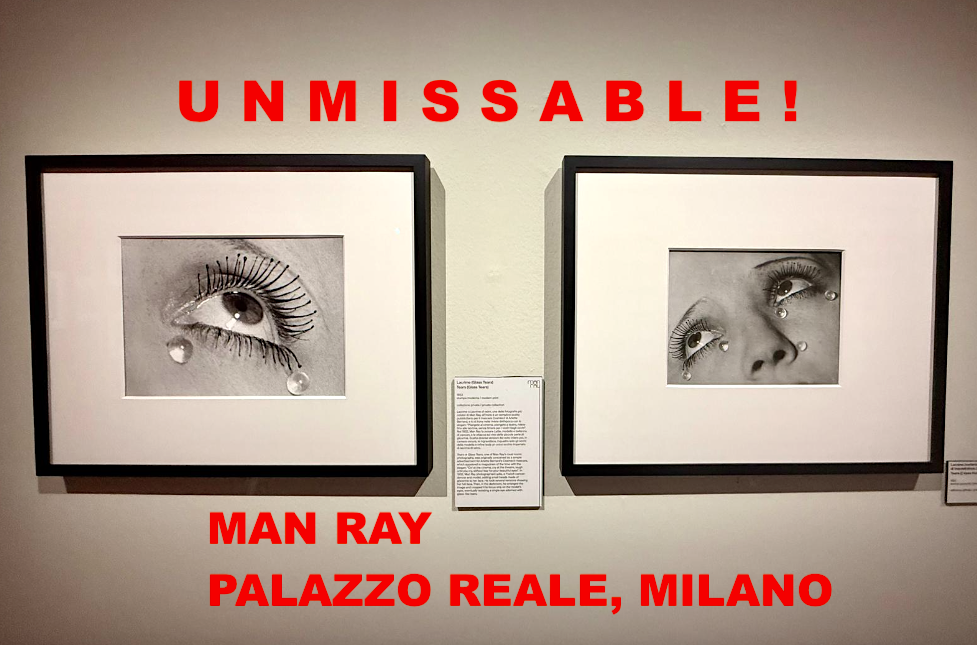


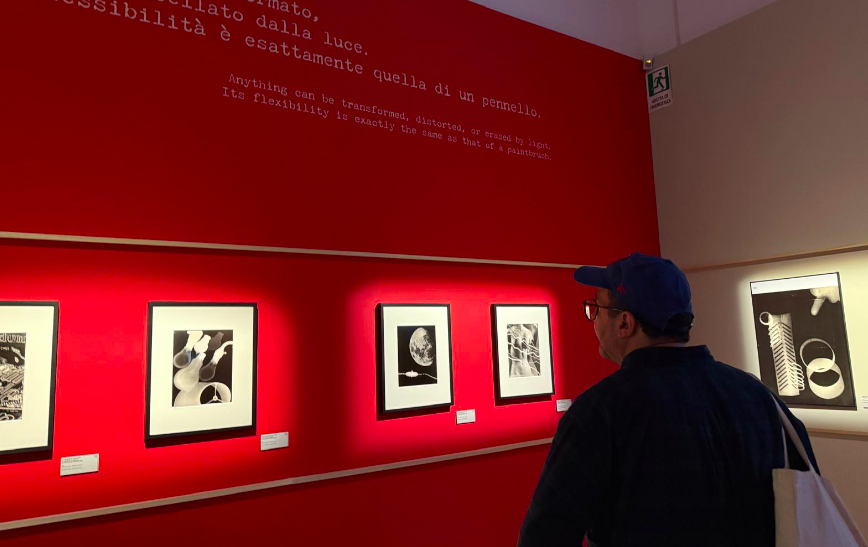
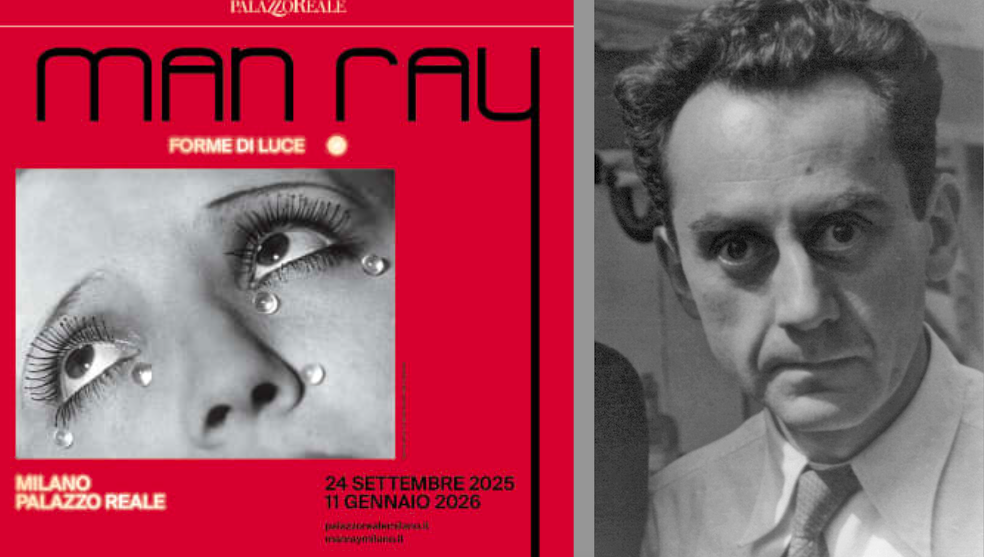


 Civita
 Rossano


 Santa Severina


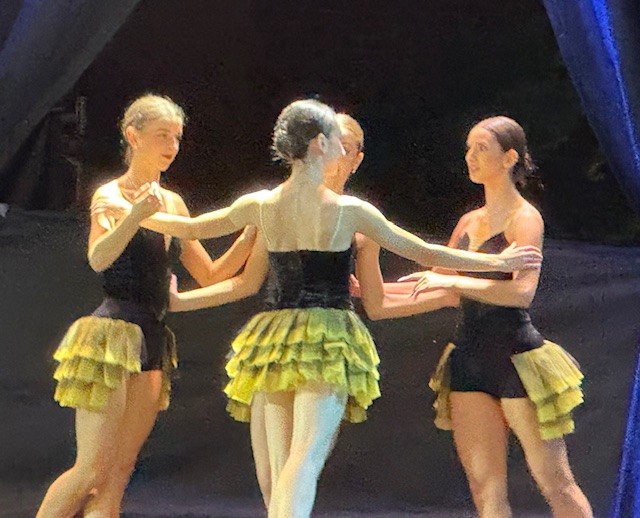

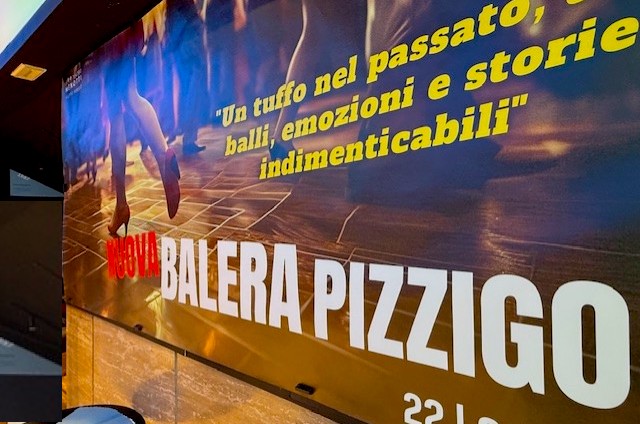 The Nuova Balera Pizzigoni is a ballroom where emotions, dances, songs and loves intertwine, all in a magic space from the 40s that manages to create a refuge of dreams and passions. The story takes place during the great snowfall in Milan in 1985, the music is very varied from the intimate song “Non arrossire” by Giorgio Gaber to the “Tango della gelosia ” to “Tutti i frutti” by Little Richard.
 On stage we find the actors Lucia Vasini, that recalls the evocative moments of this historic place. Enrico Ballardini, Sara Bertelà’, Alessandro Sampaoli, Emilia Scatigno. Four energetic dancers: Michelle Atoe, Arianna Cunsolo, Mattia Molini, Christian Pellino. The trio of musicians: Alessandro Centolanza, Daniele Di Marco), Gianmarco Straniero
 Teatro Menotti, Milan.

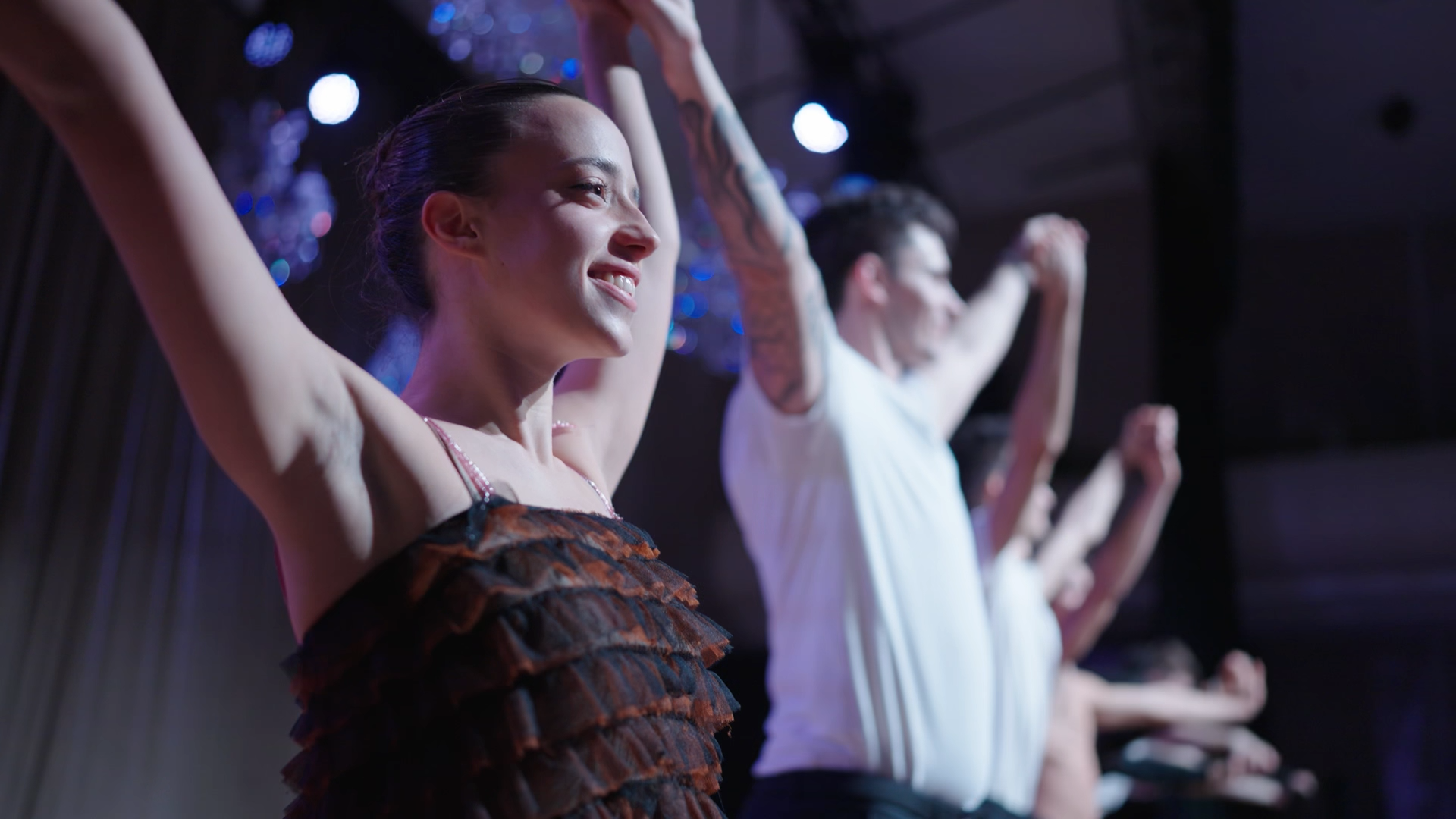
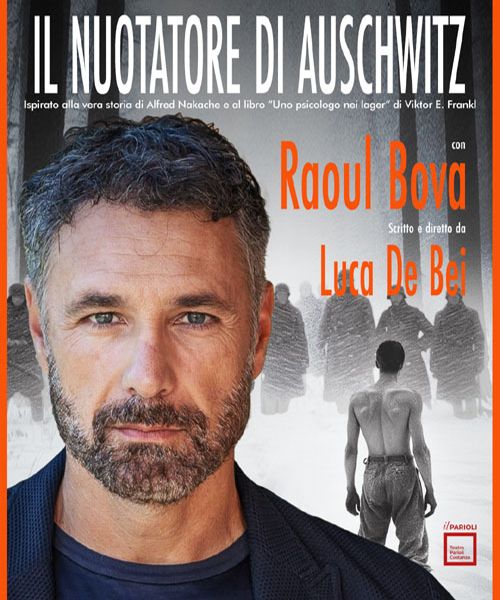 Alfred Nakache was a French swimmer of Jewish origin, holder of a world record. In Auschwitz he was prisoner number 172,763. Despite his imprisonment and unheard of privations, he never stopped training by diving into the freezing water of a reservoir. His strength, his unshakeable determination, allowed him to go through the horror of the camp and save himself. When he returned to compete, he achieved a new record and took part in the London Olympics.
  Viktor Frankl, an Austrian psychiatrist, was also interned in Auschwitz. Immediately after the liberation, he wrote a book about his experience and about those who, just like Nakache, managed to overcome that terrible ordeal. The show aims to bring back these two extraordinary figures who communicate a message of hope to all of us: living is certainly also suffering, but seeking a meaning to this suffering by looking towards the future with a purpose is the way to face the hardest challenges that life presents us. In this way, it is possible to finally discover the very meaning of existence.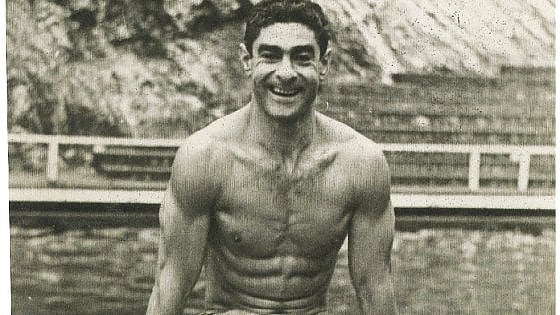
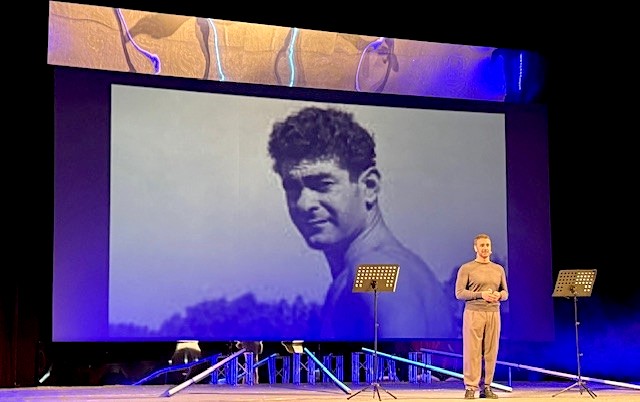 The scene around him becomes essential, composed mainly of lines of lights designed by Marco Laudando and which become the symbol of lanes in a swimming pool, of rails that transport souls full of pain to finally rise to perspective escapes in a tension towards the unknown, the absolute, the search for a spirituality more necessary than ever in an attempt to survive the brutality of the concentration camp.
 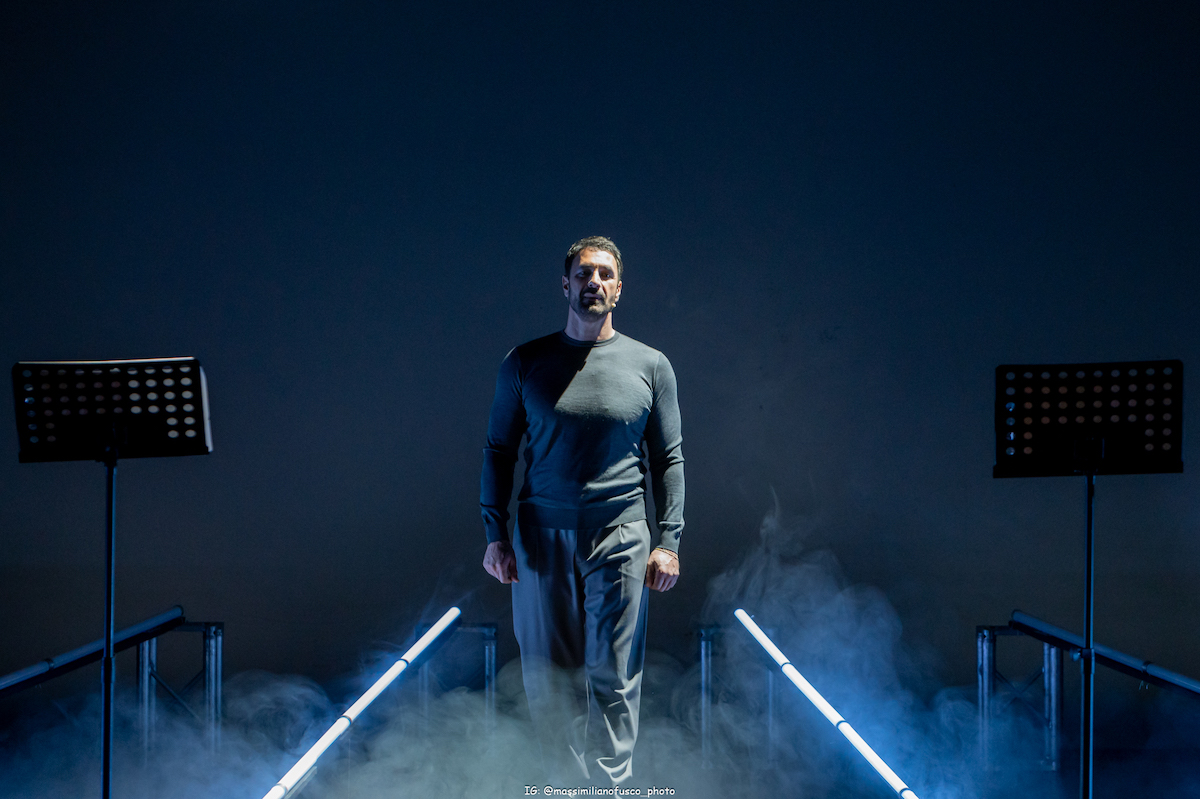 The scene is then enriched by images filmed by Marco Renda that immerse the spectator in abstract yet material and poetic spaces, in an essential black and white, non-places that are mirrors of the soul. Again, the show makes use of the original music by Francesco Bova that builds sound carpets rich in throbs and references, that envelop and sometimes disorientate the spectators, but always with the intent to involve and excite.
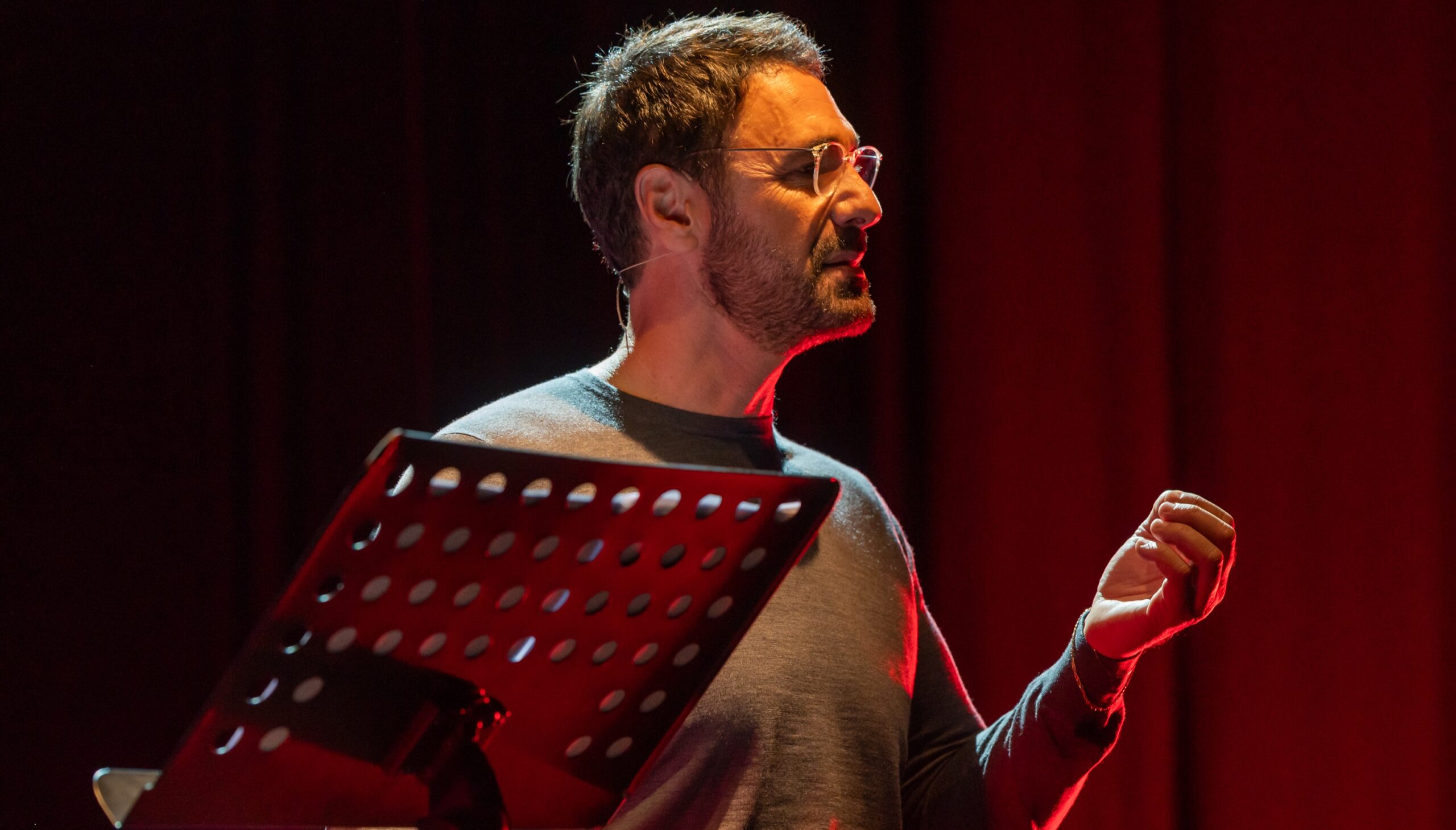 Because, if the story of an Auschwitz inmate inevitably brings us back to the many testimonies heard up to now, it is true that that of the swimmer Nakache stands out from these to become especially the emblem of a resistance carried forward and achieved with courage and stubbornness. A figure who, to fully emerge, however, needs his “double” – the scholar Frankl, – who analyses and theorises what the instinctive Alfred instinctively puts into action. In this vision Alfred and Viktor are each other’s mirror, they are two sides of the same coin and they merge in an experience capable of giving spectators the ultimate meaning of existence.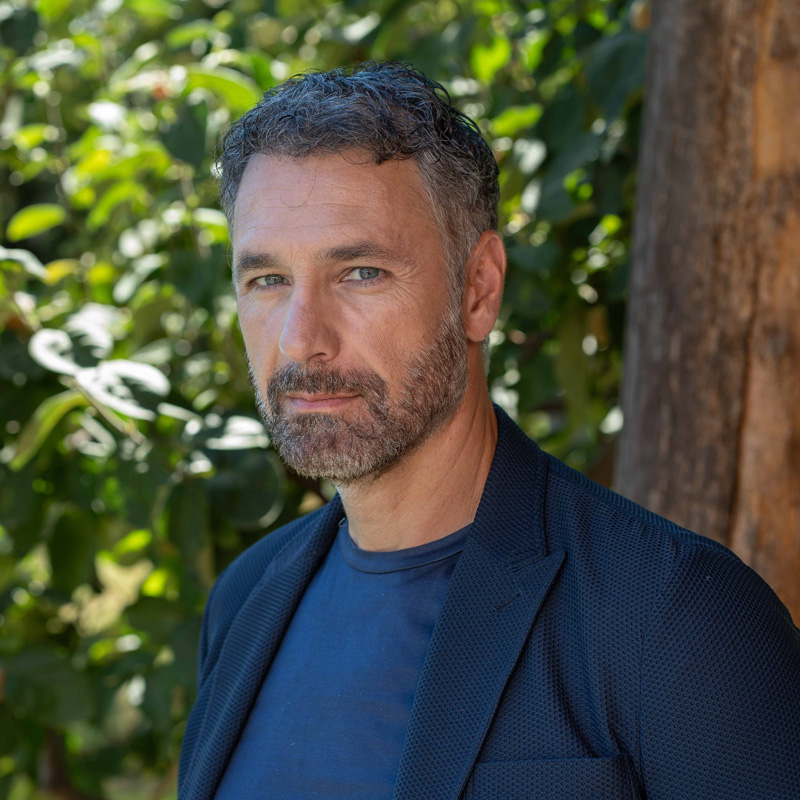
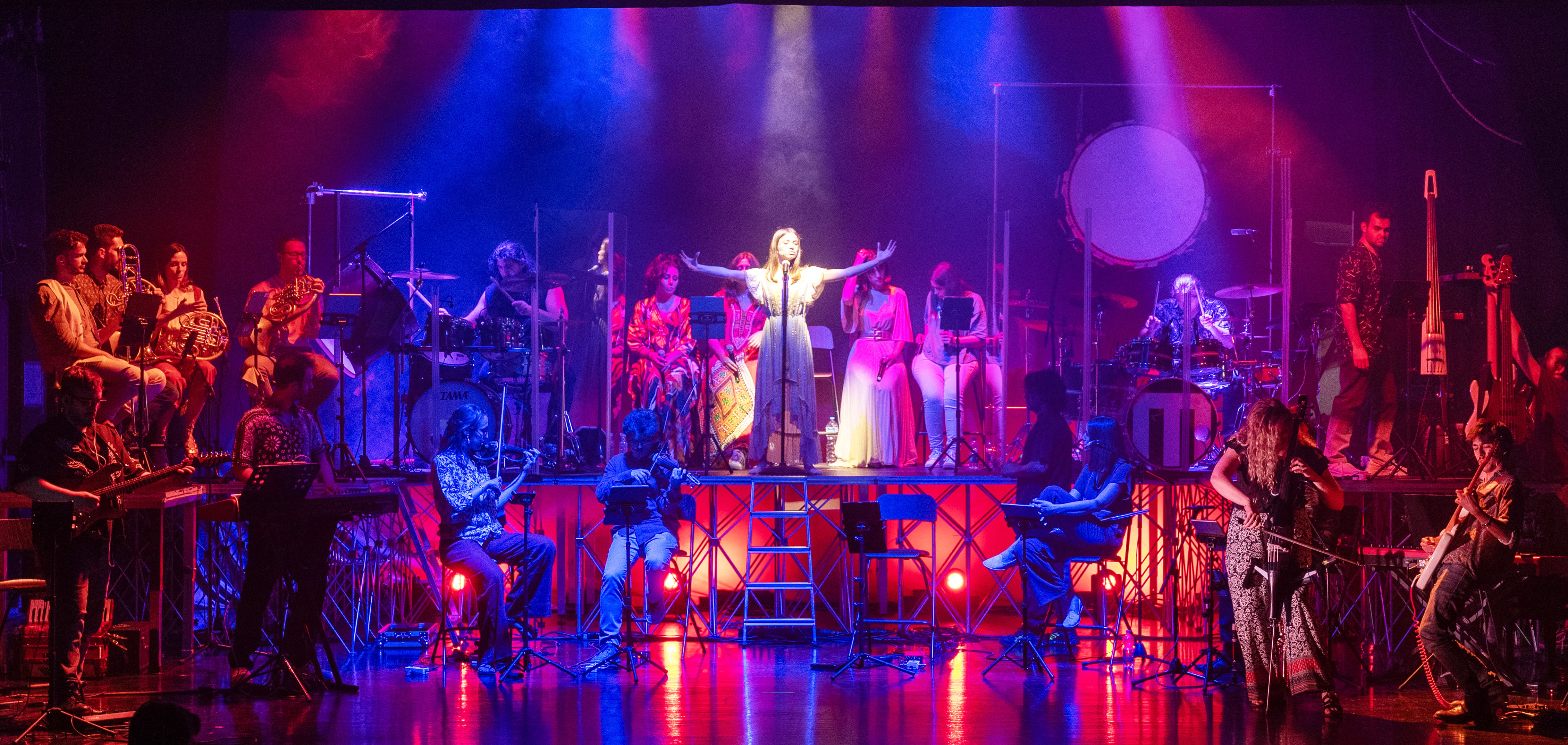
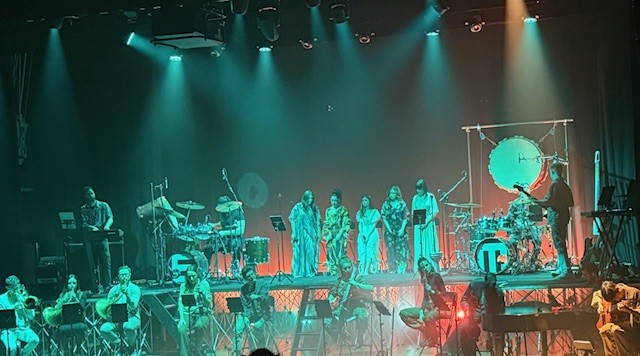 Un vero concerto-show, che vede 20 musicisti, coristi e solisti impegnati a animare il palco non solo con la musica , ma anche con movimenti coreografici e inaspettati cambi di costume (divertentissimi i cappeli ricorno dei Piarti dei Caraibi) ambientati con le immagini più rilevanti dei film da cui le colnne sonore sono state tratte.
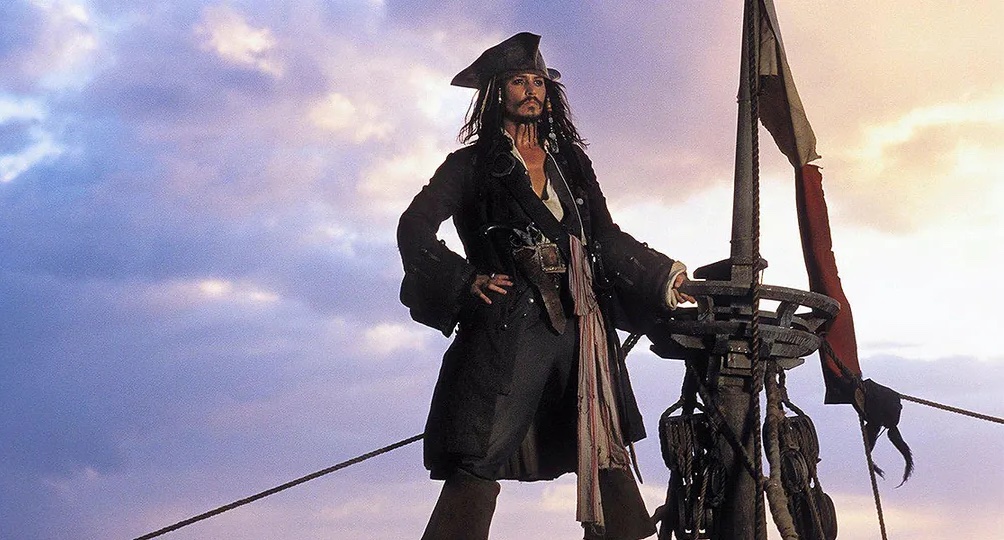 Hans Zimmer è uno dei musicisti più influente di Hollywood al pari di Ennio Morricone e John Williams. Ha musicato grandi film. ha vinto 2 Oscar, 4 Golden Globes, 4 Grammy, 1 Tony Award e decine di altri premi. Hans Zimmer ha lavorato in circa 150 pellicole diverse e in oltre 500 progetti complessivi che hanno prodotto incassi al botteghino per circa 28 miliardi di dollari.
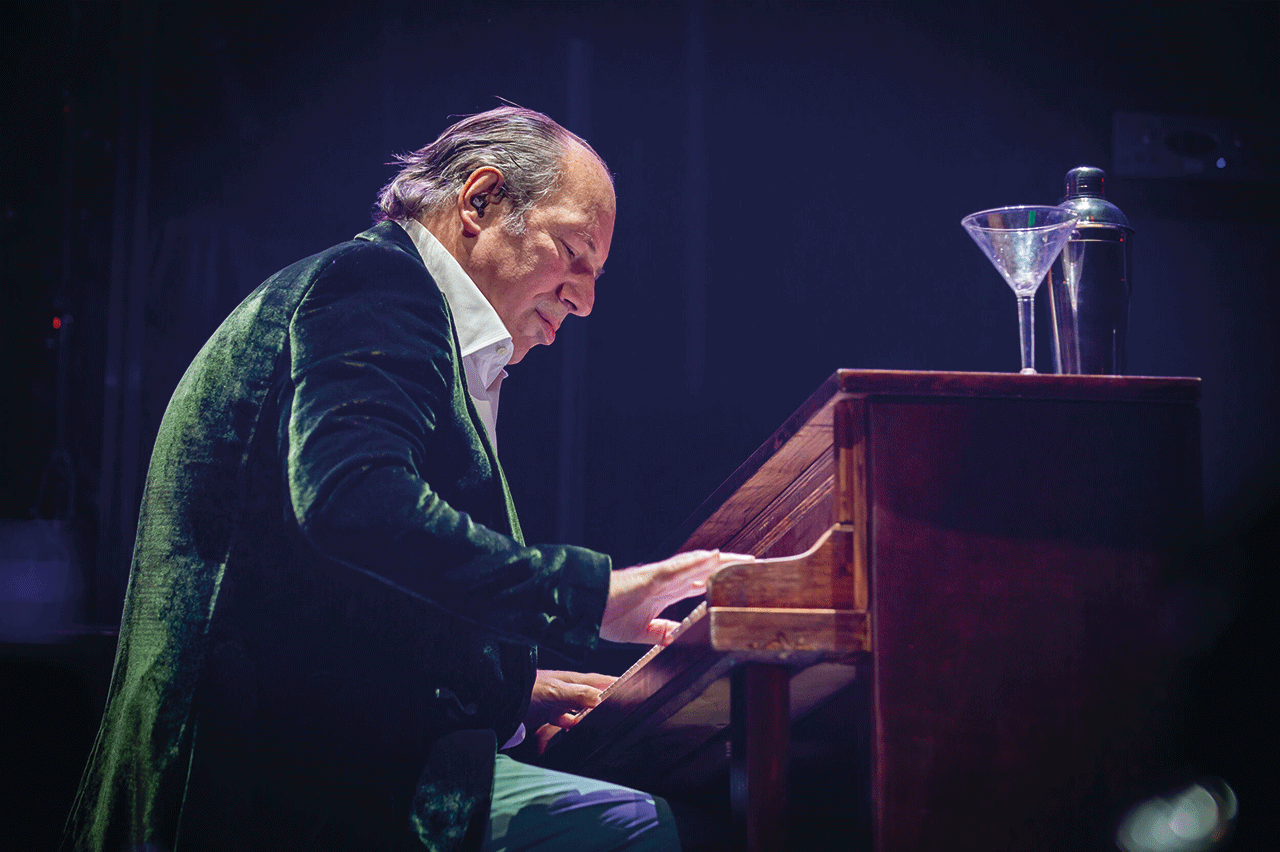 «In tutto quello che ho fatto c’è sempre qualcosa che mi piacerebbe modificare – ha dichiarato in un’intervista a Vanity Fair – però sto cercando la grande melodia che non ho ancora scritto: so che è da qualche parte là fuori e questa convinzione è ciò che mi spinge ad alzarmi dal letto ogni mattina»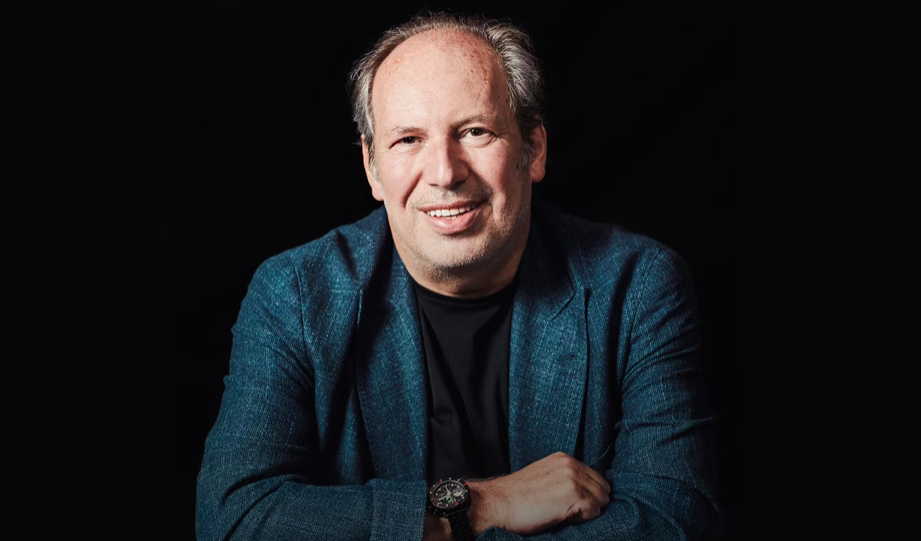
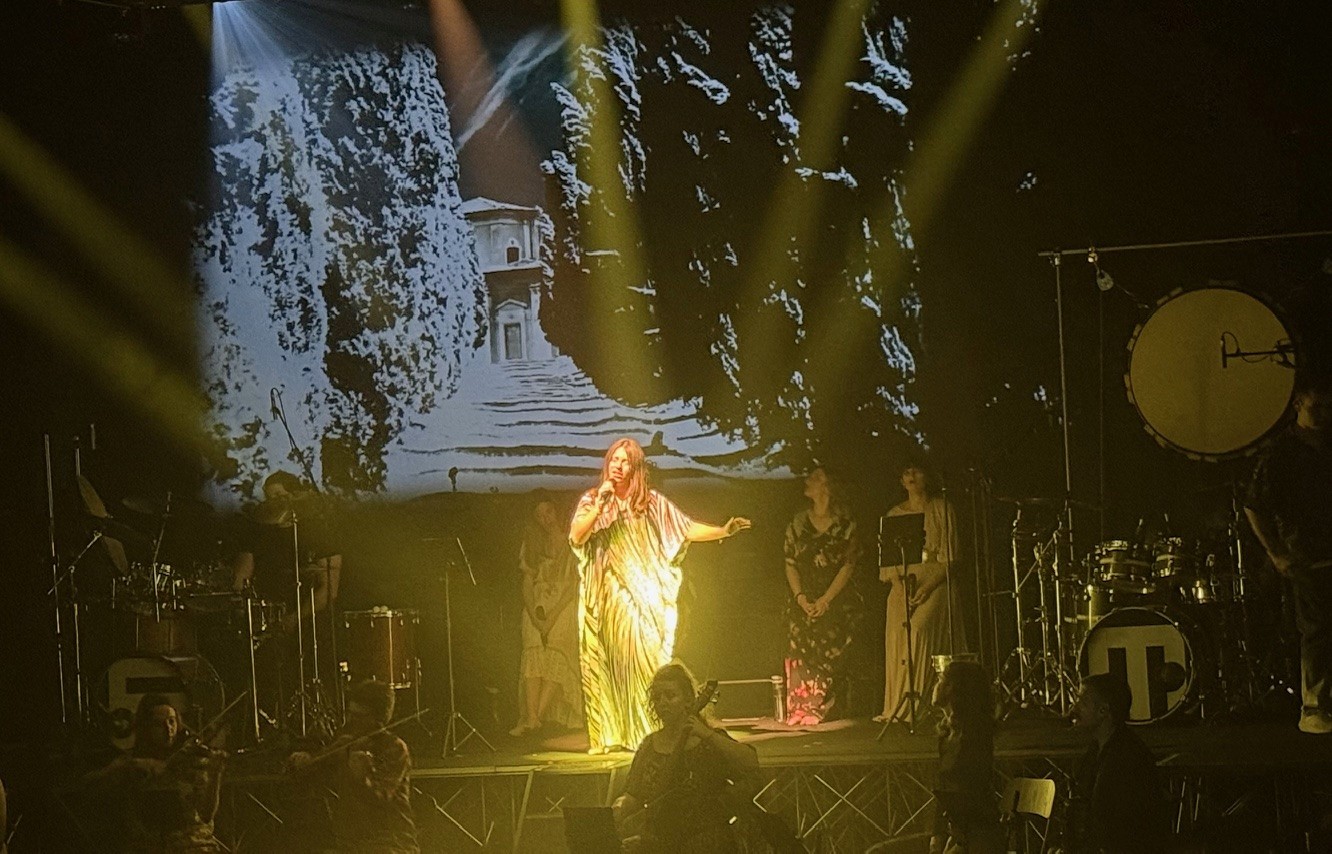
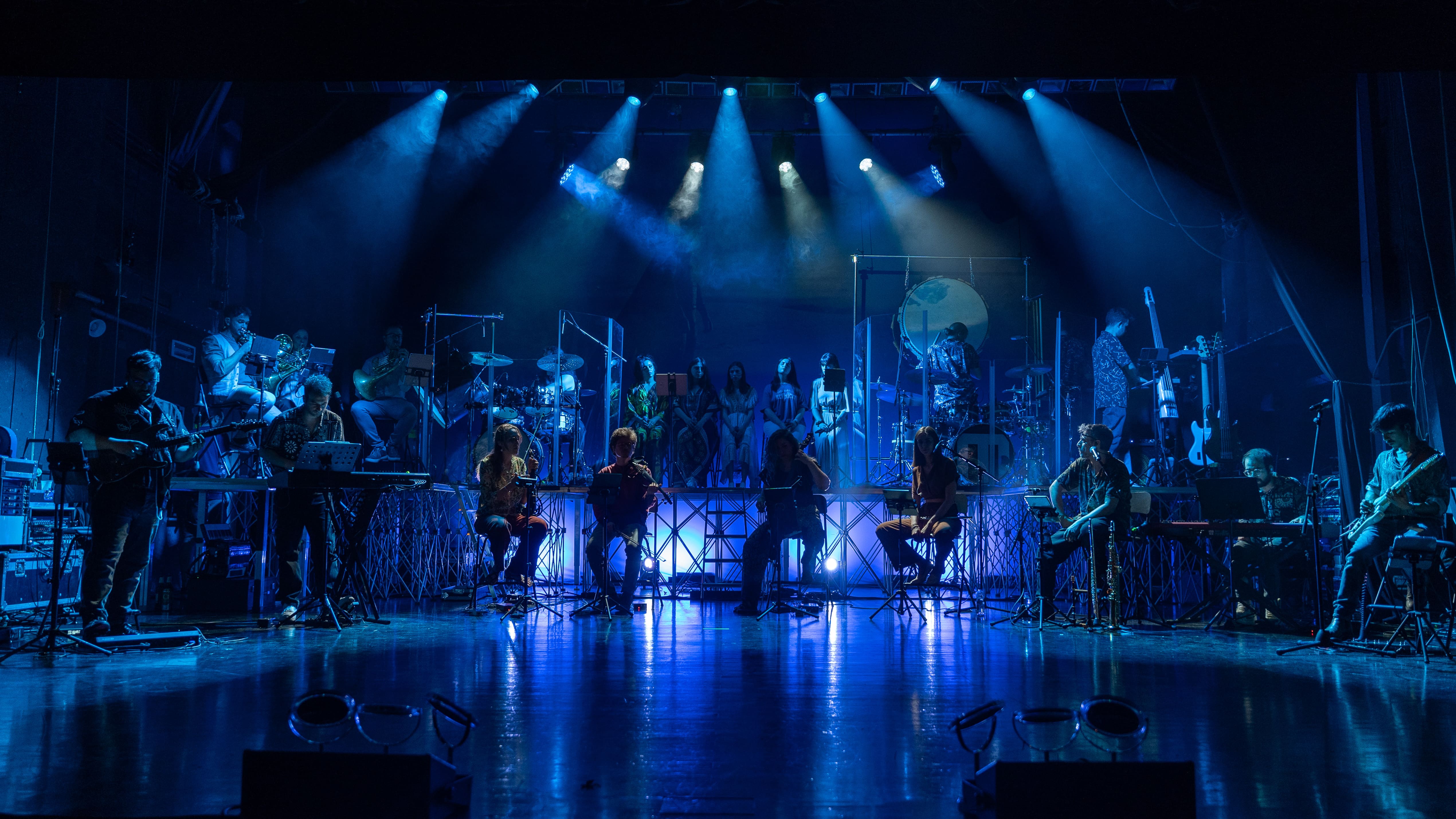
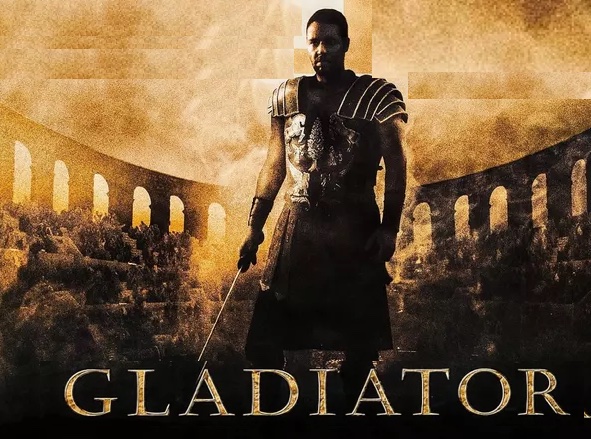
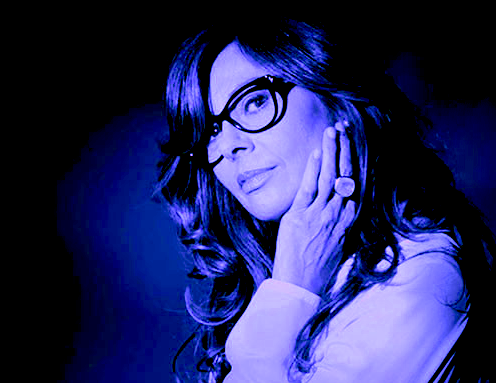 by Cesare Zucca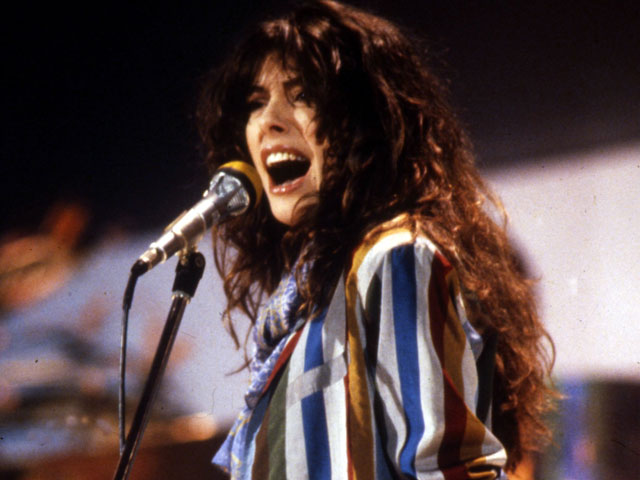
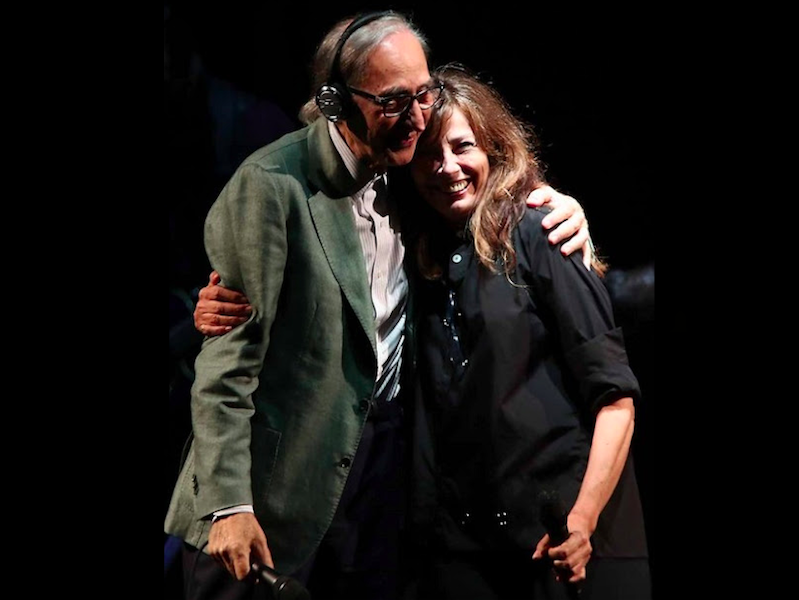 Alice’s new tour “Master Songs” features some of her most cherished and significant songs from her musical production, increasingly oriented towards the search for existential, cultural, spiritual and poetic content. In addition to her own compositions, she pays particular attention to the singer-songwriter genre, with songs by Battiato, De André, Guccini, De Gregori, Dalla, Fossati, Camisasca and Di Martino, which she interprets with the desire to capture and share their essence.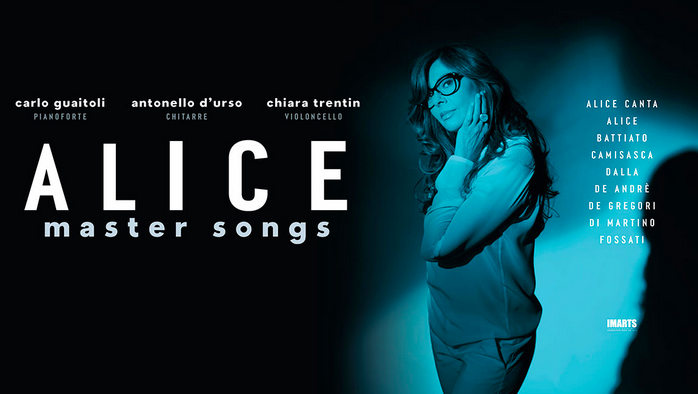
 What happens to an actor when no agent or producer wants him?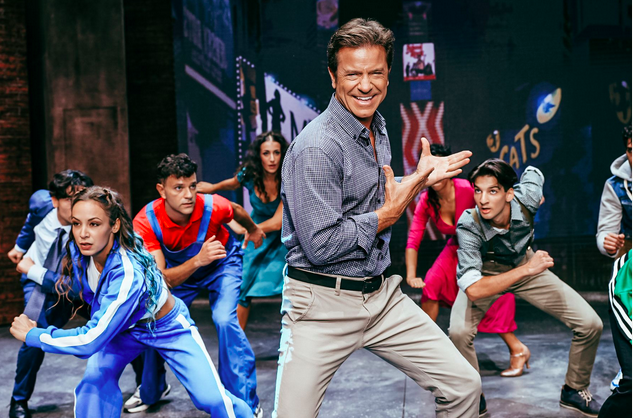

 Enzo said that “with Paolo there is a special understanding, and it is a pleasure to share the stage in a show that speaks of dreams and reality with great lightness and intensity of thought.”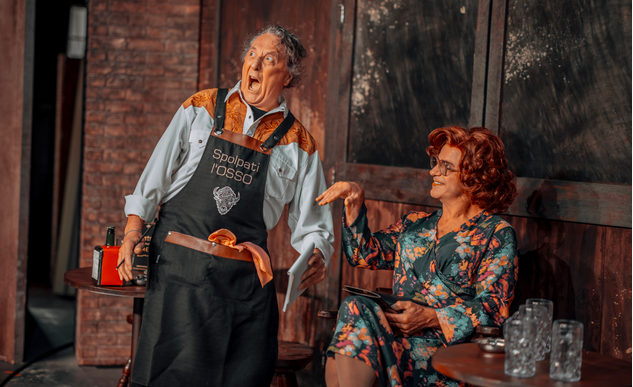

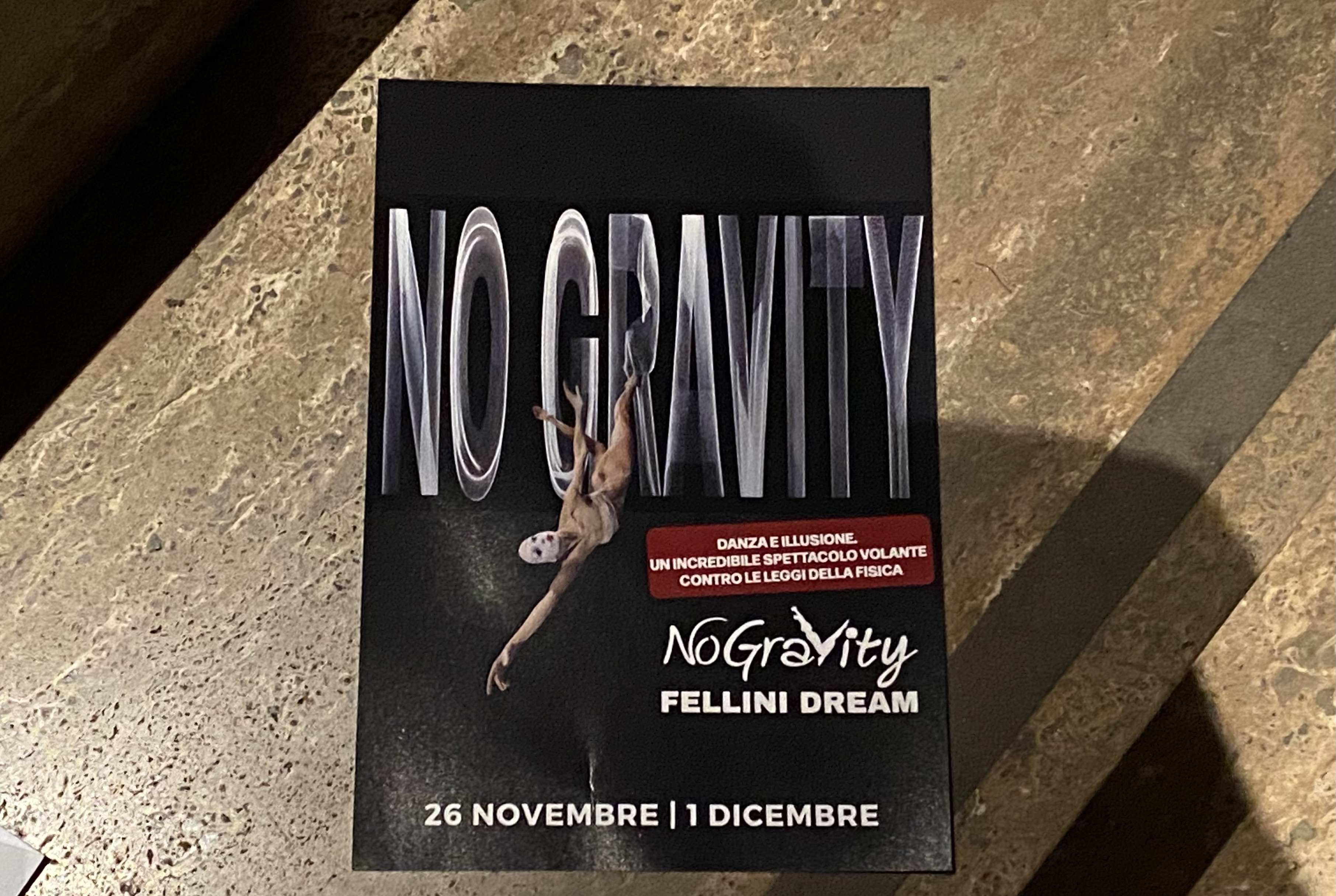 Teatro Menotti , Milan hosted the debut of NoGravity Company’s FELLINI DREAM directed by Emiliano Pellisari, who also designed scene, costume and lighting and Mariana/P, music producer and principal dancer,
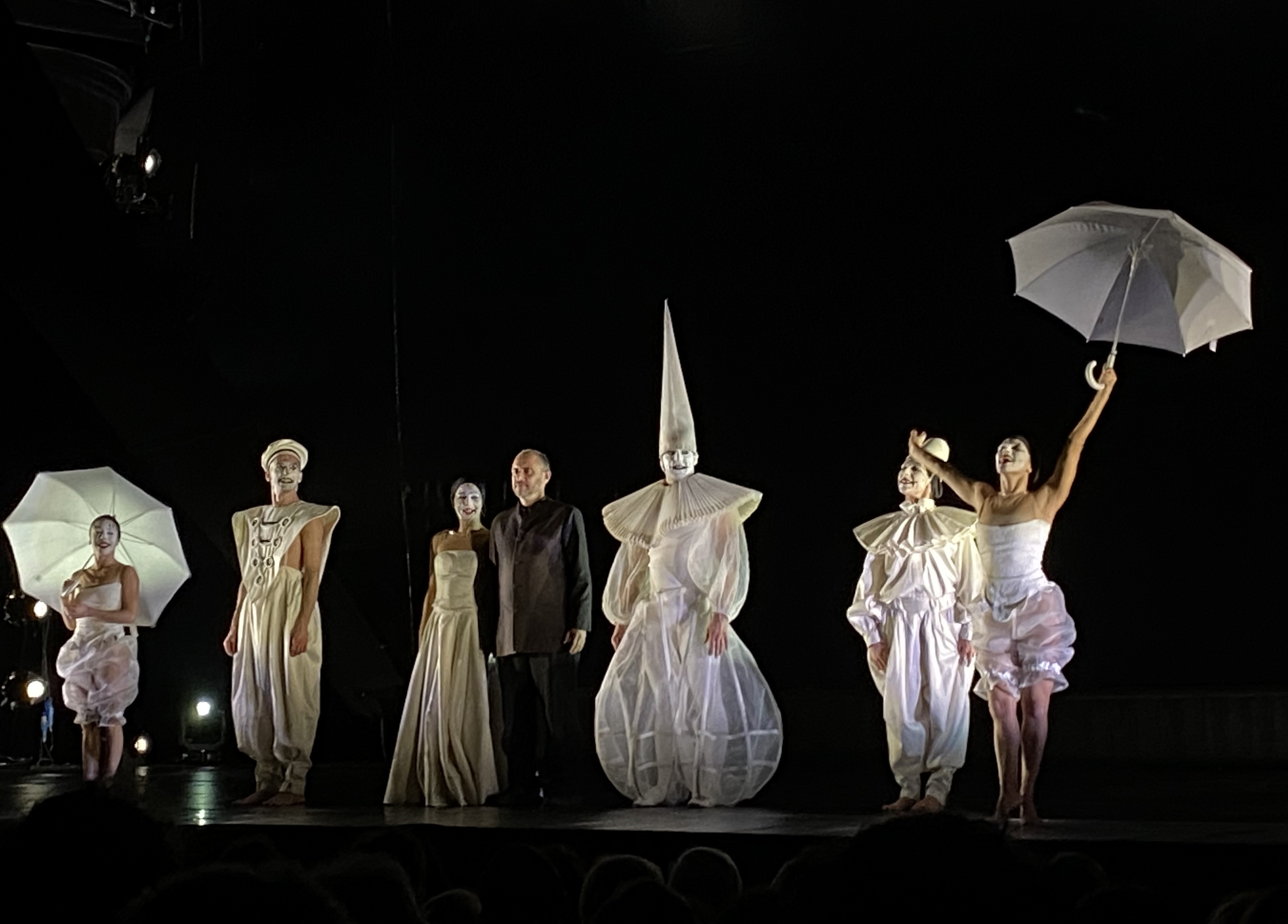 .The show takies the audience on a visionary journey where actors and dancers moved in a game between verticality and lightness, Only by giving in to gravity, the protagonist achieves peace and elevation, reflecting herself in the mirror like a light figure in the sky.
 The Company is hosting the talented dancers Francesco Saverio Cifaldi, Giada Inserra, Leila Ghiabbi, Marianna Caratelli, Baolo Tiber while choreographer Emiliano Pellisari and Mariana P designed a suggestive, unreal dance with creating images and figures through the use of bodies as human geometric figures, adopting new choreographic techniques that the No Gravity has developed and performed over the years
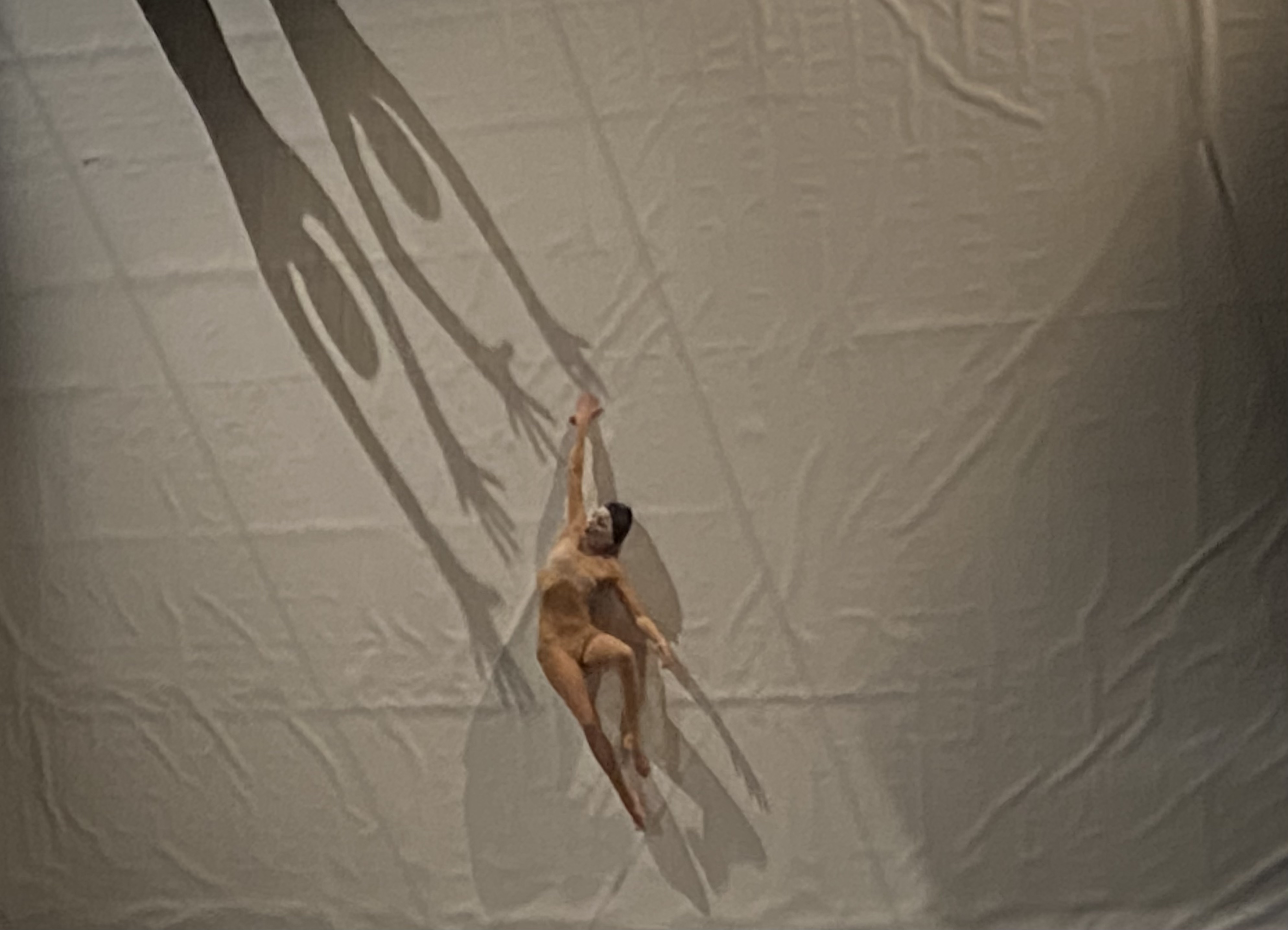 At TEATRO MENOTTI till 01
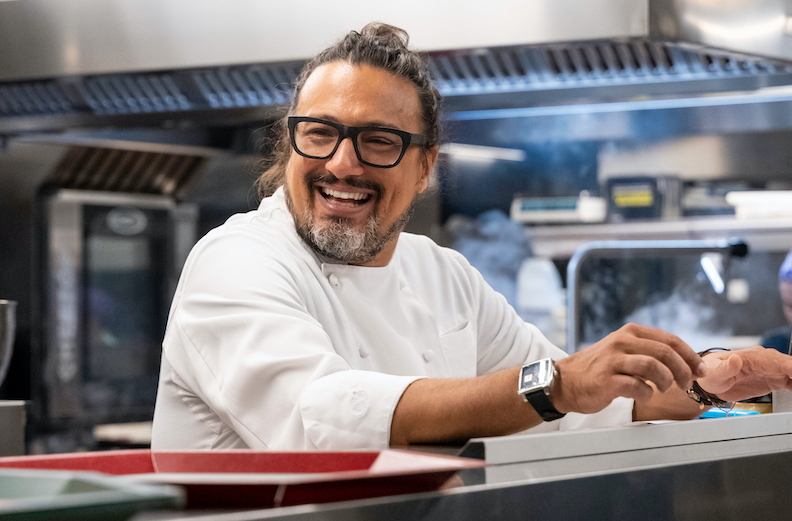 Alessandro Borghese is an eclectic and innovative chef, undoubtedly one of the most authoritative and influential figures in the Italian gastronomic scene, after graduating from the American Overseas School in Rome, he embarked on cruise ships for three years. His culinary experiences continued in restaurants in San Francisco, New York, London, Paris,
  Copenhagen, Rome, Milan and Venice, while his gastronomic “investigations” continue up and down Italy in the Italian TV show “Alessandro Borghese 4 Restaurants” written, produced and hosted by Alessandro.
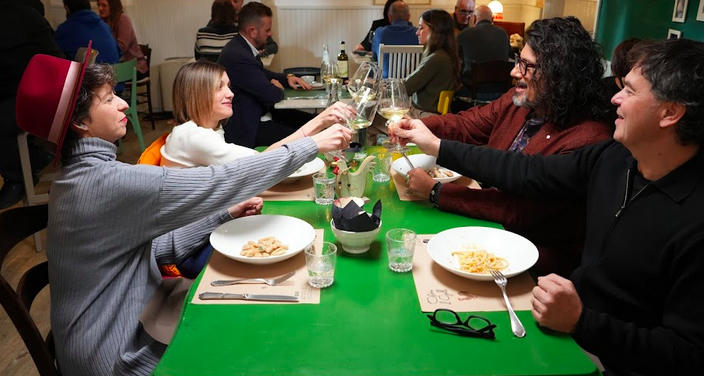 With “Alessandro Borghese 4 Restaurants” you visited many places, which one remained in your heart?
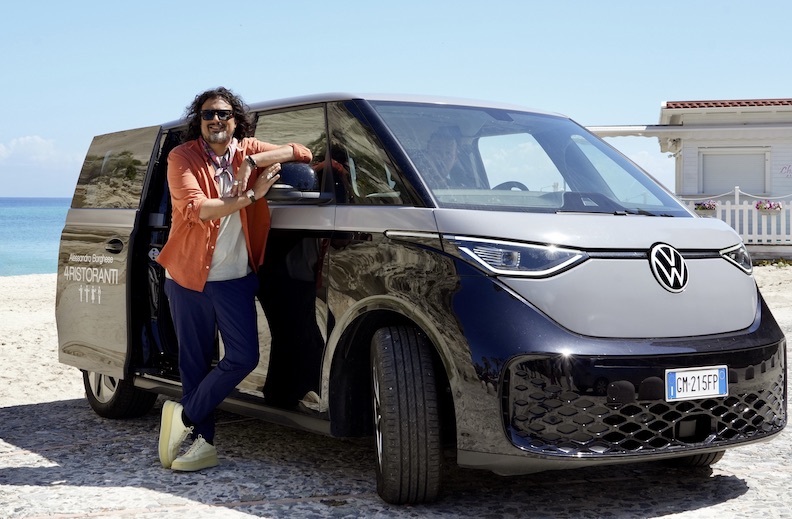 Everywhere the black van with the program’s logo has become a must for selfies… when it is parked or stopped at the traffic light, it becomes the protagonist and photos next to the door go crazy on social media. I live with immense pleasure the reality of those places and the daily life of the inhabitants I meet, they are all in my heart
  How would you describe your cuisine?
 What is “Your” favorite dish?
  Is “TV cooking” a current trend?
  When does food become “glamorous”?
 Food has captured the attention of television networks and the Internet because cooking is the soul of Italy and the engine of important commercial activities. It is no coincidence that our raw materials are unique and exceptional. Then today we are lucky to have immediate means of communication: anyone through television and the internet can follow the procedures and advice on a dish to prepare.
 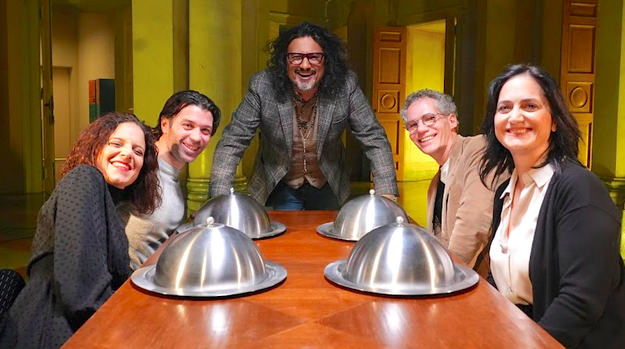 I am very happy to have been a precursor of this new vision of food: I had an idea of the success of cooking on television ever since it was unusual to become a testimonial for a gastronomic product. I am also proud to have cleared the union of cooking with other similar universes, such as music and art. Before, it was unthinkable to describe dishes with rock songs or to talk in an interview like this about possible combinations between the two realities.
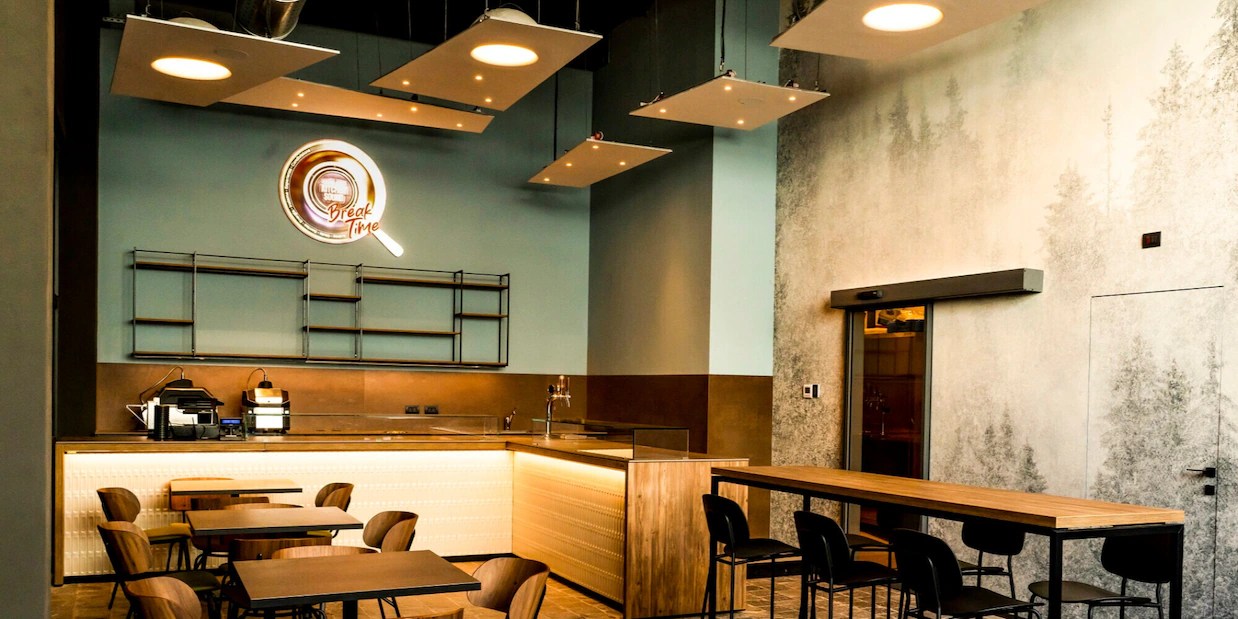 Fashions change, even in food. What dish you think will always be in vogue. Creativity. It is not a tangible dish, but I like it because it is an absolutely free concept, without end.
 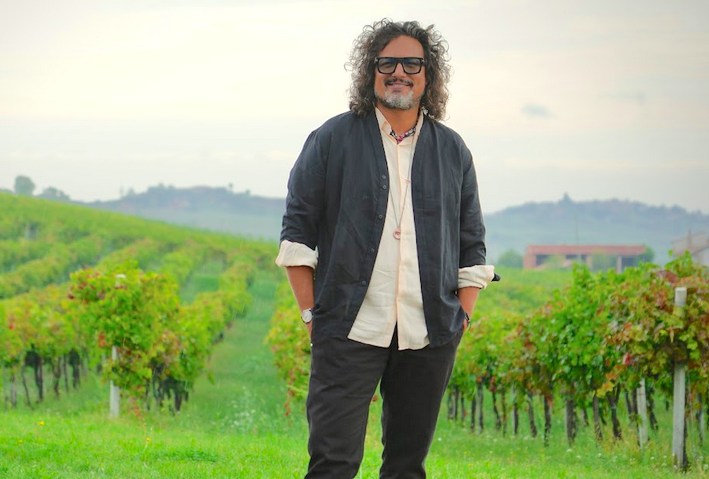 Do you have a dream in the drawer?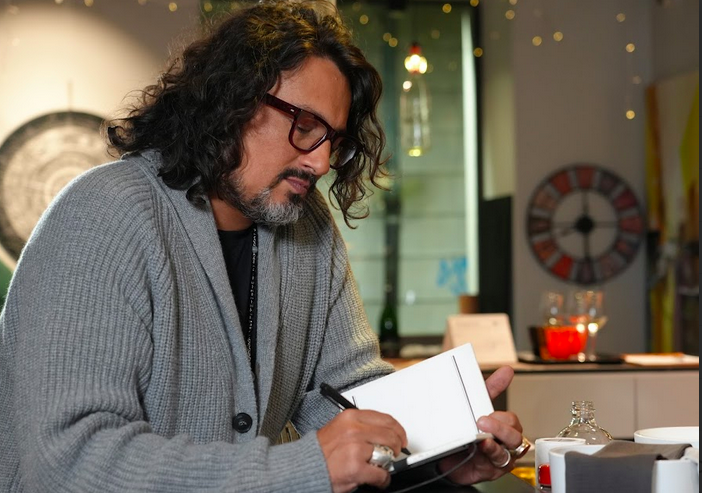
 Young professionals perform and tell their stories in front of the public, revealing themselves. The evenings are presented by Klaudia Pepa (choreographer and dancer, in the cast of Open by Daniel Ezralow) and Garrison Rochelle (famous choreographer and this year one of the protagonists of Fame, the musical)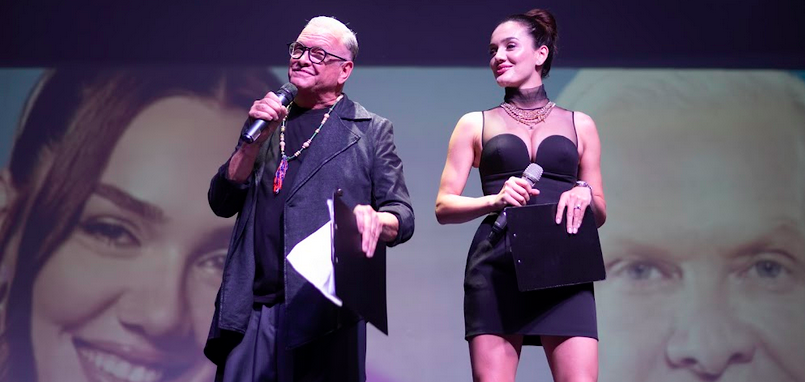

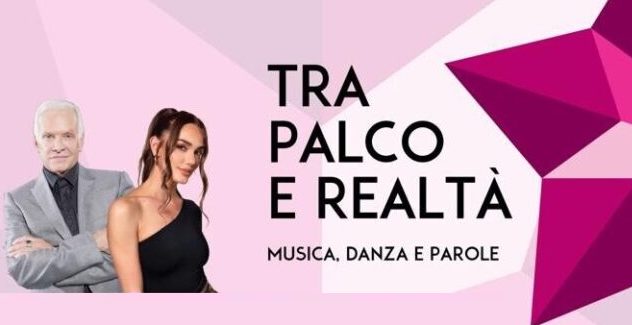


 @thewell_movie
 In this italian staged version of the iconic movie” Steel Magnolias” the action takes place in Bracciano and becomes strongly Italian: the accent, the personalities, even the soundtrack, made up of many beautiful songs by italian artists of that era.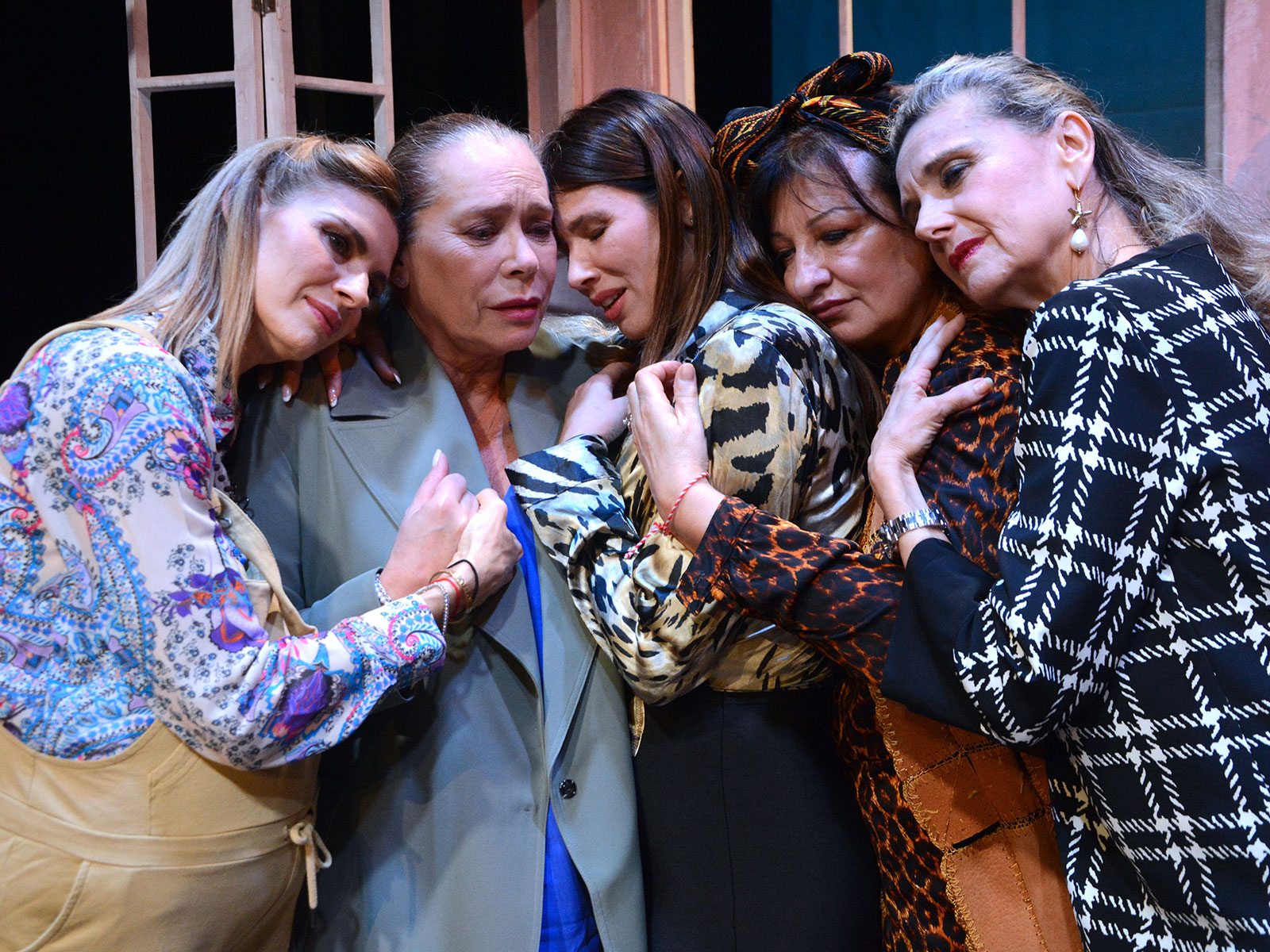
 The flamboyant cast: Barbara De Rossi, Martina Colombari, Gabriella Silvestri, Alessandra Ferrara, Caterina Milicchio, Cristina Fondi
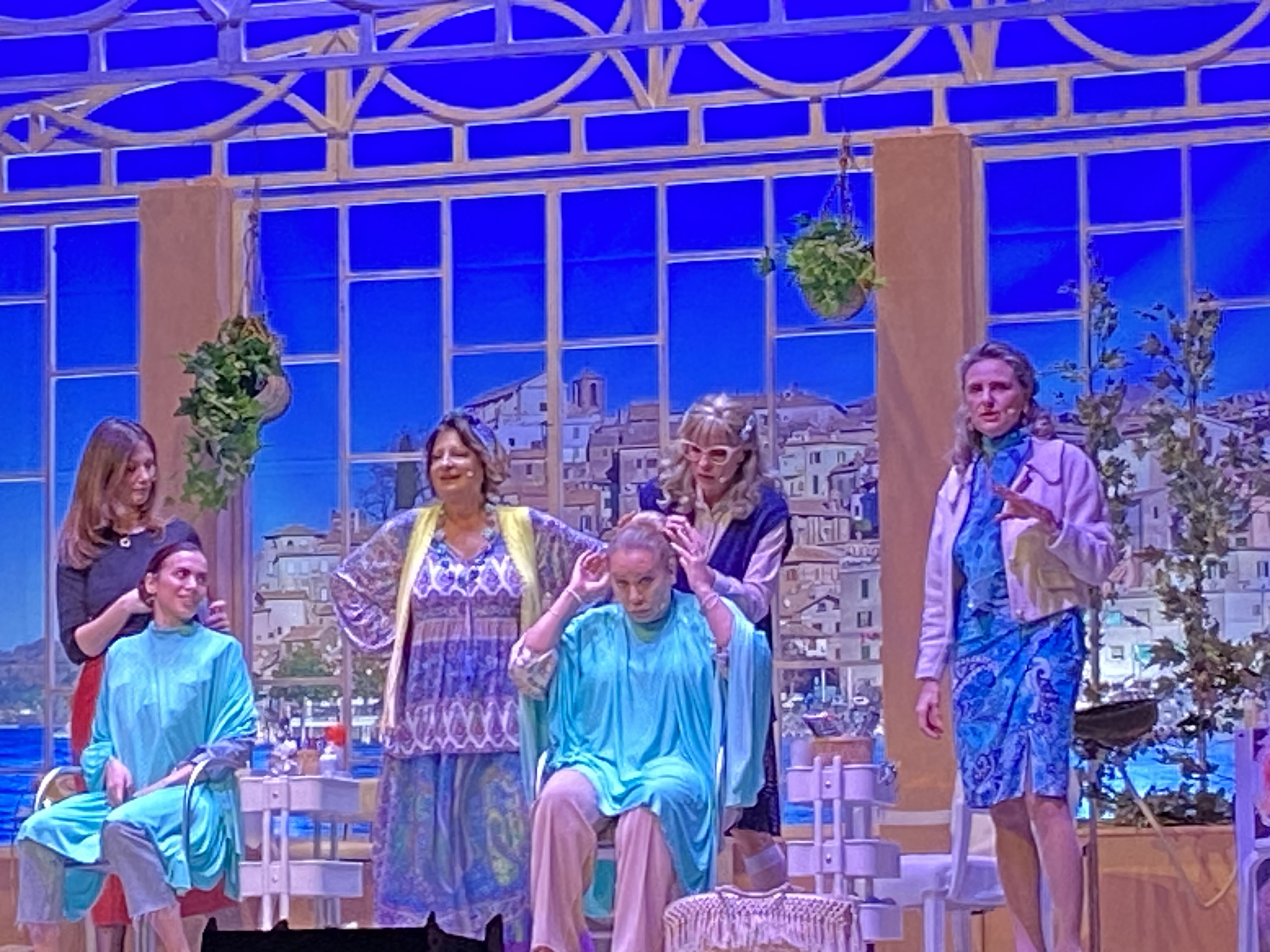 To get tickets online, click
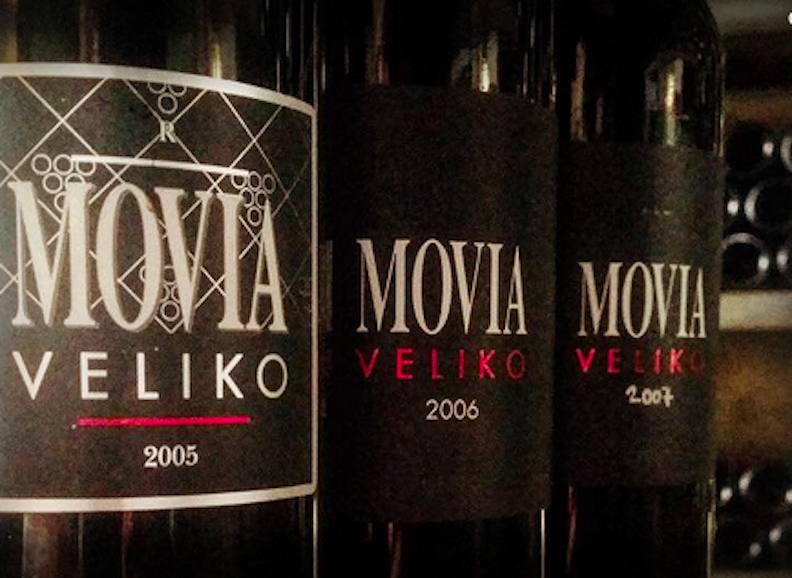
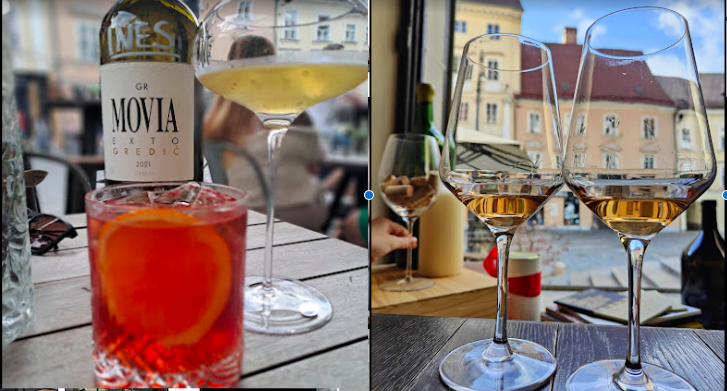
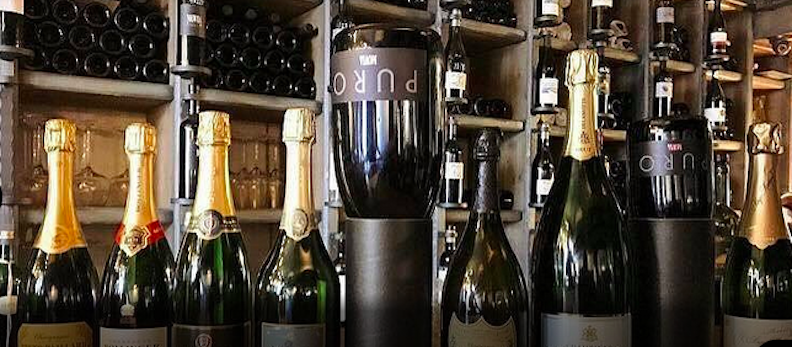


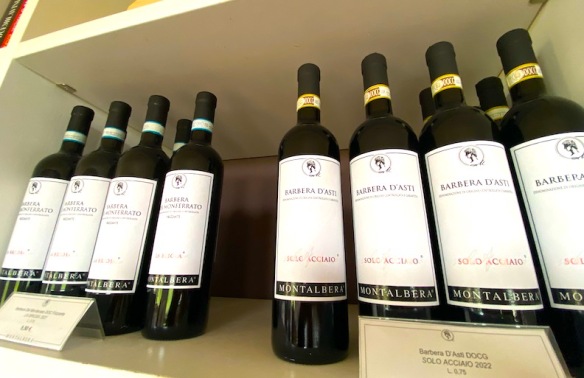
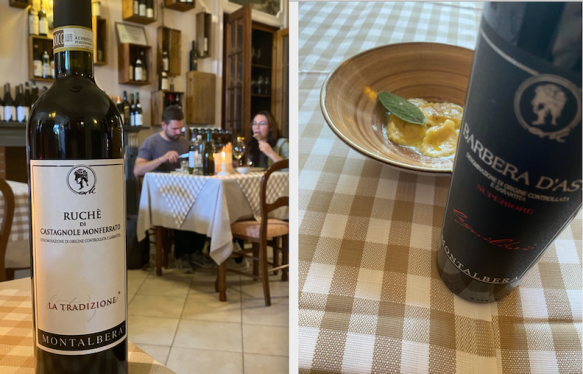


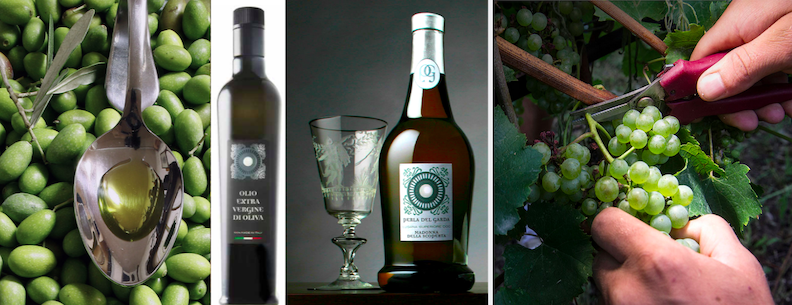

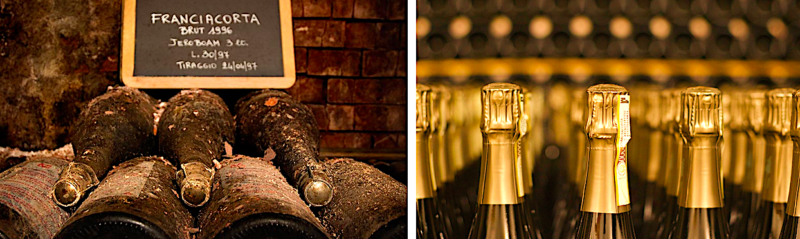
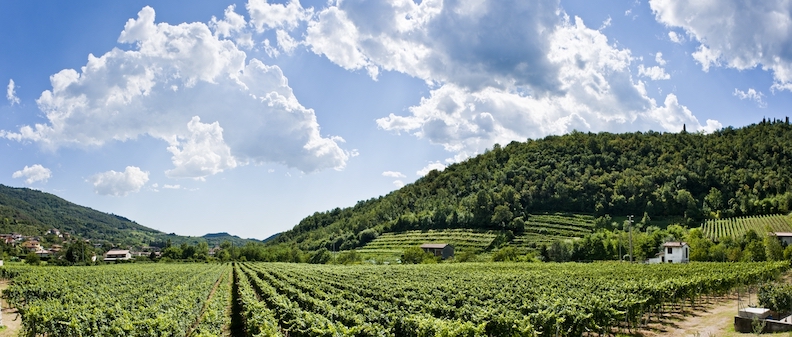 On the green transition front, Franciacorta has been able to perfect a viticulture leader in sustainability, champion of an agriculture careful to minimize environmental impacts and improve functional biodiversity within the vineyard ecosystem.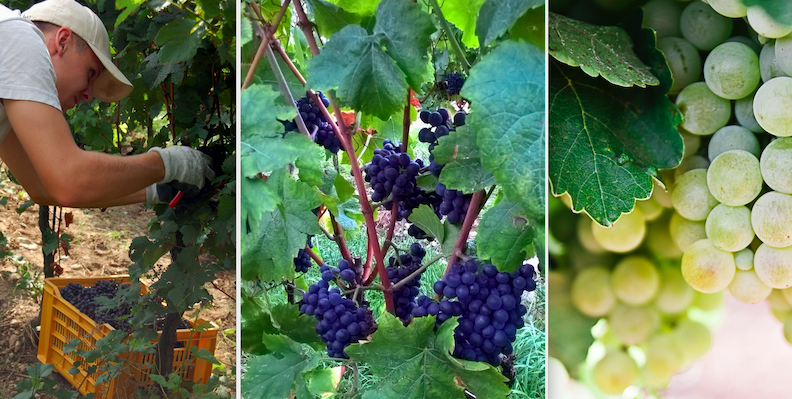
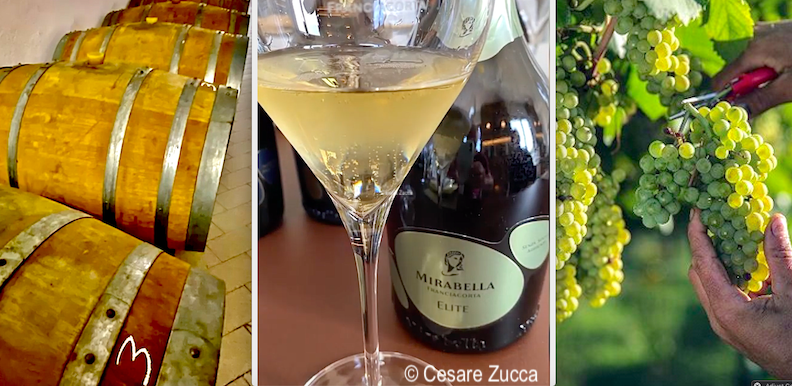



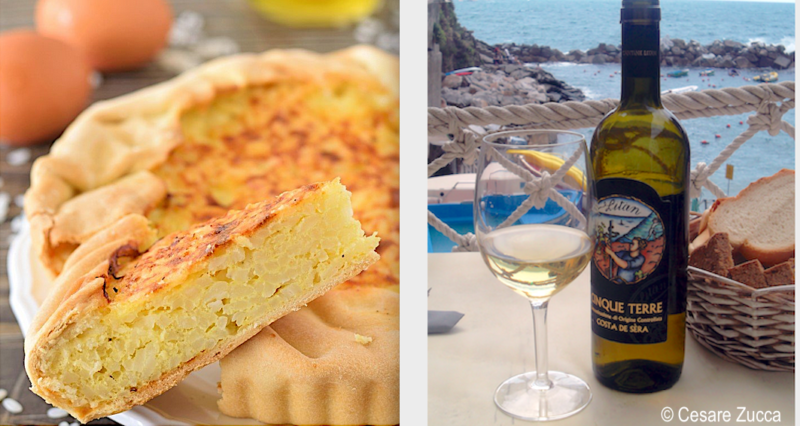
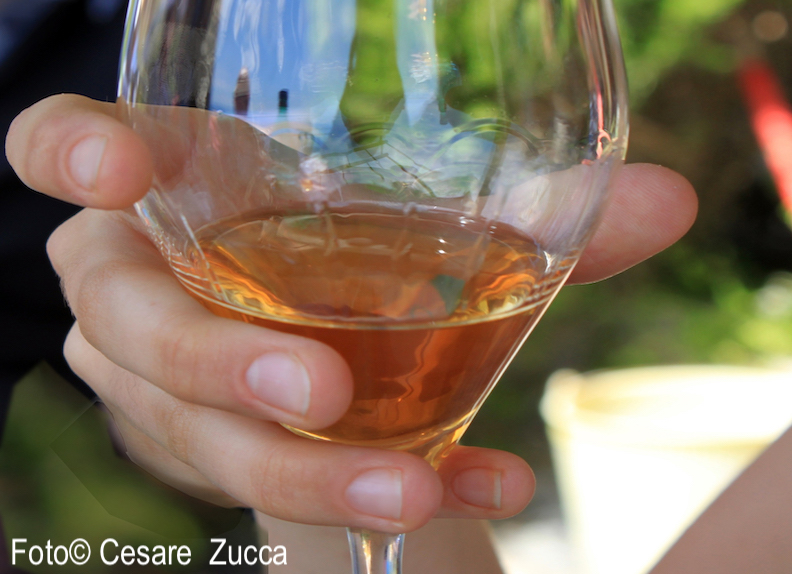


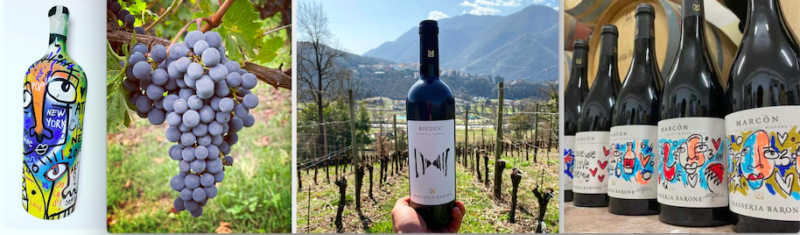
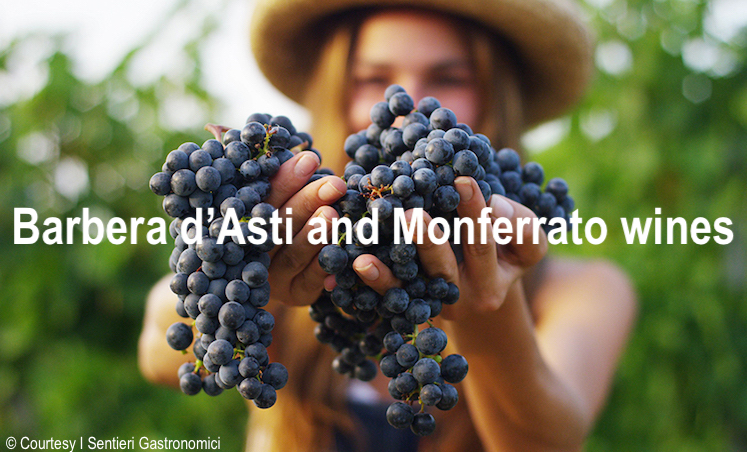


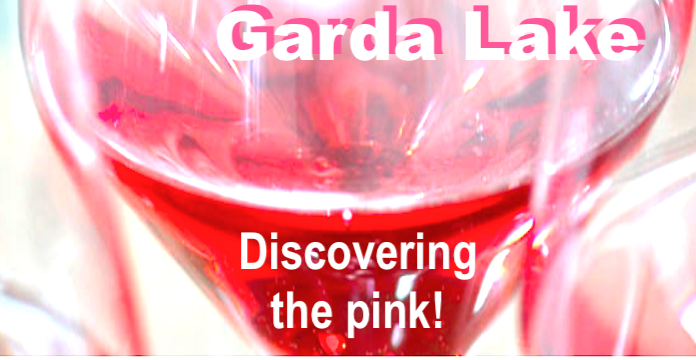 Among vineyards, suggestive villages, sanctuaries of ancient devotion and castles dating back to the 10th century, you will discover the Valtènesi famous for the beauty of the lake and hilly landscape and for the production of rosé wines, whose the characteristic grape variety and great heritage is Groppello. Doc Valtenesi is the wine, a modern and innovative expression of the Garda winemaking tradition, the sales of the first bottles of “Valtenesi” Chiaretto began on a truly romantic date: February 14, 2012, Valentine’s Day. In fact, it is easy to fall in love with this delicate but also seductive rosé …


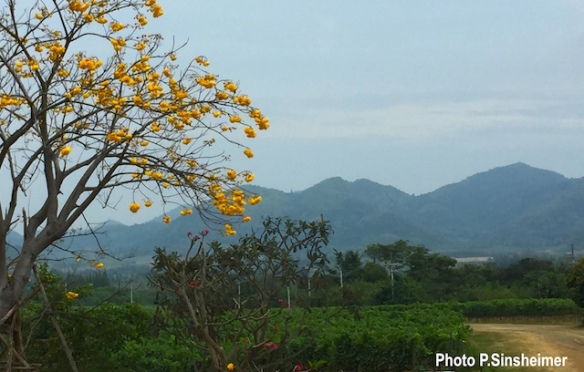
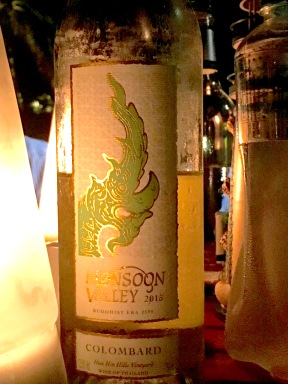
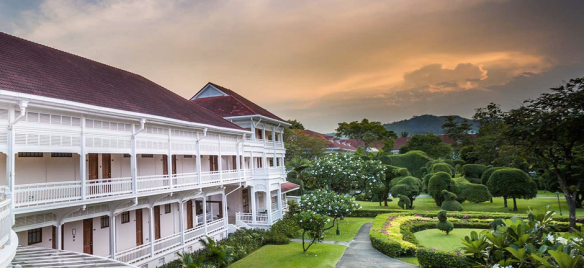
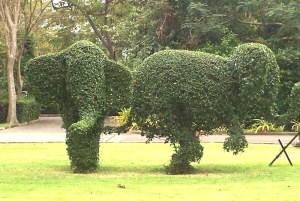
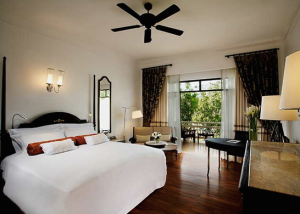
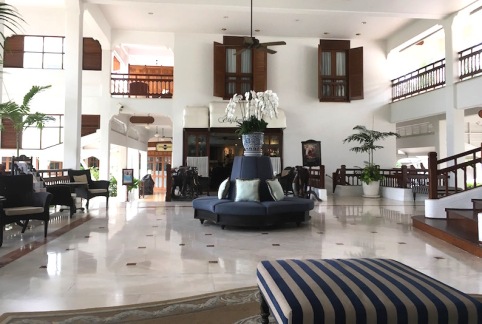
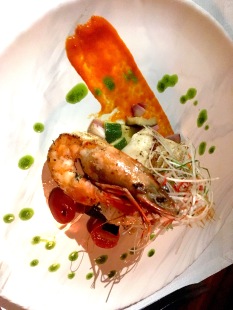
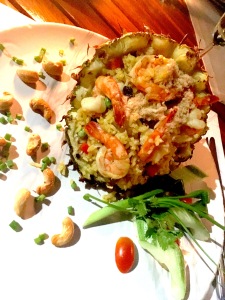
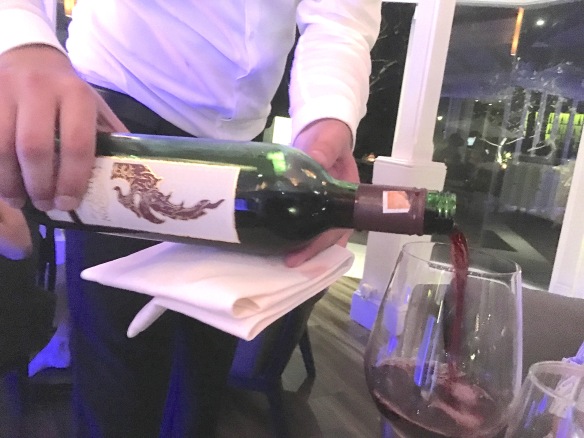
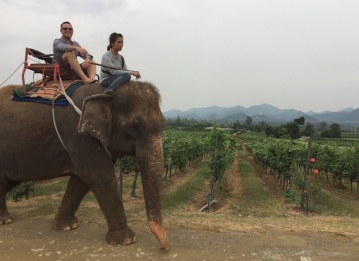
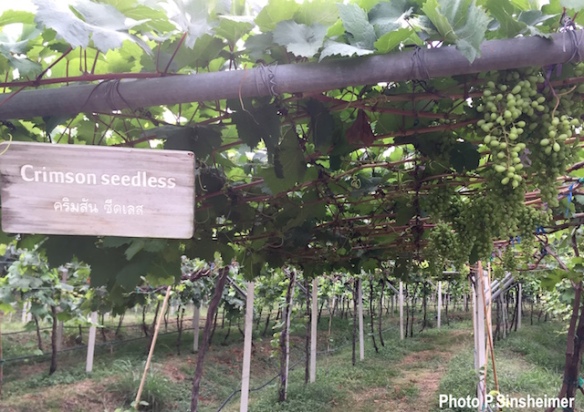
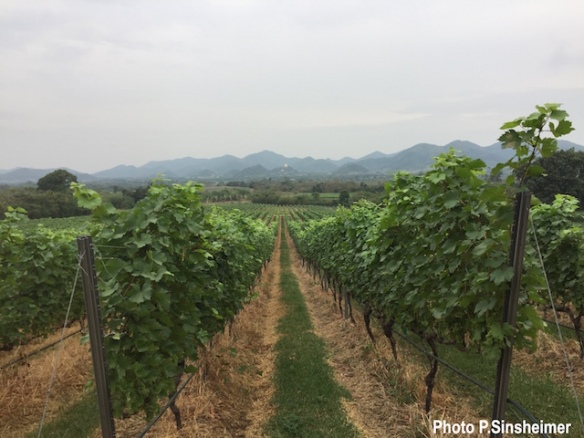
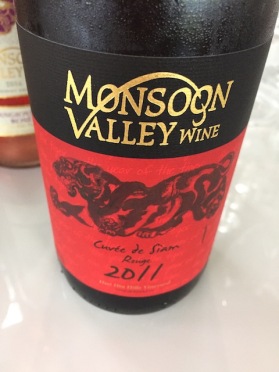
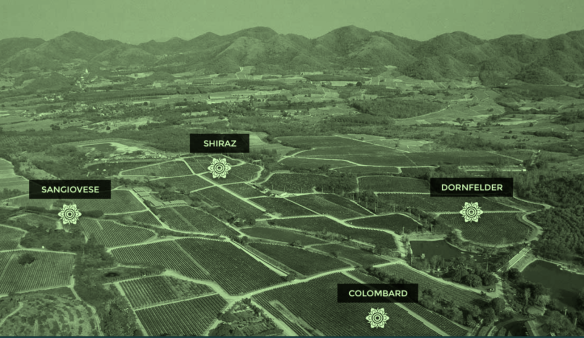
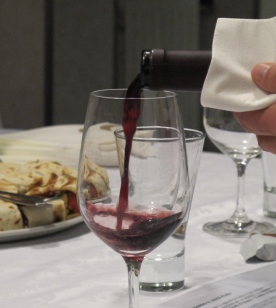
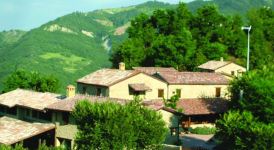
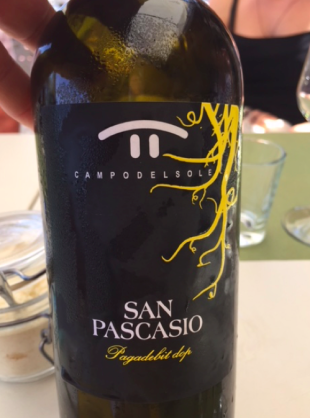
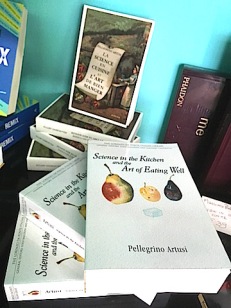
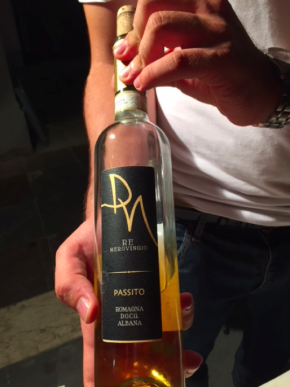
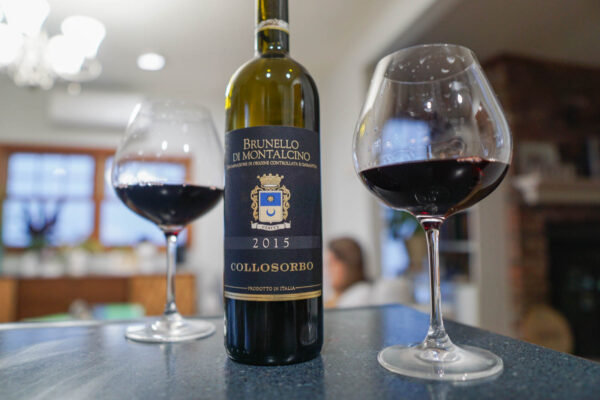
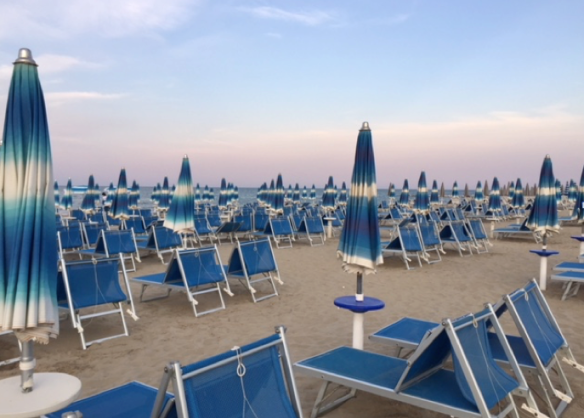
 cooking classes, as well as learn about one of the legends of Italian cookery in the name of Pellegrino Artusi whose monumental La Scienza in Cucina e l’Arte di Mangiar Bene was first printed in 1891 with 700 regional recipes. One stand had me taste an Albana Passito, sweet and intense, beautifully balanced with just enough acidity to make you want to have another sip. This final tasting note still lingers in my mind and the unique wines of Romagna will have me go back again, that is for sure.
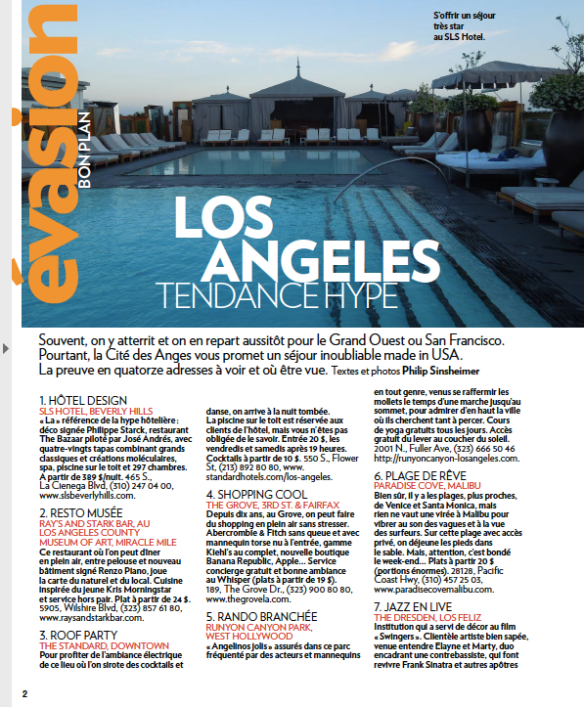
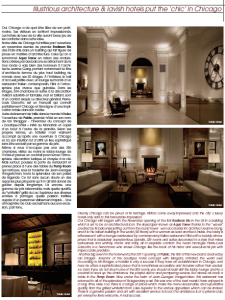
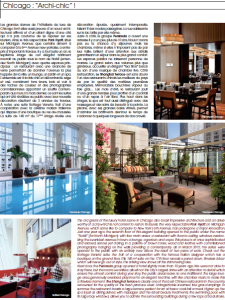
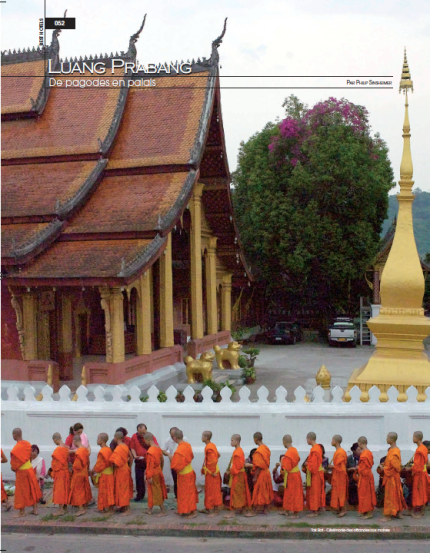
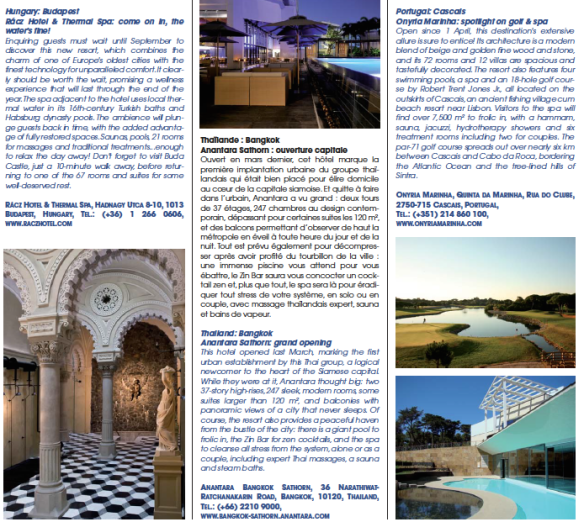
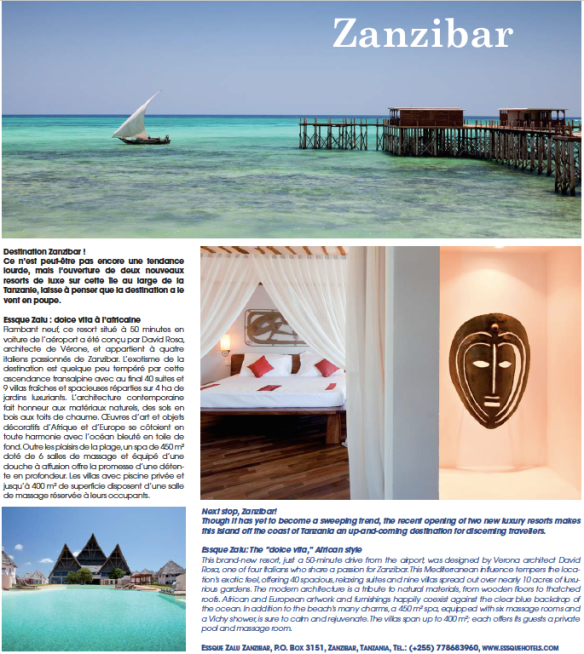
 BUDAPEST BANGKOK CASCAIS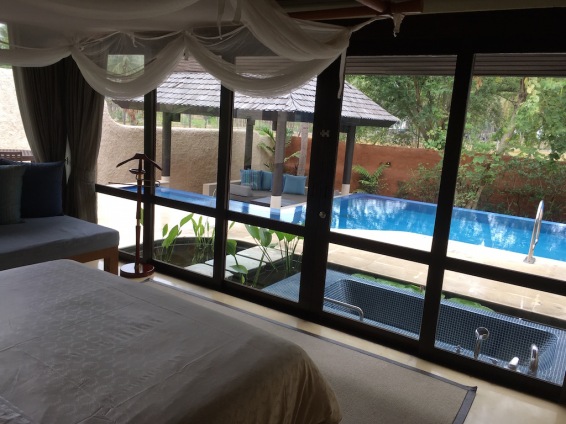
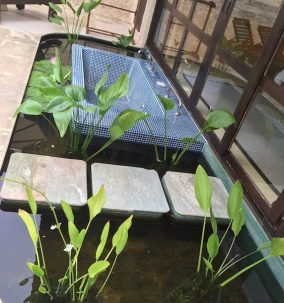
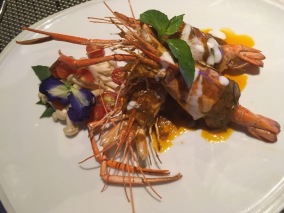


 In fact, the Museum boasts some masterpieces by Hans Memling, Gerard David and Jan Van Eyck, considered the initiator of the Flemish school and the famous portrait of his wife “Margareta, with a rather severe expression, it is rumored that in the house… she was the boss…


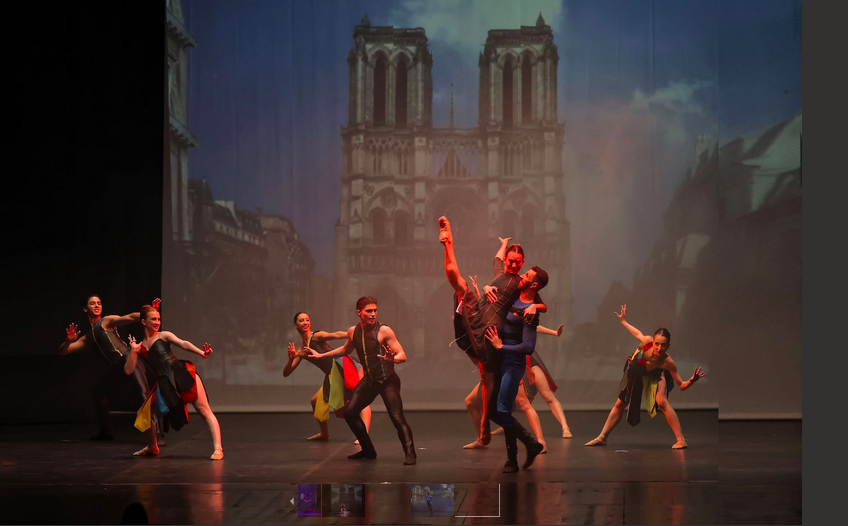 A new notable work brings back on stage the talented cast del BALLETTO DI MILANO Notre-Dame de Paris which, after the international successes of 2023, returns to important Italian stages including the TEATRO LIRICO GIORIO GABER DI MILANO, also the artistic residence of the Company, where it will be on stage on March 26th.
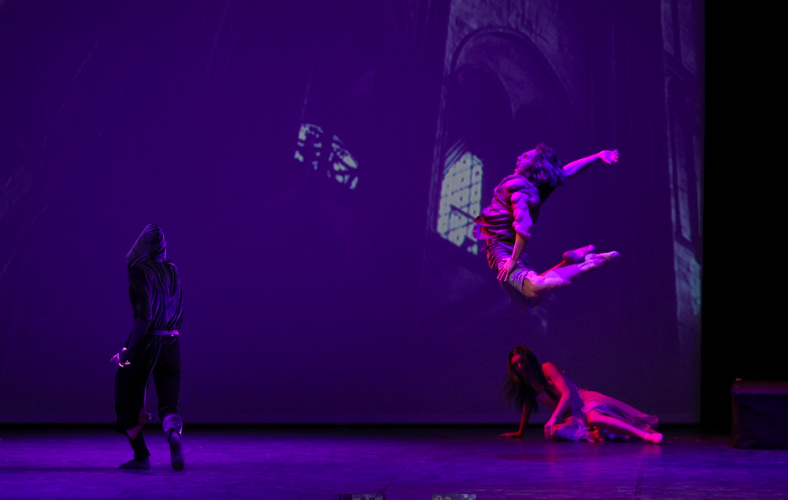 Respectful of history, Delattre has created a dynamic, brilliant and pathos-filled choreography which finds exceptional interpreters in the dancers of the Milan Ballet. Mattia Imperatore proves himself to be an extraordinary artist by portraying a touching and highly emotional Quasimodo. He is contrasted by Alberto Viggiano’s tormented Claude Frollo. Alessandro Orlando is the charming captain Phoebus, while the charismatic Gioia Pierini is Esmeralda.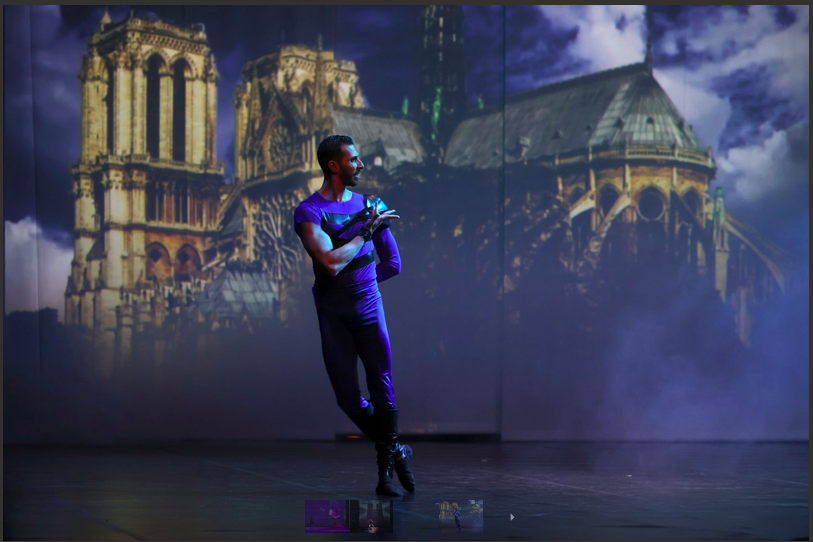
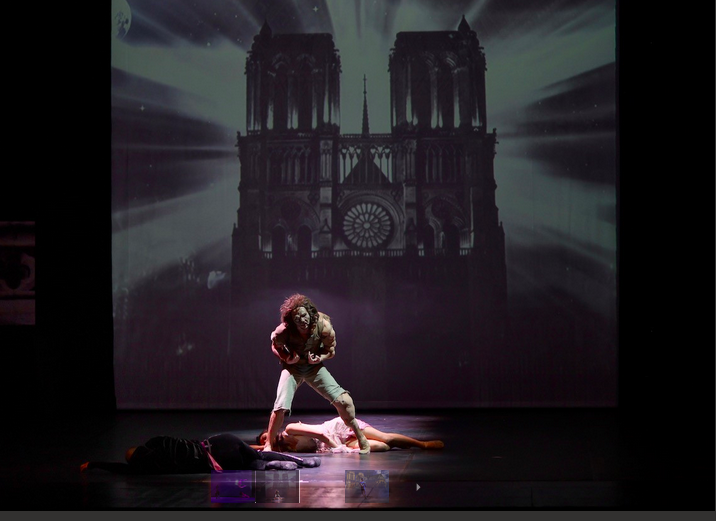
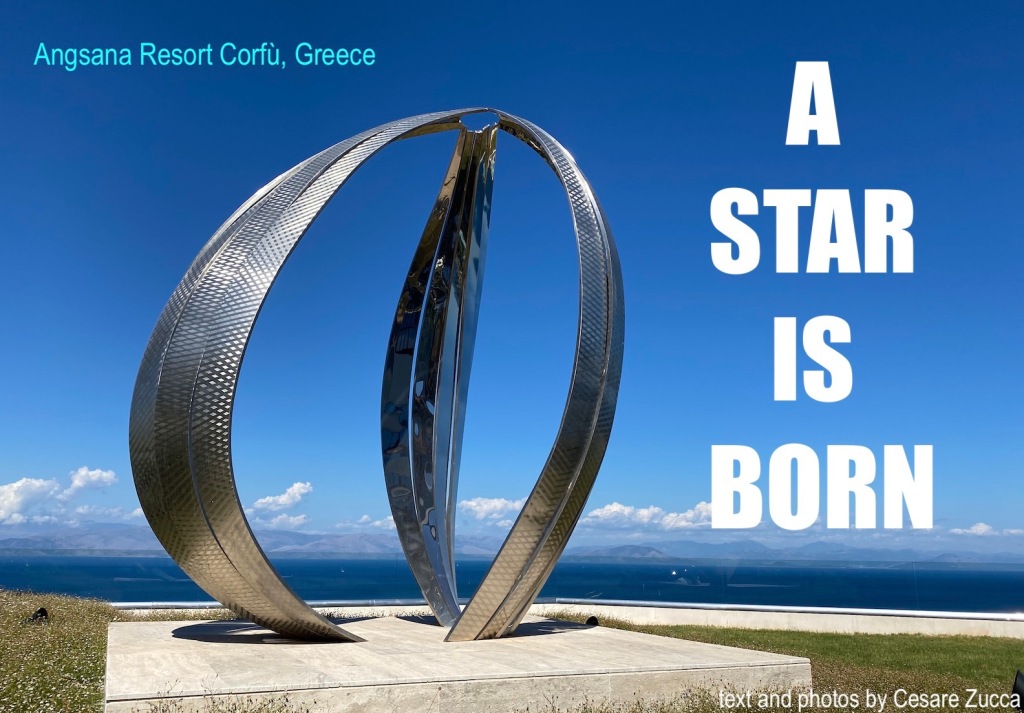

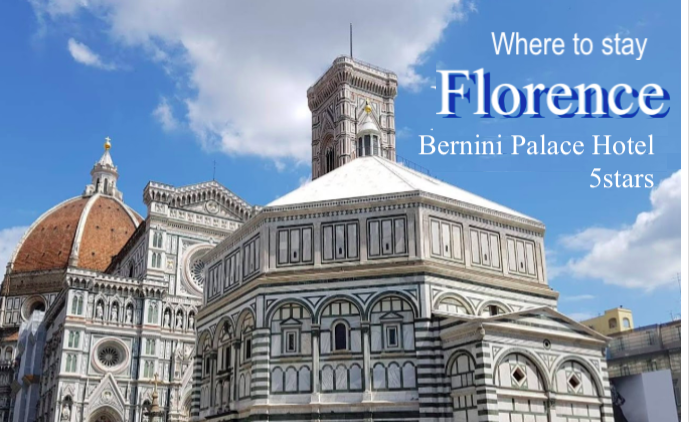
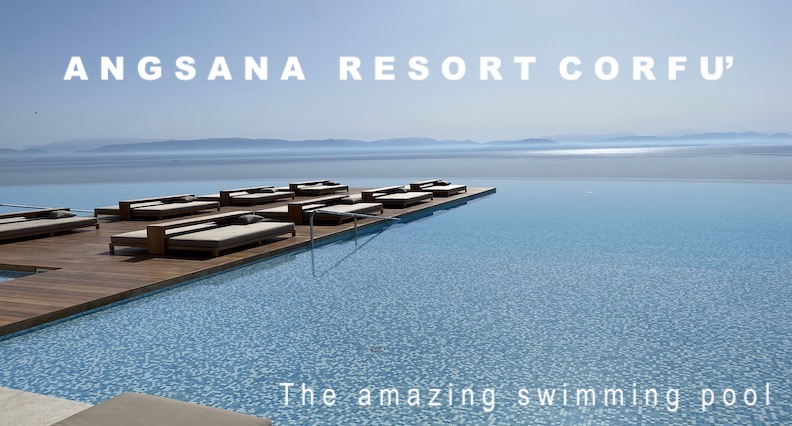
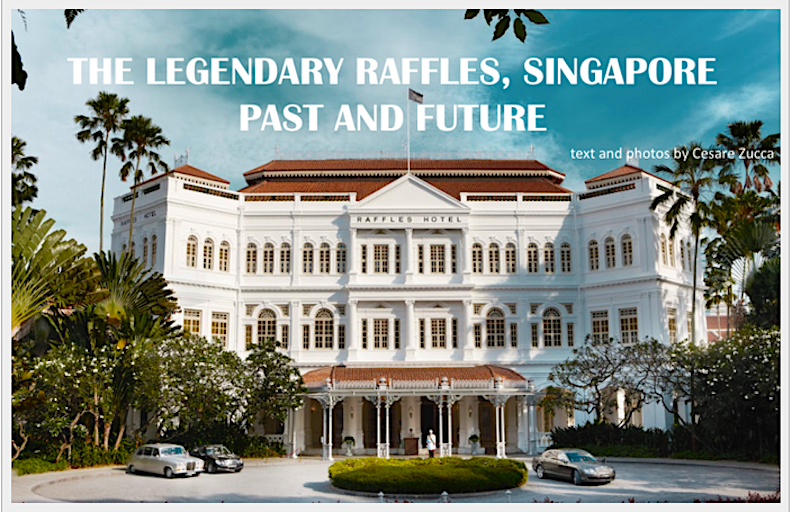
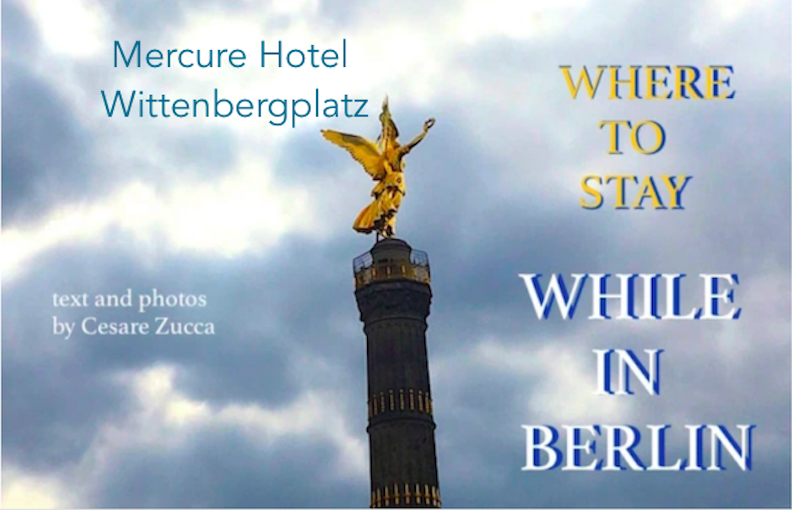
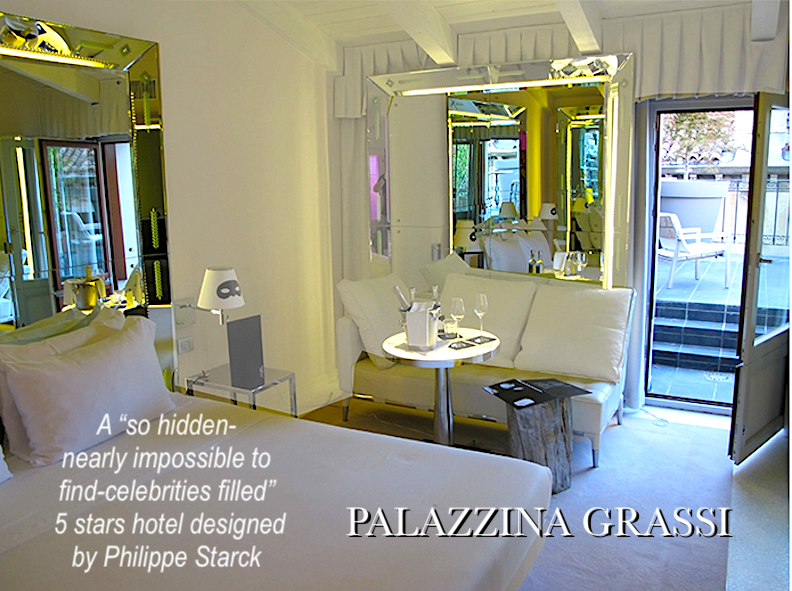
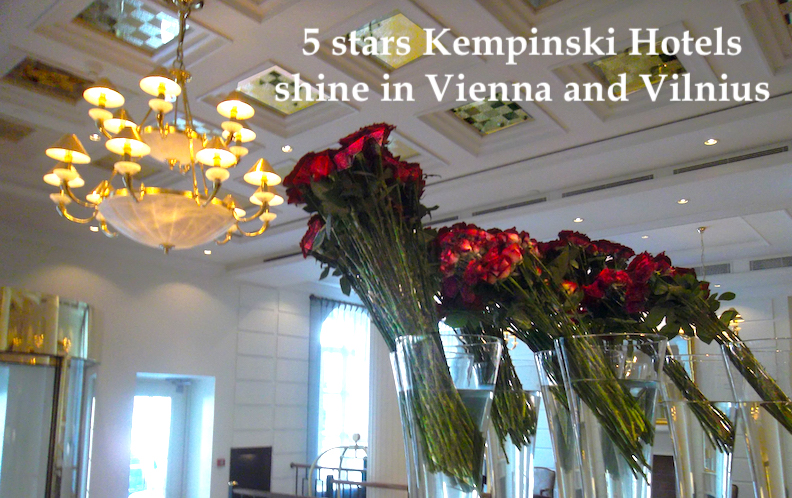
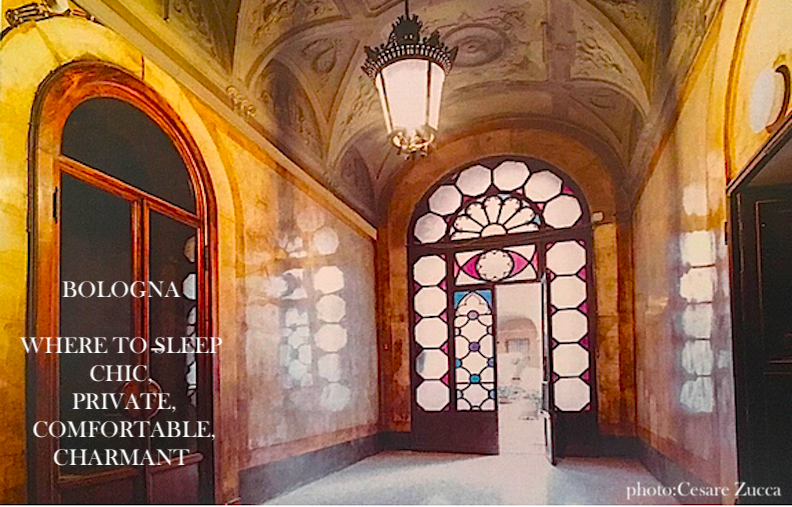
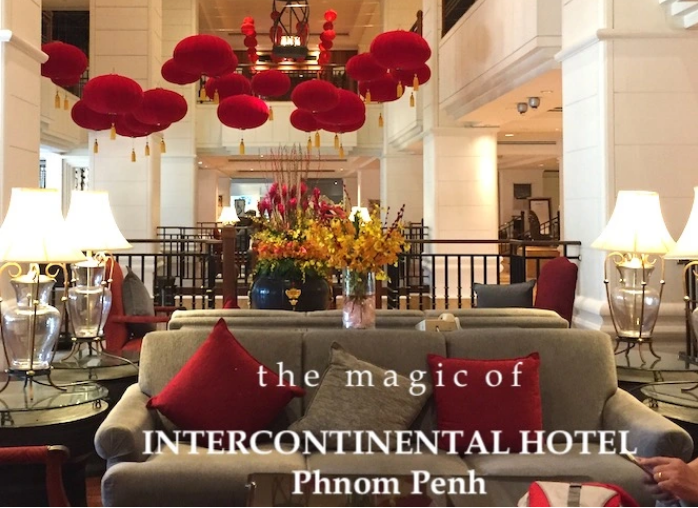
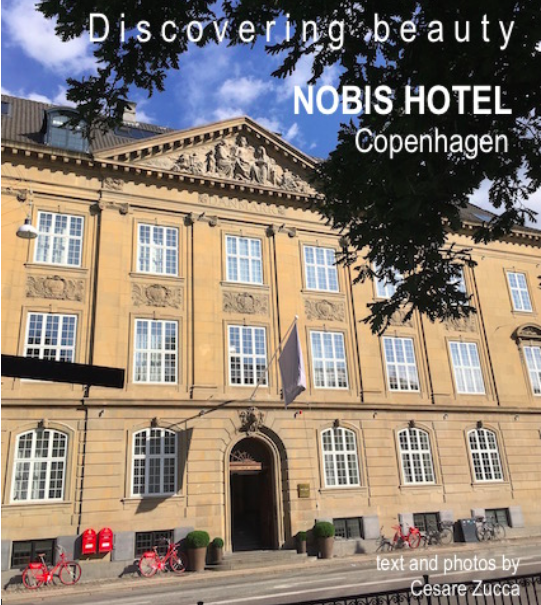
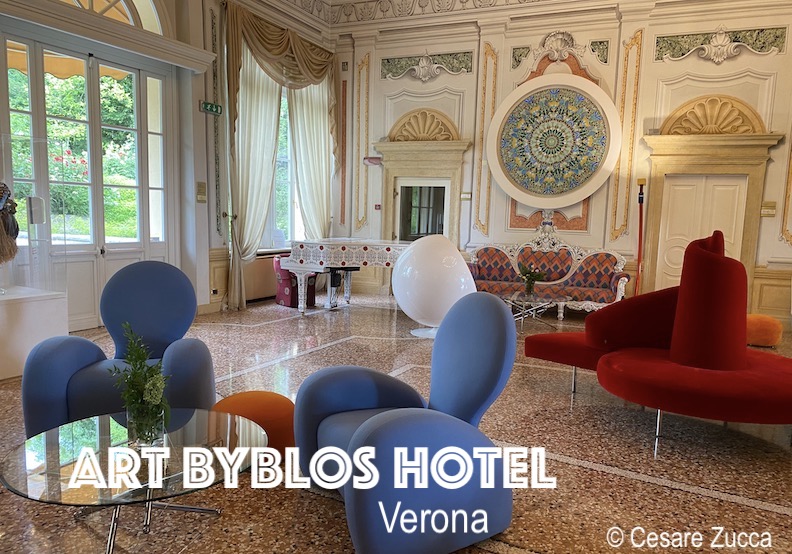
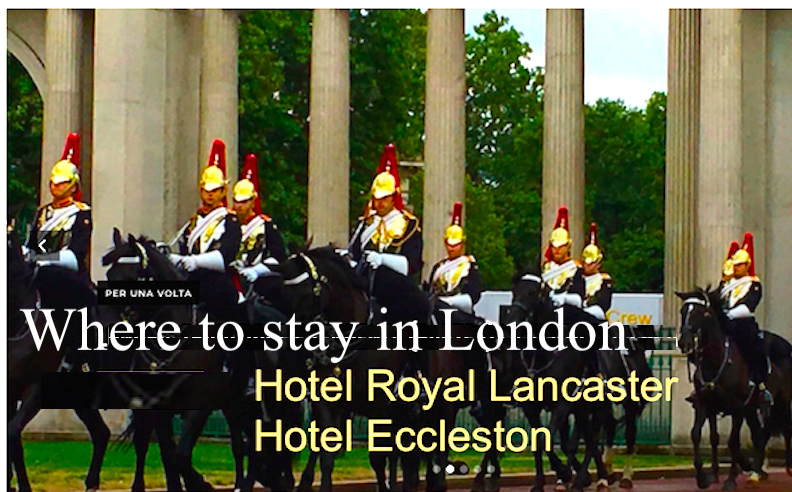
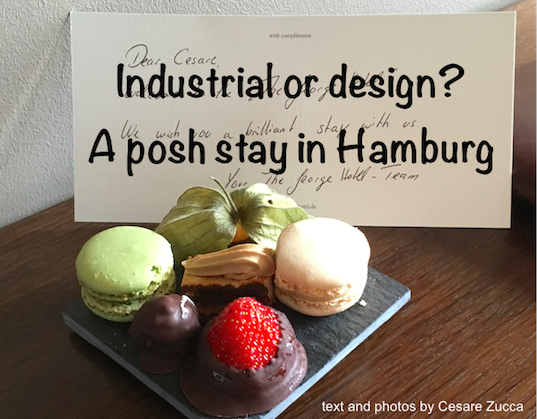
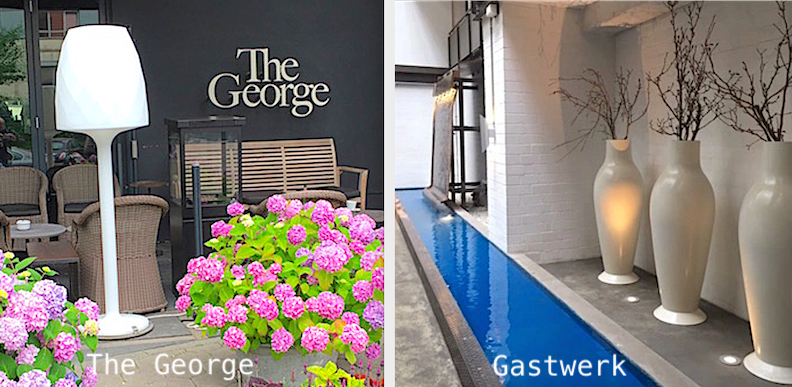
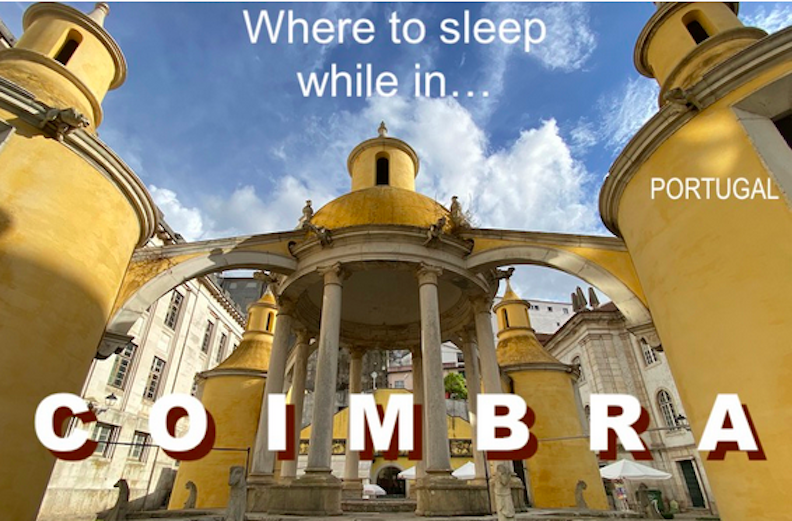
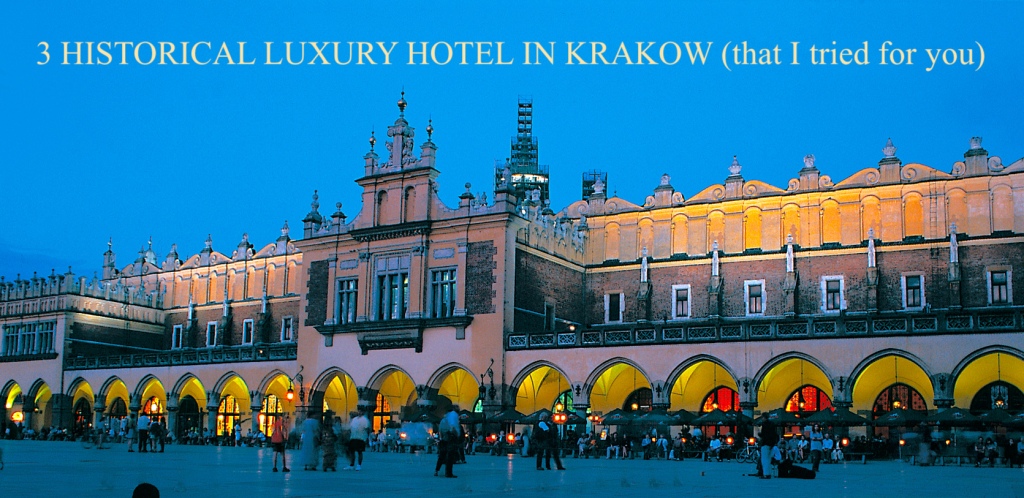
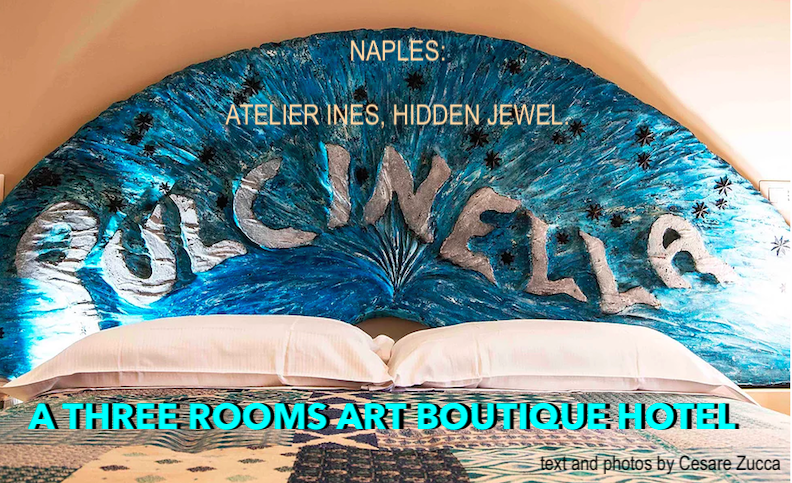
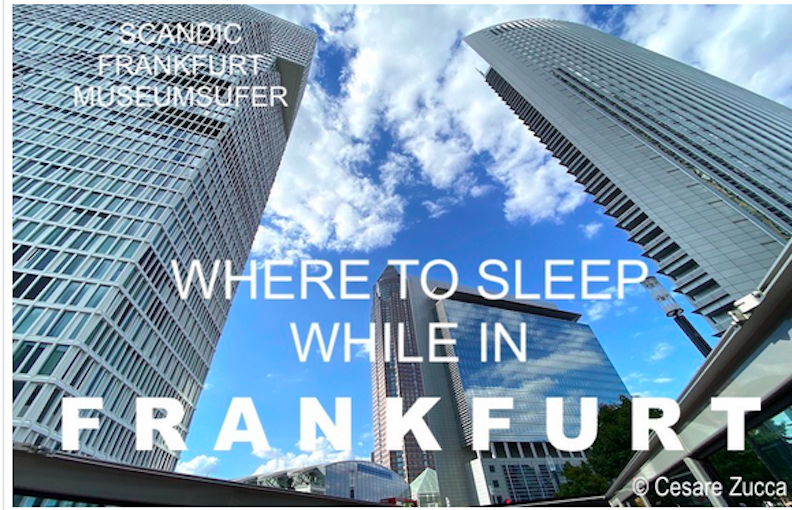
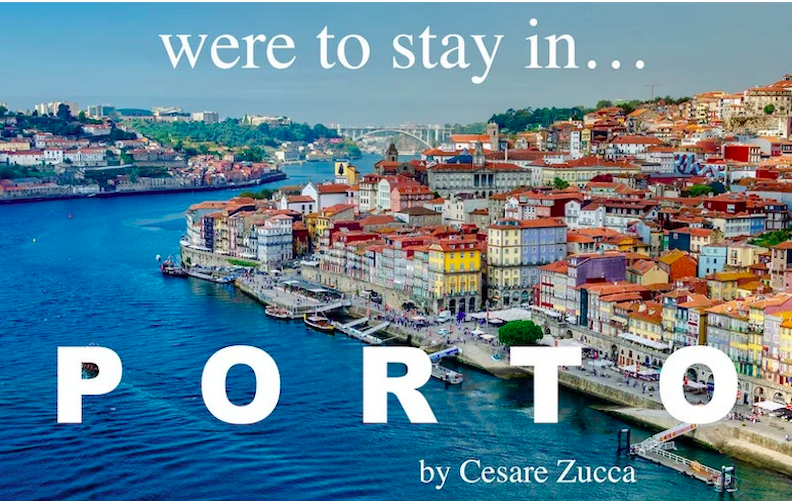
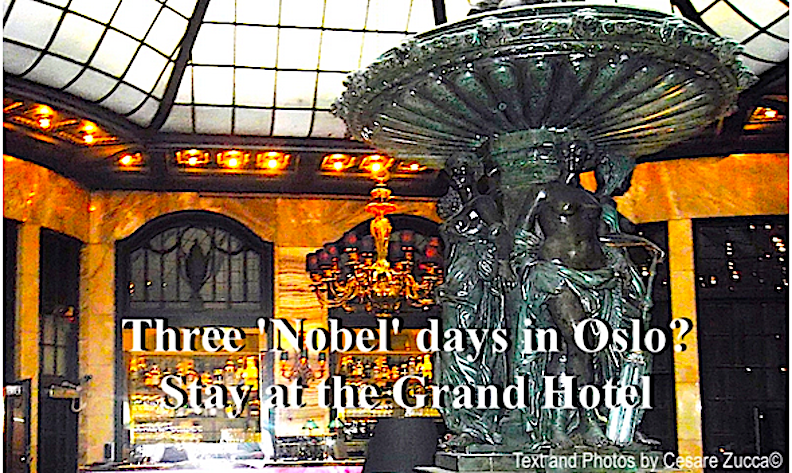
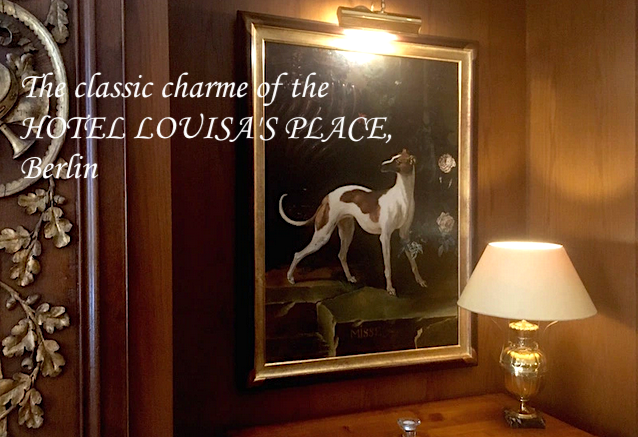
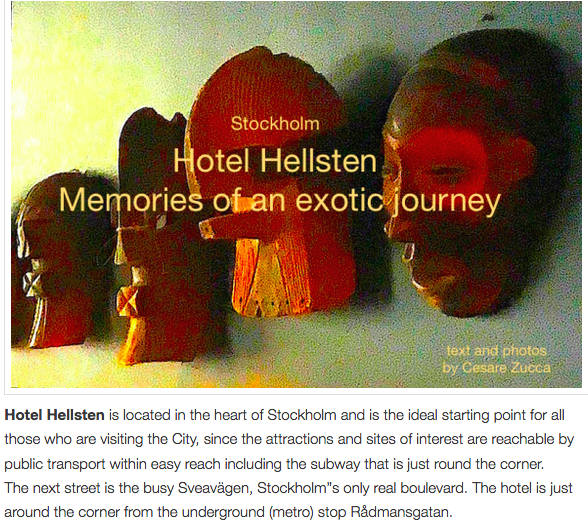
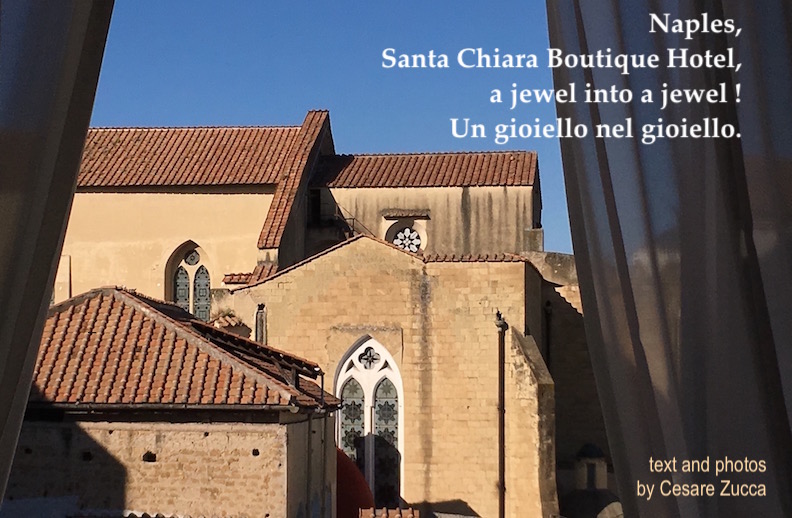
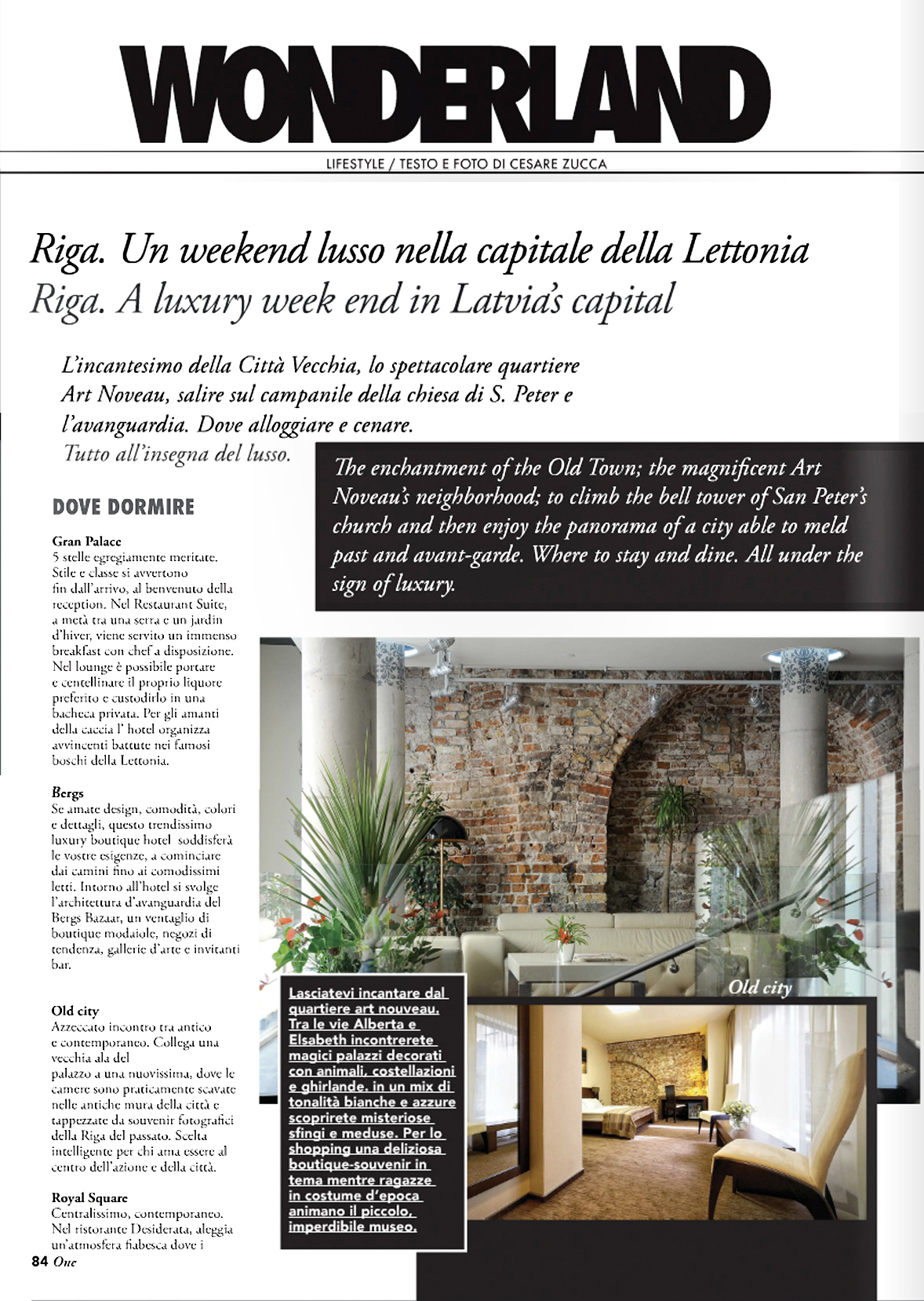
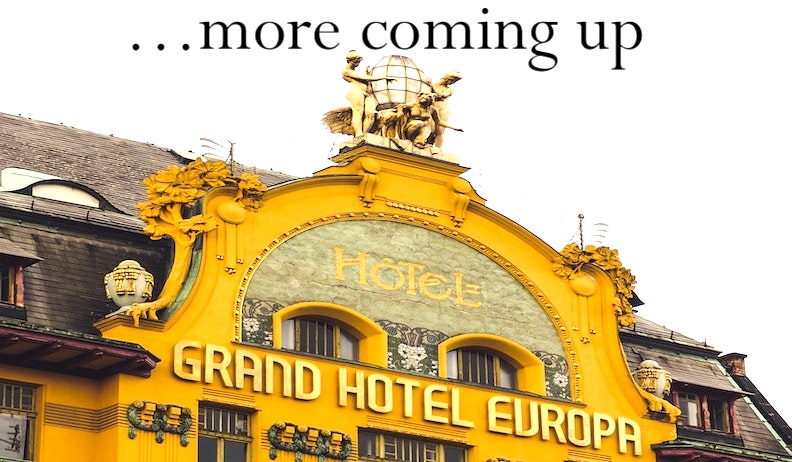

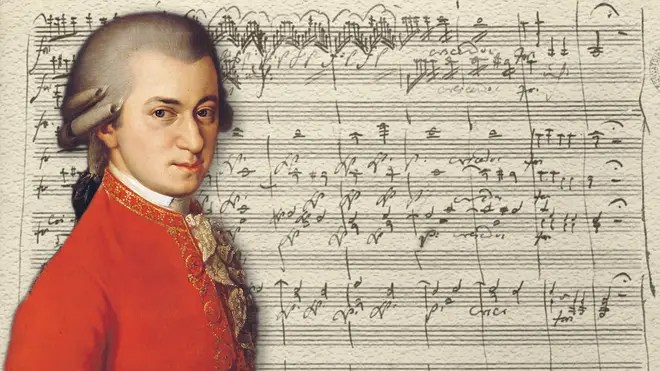 Wolfgang Amadeus Mozart is on the screen and on the stage for the upcoming performances of the The Milan Symphony Orchestra and its Symphonic Choir performing live the music from the iconic movie AMADEUS ,winner of 8 Academy Awards® including best film, actor, director and adapted screenplay,
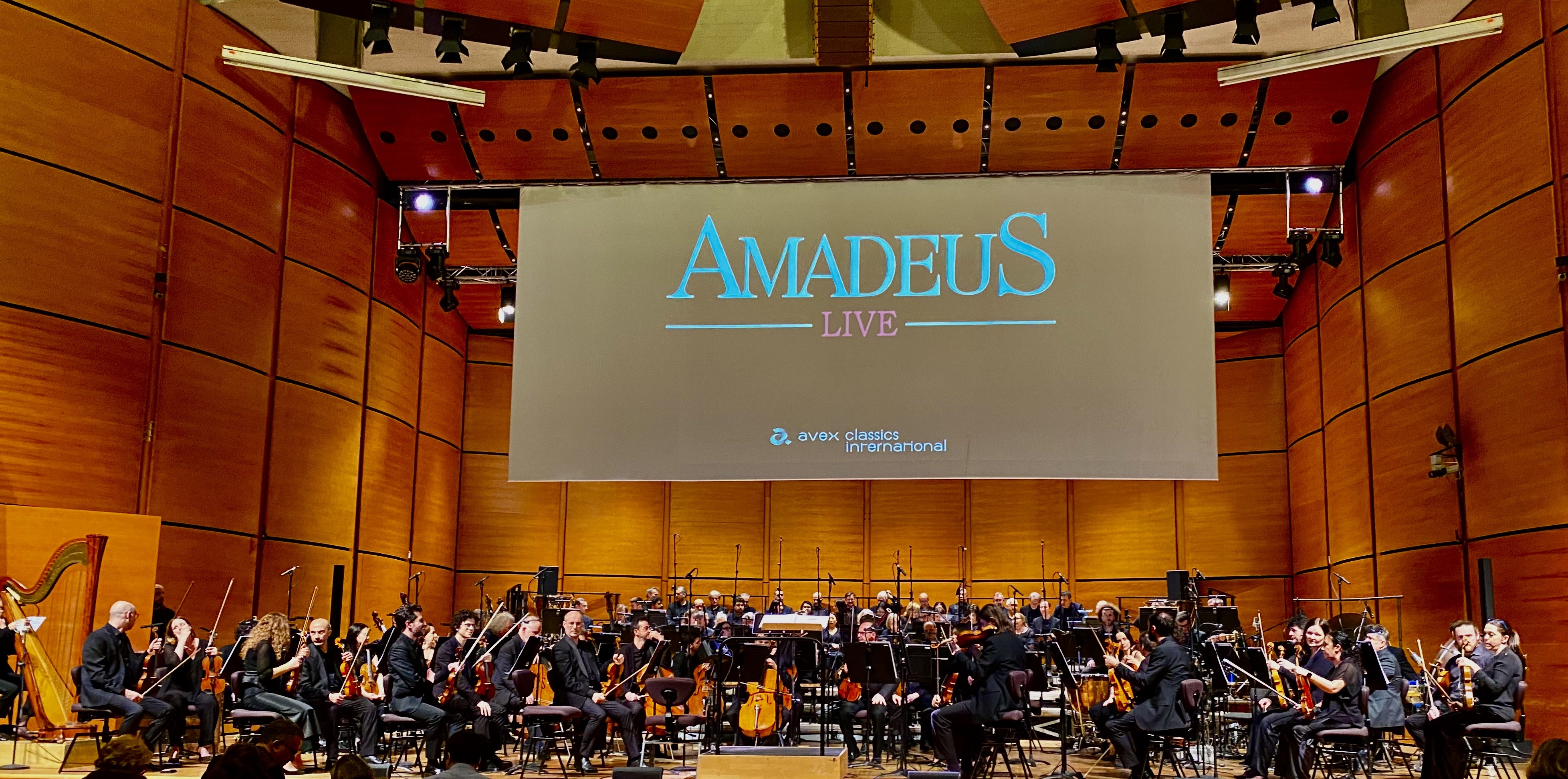 I have to say that this series of “pop” concerts held by the Auditorium are undoubtedly one of the most interesting things that have ever been produced on an Italian stage.
