
Great history, mild climate, smooth sea, unspoiled nature, dream beaches, friendly locals, smiling people, amazing food and…best teeth on hearth!
Welcome to Croatia!

I spent only two days in Pula, but, believe me , I ‘ll go back!. Pula is the largest town on the Istrian peninsula and offers a diversity of attractions to lovers of culture. The rich itinerary of its three thousand year old history, where every step you take through the Old Town is a landmark, begins and ends with the Roman amphitheatre. The city has a long tradition of winemaking, fishing, shipbuilding, and tourism. 
The Arena. Pula’s amphitheater was built around the end of the first century before Christ. It was August with a very hot weather. That s why my lovely guide Rossana met me there early in the morning , immediately after they open the gate.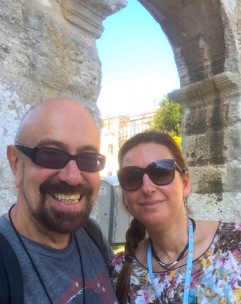 I suggest you to do the same. Rossana told me a quite cute legend about a raw linen made tent (they called it velarium) that used to be opened up to protect from the sun and give some shade to the audience while watching the show, or function as a bug umbrella in case of rain.
The Arena. Pula’s amphitheater was built around the end of the first century before Christ. It was August with a very hot weather. That s why my lovely guide Rossana met me there early in the morning , immediately after they open the gate.
I suggest you to do the same. Rossana told me a quite cute legend about a raw linen made tent (they called it velarium) that used to be opened up to protect from the sun and give some shade to the audience while watching the show, or function as a bug umbrella in case of rain.Actually the morning is he best time to come to the arena as well the sunset time.
Often the Arena hosts operas, concerts and performances. The acoustic is amazing: Tenors Giorgio Pavarotti, Placido Domingo and Beniamino Gigli said the this place was one of the most suitable for their voice and for the public. In the Arena have been performing great music legends such as Tina Turner, Joe Cocker, Sting, Simply Red, Robert Plant, Status Quo, Massive Attack, just to mention few. Every summer, Pula host a superb Film Festival in the Arena,
Celebrity town. Pula was also the residence of many Italian celebrities, from Italian singer Sergio Endrigo, to Italian actress Alida Valli who was celebrated as one of the most beautiful woman in the he world.
Celebrity town. Pula was also the residence of many Italian celebrities, from Italian singer Sergio Endrigo, to Italian actress Alida Valli who was celebrated as one of the most beautiful woman in the he world.
Pula girls!
The legacy of Alida Valli keeps the tradition. Beauty, charme, and those beautiful legs, so famous all over the world, make the local girls into dreamgirls !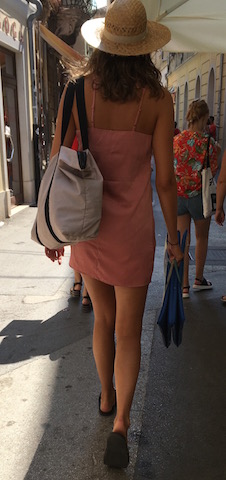
Writer James Joyce
choose Pula as his residency for several years. After a full day of historical sightseeing you will find many coffee shops on the street Forum including Café Uliks is a must for any fans of James Joyce, the Irish author who worked in Pula as a teacher in the early 20th century.
choose Pula as his residency for several years. After a full day of historical sightseeing you will find many coffee shops on the street Forum including Café Uliks is a must for any fans of James Joyce, the Irish author who worked in Pula as a teacher in the early 20th century.
Wines and food
 Wines top quality wines including Malvasia (one of my favorites) the most famous Istrian wines produced from indigenous white grapes. and Teran, a rich red wine, intensely purple colored, able to compet with the Italian ones but less expensive.
 A big time specialty is the zgvacet ragout. It is a sauce of diced chunks of chicken meat. In Pula, just as in most towns of Istria, be sure to taste seafood specialties, of which dishes rospi (monkfish), sea bass or delicious buzara Kvarner scampi only a small number of delicacies on offer. In Pula you should try and shells, thanks to the clear waters are a special flavor mussels, scallops or kanaštrele excellent fish stew, and definitely should try the black risotto with cuttlefish. Lovers of oily fish to taste anchovies to savor. This dish is eaten cold and fried sardines topped with sauce, oil, onion, vinegar and spices.In Pula you should try and maneštras traditional thick soup whose main ingredients are potatoes and beans with added mixture of bacon and garlic.
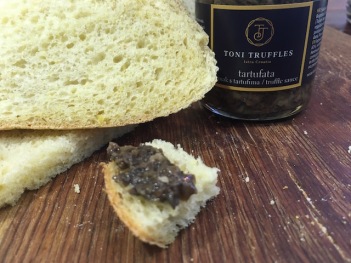
Truffles!
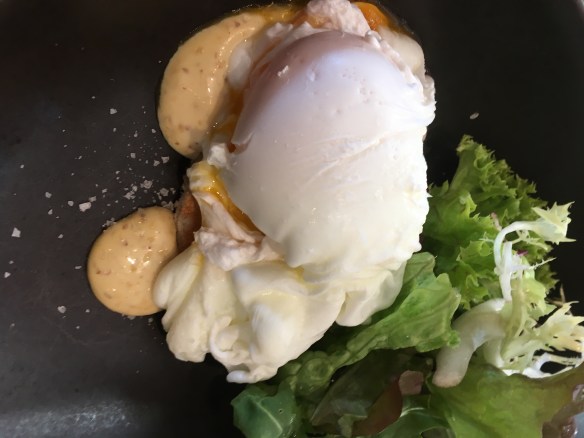
Many Pula’s restaurants carry the highlight of gastronomy: the white truffles. Try them with fusi or gnocchi with truffles or shaved over meat or cheese. But the real combo, the Romeo and Juliet of the choiche should be truffles and eggs!
Many Pula’s restaurants carry the highlight of gastronomy: the white truffles. Try them with fusi or gnocchi with truffles or shaved over meat or cheese. But the real combo, the Romeo and Juliet of the choiche should be truffles and eggs!
Bars, shops, market and flea markets
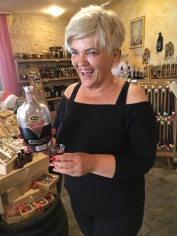 Have fun, look around, bargain!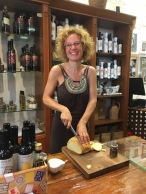
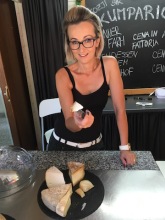

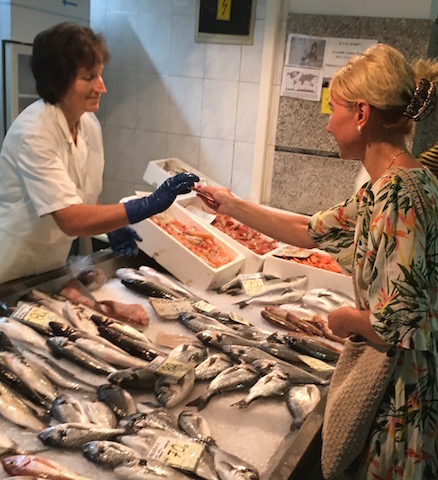

 Smile!
 Dental tourism, is hot in Croatia, organized groups come here and put their teeth in place with low-budget, cheaper prices, excellent quality, good materials and expert dentist.
How to contact them who contact them? Or you can see on the websites or call the local tourist agency that will give you advice on the best places or to be so lucky to have a friend who has already been here already.
Do not!

Croatia has its own currency: the kuna.
Don’t change your money in the street, you may get useless Balcanian or Bulgarian money…
Go into a bank and change there!
Don’t change your money in the street, you may get useless Balcanian or Bulgarian money…
Go into a bank and change there!
Where to stay
I stayed at Amfiteatar Hotel, located in the heart of the Pula city, hotel Amphitheater is at a 2 minutes walking distance to the Arena and 5 minutes walking distance to the city cathedral, with the harbor also in the close vicinity. Beach and the airport are only 10 minutes away by car. Very close to the arena and within a short walking distance to all the other attractions in the old town.
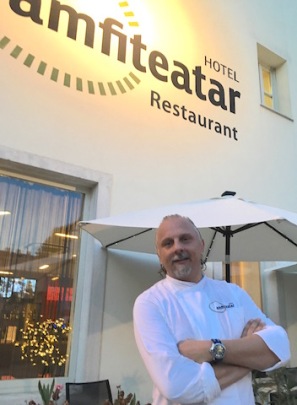
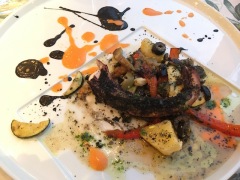
I had dinner in the outdoor restaurant, Owner Chef and culinary star Deniz Zembo prepared delicious local dishes with a twist. I loved the grilled octopuss and delicious cake.

I would like to thank the lovely ladies Viviana Vukelic and Adriana Bajic from Ente Nazionale Croato per il Turismo in Milan and the super cool Goran from the Tourism Office in Pula, Chef Deniz Zembo and my amazing guide Rossana. They truly contributed to make my Pula’s visit memorable, fun and wonderful.
TOURISM OFFICE PULA
 Nobis Hotel Copenhagen is housed in a historic 1903 building that hosted the Royal Danish Academy of Music since 1972. Back then, at Christmas time, an orchestra used to play on the reception level, while the magnificent marble staircase was filled with a chorus singing carols that would ring through the entire space creating magical moments.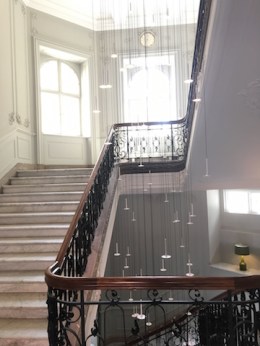
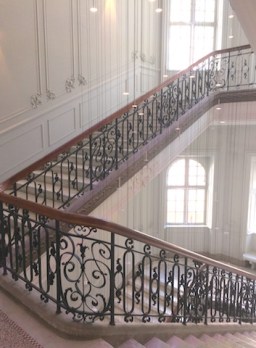 The building’s imposing sense of space and elaborate detailing gives the interiors a natural grandeur. Here neoclassicism meets a contemporary design created in collaboration with celebrated architectural firm Wingårdhs under the leadership of star architect Gert Wingårdh. Furniture, lighting fixtures and the abstract rugs were designed exclusively for Nobis,
 Finally when we stepped into this building it all felt exactly right” says Alessandro Catenacci, founder, owner and CEO at Nobis Hospitality Group. As a frequent traveler, I want a hotel to be elegant, comfortable, friendly and efficient, but I don’t need all that unnecessary excess and artificial service still often associated with luxury in the traditional sense’.
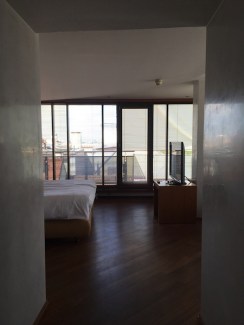
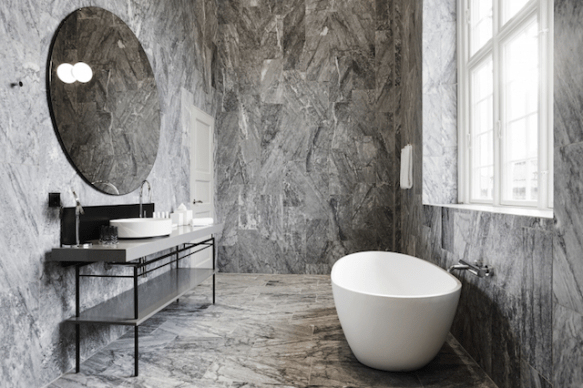 Every room is furnished with a curve-shaped special designed dresser and desk made by Wingårdhs, window details, contrasting abstract patterned rugs, angular poster beds in steel with lush cotton sheets, placed in the heart of the room creating a majestic center-piece.


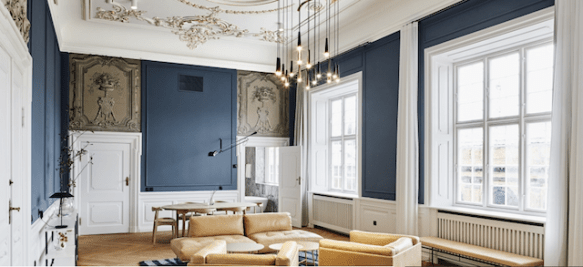 You will find a well equipped wine room,
  the simply luxurious SPA made in pink marble and natural wood with sauna, steam room, relax area in seducing shapes of gray.
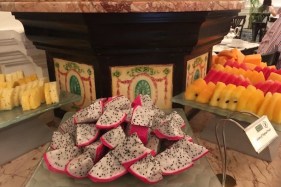
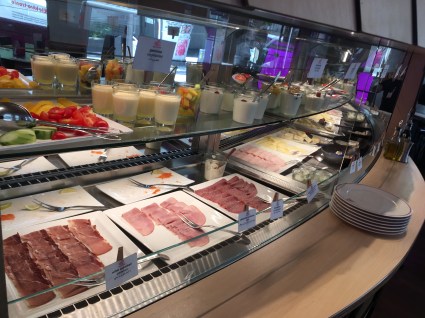
 A minimalistic yet chic breakfast is served both in the lounge or outdoor terrace. You will find fresh vegetables and fruits, from avocados to berries, an excellent selection of cheeses and cold cuts, including a yummy patè de campagne…
 I spent a marvelous afternoon getting lost in those beautiful galleries.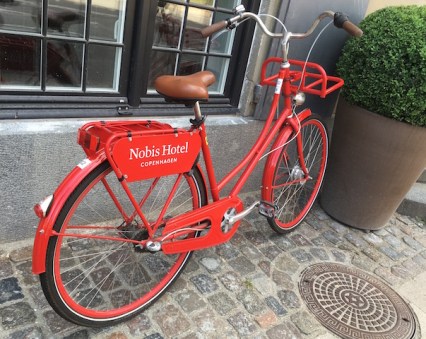
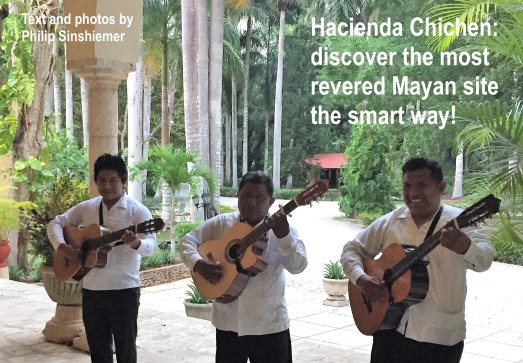 Chichen Itza, located inland of the Yucatan Peninsula, about 200 km East of Cancun, is one of the most visited archaeological sites in Mexico with over 2.6 million tourists in 2017.
 That’s on average over 7000 visitors a day. Even though the site is not limited to the iconic Kukulcàn pyramid (photo 1) and covers a very large area (over 300 hectares), that is a lot of human flesh roaming around! Especialy when one considers that the most popular way to visit the Unesco world heritage site is via tour operators organizing day trips from Cancun or Merida, creating a huge influx of fully loaded buses arriving around 11 AM or so every day. Arriving with the sun at its hottest among hordes of tourists had always been a deterring idea to me. I had sacrificed the visit of wholly site during my passed 3 visits of Yucatan, favoring the ruins of Tulum and Cuba, less crowded and still awesome examples of the might and splendor of the Mayan civilization.
 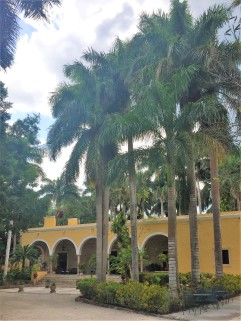 For this fourth visit this last spring, I was determined to visit the legendary Chichen Itza in the best way possible. Staying overnight at the Hacienda Chichen revealed to be the smartest answer possible. Smart because by staying overnight in this historic hotel located a few hundred feet from the archeological site enables to start exploring the grounds as early as 8 AM, before the arrival of the crowds. Smart, because the hotel combines genuine elegance and great service while respecting authenticity and ecological responsibility. Follow me, let me show you the way…When I arrived from Tulum around noon at the Chichen Itza bus terminal, I was left at the main entrance of the site in one of the largest parking lots I have ever seen: hundreds of buses still unloading their loads of tourists from every continent. The line to the ticket booth was long, the heat dreadful.
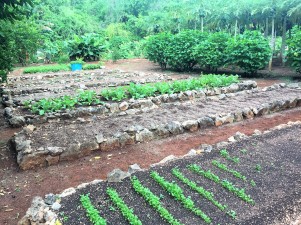
 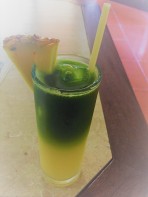 Instead of joining the frenzy, I hopped in a cab and 10 minutes later, I was discovering the old-world charm of the Hacienda Chichen. The check in was a breeze and the welcoming cocktail made of pineapple and Chaya leaf juice refreshing as heaven (pic 3). I was later to learn that it had been freshly made from the organic garden of the property, providing a lot of the fruits, vegetables and herbs used by the kitchen
 The front desk offered to arrange the purchase of my ticket to visit the site the next morning, without any surcharge, avoiding the hassle to wait in line. They also offered the possibility to have a legitimate private guide for the visit, but as usual, I declined in order to feel totally free and visit at my own pace. The afternoon was mine to relax and enjoy what the Hacienda had to offer. The 28 rooms set in a total of 12 cottages spread out on the lush grounds were originally built to host archeologists who helped excavate the site.
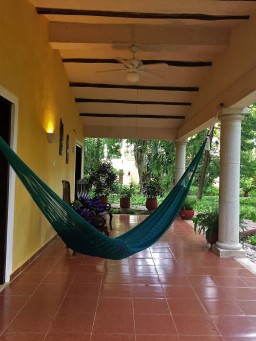
  Now they are opened to all offering soothing air conditioning, large bed, beautiful sheets, large bathrooms, fresh flowers and hammocks on the front porch for those eager to adopt the Mayan way to take a nap at the sound of singing birds
 Another way to relax in a horizontal way is to indulge in one of the treatments at the Yaxkin spa. And that’s exactly what I did, with the 45-minute Pakal treatment, a Maya healing ritual focusing on the head and the upper body. The soul is also soothed by an initial prayer in Mayan language by my charming therapist.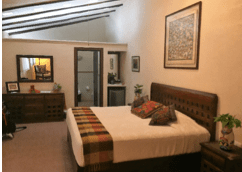
 I loved the fact that the room was very large, not one of those cubicles where on feels locked up. The outside garden was present in the room with the use of various herbs and plants, including a refreshing aloe vera jelly applied on the face.Totally relaxed, I finished the afternoon by lingering by the superb swimming pool, large and square as I like them to do laps at length.
 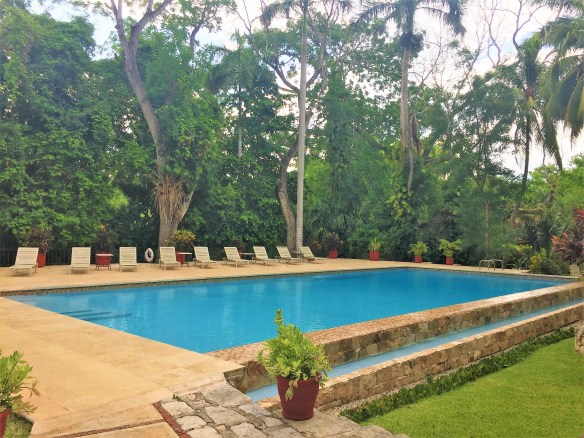 .Recycled and chemical-free water added a guilt free sensation to the overall pleasure.
 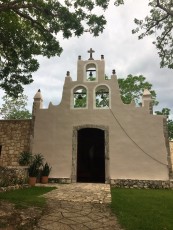 Time went by and before I knew it was time to meet the general manager for a grand tour of the property, including the restored church where weddings can be organized, surrounded by the beautifully maintained vegetation).
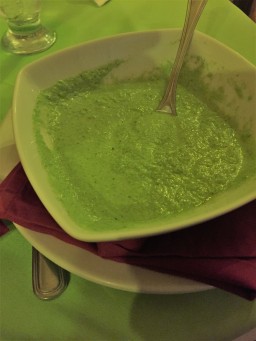 The best, by far, was the cream of Chaya soup and I appreciated the selection of Mexican wines. The night was young, but the day had been long, so I was eager to return to my beautiful room for a good night sleep. At 8:20 Am, I recuperated my ticket to visit the site and was guided to the private entrance specific to the Hacienda. I was alone when I crossed the gate and after a ten-minute walk, I was facing the beautiful Mayan pyramid with the company of a couple of iguanas, but not another human soul.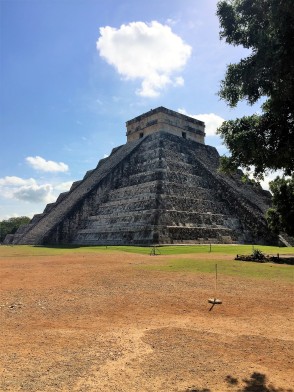
 As well as discovering the sacred cenote (sinkhole) and the perfectly aligned columns without the eye sore of groups of tourists ruining the geometry of the monuments.
 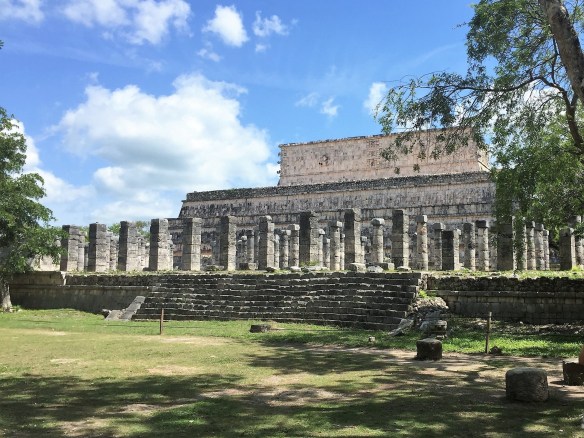 After three hours of walking at my own pace, I went back to the Hacienda, walking against the growing flow of visitors and the solicitations of the souvenir vendors, they were in full swing mode, trying to sell their T-shirts and miniature statues probably made in China!
 In summer Copenhagen is an ideal destination: favorable weather, long and sunny days, smiling, polite and serene people.
 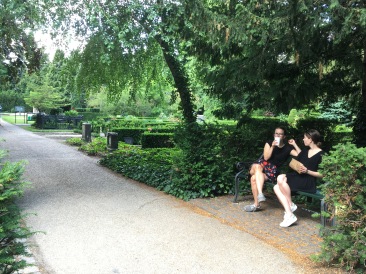 It seems that everyone here discovers the secret of happiness: hygge, a Danish word that invites you to enjoy the simple pleasures of life and live alone or with friends, at home or outside, special and happy moments.
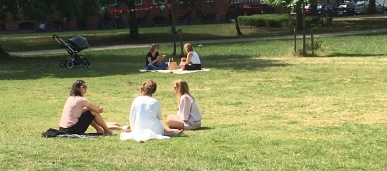 have a nice picnic at the park, attend an outdoor concert, participate in a street festival or take a bike ride … these and more are the little pleasures of life that feed the hygge spirit in the life of the Danes.
 a pass that allows you to visit as many as 86 museums and attractions, use all public transportation for free and benefit from discounts on tours, bars and restaurants.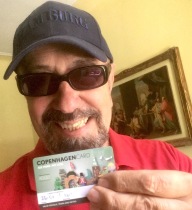


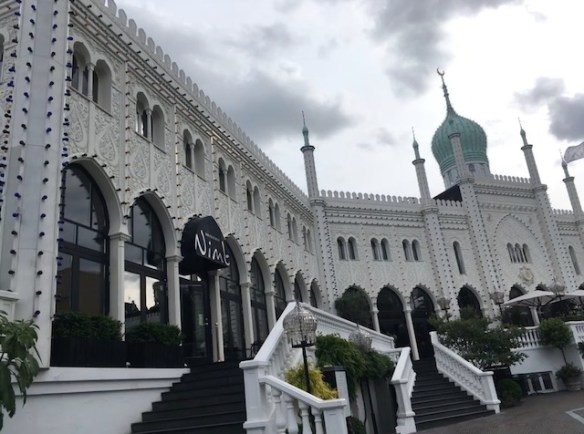
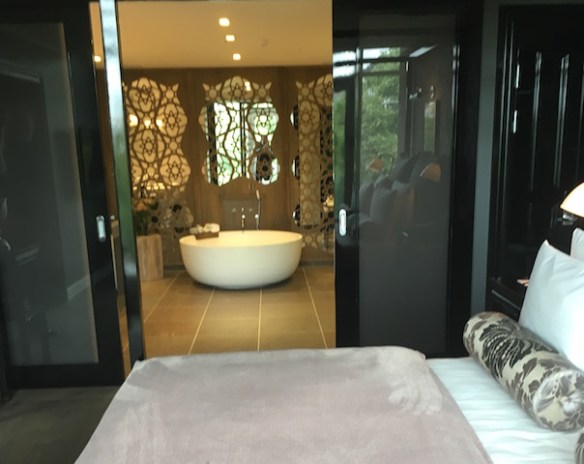 After the aerial acrobatics, I finally relaxed in the
 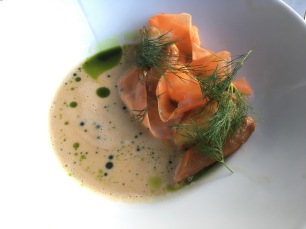 I tasted the Chef’s specialties, a delicate mollusk bisque served with scampi and carrots, a crunchy turbot à la meunière, sprinkled with lemon drops, ending with a puff pastry stuffed with strawberries and cream,
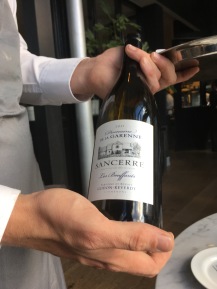
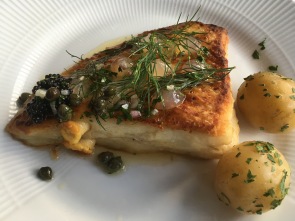 all paired to my favorite Sancerre Domaine de La Garenne, deliciously fruity, In short, a dinner worthy of the unique atmosphere of the location.
 Copenhagen history boasts of royalties and magnificent castles,Here my favorites
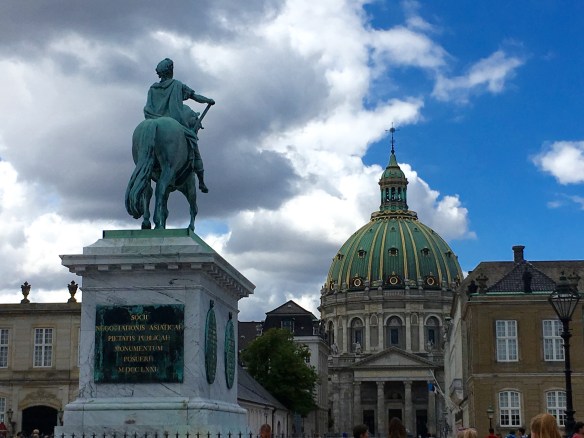 Experience royal history at the museum and sense the present of one of the world’s oldest monarchies from the beautiful palace square where you can watch the changing of its famous guards called Den Kongelige Livgarde. Every day you can experience the changing of the guards, as they march from their barracks in 100 Gothersgade by Rosenborg Castle through the streets of Copenhagen and end up at Amalienborg, where the changing of the guard takes place at 12:00 noon.
 These impressive royal rooms host the official receptions in the presence of the Queen, between a sparkle of uniforms and great evening gowns. Better to avoid arriving by car or taxi, the protocol prefers that the guests present themselves in a carriage…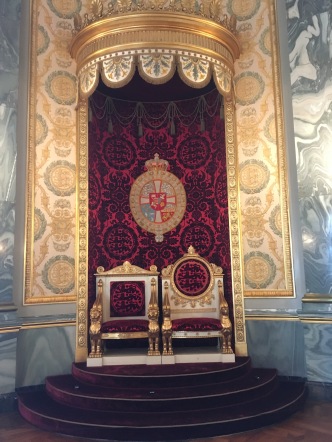
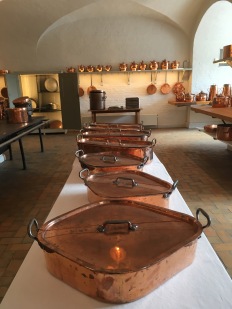

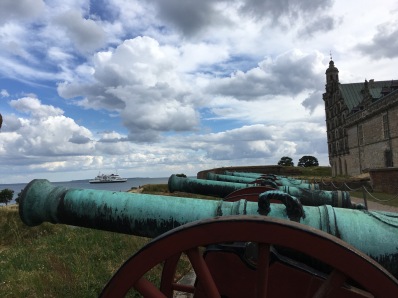 You could spend a whole day in Kronborg, and live many experiences, guided tours through the casemates and the halls, explore the passages and towers, see a play and relax admiring the sea – but if you prefer, you can get an idea Kronborg concrete even in just one hour. Kronborg is open all year round (except 1st January, 24th, 25th and 31st December) from 11am to 4pm. In the summer (June, July and August) the schedule is extended: from 10.30am to 5.30pm.
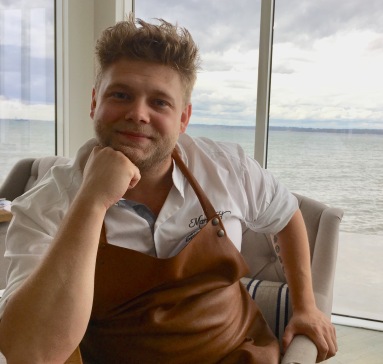 His name is Casper Stuhr Sobczyk I can describe him as a gentle viking with the sweetest smile and… smoked sardines tattooed in his arm.
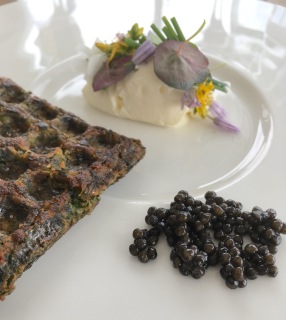 appetizer: a revolutionary version of the traditional blini, made with caviar white sturgeon, to be mixed to crème fraiche on herbal waffle. The ingredients just melt perfectly together.
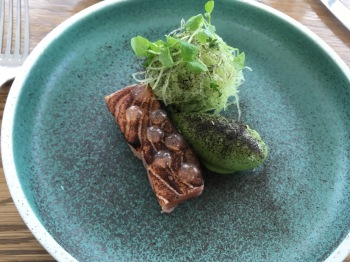 Then a salted unusually cooked burned salmon, followed by a mackerel with foie gras, green peas. As a main dish , I tasted halibut with asparagus that burned for few minutes to maintain the crunchiness.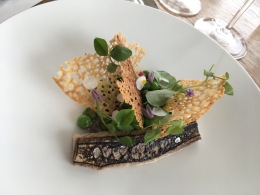
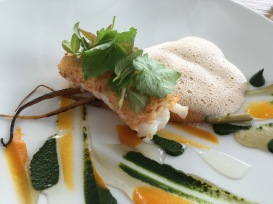 Every dish was so intense, so fresh and so herbal.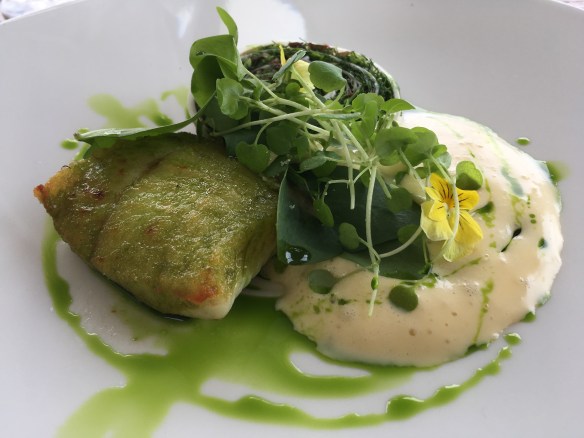
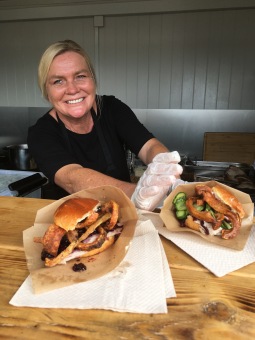 an urban playground recently opened, that mixes crafts and culture.
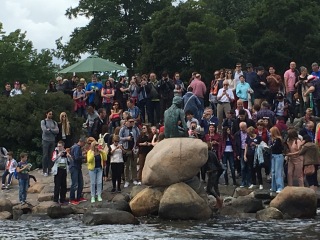 Denmark. Honestly I saw her from the boat and I have to say that the invading ‘selfie addicted crowd’ didn’t appeal to me… So I went at night, and here she was, alone, shining on the dark, mysterious and looking like wanting to splash in the water any minute,
 for more info
 I started my Hamburg experience with an avalanche of photos and selfies on board of the

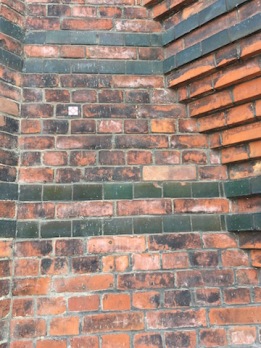
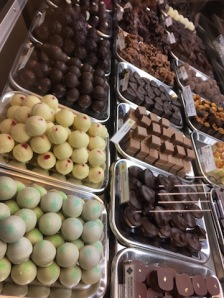
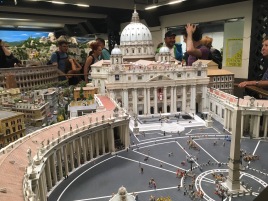 with airports, motorways, railways in great turmoil and crowded by a thousand minuscule people, including a team while washing Pope Francis car…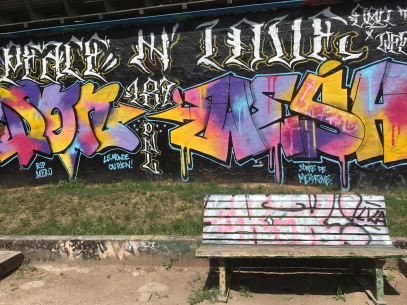
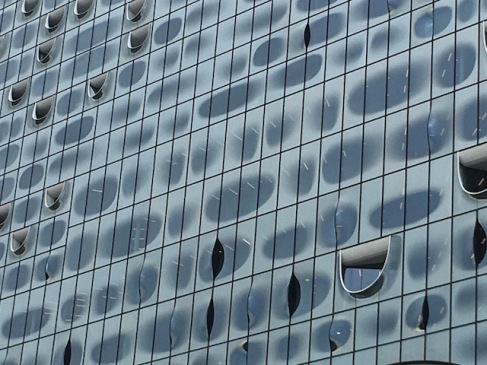



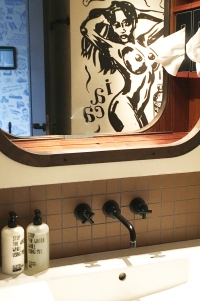

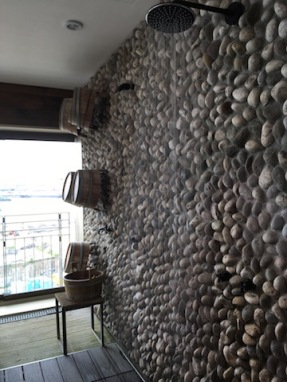

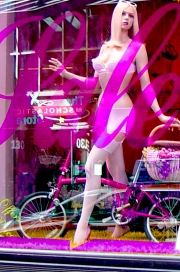
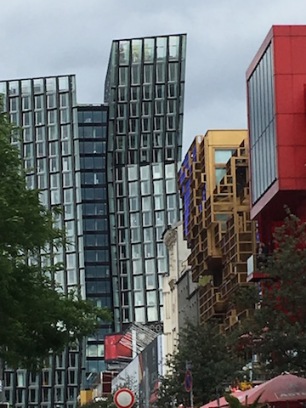
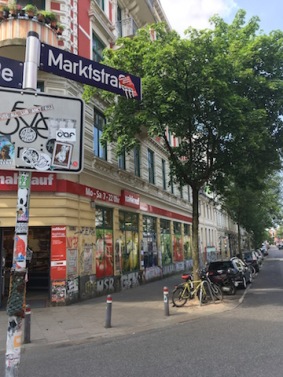 There You will find small bars, self-managed restaurants, flowers, perfumes, mini boutiques and lots of vintage. If you are ‘bio’ dive into the
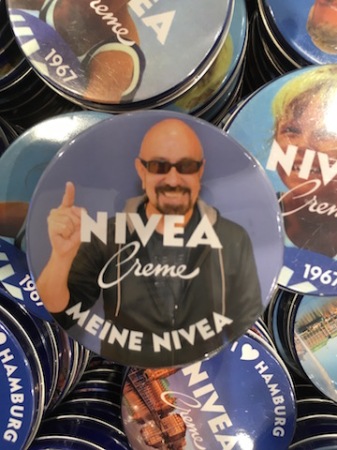
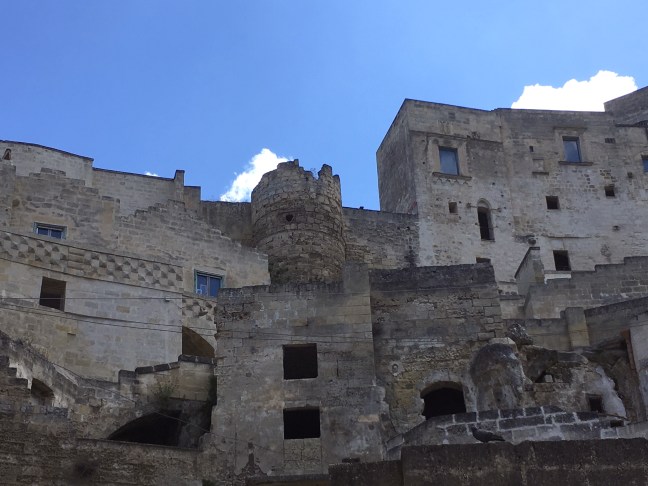 In the caves often lived more families and despite the lack of space, almost all daily activities took place in the
  Its amazing scenario has been used s a set for Mel Gibson “The Passion” Pier Paolo Pasolini “The Gospel According to Matthew “King David”, Christ The Lord: Out of Egypt “, and the remake of “Ben-Hur “
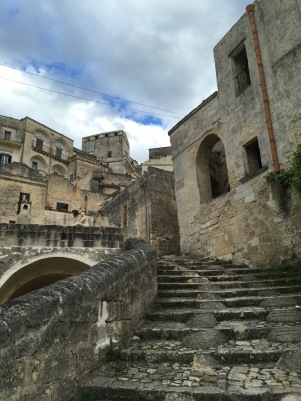 .
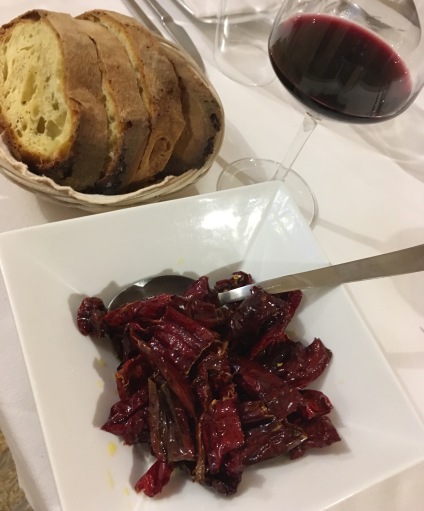
. Matera is also well now for its cooking tradition, a classic example of Italian peasant cuisine, using free ingredients combined with a fair amount of labor and know-how to turn an odd edible food into a delectable dish.
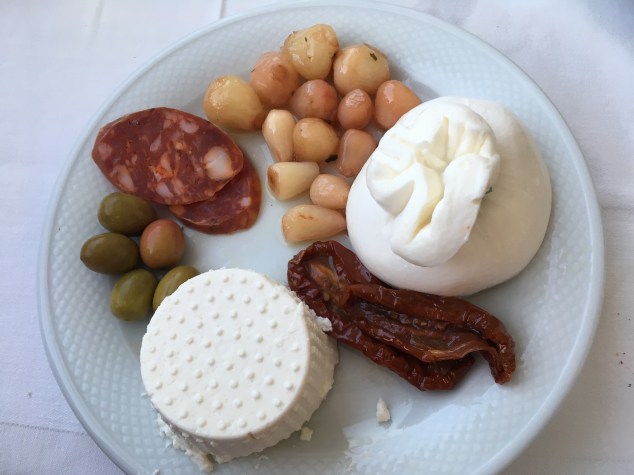

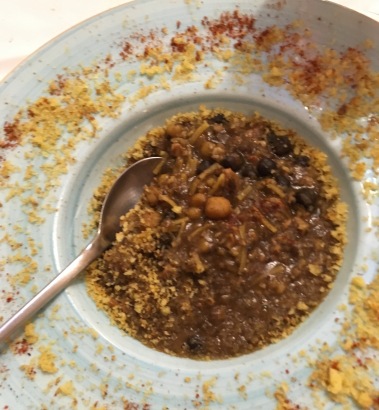
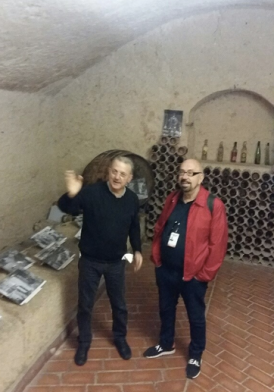 ‘This place used to be a cantina, told me Eustachio, just wine, no food.So people used to cook it at home and take it here, all wrapped up in paper tto keep it warm, then tear the bag and eat it paired with a nice glass of wine.Then came the crapiata a soup of different legumes, cereals and potatoes typical of the Basilicata cuisine of rural tradition, prepared in great quantity every year on the first day of August in the district La Martella, close to the cultivated fields and served to the inhabitants. Eustachio took me downstairs, to the 17 century cellar, which incorporates the typical architecture of the Sassi and was refurbished to retrace moments of daily life of the peasant life,
 The menu dedicates an attentive search of local herbs, like the cicoriella, the sivone and other fresh leaves variously used in cooking: in salads, minestrone, simply boiled with oil and lemon, or as a filling of ravioli and pansotti or excellent omelettes.

 ‘We represent the tradition. My family managed this restaurant since the 50’s’ told me Anna, owner of the popular Ristorante Pizzeria Da Mario ‘Since then we are always been loved by the people from Matera and from all over the world. Many celebrities have eaten here: Richard Gere, Mel Gibson just to mention few’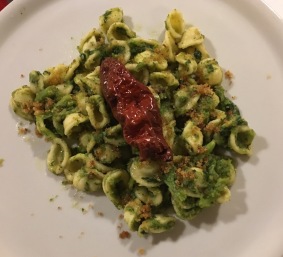
 Da Mario is know for its pizza. I tried a baby Margherita, perfectly cooked. ‘I love my town, peaceful and quiet, I run the restaurant a cosy BnB called
  Where I stayed.
 Super friendly host Francesco delighted me with anecdotes about the city, gave me tips took me to the prehistoric hypogeous cave below the residence, embellished with a precious Nativity and prepared a great breakfast that included fresh local products. I stayed in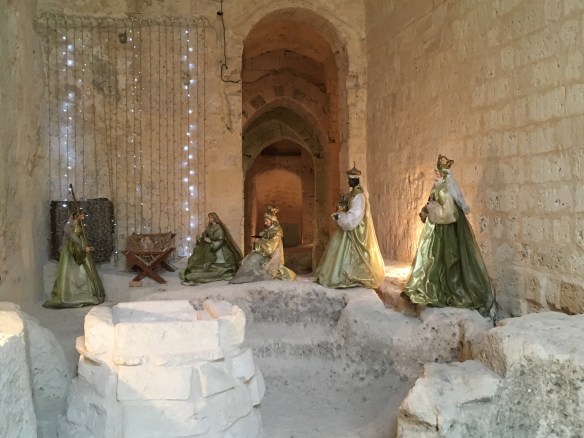

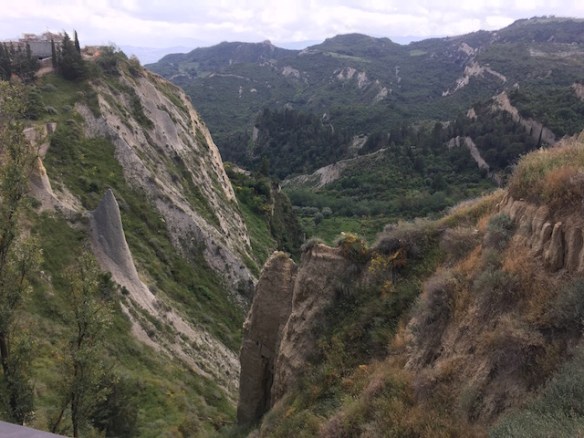 The surrounding clay landscape is characterised by naturally eroded gullies and ravines, typical of this part of the region. This is the rough, moon-like landscape of Calanch.
 Carlo Levi’s 1944 memoir about his long exile in the area. Carlo Levi was born in 1902 in Turin, Piedmont, to wealthy parents. His father was Jewish and a doctor and his mother was the sister of Claudio Treves who was an important socialist leader in Italy. After attending to the University, young Carlo pursued is passion: painting. In 1929, Levi co-founded an anti-fascist organisation called Giustizia e Libertà for which he was arrested in 1935 and exiled to Aliano, a timeless place where ancestral customs reign: witchcraft, love potions, charlatanerie,
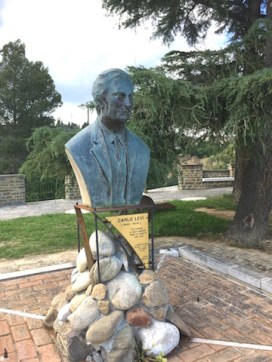 He lived the for nearly a year, painting, working as a doctor and observing the daily hardship of the villagers that he would later narrate about in his book, ‘Christ Stopped at Eboli On those days, the malaria was decimating the population, already living in dire poverty and Levi tells what he lives, what he sees, the life of its inhabitants, their customs, painting a region abandoned to his sad fate and writing beautiful pages about their hunger, heir fear ad their beliefs. When Carlo Levi arrived in Gagliano , supposed to stay there for three years under house arrest, he said he had “the impression of having fallen from the sky like a stone in a pond”. The book tells the story of suffering and injustices, where the peasants have more confidence in their tribe, and in their family, and have very little respect for institutions that do not bring them any security or well-being. The toddlers mortality was enormous, nearly 50% died simply because their parents could not afford medical assistance.Dispate all the negative things,
  Levi fell in love with Aliano where he asked to be buried. In Aliano.The Literary Park s dedicated to him as well as a museum that offers personal letters, documents and drawings related to the period during which Levi lived in Aliano.
 I Walked around the city center, where venues and places his book relive in plates reporting extracts from. In the silence of the badlands, I hear nothing but the sound of my own footsteps.
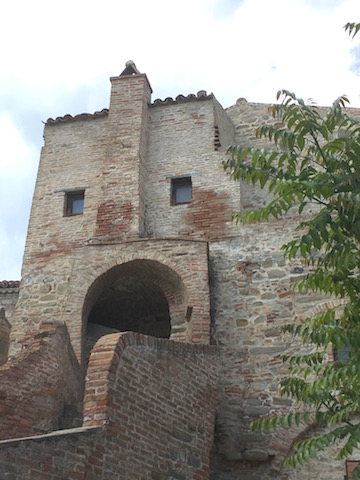 which the small windows create a gloomy wing, beyond which the gash due to the roof’s falling down allowed the pale sun to enter.Aliano has its own dialect, “Alianese”, and the population keep many old traditions. One particular example is that, during Carnevale (a catholic festival that takes place a few weeks before Easter) village men, dressed in paper mache masks, hats covered with streamers, wearing long underwear and cow bells, march down the town’s main street, throwing flour at gathered crowds and making grunting noiss.Very interesting the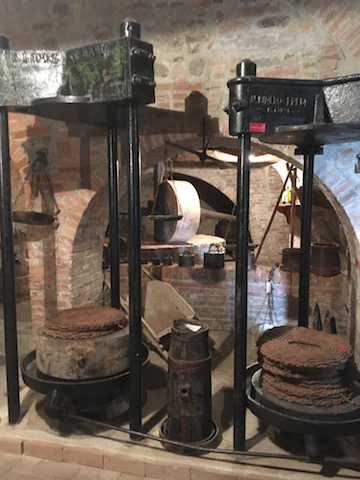
 He is known for his paintings and drawings that examine the subject of time and the vacillations between the abstract and the figurative. His subtle over painting creates dense textures
  which often seem to be clearly aware of the historical range of abstraction and the way it brushed up against figurations, from the cave paintings through contemporary figures. I stayed at La Casa De’’Americano a cozy two bedroom family managed bed & breakfast, and had my meals at their restaurant called La Locanda con gli Occhi. Dishes are simple and respect the alianese cooking tradition, from yasty cold cuts to hearty fresh vegetable soups, to lamb,

 Abano Terme is a spa resort in the Veneto region of north-east Italy, close to Padua, on the eastern slope of the Colli Euganei; it is 10 kilometres (6 mi) southwest by rail from Padua. The town’s hot springs and mud baths are an important economic resource.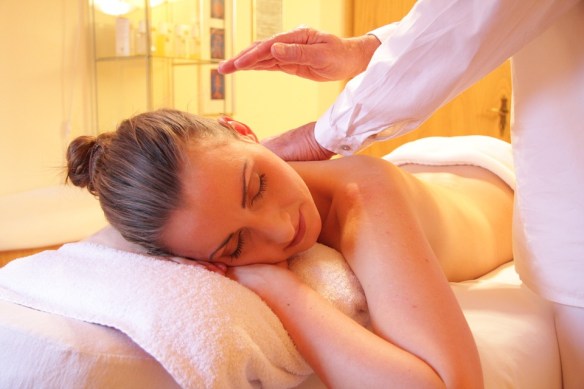


 The baths were known to the Romans as Aponi fons or Aquae Patavinae. A description of them is given in a letter to Theodoric, the king of the Ostrogoths, from Cassiodorus. Some remains of the ancient baths have been discovered (S. Mandruzzato, Trattato dei Bagni d’Abano, Padua, 1789). An oracle of Geryon lay near, and the so-called sortes Praenestinae (C.I.L. i., Berlin, 1863; 1438–1454), small bronze cylinders inscribed, and used as oracles, were perhaps found here in the 16th century.[3]
 See hotels and SPA treatments here
 , sorry I literally have 5 minutes, i got to run to Mestre to sign the extension of showing ‘Support’.
 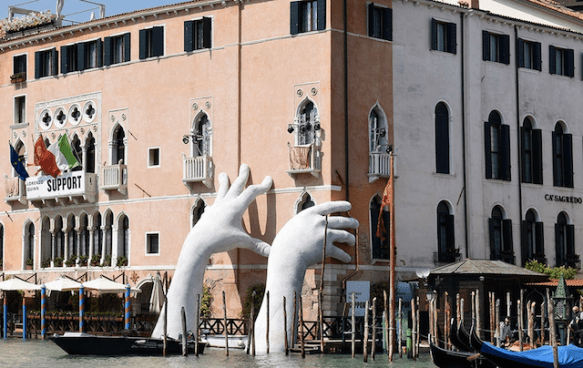 as these two giant hands rising from the waters of the Grand Canal ideally aiming to protect the façade of Ca’ Sagredo, one of Venice’s most beautiful and iconic buildings that risks sinking due to a changing climate. At the same time, however, they could destroy it and let the city sink at any moment, because “A hand could hold so much power, said Quin, the power to love, to hate, to create, to destroy. “
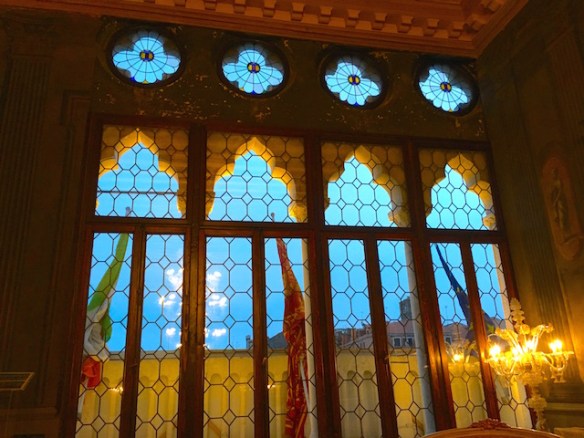

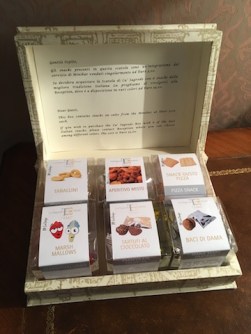

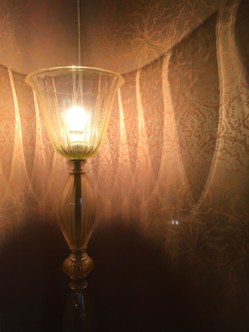

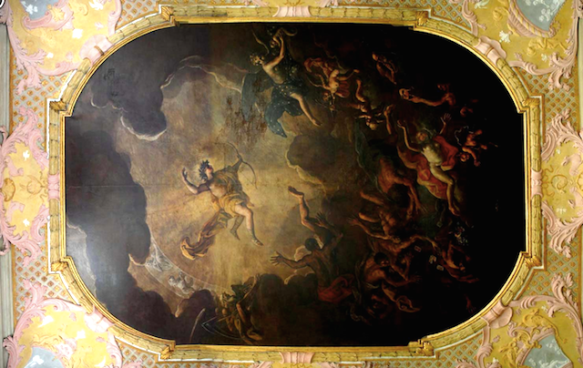
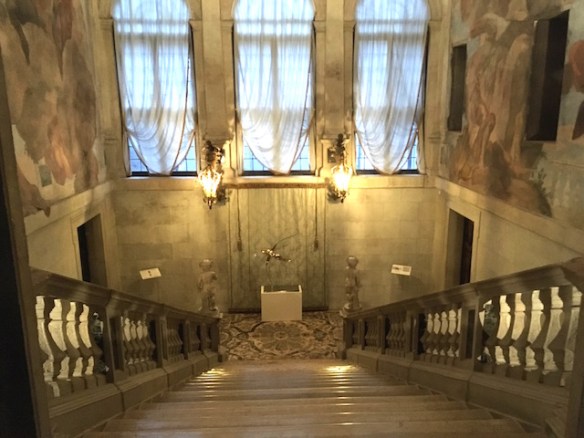 It is a real gem, half hotel, half museum with important works of art by 17th and 18th-century artists Sebastiano Ricci, Niccolò Bambini, Pietro Longhi and a beautiful Giambattista Tiepolo‘s










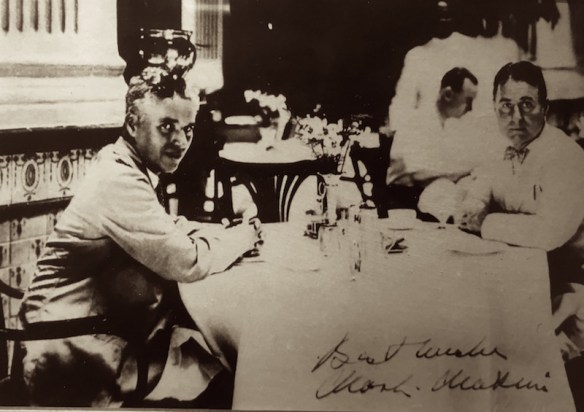
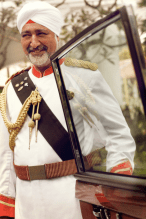
 becoming the most fabled hotel in the Far East and a must destination for royalties, celebrities and wealthy clientele, all pictures in an impressive hall of fame. Legends as Charlie Chaplin, Maurice Chevalier, Jean Harlow, Noel Coward.
  Hollywood royalties as Ava Gardner and Elizabeth Taylor.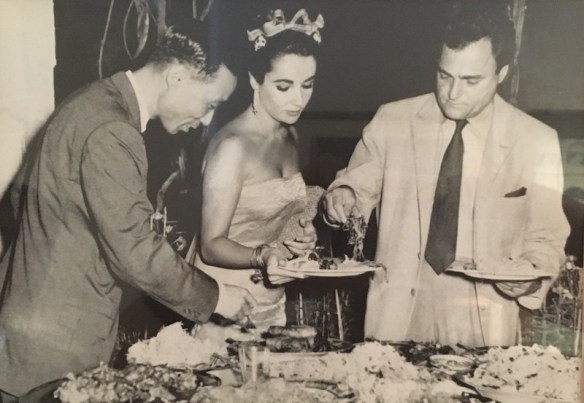

 T
T
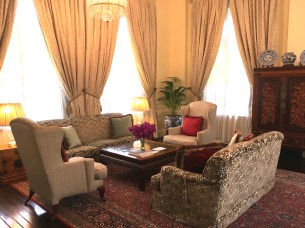
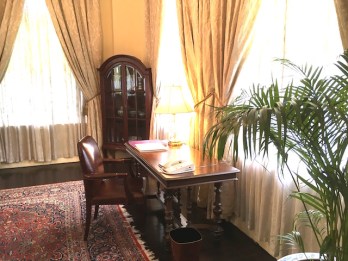
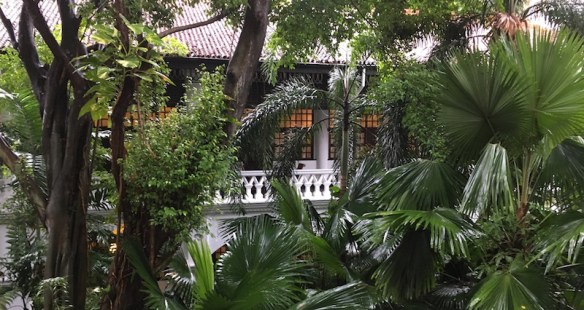
 Within its walls are more than a hundred expansive suites, framed by polished teak verandas and white marble colonnades, clustered around lush tropical gardens. Each is serviced by the legendary Raffles Butlers and offers every modern convenience necessary.


 It felt like a furnished apartment with high ceilings that I had already lived in, not a room that I was staying for the first time. I stepped through the door into a small ante-room, decorated with botanical prints.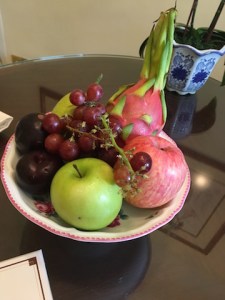

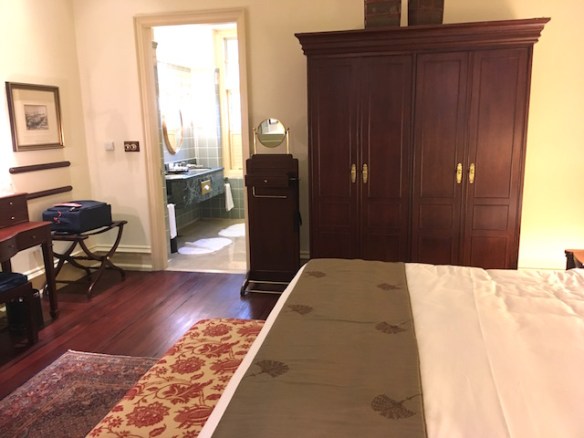
 And beyond there was the timeless green marbled bathroom with two rooms; one with basin and Raffles amenities. the other with toilet, shower, giant bath tub and ceramic elephant pot holders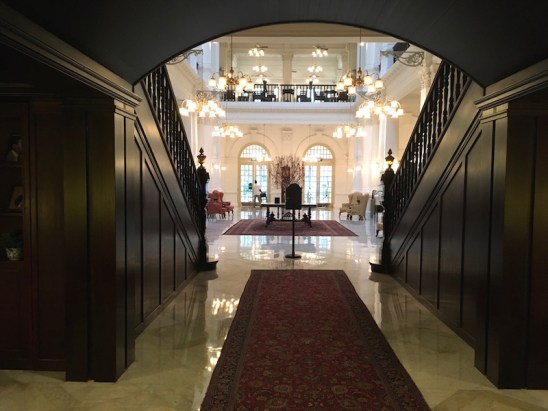

 THE NEW RAFFLES
 The venue will boast new events spaces, including a majestic 300-guest ballroom, named Jubilee Ballroom as a tribute to the Jubilee Theatre, originally a cinema in the 1930s at the same location. Elegantly sophisticated in hues of cream and gold, complimented with an air-conditioned pre-event foyer, the new space will be the ideal venue for weddings and social galas. Once reopened, the Raffles Arcade will showcase social spaces and a variety of lifestyle experiences. This includes a refreshed Raffles Gift Shop that will house a History Gallery to illustrate the heritage of Raffles Singapore. The Arcade will also be home to a brand-new Raffles Spa, a holistic sanctuary for hotel residents and the community to escape the bustle of the city.
  Writers Bar will be expanded to a full bar and be the place for bespoke cocktails, discreet elegance and intimate conversations. All event spaces will also have striking lighting elements and the latest audio-visual technology, to be relevant for today’s social galas and events.
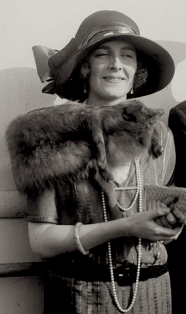 and wife of Lord Louis Mountbatten who was the Earl of Burma, last Viceroy of India and also Southeast Asia’s Supreme Allied Commander during the Second World War. In September 1945, Lord Mountbatten was in Singapore to witness the surrender of the Japanese Forces.The other will be dedicated to Lady Sophia, wife of Sir Stamford Raffles, the founder of Modern Singapore, and for whom Raffles Hotel Singapore is named after.
 It’s harvest season and 2017 appears as a challenging vintage in Europe (“a catastrophy” in Italy according to our host Cesare Zucca). Climate has always been a nail-biting stress factor in wine production and the recent warming observations are not helping…
  Well, not helping everybody! If some predict the growing production of wines in small Northern players such as the UK, Southern European big producers are feeling the heat and are worried. Wine geography has seen many changes with the emergence of “New World” wines of North America, as well as Chile, Argentina, Australia, New Zealand, South Africa in the Southern hemisphere. But wines of decent quality in tropical countries had never come to my attention… Until the discovery of
 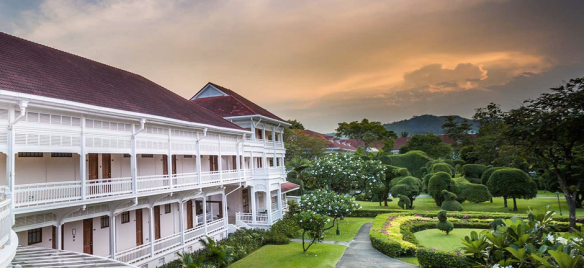 The Centara Hua Hin is a magnificent venue designed to evoke the spirit of the 1920s. Colonial influences meet modern-day comforts and soothing views are to be had of the swimming pools or the magic gardens, populated by grass elephants and other animals.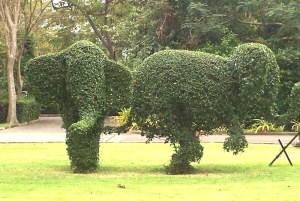
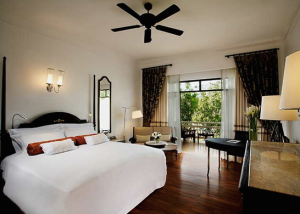
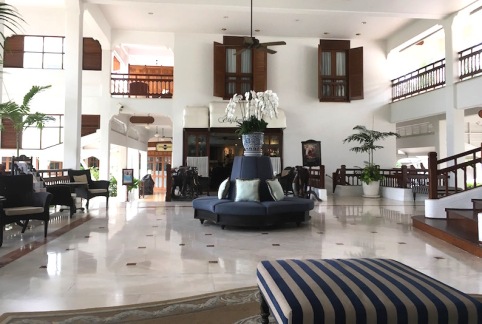
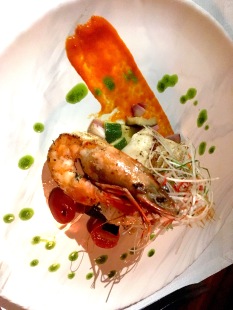 from shrimp with mango salad to roasted duck in red curry.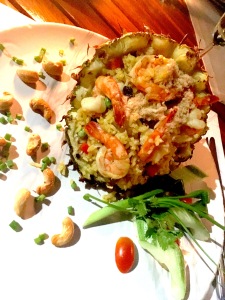
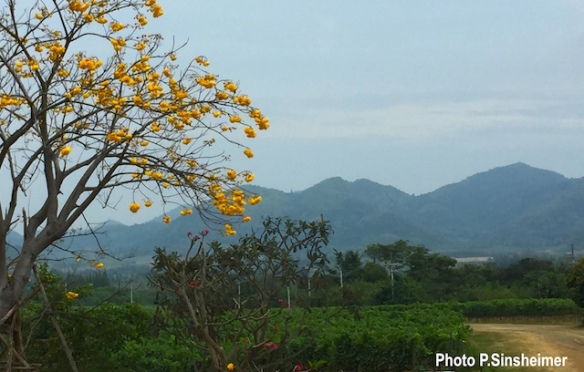
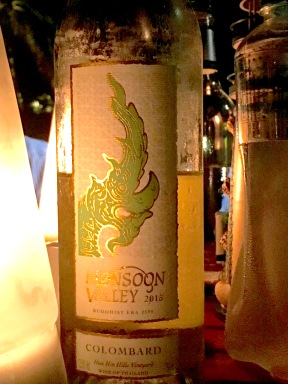
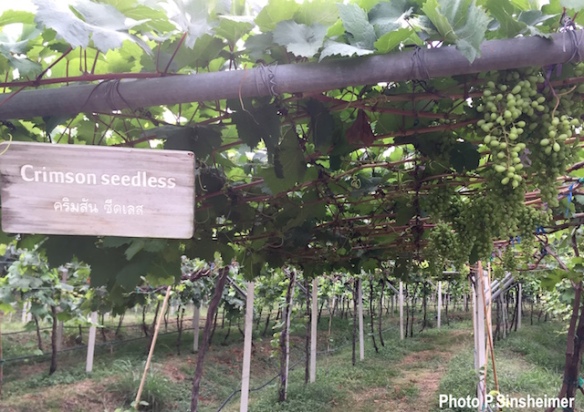
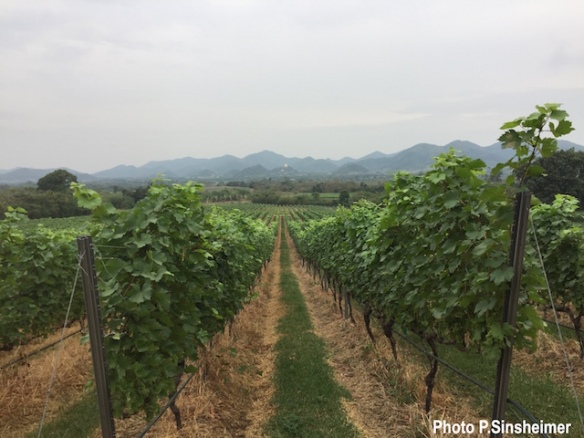
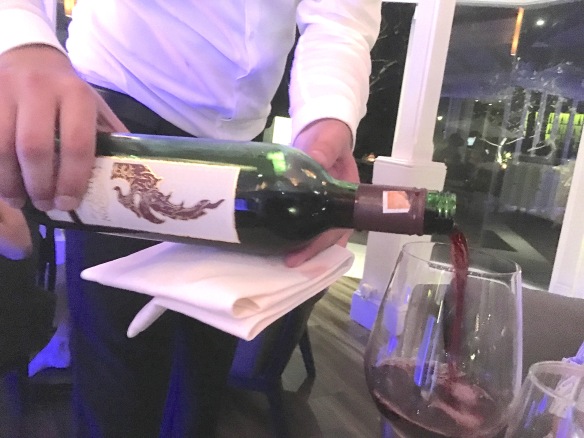 I have to say I was skeptical, but all preconceptions disappeared after a few sips of this Mansoon Valley colombard, both crisp and delicate, with exotic fruit and citrus aromas, along with floral notes. Wow! Perfect pairing with the lemongrass used in the dishes and perfectly cooling to counterbalance the heat of the chilies.I was very curious about it all and the adorable staff of the hotel arranged a visit to the vineyard located less than an hour away. The drive was a beautiful occasion to see a bit of the country side with many fields, mainly pineapple plantations. What a surprise to see in the background of one of the most iconic tropical fruit a well manicured vineyard of over 100 hectars.
 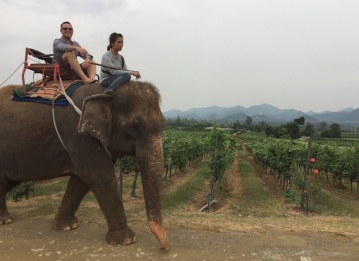 The surprise does not stop there, as I had the opportunity to tour the property on the back of an elephant (if you’ve never done this, just be prepared, it’s a beautiful, but rather rocky ride). The large and elegant tasting room dominates the valley and one can appreciate the key position of the vineyard that benefits from a cooler micro climate with breezes coming from the hills. This is essential to the production of wines that do not taste “cooked”. It’s also the occasion of learning about who is behind this incredible business operation: a man whose name you may not know, but whose fortunate was made by a beverage you definitely have heard about. No, not wine… Red Bull! Chalerm Yoovidhya is among the richest man in Thailand with a fortune approaching 10 billion US dollars according to Forbes this year. Upon returning from his studies abroad where his taste for wine was developed, Chalerm took up the challenge of growing grapes in his native Thailand and show the world that great wines can be crafted even at the 13th latitude
  of the northern hemisphere. New World wines are old, new latitude wines are in! Hua Hin Vineyards is actually one of three vineyards he owns, but it serves as the flagship of the Mansoon Valley brand. The winemaker is German born Kathrin Puff, who worked in several wineries in Italy and New Zealand before meeting this tropical challenge with brio. I had the chance to sample a few of the large collection of wines available at the vineyard and all showcased a serious winemaking expertise. A brut blanc de blancs, showacses the delicate a floral notes of chenin blanc, colombard and viognier grapes that compose this traditional champenoise method sparkling.
  Besides the colombard white, I tried the medium sweet chenin blanc, which was not cloying at all and promised a nice pairing with spicy meats dishes and seafood salads. Among the two high-end “Cuvée de Siam” bottles, made with the best grapes of chosen parcels,
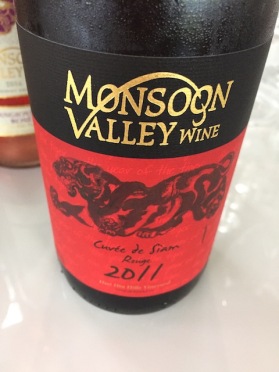 I was really impressed with the red, made with the oldest vines of shiraz and sangiovese, aged in French oak barrels and bottled unfiltered. The result: a spicy wine combining medium tanin and long finish (which earned 84 points by Robert Parker). The white was a serious wine, but lacked a bit of the freshness so pleasant in the other more simple whites. To finish on a sweet note, the chenin blanc late harvest with a nice balancing acidity invites to be enjoyed along with seared foie gras, aged gorgonzola or a more local mango, sticky rice and coconut dessert. Yes,!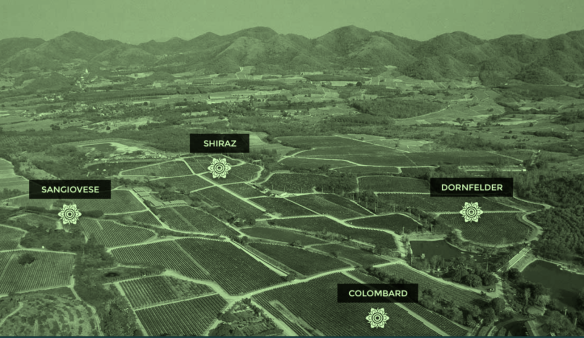
 The area offers fashionable bars, snug bistros, trendy stores and supercool shops, all nested in one of Munich’s most picturesque boroughs.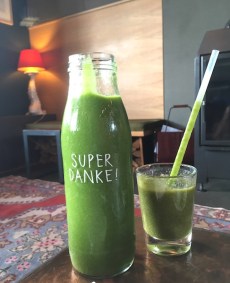

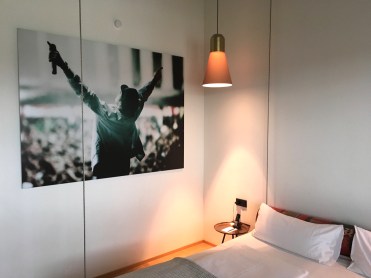 member of the well-known German hip hop group Die Fantastischen Vier , while the 4th floor rooms has been designed by the owners.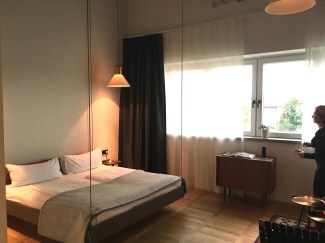
 Black was the inspirational color, including a metal skeleton band stand in an alcove and a vinyl record player ready for action.
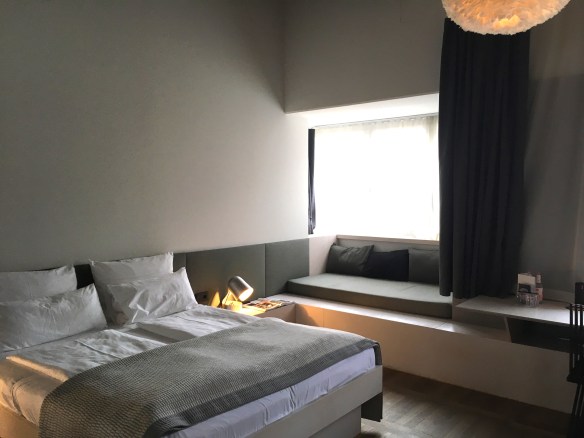 that offered a combo of high-tech furniture, sound proved walls and 2 pretty romantic feathers ceiling lamps, ballerina style.
 complimentary bottles of mineral water, and a pile of trendy magazines to flick through.




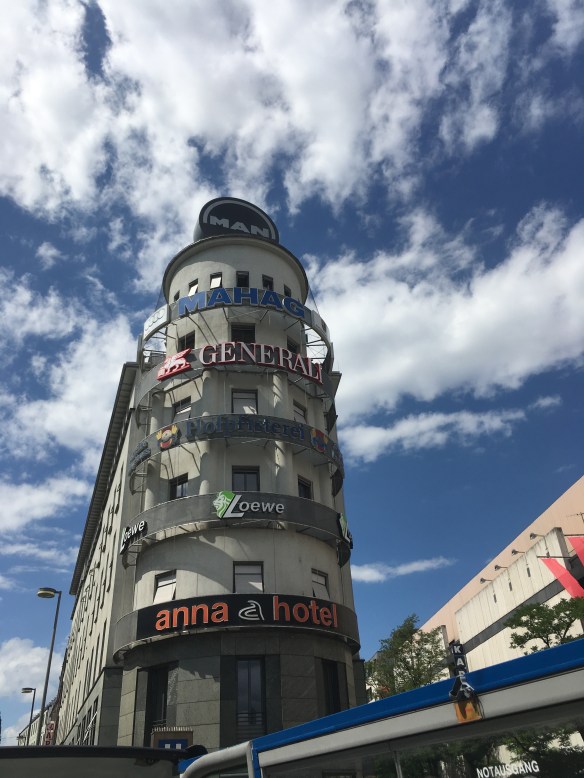 Anna hotel, is one of Munich’s first design hotels, is located at the heart of the city, right by the Karlsplatz / Stachus, close to the central railway station.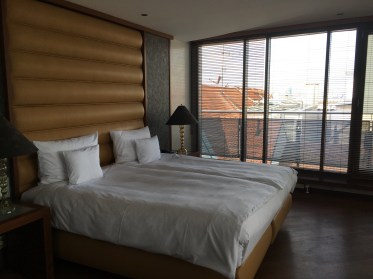
 to a rich local fruits plate,to a smart couple of condoms hidden in a anna hotel box.
 and topped up your energy levels over the day from a
 bread, cold cuts, cheeses, salmon, fruits, delicious desserts,
 .
.

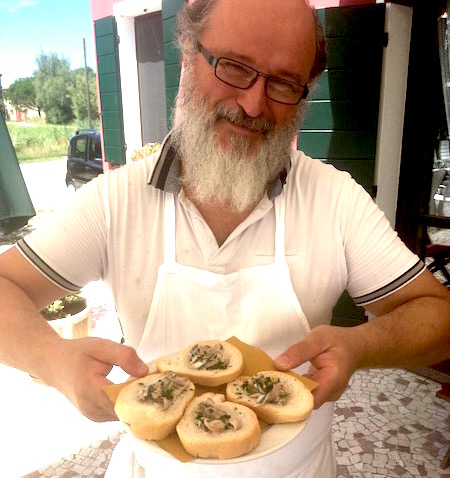

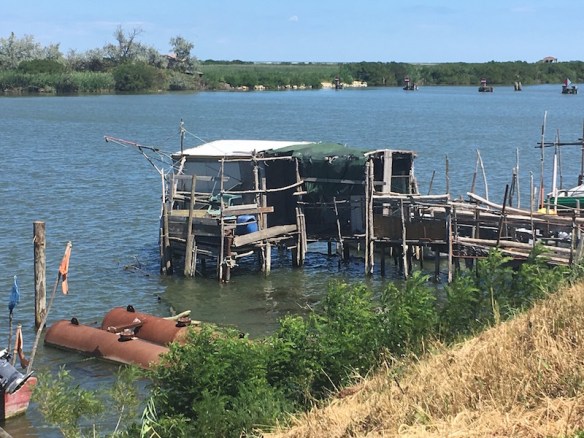 the emotion of the boat bridges, the wide horizons, the activity in the fishing lagoons and in the vegetable gardens.
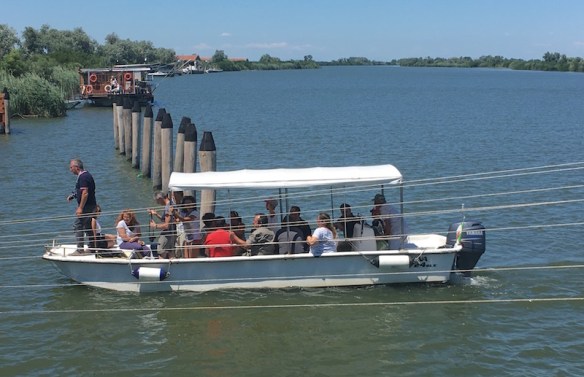 From equipped beaches of Rosolina mare, Boccasette and Porto Barricata to some isolated sandbars strips of land that are formed at low tide and where there are numerous colonies of wading birds: gulls, terns etc..making the area a wonderful bird-watching attraction.
 I discovered Scano Boa island, where the fishermen used to live in straw houses and recently retrieved to allow visitors to experience the life of these lands. You must get a boat to get there , ask locally and yes I have their ‘secret’ mobile number)


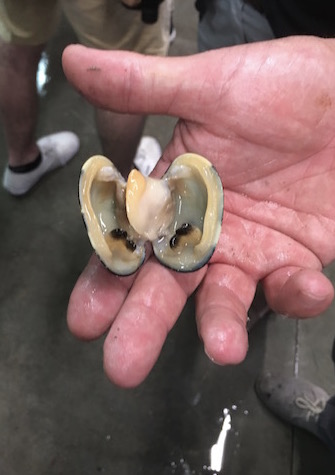 The Forum is conceived as an event that will provide young people with a unique opportunity to meet, debate and share their vision and commitment to sustainable development. It aims to become a place where strategies and action proposals can be discussed and implemented in order to achieve,
 where that rice that will be the main ingredient of tipical dishes from different countries.
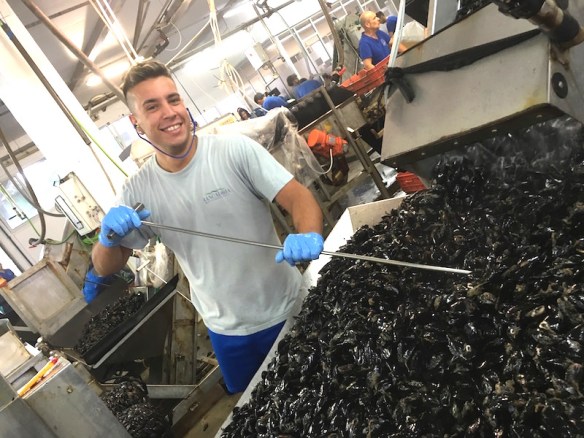



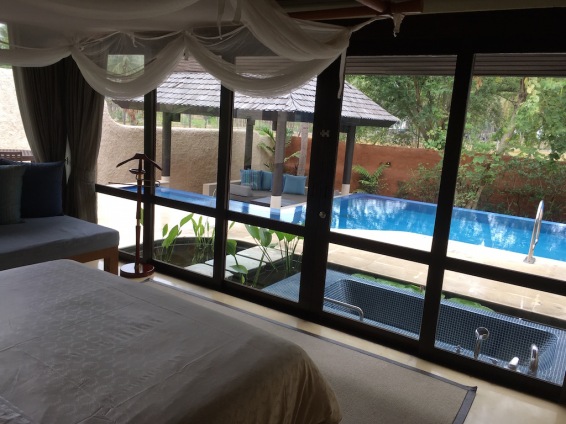
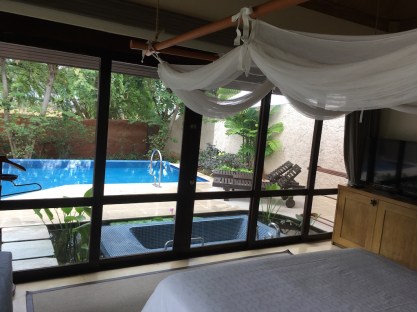
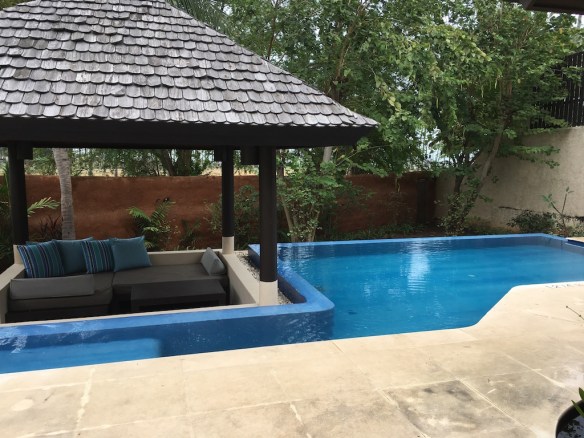
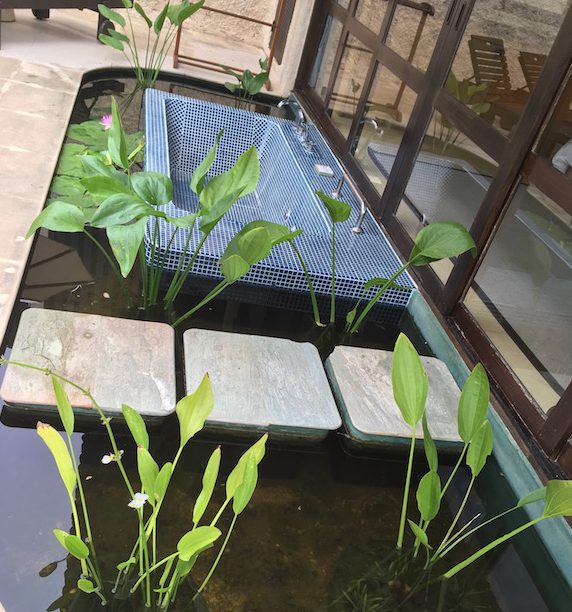

 Not the widest variety ever, but no one should be frustrated and everything was top notch. Who needs 90 items if half of them are disappointing.
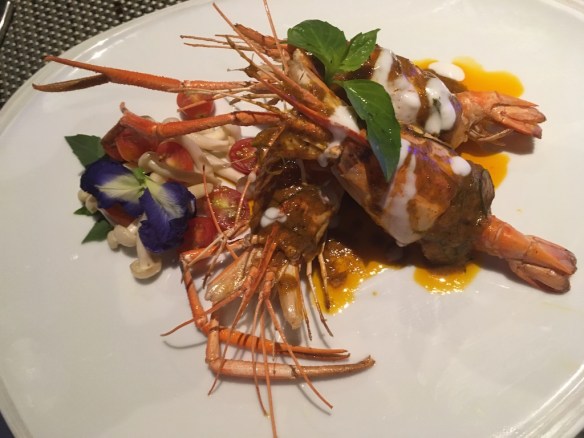
 The à la carte menu of the restaurant with ocean view had me have the best Thaï food so far: true flavors with excellent ingredient sourcing. Loved the local Pranburi squid, partially sun dried for a great flavor and texture.


